

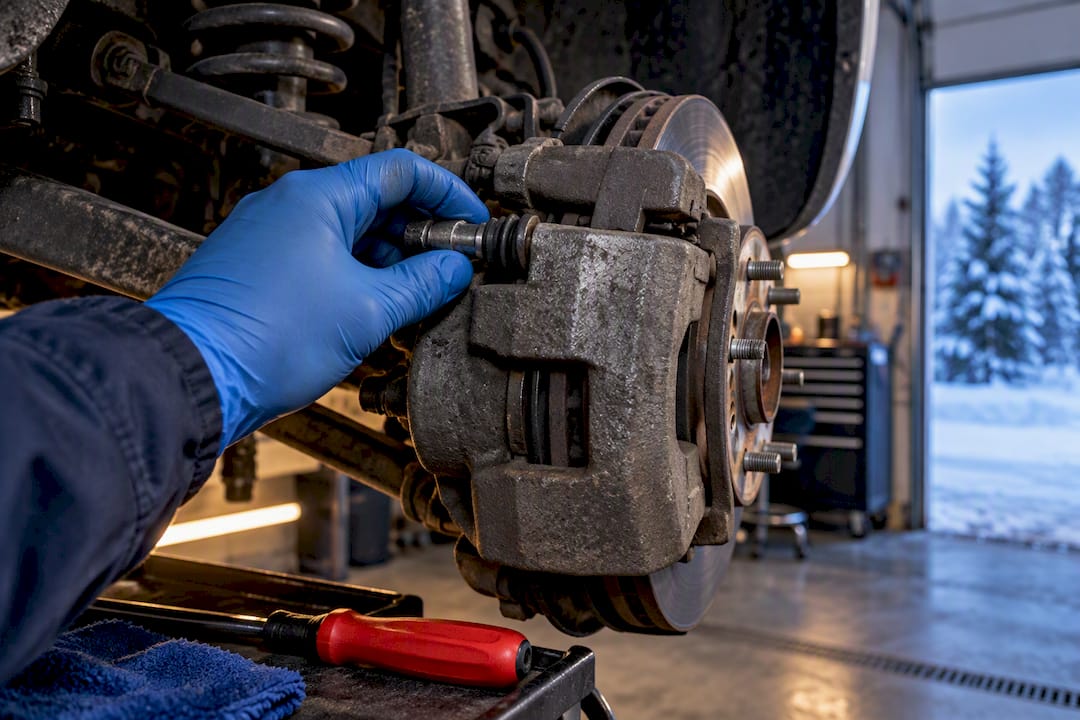
Winter conditions commonly accelerate brake pad wear, and it isn’t caused by one factor alone. Cold temperatures reduce a pad’s stopping friction on the first hard applications, road salt and slush drive corrosion into rotors and hardware, and winter driving itself demands more frequent, harder stops than dry summer roads ever do. The practical takeaway sits in the maintenance checklist below, where thickness checks, hardware lubrication, and fluid condition all matter more between November and March than at any other time of year.
TL;DR:
- Cold weather causes a reduction in brake pad friction and increased rotor corrosion, leading to longer stopping distances and faster wear.
- Winter driving habits, including frequent low-speed stops and ABS cycling, significantly accelerate brake pad and rotor deterioration.
- Signs of winter-related brake wear include squealing, pulsing, rust, uneven pad wear, and a soft pedal, requiring prompt professional inspection.
- Regular maintenance tasks such as checking pad thickness, cleaning caliper pins, and inspecting rotor surfaces are crucial for winter brake safety.
- Using moisture-adaptive brake pads and dedicated hardware from AAA Frictions can help mitigate winter wear and improve cold weather braking performance.
Table of Contents
- How cold and moisture change brake pad materials and rotors
- How winter roads and driving habits increase brake wear
- Common signs that winter has accelerated your brake pad wear
- Practical winter brake inspection and maintenance checklist
- Prevention and protection: routines and products that reduce winter wear
- Immediate steps if you notice braking problems while driving in winter
- AAA Frictions’ winter guidance and why a matched HydroAdaptive kit helps
- Why realistic expectations beat brake pad shopping
- Winter-ready pads, rotors, and kits from AAA Frictions
- Sources
- FAQ
How cold and moisture change brake pad materials and rotors
Brake friction material doesn’t perform the same at minus 20 degrees as it does at room temperature. Testing on cold and humid brake conditions found that stopping times extended across every friction lining tested, and some formulations reached what researchers classed as critical failure under severe cold exposure. That gap between how a pad performs warm versus cold is what engineers call the cold friction deficit, and it explains why your first few stops on a frigid morning can feel noticeably less confident than the same stops an hour later once the system has warmed.
Cheaper resin-bound pads are more prone to glazing and brittleness in cold weather. Repeated cold-to-hot cycling hardens the friction surface, which raises noise and increases the rate at which material sheds unevenly rather than wearing down smoothly.
- Cold pads typically need more distance and pressure to “bite” on the first stops of the day.
- Rotor surfaces rust and pit quickly once exposed to road salt and standing moisture, especially on vehicles parked outside overnight.
- Salt doesn’t just look bad on a rotor. It works mechanically into ABS sensor rings and caliper components, accelerating corrosion in places you can’t easily see.
Cold-weather brake fact: Premium pad formulations are built to retain a higher share of warm friction during a cold soak, which is one reason ceramic, hybrid, and moisture-adaptive pad families tend to hold up more consistently than budget linings once temperatures drop. AAA Frictions built its HydroAdaptive formulation around that exact cold and wet performance gap.
How winter roads and driving habits increase brake wear
Snow and slush change how often and how hard you brake, and that shift shows up in pad wear rates within a single season.
- Stop-and-go traffic in slush forces more low-speed applications per kilometre than dry-road driving, and each one wears the pad surface slightly.
- ABS cycling on icy patches triggers rapid, repeated clamping that puts more heat and abrasion into the pad than a single smooth stop would.
- Corrective braking, tapping the pedal to catch a slide or react to a vehicle stopping short on ice, counts among the highest-wear events a pad experiences all year.
- Downhill braking in slippery conditions often means riding the pedal longer than necessary, which raises pad temperature and accelerates wear over a single descent.
A morning commute through freshly salted slush can put more wear on a pad in one week than a month of highway driving in July.
Common signs that winter has accelerated your brake pad wear
Your brakes usually tell you something is wrong before a real problem develops. The trick is knowing which signals need immediate attention and which ones you can simply monitor.
- Squeal or chirp on the first stops of the day, often from moisture or light surface rust that clears within a stop or two.
- A soft or spongy pedal, which points toward moisture in the brake fluid or air in the lines rather than pad wear alone.
- Pulsing through the pedal or steering wheel, usually a sign of an uneven or rusted rotor surface.
- Visible rust on the rotor face after the vehicle has sat for a day or two, which is normal in small amounts but shouldn’t persist after a few kilometres of driving.
- Uneven wear across one pad’s edge, often a symptom of a sticking caliper slide pin rather than the pad itself.
Morning squeal that clears quickly is nothing to worry about. A soft pedal, grinding, or a dashboard ABS light means it’s time for a professional look, not a wait-and-see approach.
Practical winter brake inspection and maintenance checklist
A short seasonal routine catches most winter-related brake problems before they become expensive or unsafe.
- Clean and re-lubricate caliper slide pins. Moisture and salt cause pins to seize, and a seized pin drags one pad against the rotor constantly, wearing it faster than its opposite number.
- Inspect rubber boots on the caliper pins. Torn or cracked boots let in moisture. If they’re compromised, replace the hardware rather than just cleaning it.
- Look over the rotor surface for rust and pitting. Light surface rust wipes away with driving, but deep pitting usually means resurfacing won’t restore a smooth contact surface, and full replacement is the safer call.
- Check brake fluid condition. Fluid absorbs moisture over time, which lowers its boiling point and raises the risk of fade. A flush every two to three years is a reasonable cadence in a climate with real winters.
- Book a professional inspection if you notice an ABS warning light, grinding metal-on-metal noise, the vehicle pulling to one side under braking, or a soft pedal that doesn’t firm up.
Transport Canada’s own winter driving guidance flags pulling and changes in pedal feel as symptoms that warrant a brake check before the season gets underway, not after a problem appears.
Pro Tip: Have a technician check caliper slide pins every time you swap between summer and winter tires. It’s a five-minute job that catches a seizing pin long before it grinds a pad down unevenly, and it’s the single easiest failure point to prevent.
Prevention and protection: routines and products that reduce winter wear
Most winter brake damage is preventable with a handful of consistent habits rather than a single big repair.
- Rinse the underbody and wheel wells after driving on salted roads, ideally every week or two through the worst of the season, to clear salt before it sits against metal surfaces.
- Use oil-based rust inhibitors on hardware, not rubberized undercoating. Rubber-based coatings can trap moisture against metal rather than shedding it, which speeds up corrosion instead of slowing it.
- Skip aggressive cleaning tools like high-pressure degreasers directly on caliper seals and rotor hats. They strip away the protective coatings and lubricants that are doing their job.
- Replace pads, rotors, and hardware as a matched set when you’re due for service. Mismatched components wear unevenly and leave one corner of the car doing more braking work than the others.
- Consider dedicated corrosion protection products designed for winter road salt exposure, such as the treatments outlined in this road salt protection guide, particularly if you park outdoors through the season.
Immediate steps if you notice braking problems while driving in winter
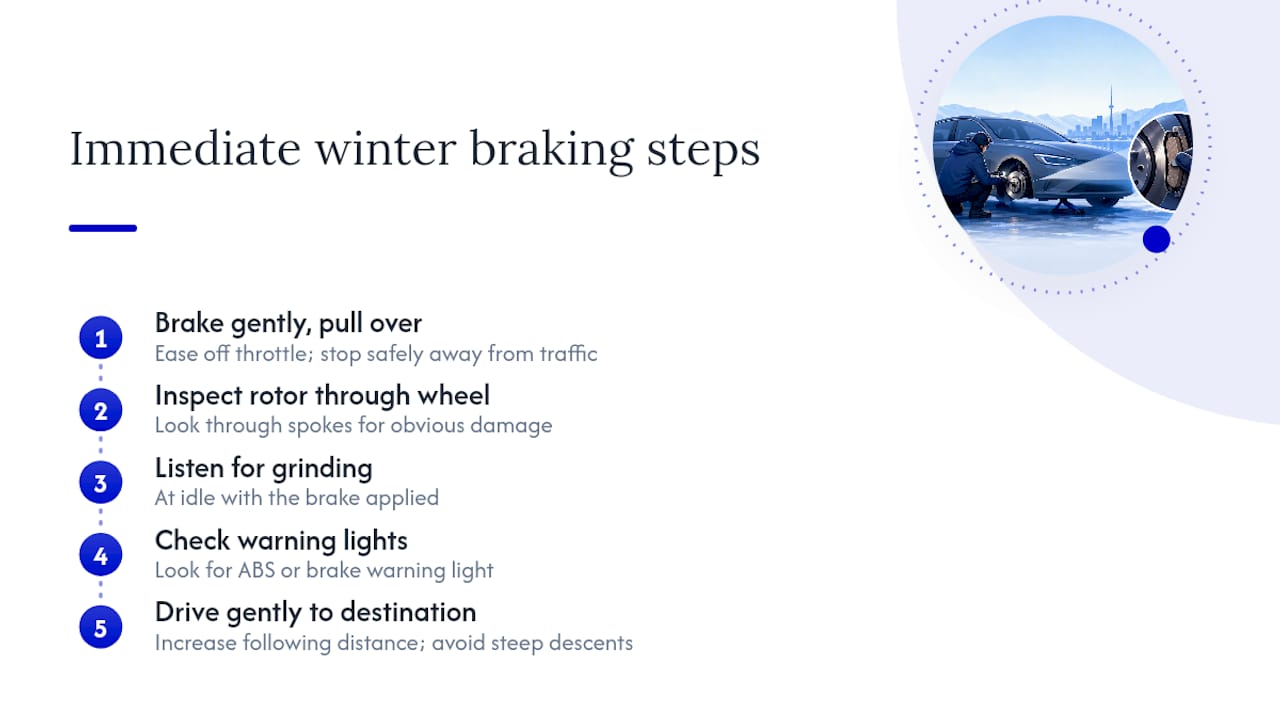
If the pedal feels off or you hear grinding, ease off the throttle and brake gently and early to find a safe spot to pull over, away from traffic. Once stopped, glance at the rotor through the wheel spokes for obvious damage, listen for grinding at idle with the brake applied, and check the dashboard for an ABS or brake warning light. Drive gently to your destination with more following distance and avoid steep descents until a technician looks at it. Tell the shop exactly what you heard, felt, and saw, including when it started and whether it happens cold or warm.
AAA Frictions’ winter guidance and why a matched HydroAdaptive kit helps
HydroAdaptive technology is designed specifically to clear moisture from the pad and rotor surface faster, aiming to close the cold friction deficit described earlier. Paired with matched rotors and hardware, the goal is fewer rotor pitting problems and steadier bite on the first wet or cold stop of the day. Treat any upgrade as a complement to good habits, not a substitute for slower speeds, longer following distances, and a proper winter inspection.
Why realistic expectations beat brake pad shopping
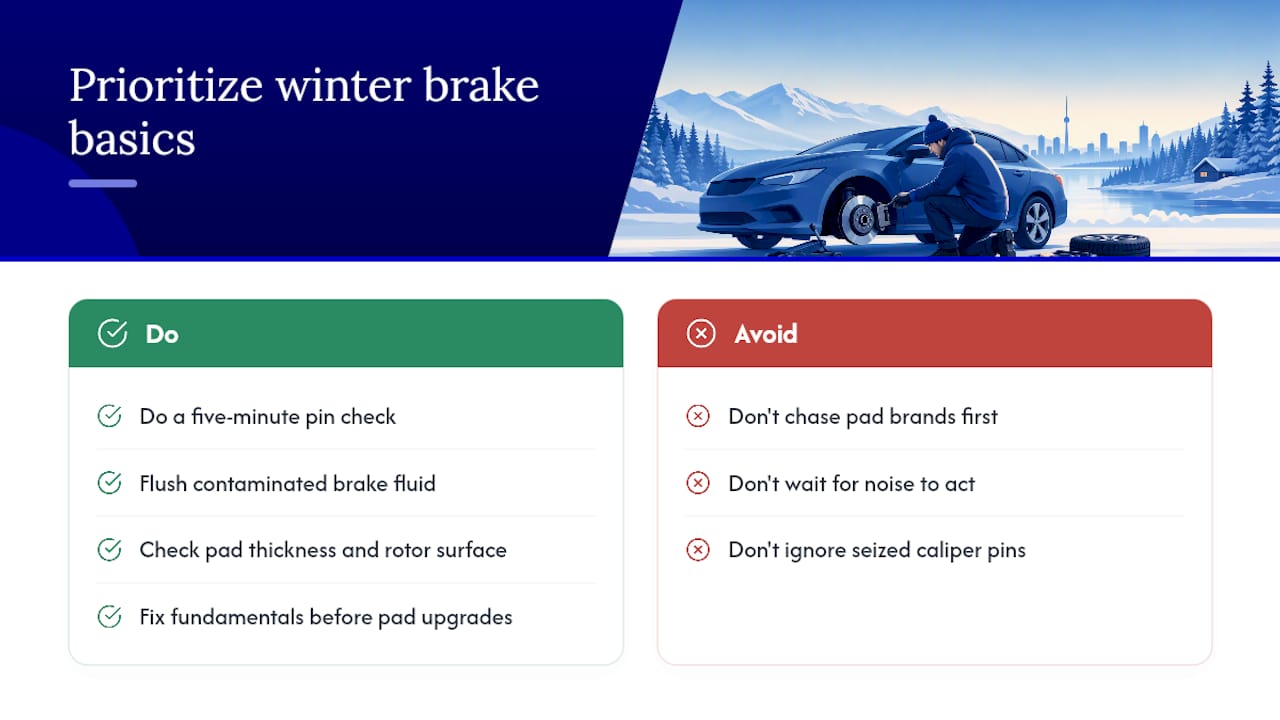
The research behind this piece points to a conclusion that gets buried under most winter brake advice: the biggest wins come from a five-minute pin check and a fluid flush, not from chasing a marginally better pad compound. Conventional wisdom fixates on pad brand and price, when a seized caliper slide pin or two-year-old contaminated brake fluid does more damage to your stopping distance than material choice ever will.
Where the standard advice falls short is timing. Most drivers think about brakes only after they hear a noise, but the cold friction deficit research makes it clear that the risk window is the first few stops of a cold morning, before anyone notices a problem exists. Prioritize the boring stuff first: thickness, pins, fluid, rotor surface. A better pad compound is worth pursuing once those fundamentals are handled, not before.
— AAA
Winter-ready pads, rotors, and kits from AAA Frictions
If you’ve worked through the checklist above and your pads are near that 4 millimetre mark or your rotors show real pitting, AAA Frictions builds two pad lines and two rotor lines specifically for this. The Type 03 pads and Type 07 pads use the company’s HydroAdaptive ceramic formulation, and they pair naturally with SC Type or GC Type rotors for a matched set rather than mixing old hardware with new pads.
The company’s stated goal with this pairing is faster moisture clearing and steadier bite on cold, wet stops, framed as its own claim rather than an independent lab result. If you’re ready to move past the checklist stage, check the complete kit page to see how the matched pad, rotor, and hardware approach works for your vehicle, then browse the Type 03 and Type 07 product pages to find the right fit for your winter driving.
Sources
- Effect of water spray on friction and wear behaviour of noncommercial and commercial brake pad materials (technical paper)
- Essential winter car maintenance for Canadian drivers | DrivingTest
- Winter brake maintenance: what parts to inspect and replace – NAPA Auto Parts Blog
- Brake pad cold weather performance: how low temperatures affect braking and what to look for – Huaruifeng Machinery
FAQ
What percentage of brake pad wear is acceptable?
There’s no single acceptable percentage. What matters is remaining thickness: most technicians treat 4 millimetres as a conservative minimum, with earlier replacement recommended for heavy winter driving or towing.
How long do brake pads usually last?
Brake pad life varies widely with driving style, vehicle weight, and climate, but frequent stop-and-go winter driving and heavier ABS activity on ice both shorten that lifespan compared with mild, dry-road conditions.
Is 4 millimetres left on brake pads okay?
Four millimetres is generally considered the minimum acceptable thickness before replacement, and it’s treated as a cutoff rather than a comfortable margin. If you’re driving through heavy winter conditions or noticing any squeal or pulling, replace pads before hitting that number.
Why are my brake pads wearing out so quickly in winter?
The most common causes are the cold friction deficit on first stops, salt and slush accelerating rotor and hardware corrosion, and more frequent low-speed and ABS-triggered braking events. A seized caliper slide pin is also a frequent, often overlooked cause of one pad wearing much faster than the other.
Do HydroAdaptive pads from AAA Frictions help with winter wear?
AAA Frictions designed its HydroAdaptive pads to clear moisture from the friction surface faster and maintain more consistent bite in cold and wet conditions, according to the company. Pricing for the Type 03 and Type 07 pad lines is available on the product pages.