

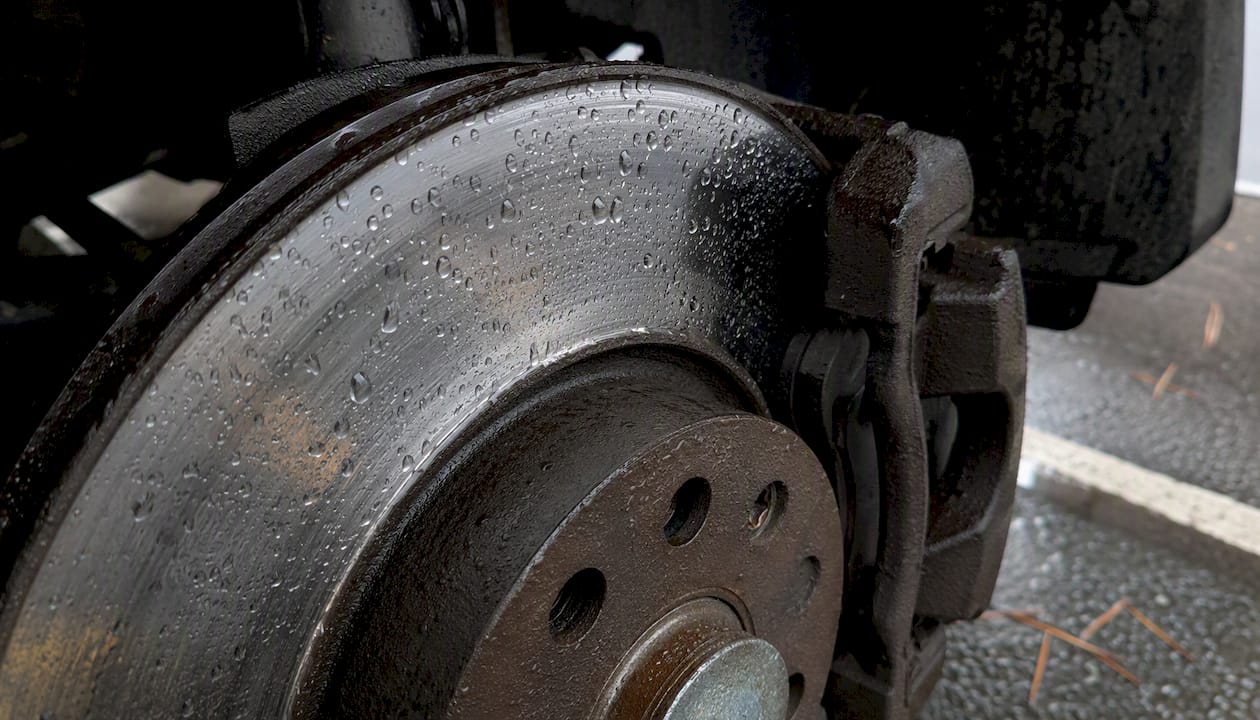
Brakes squeal when wet because a thin water film between the pad and rotor reduces friction, triggering a high-frequency stick-slip vibration that registers as an audible squeal. Surface rust that forms on iron rotors overnight or after rain adds to the noise on the first few stops. For most drivers, this is a temporary, self-clearing condition, not a safety emergency. According to EngineAuditor, the wet-film effect typically clears within 3–5 stops after light rain or dew, and within 10–20 stops after a heavy soak or car wash. The quick verdict: if the squeal fades as the brakes warm up and dry, you can drive on. If it persists after drying, or comes with grinding, a soft pedal, or pulling to one side, get the vehicle inspected.
Common causes at a glance:
- Water film between pad and rotor reducing friction coefficient
- Surface rust on iron rotors after rain, humidity, or overnight exposure
- Pad material (semi-metallic compounds are more prone to wet noise than ceramic)
- Contamination from road grime, brake dust, or car wash chemicals on rotor faces
Key Takeaways
Wet brake squeal is almost always temporary and self-clearing, but knowing the difference between a nuisance noise and a safety signal is what keeps you in control.
| Point | Details |
|---|---|
| Root cause | Water film and surface rust cause temporary stick-slip squeal that usually clears within 3–20 stops. |
| Immediate action | Perform 3–5 firm, controlled stops in a safe area to dry rotors and restore normal friction. |
| Red flags | Grinding that persists, soft pedal, pulling, or vibration require professional inspection before driving further. |
| Upgrade path | Ceramic or HydroAdaptive ceramic pads with coated rotors reduce wet squeal at the source. |
| Aaafrictions option | The HydroAdaptive kit (ceramic pads + GEOMET coated rotors) is engineered specifically for consistent wet-weather braking performance. |
Table of Contents
- Why Do Brakes Squeal When Wet?
- Is Wet Brake Noise a Safety Problem?
- What to Do Immediately After Rain or a Car Wash
- Routine Maintenance and DIY Fixes That Reduce Wet Squeal
- Which Upgrades Actually Reduce Wet-Weather Squeal?
- When to Take Your Vehicle to a Shop
- The Nuance Drivers Miss About Wet Brake Noise
- Aaafrictions HydroAdaptive Kits for Lasting Wet-Weather Performance
- Sources
Why Do Brakes Squeal When Wet?
The physics behind wet brake noise are straightforward. When water coats the rotor face, it acts as a partial lubricant, lowering the friction coefficient between pad and rotor. Instead of gripping cleanly, the pad alternately sticks and slips across the rotor surface at high frequency. That stick-slip cycle produces vibration, and the rotor and caliper assembly amplify it into the squeal you hear. Heat from braking evaporates the water film, friction returns to normal, and the noise stops.
Surface rust and why the first stops are loudest
Iron rotors oxidize fast. A few hours of humidity or a single rain shower can deposit a thin rust layer across the entire rotor face. The first one to three brake applications scrape that layer off mechanically, which can produce a squeal or a brief light grinding sound. Once the rust is gone, the noise disappears. Direct Brakes confirms that this surface rust is micron-thin and normally removed within the first few stops; persistent grinding after the rotors have dried is a different problem entirely.
How pad material changes the noise
Not all pads behave the same way in wet conditions. ShunAuto’s analysis of pad compound behavior shows that ceramic pads are generally quieter in wet conditions for most drivers, though they can produce a sharper high-pitch squeal at low pedal pressure when cold or wet. Semi-metallic pads tend to generate more brake dust and can be louder overall, especially in the first few stops after rain. Organic pads are the softest and quietest but wear faster and can glaze more easily when wet. For a deeper look at how these compounds compare, see our ceramic vs. semi-metallic brake pad guide.
What affects how long the noise lasts
Several factors determine whether the squeal clears in two stops or twenty:
- Exposure level: light dew vs. a full car wash vs. driving through standing water
- Rotor temperature at the time of exposure: cold rotors hold moisture longer
- Parking habits: uncovered overnight parking in humid climates accelerates rust formation
- Trip length: short city trips may not generate enough heat to fully dry the rotors
- Rotor condition: worn, grooved, or already-glazed rotors hold moisture in surface irregularities
| Exposure Level | Typical Noise Duration |
|---|---|
| Light dew or brief drizzle | 3–5 stops or 1–3 minutes of driving |
| Moderate rain or puddle splash | 3–5 stops or 1–5 minutes |
| Heavy rain or car wash soak | 10–20 stops or up to 15 minutes |
| Overnight humidity with rust | 1–3 stops (rust scrape), then clear |
Pro Tip: Park in a garage or covered space when possible. Reducing overnight rotor exposure to humidity is the single easiest way to cut down on morning brake squeal, especially in coastal or high-humidity climates.
Is Wet Brake Noise a Safety Problem?
Usually, no. RAC Drive classifies high-pitched squeal from moisture or surface dust as generally non-urgent, provided it clears after a few stops and is not accompanied by any change in braking performance. The squeal itself does not mean your brakes are failing.
The real concern is the broader wet-weather braking context. Direct Brakes reports that rain increases stopping distance on average, independent of any brake noise. That figure alone is reason to increase following distance and brake earlier whenever roads are wet, regardless of whether your brakes are squealing.
Red flags that require immediate inspection
These symptoms are not normal wet-weather behavior. If you notice any of them, do not wait for the noise to “dry out”:
- Grinding that does not clear after 3–5 stops on dry pavement
- Soft or spongy brake pedal at any point
- Vehicle pulling to one side under braking
- Vibration or pulsation through the pedal or steering wheel
- Squeal that persists in dry conditions at all speeds
- Reduced stopping power or a longer-than-usual stopping distance
Safety note: Any of the red flags above warrants a professional brake inspection before your next long drive. A diagnostic check of squeaky brakes can identify worn pads, seized caliper slides, or missing shims before they become a stopping-distance problem.
Direct Brakes’ urgency-ranked diagnostic guide puts surface rust at the bottom of the urgency scale (clears in 1–3 stops) and places worn wear indicators, stuck caliper slides, and missing shims significantly higher. If your noise matches the latter, treat it as a service item, not a weather nuisance.
What to Do Immediately After Rain or a Car Wash
The fastest way to clear wet brake noise is to use the brakes. Heat evaporates the water film and mechanical contact scrubs the rust layer. Do this safely, in a low-traffic area or parking lot.
- Find a safe, low-traffic area. A quiet street, parking lot, or empty stretch of road works well.
- Apply firm, controlled stops from 20–25 mph. You are not panic-stopping; you want enough pedal pressure to generate heat and contact across the full rotor face.
- Repeat 3–5 times with brief rolling between stops. Allow the vehicle to roll forward 10–15 feet between applications so the pad contacts a fresh section of rotor.
- Listen and feel after each stop. The squeal should diminish progressively. If it does not, or if grinding intensifies, stop the exercise and arrange an inspection.
- Merge back into normal traffic once the noise clears. The rotors are now dry and the friction profile has normalized.
This same principle applies after a car wash. The mechanical process of applying the brakes firmly several times after wet exposure is the standard method for drying braking surfaces on rotor-and-pad systems.
What to avoid:
- Do not spray lubricant onto rotor faces or pad surfaces. Contaminating the friction material causes glazing and can dramatically reduce braking performance.
- Do not ignore grinding that does not clear. Grinding that persists after 5 stops on dry pavement is not a moisture issue.
- Do not drive at highway speed immediately after a car wash without first performing a few controlled stops at low speed to verify normal braking feel.
After completing these steps, most drivers find the noise clears within a few minutes of normal driving. Light exposure typically resolves in 1–5 minutes; a heavily soaked vehicle may take a bit longer.
Routine Maintenance and DIY Fixes That Reduce Wet Squeal
Consistent maintenance is the most reliable way to keep wet-weather brake noise from becoming a recurring problem. Most of these tasks are within reach for a mechanically comfortable owner with basic tools.
- Inspect pad thickness and rotor condition every 10,000–15,000 miles. Pads worn below 3mm of friction material have less thermal mass and are more susceptible to wet noise and glazing. Rotors with deep grooves or surface scoring hold moisture in those channels and squeal longer after rain.
- Clean rotor faces with brake cleaner. Spray brake-specific cleaner (not WD-40 or general degreaser) onto the rotor face and wipe with a clean cloth. This removes road grime, brake dust buildup, and light contamination that amplifies wet noise.
- Lubricate caliper slide pins, not pad faces. Apply a thin layer of high-temperature brake lubricant to the caliper slide pins and the back of the pad shims. Seized or dry slide pins are a leading cause of uneven pad contact, which worsens wet squeal. Never apply lubricant to the rotor face or the friction surface of the pad.
- Check anti-rattle shims and hardware. Missing or worn shims allow pads to vibrate freely against the caliper bracket, producing squeal that is amplified by moisture. Replacement shim kits are inexpensive and often included with quality pad sets. For a detailed explanation of what shims do, see our brake pad shims guide.
- Bed in new pads and rotors properly. New friction material requires a break-in sequence to transfer a uniform layer of pad compound onto the rotor face. Without bedding, new pads can squeal in both wet and dry conditions. A standard bed-in involves 8–10 moderate stops from 35 mph, followed by a cooling period, then 3–4 firm stops from 45 mph.
When bedding new pads and rotors, avoid coming to a complete stop during the heat cycles. Stopping while the rotors are hot can deposit an uneven pad material transfer layer, creating a high spot that causes vibration and squeal in all conditions, not just wet ones. Let the vehicle roll slowly between each stop cycle.
When to call a mechanic instead of DIYing: If you find pad thickness below 2mm, rotor thickness below the minimum spec stamped on the rotor hat, or any sign of a seized caliper (uneven pad wear, vehicle pulling, excessive heat on one wheel), stop and schedule professional service. These are not DIY-appropriate conditions.
Which Upgrades Actually Reduce Wet-Weather Squeal?
Ceramic or HydroAdaptive formulations reduce wet squeal for many drivers, though each upgrade path carries trade-offs worth understanding before you buy.
Pad compound choices
- Ceramic pads: Lower dust output, quieter in most wet conditions, and resistant to glazing. Trade-offs include higher cost and slightly less initial bite when cold. A good choice for daily drivers in rainy climates.
- Semi-metallic pads: Strong bite and excellent heat dissipation, but more prone to wet noise and dust. Better suited to performance or towing applications where bite matters more than noise.
- Organic pads: Quietest and softest, but they wear faster and can glaze in wet conditions, which paradoxically increases squeal over time.
Rotor coatings and corrosion resistance
Uncoated iron rotors rust within hours of rain exposure. Coated rotors, including GEOMET-coated options, apply a zinc-based or similar protective layer to the rotor hat, vanes, and non-swept areas. This slows rust formation and reduces the severity of the first-stop squeal after overnight exposure. Aaafrictions’ HydroAdaptive formulation pairs moisture-managing ceramic pad compounds with coated rotors specifically to reduce wet-weather performance degradation and noise, addressing the problem at both the pad and rotor surface simultaneously.
Anti-squeal hardware
Shims, anti-rattle clips, and caliper bracket insulators dampen the vibration frequencies that produce squeal. These are inexpensive and often overlooked. Installing fresh hardware when replacing pads is a low-cost step that pays consistent dividends in noise reduction.
Pro Tip: When upgrading pads, always replace the hardware kit at the same time. Reusing old, compressed shims with new pads is one of the most common reasons a fresh pad installation still squeals.
| Upgrade | Wet Noise Benefit | Trade-Off |
|---|---|---|
| Ceramic pads | Quieter in most wet conditions | Higher cost, slightly less cold bite |
| Semi-metallic pads | Strong bite, good heat management | More noise and dust in wet conditions |
| GEOMET/coated rotors | Slower rust formation, less first-stop squeal | Modest cost premium over bare iron |
| Anti-squeal shims | Dampens vibration frequencies | Minimal; must match pad/caliper geometry |
| HydroAdaptive kit (pads + coated rotors) | Addresses moisture at pad and rotor surface | Professional install recommended |
When to Take Your Vehicle to a Shop
Wet squeal that clears after a few stops is a maintenance observation, not a service trigger. Wet squeal that does not clear, or that comes with any of the red flags listed earlier, is a service trigger.
Schedule a professional brake inspection when you notice:
- Squeal or grinding that persists after the rotors have fully dried
- Any soft, spongy, or inconsistent pedal feel
- Vibration or pulsation under braking
- The vehicle pulling left or right during a stop
- Visible pad thickness below 3mm through the wheel spokes
- A burning smell after normal driving in wet conditions
Typical U.S. cost ranges for common brake services
These ranges reflect typical U.S. market pricing and will vary by vehicle, region, and shop labor rate.
| Service | Typical U.S. Cost Range |
|---|---|
| Brake inspection | low to moderate cost range (many shops offer free inspections) |
| Brake pad replacement (per axle, parts + labor) | moderate cost range |
| Rotor resurfacing (per axle) | moderate cost range |
| Rotor replacement (per axle, parts + labor) | moderate to higher cost range |
| Caliper rebuild or replacement (per caliper) | moderate to higher cost range |
| Full brake system service (pads, rotors, hardware) | broad cost range |
Keep all service receipts. Many quality brake parts carry a warranty, and documentation supports any warranty claim if the same component fails within the coverage period. If you are sourcing your own parts before a shop visit, vehicle-specific kits from Aaafrictions include matched pads and rotors, which simplifies the parts conversation with your installer.
The Nuance Drivers Miss About Wet Brake Noise
Wet brake squeal sits in an uncomfortable middle ground: it is almost always benign, yet it occurs in exactly the conditions where your braking system needs to perform at its best. That tension is worth taking seriously, even when the noise itself is not.
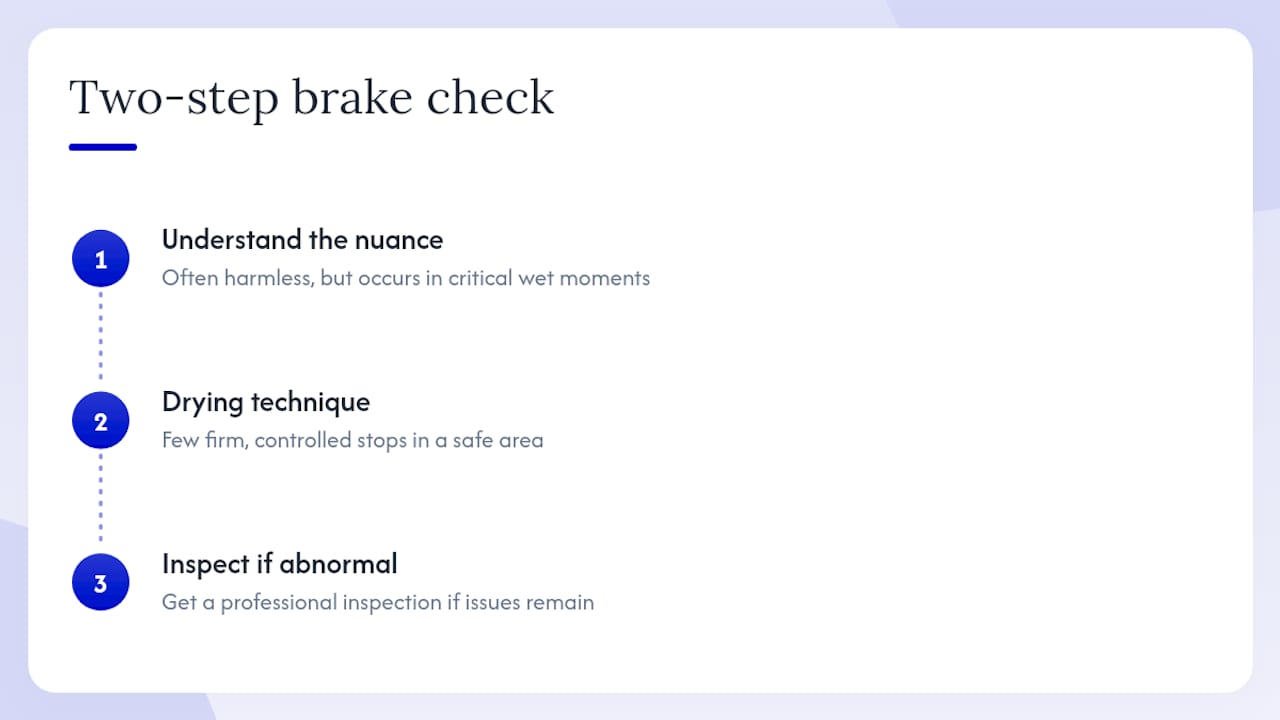
The practical approach we recommend is a two-step filter. First, apply the drying technique: a few firm, controlled stops in a safe area. If the noise clears and braking feels normal, the system is functioning as designed. Second, if anything feels off after that test, treat it as a service item. The cost of a professional inspection is low relative to what it confirms.
The one thing drivers consistently underestimate is how quickly surface rust forms and how normal that is. An iron rotor left outside overnight in a humid climate will have a visible rust layer by morning. That is not a sign of poor quality or neglect. It is the nature of ferrous metal. What matters is whether the rust clears cleanly in the first few stops or whether it signals something deeper, like a rotor that has corroded past the point of even wear. Knowing the difference is what separates a driver who understands their brakes from one who either ignores every noise or panics at every squeak.
Aaafrictions HydroAdaptive Kits for Lasting Wet-Weather Performance
For drivers who want to stop managing wet brake noise after every rain and start preventing it, Aaafrictions’ HydroAdaptive technology addresses the problem at the engineering level. The patented ceramic formulation is designed to rapidly clear moisture from the braking surface and maintain a consistent friction profile across rain, humidity, and cold, reducing the stick-slip vibration that causes wet squeal in the first place.

The Type 07 HydroAdaptive kit pairs ceramic pads with GEOMET coated rotors, combining moisture-managing pad chemistry with corrosion-resistant rotor surfaces. The result is a braking system that performs predictably from the first stop after a downpour, not the fifth. Professional installation is recommended to confirm proper bedding and hardware fitment. Vehicle-specific kits are available directly through the Aaafrictions storefront, where you can match a kit to your exact make and model.
Sources
- Why Do Car Brakes Squeak When Wet? Simple Explanation
- Wet Weather Braking Dangers: How Rain Affects Your Brakes | Direct Brakes
- Squeaky brakes: causes and solutions | RAC Drive
- Why Do Car Brakes Squeal When Wet? Causes And Solutions | ShunAuto