

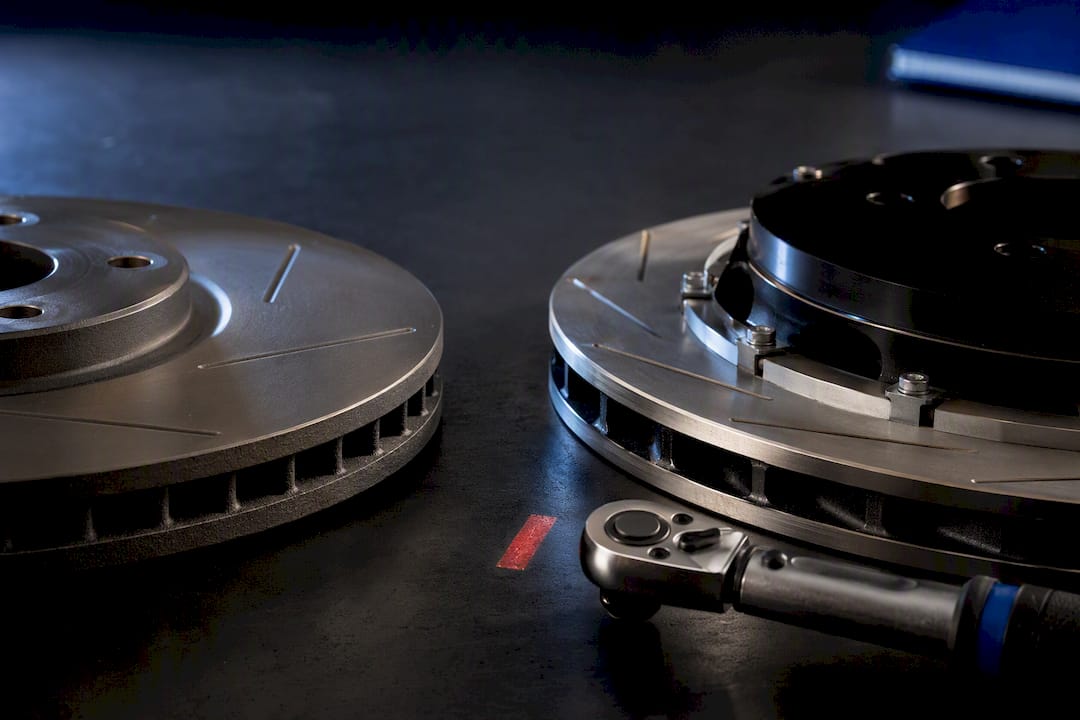
For most street-driven cars, a quality one-piece rotor is the sensible choice. It costs less, needs no special inspection routine, and delivers stopping power that matches or beats a two-piece setup in daily conditions. Two-piece rotors earn their premium when your car sees dedicated track days, heavy repeated high-heat braking, or when shedding rotational mass at the corners actually changes how the car feels to drive. The sections below explain the engineering behind that split and the ownership math that backs it up.
TL;DR:
- Two-piece rotors save up to 7 pounds per corner, reducing unsprung weight and improving suspension response during spirited driving.
- Their thermal break lowers hub temperatures by 30 to 50 percent, decreasing wear on bearings and extending brake system longevity.
- For daily driving, one-piece rotors are more cost-effective, while dedicated track use justifies the higher expense of two-piece setups due to heat management benefits.
- Replacing just the friction ring on a two-piece rotor is cheaper than a full replacement, making them more economical over multiple seasons for frequent track users.
- Most shops replace worn rings without resurfacing, and compatibility issues may arise if aftermarket wheels have different offsets or sizes.
Table of Contents
- What’s the Real Design Difference Between Two-Piece and One-Piece Rotors?
- Weight, Heat, and Pedal Feel: What Actually Changes
- What Do Two-Piece Rotors Actually Cost Over Time?
- How Are Two-Piece Rotors Serviced Compared to One-Piece?
- Common Myths About Two-Piece Rotors
- How AAA Frictions Approaches Rotor and Pad Pairing
- Which Rotor Should You Actually Buy?
- Ready for a Rotor and Pad Upgrade That Actually Matches?
- Sources
- FAQ
What’s the Real Design Difference Between Two-Piece and One-Piece Rotors?
A one-piece rotor is a single casting: the friction surface and the mounting hat are the same piece of iron, machined together. There’s nothing to separate, nothing to bolt, nothing to align. That simplicity is exactly why it dominates OEM applications.
A two-piece rotor splits those two jobs. A cast-iron friction ring handles the braking surface, and a separate aluminum hat (sometimes called a bell) bolts or floats it to the hub. Small bobbins or pins connect the two pieces, and on performance-oriented designs, those pins allow the ring to expand and contract slightly under heat without dragging the aluminum hat along with it. That’s the “floating” setup you’ll hear referenced in track circles, and it’s what allows the iron ring to run hot without transferring all that heat straight into the hub, bearings, and wheel.
Aluminum gets paired with cast iron for a reason: iron survives the friction surface’s heat cycles far better, while aluminum shaves weight where it matters most, near the hub’s rotational center.
You can usually identify a two-piece rotor on your car by checking for:
- A visible seam or ring of bolts/pins where the hat meets the outer ring
- Two distinct metal tones (silver aluminum center, darker iron ring)
- Slight visible movement or play in the ring when the wheel is off and the rotor is cold
Weight, Heat, and Pedal Feel: What Actually Changes
The numbers here matter more than the marketing copy usually suggests. Two-piece rotors typically save 4 to 7 pounds per corner compared to an equivalent one-piece design, with the exact figure depending on rotor diameter and hat material. That weight comes off near the hub, which is rotational mass, the kind of weight your car has to accelerate and decelerate every time you touch the throttle or the brake pedal.
Rotational mass reduction of a few pounds per corner sounds small, but because it’s spinning weight rather than static weight, its effect on suspension response is disproportionate to its size — a fact borne out across multiple technical weight analyses of two-piece rotor designs.
Where two-piece rotors show their clearest advantage is heat management. Splitting the ring from the hat introduces a thermal break, a point of contact resistance that slows how much heat migrates from the friction surface into the hub assembly. Technical analyses of two-piece geometry report hub-side temperatures running 30 to 50 percent lower than a comparable one-piece rotor under equivalent heat loads. That matters because bearings, seals, and wheel hardware degrade faster the hotter they run, and a one-piece rotor has no way to interrupt that heat path.
The floating design also reduces warping risk during repeated high-temperature cycles, since the decoupled friction ring can expand independently instead of fighting against a rigid hat that wants to stay a different temperature.
Here’s what that buys you in practice:
- More consistent pedal feel across a full track session, since the rotor isn’t warping or cupping as heat accumulates
- Better resistance to brake fade during back-to-back hard stops
- Little to no change in dry-pavement stopping distance for normal street driving
That last point deserves emphasis. If you’re braking from highway speed once or twice on your commute, a two-piece rotor isn’t going to stop your car meaningfully shorter than a good one-piece unit. The benefit shows up in repeated, sustained heat exposure, exactly the kind of punishment a track day delivers and a grocery run doesn’t. Floating hardware can also introduce a faint rattle or clatter at low speed, which manufacturers address with anti-rattle clips or limited-float bobbin designs built for street use.
What Do Two-Piece Rotors Actually Cost Over Time?
One-piece rotors for most passenger cars run anywhere from roughly $40 to $150 per rotor depending on size and coating. A two-piece front pair, by contrast, commonly lands well into multiple times that cost, and forum accounts of real installs back that up, with buyers reporting two-piece sets costing several times more than an OE-spec replacement pair for the same car.
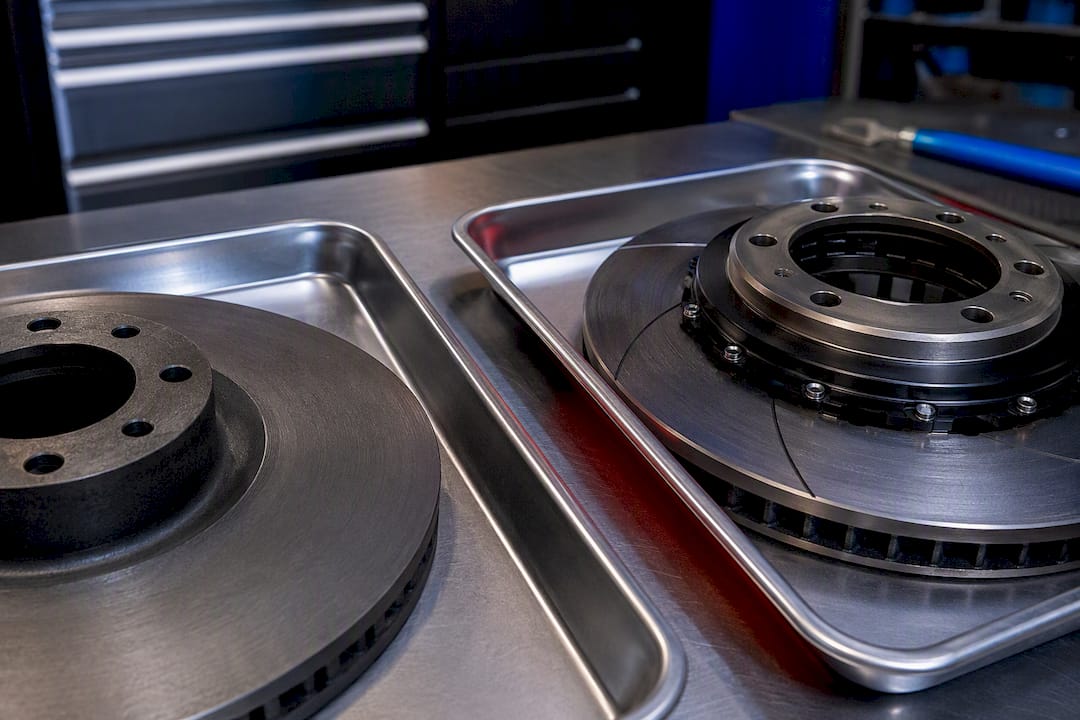
The modular design changes the math over time, though. Because the aluminum hat is reusable, only the iron friction ring needs replacing once it wears down or gets glazed from heat. That ring swap typically costs less than a full one-piece rotor, and the anodized, heat-treated hat is built to survive multiple ring-replacement cycles without needing to be swapped itself.
Here’s how that plays out across different driving patterns:
- Street-only driver: One-piece rotors win outright. You’ll replace them once every several years regardless, and the two-piece premium never pays back.
- Occasional HPDE participant: Break-even is murky. A couple of track days a year rarely generates enough ring wear to offset the higher upfront cost.
- Dedicated track driver: The math flips. Across multiple seasons of heavy consumption, replacing rings on a reusable hat can approach cost parity with buying fresh one-piece rotors again and again, while delivering better thermal behavior the whole time.
Pro Tip: When you run your own break-even numbers, don’t forget shipping on replacement rings, labor time for the ring swap itself, and how often your specific driving style actually glazes or cracks a rotor surface. Those hidden costs shift the equation more than the sticker price does.
How Are Two-Piece Rotors Serviced Compared to One-Piece?
Replacing a one-piece rotor is about as simple as automotive maintenance gets: unbolt the caliper, pull the old rotor off the hub, slide the new one on, torque everything back down. A shop can usually knock out a full axle in under an hour.
Two-piece rotors add a step, but it’s not a complicated one:
- The caliper comes off just like any brake job.
- The rotor assembly comes off the hub as a unit.
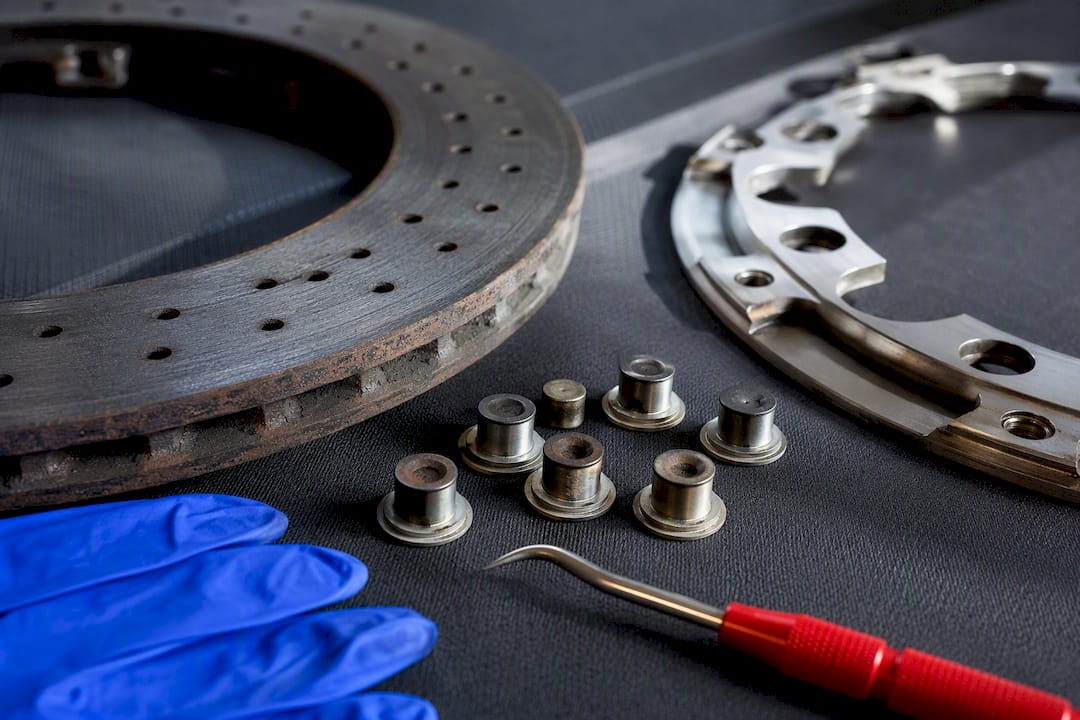
- The bobbins or pins holding the friction ring to the hat get removed.
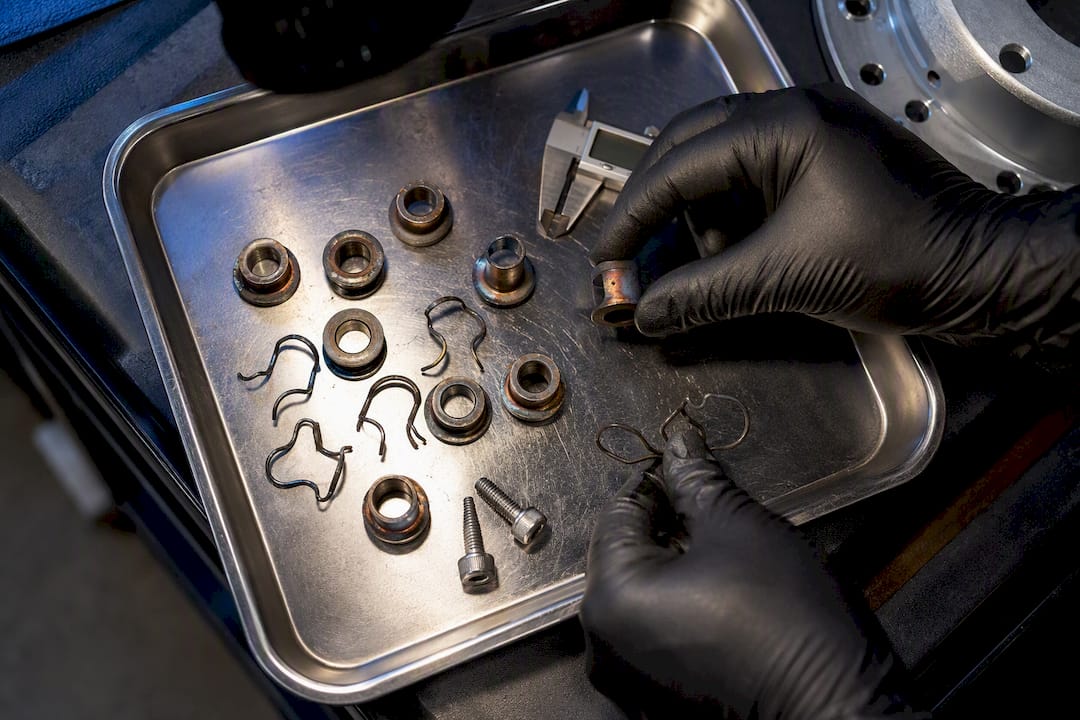
- The old ring comes off, the new ring goes on, and the hardware gets reinstalled, often with fresh anti-rattle clips or spring hardware.
- The reassembled rotor goes back on the hub, and the caliper is torqued down.
Most shops replace worn rings rather than resurface them, since modern friction rings are thinner than older solid rotors and don’t leave much material to machine off safely. Ring replacement costs vary by brand and rotor size, but budget more than a one-piece rotor purchase, less than a full new two-piece hat-and-ring assembly.
The hardware itself is the part to watch. Bobbins and spring clips wear or corrode over years of heat cycling and road salt exposure, and a shop will typically inspect that hardware at every brake service. If the aluminum hat shows corrosion at the mounting face or the bobbin holes have worn oval, a shop may recommend replacing the full assembly instead of just swapping the ring, since a compromised hat can’t hold the ring securely under hard braking.
Common Myths About Two-Piece Rotors
The biggest misconception is that two-piece rotors make your car stop shorter in everyday driving. They don’t, reliably. Their value is thermal consistency and lower rotational mass, not shorter stopping distances on a dry street.
A few other things worth knowing before you buy:
- Floating hardware can produce a low-speed rattle; anti-rattle clips and limited-float bobbin designs largely solve this for street use.
- Slotted or drilled rotor faces change how the pad bites the surface and can accelerate pad wear; they don’t universally shorten stopping distances and often add noise.
- Check wheel clearance and hub bolt patterns before buying. Two-piece rotors sometimes run a slightly different offset or diameter than the OEM one-piece unit, and that can create fitment issues with aftermarket wheels.
How AAA Frictions Approaches Rotor and Pad Pairing
Mismatched pads and rotors are a quieter problem than most buyers realize. A friction compound tuned for one rotor surface can behave unpredictably on another, especially when moisture enters the picture. That’s the core reason AAA Frictions sells rotors only as part of a matched pad and rotor kit rather than as standalone parts. The friction profile of the pad and the surface characteristics of the rotor are engineered together, not assumed to work out.
That pairing matters most where our HydroAdaptive ceramic formulation does its work: clearing moisture quickly from the friction surface so pedal response stays consistent in rain, humidity, or snow. A rotor that isn’t matched to that pad chemistry can undercut the moisture-clearing behavior the pad is designed to deliver.
- Daily drivers in wet or seasonal climates benefit most from a matched kit over a mixed-and-matched build.
- Owners who want one order instead of separately sourcing rotors and pads get a simpler upgrade path.
- Track-focused owners chasing modular ring replacement may still prefer a dedicated two-piece system, since that’s a different priority than all-weather consistency.
Pro Tip: If you’re comparing a modular two-piece system against a matched kit, ask what the rotor manufacturer actually validated the pad compound against. A rotor sold without a specified pad partner is a rotor sold on assumptions.
Which Rotor Should You Actually Buy?
If you commute, run errands, and take the occasional highway trip, a one-piece rotor paired with a quality pad handles that job without asking you to think about it again for years. If you’re doing occasional HPDE days, the case for two-piece rotors is genuinely marginal, run the numbers on your own driving frequency before spending the premium. If you’re tracking your car regularly and pushing sustained high-heat braking, the thermal and weight advantages of a two-piece setup are real and worth the cost. Whatever you choose, inspect your current rotors, price out a ring swap against a full replacement, and talk to a mechanic you trust before committing. The right answer depends less on which rotor sounds more impressive and more on how hard you actually brake, and how often.
— AAA
Ready for a Rotor and Pad Upgrade That Actually Matches?
If you’ve weighed the two-piece versus one-piece decision and landed on “I just want a reliable street setup that won’t surprise me in the rain,” that’s exactly the gap a matched kit is built to close. Instead of sourcing a rotor from one brand and guessing at a pad compound to pair with it, AAA Frictions kits ship the friction and the rotor together, engineered as one system rather than assembled from two guesses.

Our HydroAdaptive technology is built into every kit, clearing moisture from the friction surface so wet or humid mornings don’t turn into a soft pedal. Daily drivers in seasonal climates and owners who’d rather place one order than piece together separate rotor and pad purchases both get a straightforward upgrade path here. Browse the Type 03 brake pads with Type SC rotors kit or check which brake pads fit your driving style to find the right match for your car and get your order started.
Sources
- Are two-piece rotors worth the extra money? | Grassroots Motorsports
- Two-Piece Brake Rotors: Why Your Track Car Needs Floating Discs – AME Motorsport
- Hfm
- Engineerskill
FAQ
How Can I Tell if My Rotor Is Two-Piece?
Look for a visible seam or ring of bolts where an aluminum center hat meets a darker iron outer ring; a true one-piece rotor has no seam because it’s a single casting.
What Type of Rotors Are the Best?
There’s no universal “best,” it depends on use: one-piece rotors are the practical choice for street driving, while two-piece rotors suit dedicated track use where thermal management and rotational mass reduction matter more than upfront cost.
Can Two-Piece Rotors Be Resurfaced?
Most shops replace the worn friction ring rather than resurface it, since modern rings are thinner and don’t leave enough material to machine safely.
Do Slotted Rotors Really Make a Difference?
Slotted or drilled faces change how the pad bites the rotor surface and can accelerate pad wear, but they don’t reliably shorten stopping distances for street driving and can add noise.