

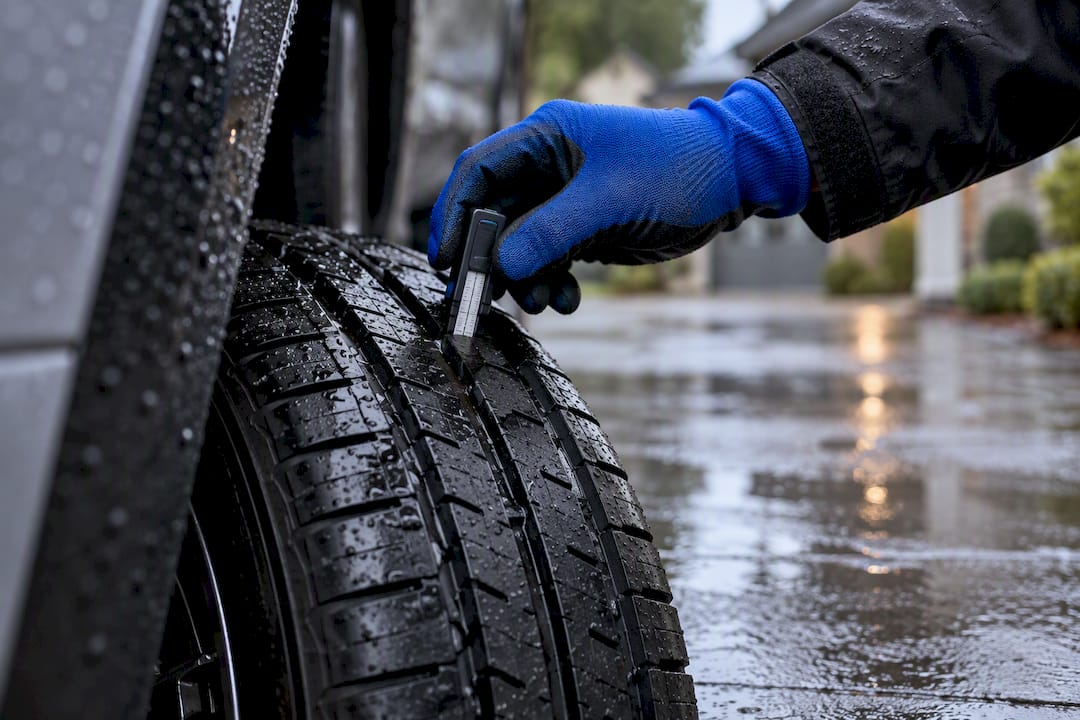
Brakes that feel weak in rain are almost always reacting to a thin film of water between the pad and rotor, or between the tyre and road, rather than a broken part. The first move is simple: ease off the speed, open up your following distance, and apply light, repeated braking to help clear the surfaces. If the pedal feels different, the car pulls to one side, grinding continues, or a warning light appears, stop driving and have the brakes inspected.
TL;DR:
- Most weak or inconsistent braking in rain results from a thin water film or flash rust on rotors that clears after a few controlled stops.
- Tyres with proper tread and pressure significantly reduce hydroplaning risk, and temperatures below 7°C further diminish traction regardless of rain.
- Mechanical issues like seized caliper pins, uneven rotors, or low brake fluid worsen wet-weather braking, necessitating a professional inspection if symptoms persist.
- Light, repeated braking and increased following distance help wipe moisture from pads and rotors, temporarily restoring braking performance.
- Upgrading to ceramic or textured rotors and weather-adaptive pads, such as HydroAdaptive formulations, can help minimize stopping distance increases during wet conditions.
Table of Contents
- What causes brakes to feel weak or inconsistent in wet conditions
- Immediate steps to restore braking reliability while driving
- Maintenance checks and diagnostics: when the problem is more than wet weather
- Prevention and upgrade options that reduce wet-weather braking problems
- How HydroAdaptive technology targets wet-weather braking issues
- What technicians see most often in wet weather
- If you want a parts based solution: where to start with AAA Frictions kits
- Sources
- FAQ
What causes brakes to feel weak or inconsistent in wet conditions
Rain interferes with braking in two separate places at once, and both reduce the friction your car depends on to stop.
At the pad and rotor, a thin layer of water sits between the friction material and the metal surface for the first moments of contact. Until that layer is displaced, the pad cannot bite the way it does when dry, so the pedal can feel soft or the stop can feel delayed. Rotors also develop flash rust, a light surface corrosion that forms when moisture sits on exposed metal, typically overnight or after a car park sits in rain. Flash rust usually clears within a few controlled stops as the pad wears the thin rust layer away, and the light grinding sound that comes with it is often mistaken for a mechanical fault.

At the tyre and road, water reduces the contact patch that generates grip, and in heavier rain a tyre can ride on top of a film of water rather than through it, a condition known as hydroplaning. Tread depth, tyre pressure, and temperature all affect how well a tyre resists this. Transport Canada notes that tyres lose traction once temperatures drop below about 7°C, a threshold that matters even in rain if the weather is cool.
Several mechanical issues make wet-weather symptoms worse than they should be:
- Seized caliper pins that stop a pad from retracting or applying evenly.
- Rotors with uneven wear or run-out that create pulsing under braking.
- Worn pads that have lost enough material to reduce clamping force.
- Low brake fluid, which can introduce air into the lines and cause a soft pedal.
- ABS or electronic anomalies that change how the system responds to wheel slip.
Immediate steps to restore braking reliability while driving
None of these steps replace a repair when one is needed, but they address the temporary moisture effect that causes most sudden wet-weather braking complaints.
- Reduce speed gradually rather than braking hard at the first sign of a soft pedal.
- Increase your following distance well beyond what feels necessary on dry pavement.
- Apply light, repeated braking over a few seconds. This helps wipe water off the pad and rotor surface and restores normal friction.
- If the vehicle pulls to one side or grinding continues past a few stops, pull over safely and check for obvious issues, such as a stuck pad or visible damage.
- Let the anti-lock system do its job under hard braking. Press firmly and hold; do not pump the pedal, since ABS already modulates pressure many times per second.
Pro Tip: A few deliberate, light taps on the brake pedal right after driving through standing water clears surface moisture faster than waiting for it to evaporate on its own.
Doubling your following distance in the rain gives this process room to work without forcing a panic stop, a point covered in more detail in our guide to stopping distances in wet conditions.
Maintenance checks and diagnostics: when the problem is more than wet weather
Temporary moisture effects clear quickly. A problem that persists across several dry stops, or that shows up the same way every time it rains, points to something mechanical.
- Grinding pattern: Light grinding that fades after two or three stops is likely flash rust; grinding that continues or gets louder suggests worn pads or a damaged rotor.
- Pad thickness and rotor run-out: A technician can measure remaining pad material and check whether the rotor surface is running true, both quick checks during a routine inspection.
- Caliper hardware: Slide pins and hardware should move freely; corrosion or seizure here causes uneven pad contact that gets worse in wet weather.
- Fluid level and warning lamps: Low brake fluid reduces hydraulic pressure and should never be ignored. Transport Canada recommends a thorough brake check before winter and flags pulling, pedal changes, and persistent squealing or grinding as reasons to have a vehicle serviced. It’s also worth knowing that dashboard warnings do not always tell the whole story: a Transport Canada recall notice describes a software fault in some General Motors vehicles that could prevent the low brake fluid lamp from illuminating at all, which is why low fluid found during a manual check still warrants prompt attention regardless of what the dash shows.
- Tyre condition: Tread depth, correct pressure, and a tyre suited to the current temperature range all affect wet stopping distance as much as the brakes themselves.
Persistent grinding after rain deserves its own look, and our page on brakes grinding after rain walks through the difference between the two patterns in more detail.
Prevention and upgrade options that reduce wet-weather braking problems
Tyres come first. A tyre with adequate tread and correct pressure resists hydroplaning better than any brake component can compensate for, and Transport Canada’s winter driving guidance points to measurable stopping distance differences between winter tyres and all-season tyres once temperatures drop, a gap that shows up in wet weather too.
Once tyres and basic hardware are confirmed to be in order, pad compound and rotor surface become the next lever:
- Ceramic and semi-metallic pads generally shed water faster than older organic compounds, shortening the delay before full friction returns.
- Coated or textured rotor surfaces can resist flash rust buildup and help maintain a cleaner contact area.
- Maintaining tyres and hardware first, then upgrading pads or rotors only if symptoms persist, avoids paying for a fix that a simple tyre check might have solved.
No pad or rotor upgrade eliminates the fact that wet roads increase stopping distance. The goal of a weather-adaptive component is to narrow that gap, not remove it entirely. Light surface rust and brake dust can also be cleaned off visible rotor faces between services; a gentle rotor-cleaning method with a short dwell time is one option for owners who want to keep the visible surfaces clear without affecting friction material.
How HydroAdaptive technology targets wet-weather braking issues
HydroAdaptive is AAA Frictions’ approach to the moisture problem described above: a ceramic formulation designed to clear water from the pad surface quickly so friction returns sooner after contact with a wet rotor. It is built to address the specific delay that standard ceramic pads can experience in wet or humid conditions, rather than to change how the brake system works overall.
A few things matter for getting the expected result from any weather-adaptive pad or rotor:
- Pair new pads or rotors with tyres suited to the season and temperature range you drive in.
- Have components fitted by a qualified installer, since correct seating affects how quickly a new pad reaches full performance.
- Follow the manufacturer’s bedding-in procedure; skipping it can cause noise or inconsistent performance regardless of the pad compound.
What technicians see most often in wet weather
Most wet-weather complaints we hear about turn out to be flash rust that clears on its own within a few stops. Symptoms that don’t clear, that come with a warning light, or that include pulling or persistent grinding, are the ones that call for a proper inspection rather than a wait-and-see approach. Tyres and basic hardware checks solve more of these cases than people expect, long before an upgrade is worth considering.
— AAA
If you want a parts based solution: where to start with AAA Frictions kits

When a maintenance check points to worn pads or a pitted rotor rather than simple flash rust, that’s the point where a weather-adaptive upgrade actually pays off. HydroAdaptive technology is built into two pad lines and two rotor lines aimed precisely at this problem:
- Type 03 Brake Pads: a ceramic option built for consistent bite across wet and dry conditions, available on the Type 03 product page.
- Type 07 Brake Pads: the HydroAdaptive+ formulation, detailed on the Type 07 product page.
- SC Type Rotors: semi-coated rotors designed to resist surface corrosion, shown on the SC Type Rotors page.
- GC Type Rotors: GEOMET coated rotors for added corrosion resistance, available on the GC Type Rotors page.
Pair any of these with professional installation and a follow-up inspection to confirm bedding-in has gone as expected.
FAQ
What is the 30/30/30 rule for brakes?
Definitions vary by source and this isn’t a standard covered by Transport Canada guidance, so treat any specific numeric rule with caution. As a general practice, focus instead on watching for pedal changes, pulling, or persistent grinding, which are the recognized signs that a brake inspection is needed.
Why do my brakes grind only when it rains?
This is almost always flash rust, a thin layer of surface corrosion that forms on rotors after exposure to moisture. It typically wears away after a few controlled stops; if the grinding continues beyond that, it likely points to worn pads or hardware rather than the rain itself.
If my brakes are wet, how can I dry them out?
The most effective method is light, repeated braking at low speed, which helps wipe the water film off the pad and rotor surface. Avoid hard braking as your first response, since a soft or delayed pedal in the first few seconds after driving through water is usually temporary.
Is it normal for brakes to squeak in rain?
Yes, occasional squeaking after rain is common and is usually related to the same moisture and light surface rust that causes temporary grinding. It should fade within a few stops; a squeak that persists or changes to grinding warrants a closer look at the pads and rotors.