

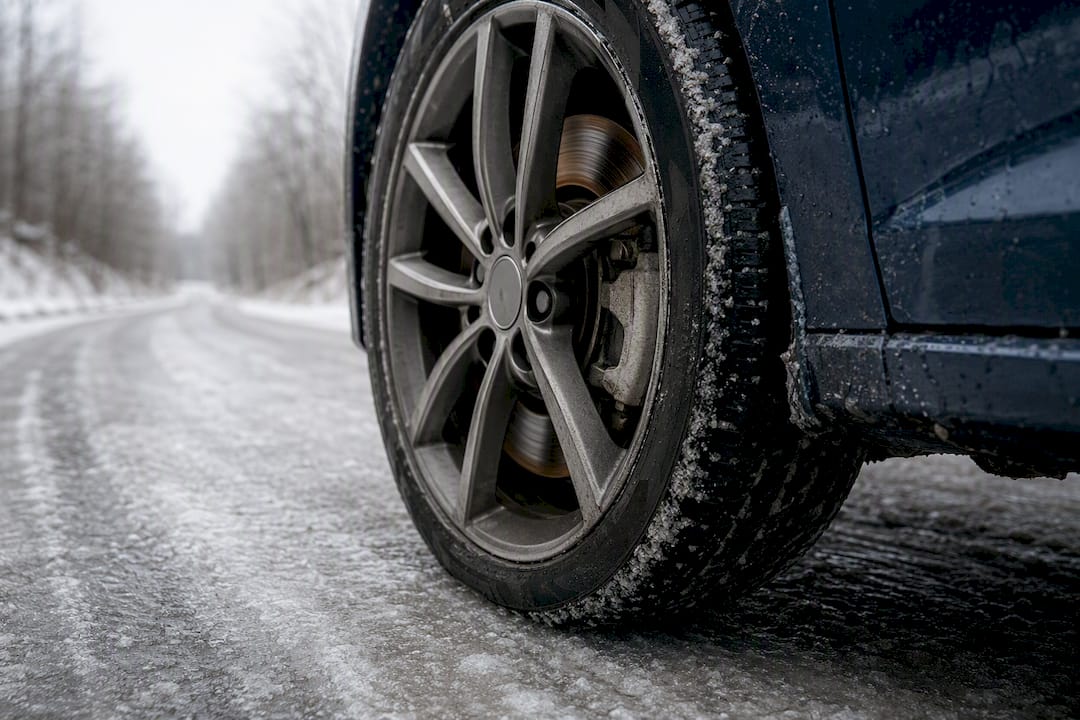
ABS keeps your wheels rolling instead of locking, which means you keep the ability to steer, but it will not always shorten how far your car travels before it stops. On sheer ice, physics wins the argument every time. Transport Canada explains that ABS works by automatically pulsing brake pressure the moment a wheel starts to skid, so the system is doing the fast, precise work your foot never could.
Here’s what that means the next time you hit a slick patch:
- If your car has ABS: press the brake pedal firmly and hold it. Do not pump. Steer toward safety while the system does its job.
- If your car does not have ABS: pump the brakes manually in short, controlled bursts to avoid a full skid.
Key Takeaways
ABS preserves steering control on ice but does not guarantee a shorter stopping distance when traction is nearly zero.
| Point | Details |
|---|---|
| Press firm, hold steady | ABS pulses automatically; pumping the pedal only interferes with the system. |
| Steering beats stopping | On sheer ice, ABS gives you control to steer around hazards, not a shorter stop. |
| Deep snow is different | Locked wheels can build a snow wedge that sometimes stops a car faster than ABS. |
| Practice before you need it | An empty, snow-covered lot is the safest place to feel ABS engage for the first time. |
| Upgrade tires first, then pads | Winter tires matter most; Aaafrictions’ HydroAdaptive kits offer a supplemental, weather-adaptive upgrade. |
Table of Contents
- Abs On Ice: How the System Actually Behaves in Snow and Cold
- How to Brake on Icy Roads With ABS: A Step-by-Step Guide
- When ABS Doesn’t Shorten Your Stopping Distance
- Should You Turn Off Traction Control or Stability Control in Snow?
- Tires and Brakes: The Maintenance That Actually Changes Your Stopping Power
- Why Prevention Beats Emergency Technique
- Winter-Ready Brake Hardware Worth Knowing About
- Sources
Abs On Ice: How the System Actually Behaves in Snow and Cold
ABS relies on wheel speed sensors at each corner of your car. The moment one wheel starts spinning slower than the others, a sign that it’s about to lock, the system reduces brake pressure to that wheel in a fraction of a second, then reapplies it. This happens dozens of times per second, which is why you feel a pulsing sensation and often hear a grinding or clicking noise through the pedal.
That pulsing exists for one reason: to keep the tire rolling just enough to hold onto steering grip. Erie Insurance notes that the pulsation you feel is automatic, and it’s a sign the system is preventing the wheel from locking, not a malfunction.
Here’s the part drivers underestimate: when the tire-to-road friction is close to zero, no amount of brake modulation changes the outcome. Stopping distance on ice is a function of available traction, not how cleverly the brakes are managed. Picture a wheel trying to grip a surface that offers almost nothing to bite into; whether that wheel is locked, rolling, or pulsing matters far less than the surface itself.
A few numbers worth knowing:
- ABS became standard on the vast majority of vehicles built after roughly the early 2010s, per Erie Insurance’s guidance on checking your dashboard and manual.
- The system’s pulsing cycle happens fast enough that manual pumping cannot replicate it.
How to Brake on Icy Roads With ABS: A Step-by-Step Guide
Firm, steady pressure. That’s the entire instruction for ABS-equipped vehicles, and it runs counter to decades of “pump your brakes” advice that predates the technology. Transport Canada confirms that ABS is engineered to do the modulation for you, so pumping only interrupts the system and can extend your stop.
When you need to make an emergency stop on ice, work through it in this order:
- Scan ahead early. Ice often hides in shaded spots, bridges, and intersections before it shows up anywhere else.
- Get your whole foot on the brake pedal, not just your toes.
- Apply firm, continuous pressure. Do not lift and reapply.
- Keep your hands steady on the wheel and look toward the path you want, not the obstacle you’re avoiding.
- Steer smoothly around hazards while the ABS holds your braking power steady underneath you.
Dos and don’ts for icy stops:
- Do maintain steady pressure the entire time you’re braking.
- Do prioritize steering input over trying to “help” the brakes.
- Do leave more following distance than you think you need. Ice punishes short gaps.
- Don’t pump the pedal. That’s for non-ABS cars only.
- Don’t slam the brake at the first sign of a skid. A sudden stab can startle you into easing off at the wrong moment.
Pro Tip: Find an empty, snow-covered parking lot on a weekend morning and practice a few hard stops at low speed. Feeling the ABS pulsation for the first time in a controlled setting, rather than during a real emergency, is one of the cheapest safety lessons you’ll ever get. CAA Manitoba recommends exactly this kind of controlled practice so the sensation doesn’t catch you off guard later.
When ABS Doesn’t Shorten Your Stopping Distance
Deep or loose snow is the scenario where ABS can actually work against you. YourMechanic points out that a locked tire plowing through loose snow builds up a wedge in front of it, and that wedge itself helps slow the car. ABS, by keeping the wheel rolling, prevents that wedge from forming, which sometimes means a longer stop rather than a shorter one.
This is where threshold braking enters the conversation. It’s a technique where a driver manually holds the brake right at the edge of wheel lock, squeezing out maximum friction without fully skidding. It demands constant, precise foot pressure and instant correction, skills built through repeated, supervised practice, not something to attempt for the first time on a public road during a real slide.
- ABS: consistent, automatic, safer for the vast majority of drivers.
- Threshold braking: potentially shorter stops in deep snow, but high-skill and risky without training.
Rally and performance driving instructors have shown that a practiced driver using threshold braking can sometimes out-stop ABS in deep snow. Road & Track frames this as a demonstration of skill under controlled conditions, not a recommendation for everyday driving.
For nearly every driver reading this, ABS remains the safer default. Threshold braking belongs on a closed course, not your morning commute.
Should You Turn Off Traction Control or Stability Control in Snow?
Traction control and electronic stability control work alongside ABS, not against it. Traction control cuts engine power or applies gentle braking to a spinning wheel; stability control senses when your car’s path doesn’t match your steering input and pulses individual brakes to bring it back in line. Together with ABS, they form one coordinated safety net.
Leave these systems on in virtually every winter driving situation. The narrow exception: if you’re stuck in snow and need the wheels to spin freely to rock the car loose, some vehicles let you briefly disable traction control for that specific purpose.
- Keep ABS, traction control, and stability control active for normal winter driving.
- Only consider disabling traction control when you’re stuck and need wheelspin to break free.
- Check your owner’s manual. Every model handles these settings differently, and some don’t allow full deactivation at all.
Tires and Brakes: The Maintenance That Actually Changes Your Stopping Power
Tires do more for winter stopping than any brake component. YourMechanic notes that tire compound and tread pattern affect traction on ice and snow far more than brake pad material alone. Winter tires stay flexible in the cold and bite into snow in ways all-season rubber simply can’t.
Before winter sets in, check:
- Tread depth. Shallow tread loses its grip on snow and slush fast.
- Tire compound. Winter tires flex at low temperatures; all-season tires stiffen and lose traction.
- Tire pressure. Cold weather drops pressure, which changes how the tread contacts the road.
- Brake fluid condition, since moisture contamination affects pedal feel and response.
- Pad thickness and rotor condition, since worn components respond less predictably when you need firm, sustained pressure.
Winter tires are the first upgrade worth making. After that, weather-adaptive brake hardware is where a real difference shows up. Aaafrictions builds its pads and rotors around HydroAdaptive technology, engineered to manage moisture and hold consistent friction across snow, cold, and slush rather than just dry pavement. A kit like the Acura ILX winter-ready brake kit shows how these components are matched to specific vehicles rather than sold as one-size-fits-all.
Pro Tip: Before buying any brake kit, confirm fitment against your owner’s manual or with a mechanic. Winter-ready pads only perform as designed when they’re matched correctly to your make and model.
Why Prevention Beats Emergency Technique
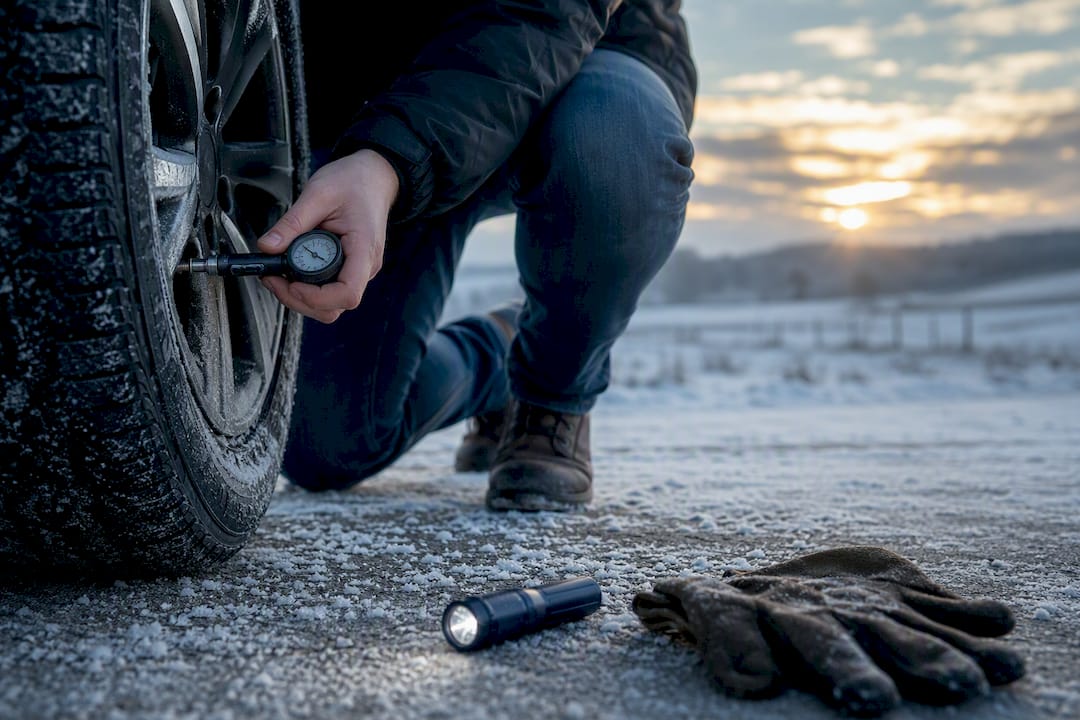
The best ABS technique is the one you never need. Slowing down before the ice, not during it, prevents more crashes than any braking method. Winter tires and following distance do more heavy lifting than pedal skill ever will.
Priorities that matter most in winter:
- Reduce speed before you reach a suspected icy patch, not after.
- Increase following distance well beyond your summer habit.
- Practice ABS engagement in a safe, empty lot so it’s familiar before it matters.
Winter-Ready Brake Hardware Worth Knowing About
Confidence on ice starts with tires, but it doesn’t end there. Aaafrictions engineers its brake pads and rotors with HydroAdaptive technology to clear moisture quickly and hold steady friction whether you’re braking on slush, cold pavement, or a sudden patch of black ice, which means more predictable pedal feel exactly when you’re pressing firmly and holding, as this guide recommends.

Every kit is built for specific makes and models, so fitment matters before you buy. Browse the full product lineup or use the vehicle search tool to find the kit matched to your car. One honest note: hardware improves your margin of confidence, but it doesn’t replace winter tires or the braking technique covered above. Pair the right pads with the right habits, and start by checking fitment for your vehicle today.
Sources
- Anti-lock braking systems (ABS) — Transport Canada
- Stopping on Ice: To Pump or Not to Pump? | Erie Insurance
- Driving With ABS in Snow and Ice | YourMechanic Advice
- Anti-Lock Brakes in Snow – Is ABS Good or Bad in Winter Driving? | Road & Track