
For most drivers, a vehicle-specific full brake kit is the better choice because it guarantees matched parts, proven fitment, and consistent performance from the first stop. Buy individual components only when you need a targeted repair, a specific pad compound the manufacturer doesn’t bundle, or you’re working with rotors that are still well within spec.
Here’s how that breaks down by driver type:
- Daily commuters: A vehicle-specific kit with ceramic pads and coated rotors. You get quiet operation, low dust, and no guesswork about compatibility.
- Towing or heavy-duty use: A heavy-duty kit built for thicker rotors and higher-temperature pads, or a matched component set if you already know your specs.
- Track or performance driving: A big-brake kit sized for your caliper and wheel clearance. Individual parts rarely deliver the matched piston-to-rotor engineering these builds need.
- Emergency or partial repair: Individual components, but only when your rotors have plenty of life left. Otherwise you risk pairing new pads with worn metal.
If moisture and cold are part of your driving reality, weigh a kit engineered for weather adaptability. The checklist and comparison below walk through exactly how to decide.
Key Takeaways
A vehicle-specific full brake kit with matched pads and rotors delivers more consistent, predictable braking than individually sourced components for most drivers.
| Point | Details |
|---|---|
| Match the choice to climate | Wet, cold, or salted-road driving favors coated rotors and moisture-managing pad compounds. |
| Kits reduce fitment risk | Bundled rotors, pads, and hardware are pre-matched, cutting compatibility errors during installation. |
| Components suit targeted repairs | Replace pads alone only when rotors measure well within spec and thickness limits. |
| Bed-in and torque are non-negotiable | Skipping proper bed-in or torque specs is a leading cause of post-install braking issues. |
| Aaafrictions offers weather-adaptive kits | HydroAdaptive+ ceramic pads paired with GC Type GEOMET coated rotors target consistent stops in wet or cold conditions. |
Table of Contents
- What a Brake Kit Vs Components Comparison Should Start With
- Why Some Owners Buy Individual Brake Components Instead
- Brake Kit Advantages and Component Trade-Offs by Use Case
- How Do You Choose Between a Kit and Individual Parts?
- What Should You Expect During Brake Kit Installation?
- How Long Do Brake Pads and Rotors Actually Last?
- Brake Kit vs Components: Which to Choose for Performance and Safety
- Where AAA Frictions Fits Into This Decision
- Sources
What a Brake Kit Vs Components Comparison Should Start With
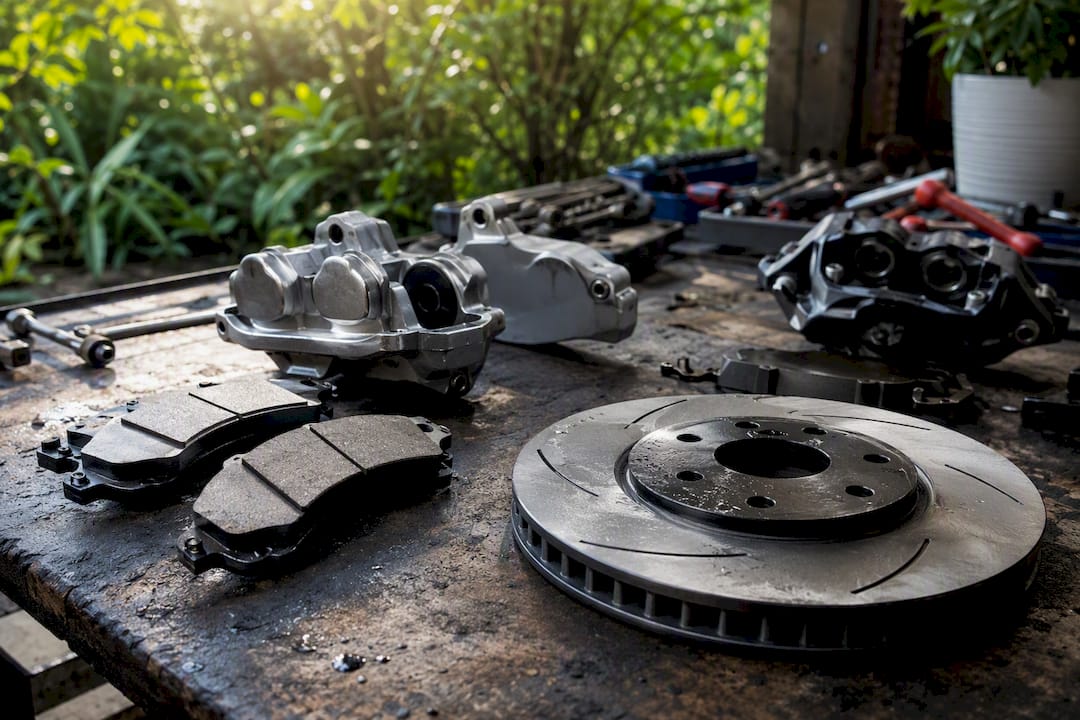
Before comparing kits and individual parts, it helps to know what a “kit” actually contains, because the term gets used loosely across the aftermarket. A genuine brake kit bundles rotors, pads, and often hardware such as clips, shims, and sometimes calipers, all sized and paired by the manufacturer to work as one system. Some kits also include brake lines for full system overhauls.
You’ll run into a few common variants:
- Standard replacement kits: Rotors and pads matched to OEM specifications for a direct swap.
- Performance or big-brake kits: Larger rotors and multi-piston calipers designed to cut fade under sustained hard braking.
- Heavy-duty or towing kits: Thicker rotors and higher-temperature pad compounds for trailers and cargo loads.
- Coated vs. plain rotors: Coated rotors resist corrosion and hold their finish longer in wet or salted environments.
Rotor diameter, thickness, and pad compound are the specs that matter most, since they govern how much heat the system can absorb and how it manages fitment on your wheel. When reading a kit’s spec table, those two numbers deserve your attention before anything else. A well-designed kit accounts for caliper piston count too, since a rotor swap without matching caliper clamping force won’t deliver the improvement you’re paying for.
Why Some Owners Buy Individual Brake Components Instead
Selective replacement makes sense in specific situations. If your rotors measure well within their minimum thickness and only your pads are worn, replacing pads alone saves money without sacrificing safety. Owners also choose individual parts when they want a particular pad compound, say, a low-dust ceramic formula, that isn’t offered in a bundled kit for their vehicle.
The appeal is straightforward:
- Lower upfront cost when only one part actually needs replacing.
- Compound choice, letting you pick a pad formulated for towing, quiet operation, or cold-weather grip.
- Faster fix for a single worn part rather than a full system overhaul.
The risk sits on the other side of that ledger. Pairing new pads with rotors that have an established wear pattern can create an uneven transfer layer, leading to pulsing or vibration under braking. Resurfacing or replacing rotors when installing new pads is standard practice unless the old rotors are demonstrably within spec. Mismatched components can also void a warranty if a supplier requires original pairings, and inconsistent pad-to-rotor friction profiles show up as reduced bite exactly when you need it most.
Brake Kit Advantages and Component Trade-Offs by Use Case
The right answer depends heavily on how and where you drive. Here’s how the choice plays out across the situations most owners actually face:
- Daily driving in mixed weather. A full kit with ceramic pads and a moderate rotor size typically wins here. You want quiet, low-dust braking that holds up whether the road is dry, wet, or freshly salted, and a kit engineered for wet or salted-climate consistency removes the guesswork.
- Towing or heavy hauling. Thicker rotors and heavy-duty pad compounds are non-negotiable for sustained heat. A heavy-duty kit gets you there in one purchase; a matched component set works too, but only if you’re confident in your pad-to-rotor pairing.
- Track days and performance driving. Big-brake kits increase rotor diameter and caliper capacity specifically to reduce fade under repeated hard stops, though they typically require a wheel clearance check before you commit to the upgrade.
- Partial or emergency repair. Individual components make sense, but only with rotors confirmed in spec. Reusing worn rotors under new pads is the single most common mistake we see traced back to a “why is my new brake job vibrating” complaint.
Pro Tip: If you’re replacing pads on rotors with more than 20,000 miles of wear, have a shop measure rotor thickness before you decide. The five minutes it takes can save you a comeback repair.
Cost and labor also tilt the scales. A kit often costs less than sourcing equivalent parts individually, since bundled parts are pre-matched for compatibility, which cuts the labor risk of a mechanic discovering a mismatch mid-job.
How Do You Choose Between a Kit and Individual Parts?
Start with how you actually use your vehicle and what climate you drive in, since that determines which pad compound and rotor type make sense before you even look at price. A driver in a wet or snowy region benefits from coated rotors and a ceramic pad built for rapid moisture clearing. A driver hauling a trailer through summer heat needs a compound rated for higher sustained temperatures.
Fitment comes next, and this is where corners get cut. Confirm your exact make, model, and year, since even small trim variations change rotor diameter and caliper mounting. Check wheel diameter and offset too. Fitment constraints often determine whether a kit installs as a bolt-on or requires wheel modification, so don’t assume compatibility from a listing photo alone.
| Consideration | Full Kit | Individual Components |
|---|---|---|
| Fitment risk | Low, pre-matched by vehicle | Higher, buyer must verify pairing |
| Upfront cost | Often lower per-part when bundled | Lower only if replacing one item |
| Compound choice | Limited to kit options | Full flexibility |
| Warranty simplicity | Single coverage across parts | May require matching brands |
Before buying, ask your supplier or mechanic whether the kit includes all hardware, whether it’s rated for your ABS system, and what the warranty covers if one component fails. This vehicle selection checklist offers a useful framework for applying the same due diligence to parts decisions that you’d use buying the vehicle itself.
What Should You Expect During Brake Kit Installation?
Installation complexity scales with scope. A pad-only swap is a manageable weekend job with a jack, lug wrench, C-clamp, and torque wrench. Adding rotors means dealing with hub rust, potential wheel bearing access, and rotor runout checks. A full kit swap, especially one with new calipers, may require brake fluid bleeding and line work.
Here’s the sequence that matters most for safety:
- Confirm fitment before you start, including wheel clearance and ABS sensor compatibility.
- Torque everything to spec. Under-torqued lug nuts and caliper bolts are a leading cause of post-install comebacks.
- Bed in the new pads with a series of moderate stops from higher speed, avoiding hard braking for the first several hundred kilometers.
- Test stop at low speed before driving normally, and watch for warning lights or pulsing.
Pro Tip: Never skip the bed-in procedure on a new kit. Skipping it is the single most common reason a properly installed kit still squeals or feels weak for the first week.
If your vehicle has integrated parking brake calipers, electronic brake modules, or you’re not confident bleeding a hydraulic system, hire a qualified mechanic. The cost of a comeback repair almost always exceeds the labor you’d have paid upfront.
How Long Do Brake Pads and Rotors Actually Last?
Pad life typically runs 30,000 to 70,000 kilometers depending on driving style, while rotors often last through two to three pad changes if they’re not damaged by heat or corrosion. Stop-and-go city driving, aggressive braking, and towing all shorten those numbers considerably.
Climate plays a bigger role than most owners expect. Wet, cold, and salted roads accelerate rotor corrosion and can affect friction consistency between wet and dry stops, which is part of why coated rotors and compound-matched kits hold value in these conditions.
Watch for these warning signs:
- Vibration or pulsing under braking (often a warped or unevenly worn rotor).
- Squealing that persists after bed-in (a common contact wear indicator).
- Reduced pedal bite, especially when stopping is noticeably weaker in humid or freezing conditions.
A quick monthly visual check on pad thickness and rotor surface catches most problems before they become safety issues.
Brake Kit vs Components: Which to Choose for Performance and Safety
The conventional advice you’ll find online treats this as purely a cost question: buy components if you’re on a budget, buy a kit if you’re not. That framing misses the variable that actually determines whether your brakes perform when it counts, which is climate.
A pad-only replacement in a dry, moderate climate carries little risk. That same shortcut in a region with wet winters, road salt, or frequent freeze-thaw cycles is a different calculation entirely, because corrosion and moisture on mismatched or aging rotors degrade braking consistency faster than most owners realize. We think weather exposure deserves equal weight with budget and driving style when you’re deciding.
What we’d prioritize first: know your climate before you know your price point. A driver in a wet or cold region gains more from a matched, moisture-managing system than from saving on a rotor resurface. Everyone else still benefits from matched parts, but the margin for cutting corners is wider.
Match the decision to how and where you actually drive, not to whichever option looks cheaper on the shelf.
— AAA
Where AAA Frictions Fits Into This Decision
If you’ve landed on “a full kit makes more sense for my situation,” the next question is which kit actually manages moisture instead of just resisting it. Aaafrictions built its HydroAdaptive Technology around that exact gap: a ceramic formulation designed to clear water rapidly from the pad-rotor interface so friction stays consistent through rain, slush, and humidity instead of fading in the first few seconds of a wet stop.

A typical Aaafrictions kit pairs HydroAdaptive+ ceramic pads with GC Type GEOMET coated rotors, engineered together for corrosion resistance and stable pedal feel across a full vehicle-specific fitment, not a generic size range. That combination fits three buyer profiles especially well: drivers in wet or cold climates who want moisture-clearing performance built in, mixed-use drivers who want one dependable setup for commuting and occasional longer trips, and owners who want confirmed bolt-on compatibility instead of researching individual parts.
The Honda Pilot 2003 to 2008 kit shows how this plays out for a specific vehicle, with pads and rotors sized and paired for that exact model. Check the landing page to confirm fitment for your own vehicle and see current kit availability before you buy.
Sources
- How to Read Brake Kit Spec Tables | Brake Kit Comparison Guide
- Ultimate Brake Kits Buying Guide – Parts Avenue
- Compare Brake Pads, Rotors, and Kits | Brake Hero