

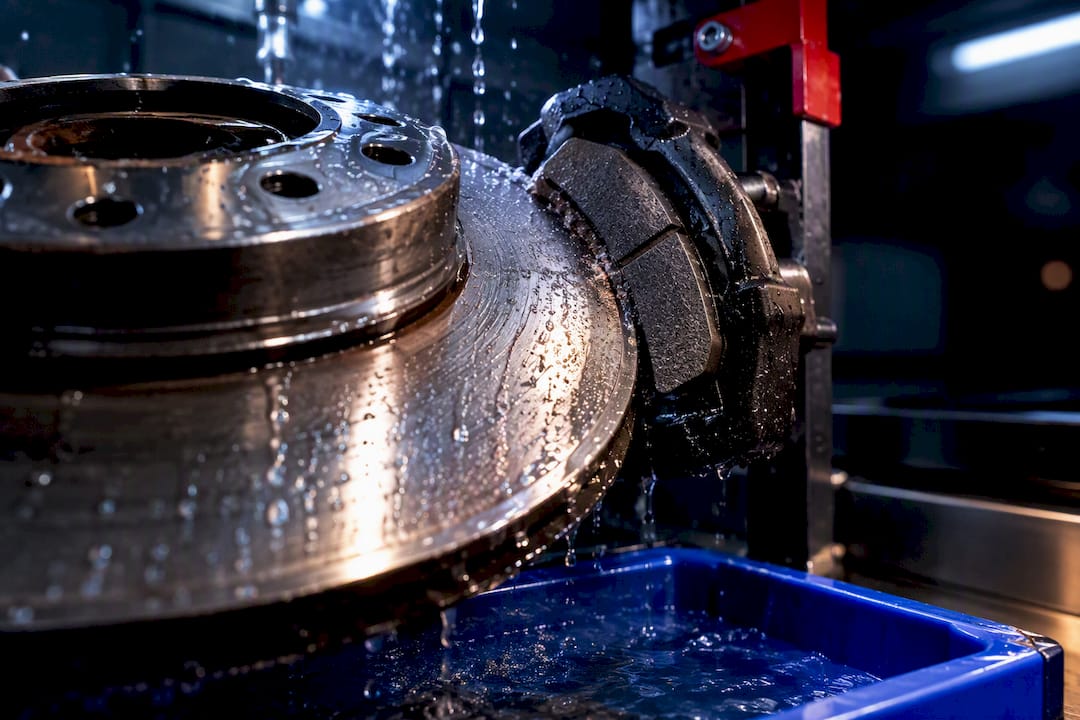
Yes, humidity affects braking behaviour, but it rarely threatens your stopping distance on its own. Surface moisture can change how the pad meets the disc for a stop or two, and persistent damp conditions accelerate corrosion and let brake fluid absorb water over time. The real question is whether your hydraulic system or hardware has been compromised. Watch for a soft or hard pedal, a dashboard warning light, dragging, or a burning smell. Any of those means stop driving and get the vehicle inspected. If it is just a squeak that clears after a couple of gentle stops, you are almost certainly fine.
TL;DR:
- Humidity can cause temporary brake squeaks and alter pad-to-disc friction, but persistent noise or changing pedal feel indicates a deeper problem.
- Water absorption in brake fluid lowers its boiling point, increasing the risk of vapour formation, brake fade, and a soft pedal during extended braking.
- Metal components such as caliper pins, parking brakes, and vacuum pumps are vulnerable to corrosion from moisture, leading to sticking, seizing, or increased stopping distance.
- Moisture-related issues are more common in drum brakes and enclosed systems because of trapped water and corrosion potential inside the housing.
- Maintaining sealed brake fluid, regular component lubrication, and using moisture-resistant pads and rotors helps prevent humidity-related brake problems.
Table of Contents
- How humidity changes pad-to-disc friction and brake noise
- How moisture in brake fluid affects pedal feel and stopping power
- Can moisture corrode brake hardware and sensors?
- How do you diagnose a humidity-related brake problem?
- Maintenance steps that reduce humidity-related brake problems
- How AAA Frictions engineers for moisture
- Do disc brakes and drum brakes respond differently to humidity?
- Does humidity affect ABS performance and sensor reliability?
- Practical takeaway for owners in humid climates
- Get parts engineered for wet and humid driving
- Sources
- FAQ
How humidity changes pad-to-disc friction and brake noise
Moisture sits between the pad and the rotor as a thin film the instant you park overnight in damp air or drive through a puddle. That film briefly interrupts direct metal-to-friction-material contact, and it also interacts with wear debris already on the disc surface to form what tribologists call a tribofilm, a mix of moisture and worn material that changes how the two surfaces grip.
The study on humidity’s influence on friction and squeal also found only a limited link between humidity and squeal, meaning a noisy stop is not proof of dangerous wear.
That distinction matters for how you react:
- A short squeak after a humid night or a car wash is common and usually clears within a few normal stops.
- Noise that persists after several dry stops, or that comes with a change in pedal feel, is a genuine diagnostic flag worth a second look.
- Smoother pad surfaces tend to be less sensitive to humidity swings than rougher, more porous formulations.
How moisture in brake fluid affects pedal feel and stopping power
Brake fluid is hygroscopic, meaning it pulls moisture out of the air over its service life, whether through microscopic seals, hose walls, or an open reservoir cap. That absorbed water lowers the fluid’s boiling point substantially. Under hard or repeated braking, the heat generated at the calipers can turn that trapped moisture into vapour inside the lines.
Vapour compresses, unlike fluid, and a compressible bubble in a hydraulic line is what produces brake fade and a pedal that suddenly feels spongy. Watch for these symptoms:
- A soft or sinking pedal that needs more travel than usual to engage.
- Fade that builds across several stops on a long descent, rather than on the first one.
- A pedal that feels fine cold but degrades noticeably after sustained highway braking.
Pro Tip: Never top up your reservoir with fluid from a bottle that has been opened and sitting in your garage. Once a container is unsealed, it starts absorbing atmospheric moisture too, so use a fresh, sealed bottle of the fluid type your manufacturer specifies. The Transport Canada light-vehicle brake standard treats visible fluid leakage at the master cylinder or brake power unit as a warning condition on its own, separate from any moisture concern.
Can moisture corrode brake hardware and sensors?
Humidity’s more serious threat isn’t the pad surface. It’s what damp air does to metal components over months and years, and Transport Canada’s own recall record backs that up with real cases.
- In one investigation, moisture buildup corroded an electric vacuum pump on certain trucks, reducing brake assist and increasing both pedal effort and stopping distance on affected vehicles.
- Separate recall campaigns document moisture entering parking-brake mechanisms, where corrosion caused the mechanism to seize, bind, or fail to release, producing dragging or a hard-to-move pedal.
- Slide pins on floating calipers are another common entry point. Moisture that reaches these pins without adequate lubrication leads to sticking, uneven pad wear, and a car that pulls to one side under braking.
None of this clears up on its own the way a surface squeak does. If a hard pedal, dragging, or uneven wear persists after the car has had a chance to dry out, that points to seized hardware or a corroded valve, not a passing surface condition, and it needs a mechanic’s eyes on it.
How do you diagnose a humidity-related brake problem?
Start with the pedal itself, because its behaviour tells you which system is likely involved. A hard pedal that needs unusual force to engage typically points toward an assist problem, often a corroded vacuum or electric pump circuit. A soft or spongy pedal typically points toward the hydraulic side: air, contaminated fluid, or a leak somewhere in the lines.
Once you know which direction to look, work through it in order:
- Look at the rotor surface for a light rust film. This is normal after overnight moisture and usually wipes away with the first few stops.
- Check for pad contamination, visible fluid leaks around the calipers or lines, and any sign that a caliper slide isn’t moving freely.
- Feel for parking-brake binding by trying to roll the vehicle immediately after release.
- Take a short, careful drive and perform a few gentle stops in a safe area to see whether the noise or drag clears as surface film wears off.
If symptoms remain after that test drive, that is your signal to book a shop visit rather than keep driving on it. A technician can run a fluid moisture test, which measures water content directly rather than guessing from fluid colour, check the ABS valve body for corrosion, inspect and re-lubricate the caliper slide pins, and check the reservoir cap and seal for a proper fit that keeps moisture out going forward.
Pro Tip: Ask specifically for a fluid moisture reading in percentage, not just a visual check. Fluid can look clean and still carry enough absorbed water to lower its boiling point meaningfully.
If you notice unusual pedal feel showing up after wet driving, our guide on restoring wet brake pads’ grip walks through the short-term steps worth trying before you assume the worst.
Maintenance steps that reduce humidity-related brake problems
Prevention here is mostly about discipline, not special tools. Follow these steps on a seasonal basis, especially if you live somewhere humid or near the coast:
- Stick to the fluid type and change interval your manufacturer specifies. The Transport Canada brake standard calls for using only fluid from a sealed container and cleaning the filler cap before you open the reservoir.
- Shorten your inspection interval if you deal with persistent humidity, coastal road salt, or repeated wet and cold storage cycles rather than waiting for the standard schedule.
- Clean and re-lubricate caliper slide pins, and consider an anti-corrosion underbody treatment if you drive in a consistently damp climate.
- Keep parking-brake cavities dry and, where possible, park in a covered or ventilated space rather than leaving the vehicle exposed to sitting moisture.
- Add a rotor visual check and a stopping-distance test after any heavy rain event or a long period of storage to your normal seasonal routine.
A quick wipe with the right product also helps. Removing built-up dust and grime with a short-dwell brake dust remover before moisture sits on it reduces the debris that combines with water to form that sticky tribofilm in the first place.
How AAA Frictions engineers for moisture
Standard ceramic pads can lose consistency the moment surface film or absorbed moisture enters the equation. AAA Frictions built its HydroAdaptive ceramic formulation specifically around that problem, engineering the friction material to clear surface moisture quickly and hold a stable friction profile through rain, humidity, and cold. Paired with corrosion-resistant SC Type and GC Type rotors and climate-adaptive ClimateFlex caliper hardware, the goal is a pedal that feels the same whether the pavement is dry or soaked.
Do disc brakes and drum brakes respond differently to humidity?
Disc brakes handle moisture better than drum brakes, largely because of geometry. An open rotor spins in free air, and centrifugal force combined with the pad’s contact pressure clears surface water within the first rotation or two of light braking. That is why a quick, gentle stop after driving through a puddle is often enough to restore normal disc-brake feel.
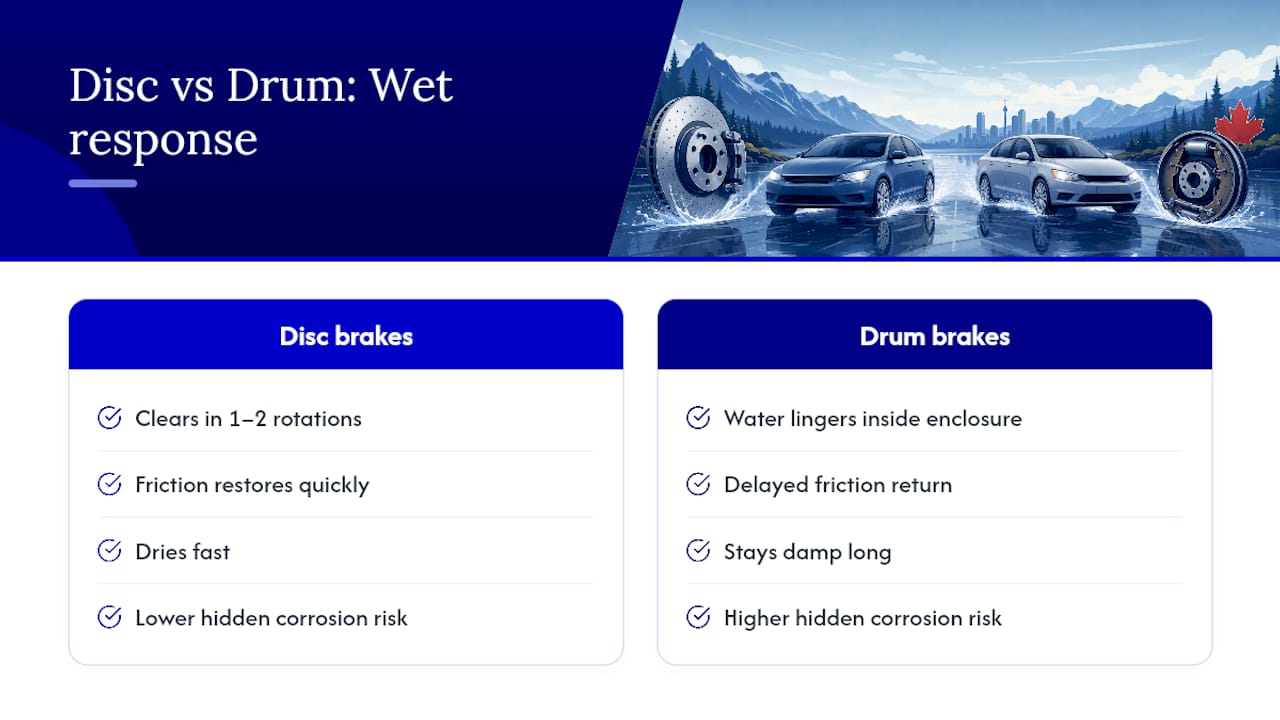
Drum brakes work inside an enclosed housing, and that enclosure is exactly what makes them more vulnerable. Water that gets past the seals has nowhere to evaporate quickly, so it lingers against the shoes and the drum’s inner surface. That trapped moisture does two things: it delays the return of full friction after a wet crossing, and it creates a more corrosion-prone environment over time, since the drum interior stays damp long after the exterior has dried.
This is part of why most vehicles you will drive today use rear drums, if at all, only on lighter-duty trims, with front discs handling the majority of stopping force. If your vehicle still uses rear drums, particularly for a parking-brake mechanism nested inside the drum assembly, that is a spot worth extra attention in a humid climate. Corrosion inside a drum-style parking brake is one of the more common causes of a binding or sticking parking brake reported in Transport Canada recall records, and it is far less visible during a routine walk-around than a rusty disc rotor.
Does humidity affect ABS performance and sensor reliability?
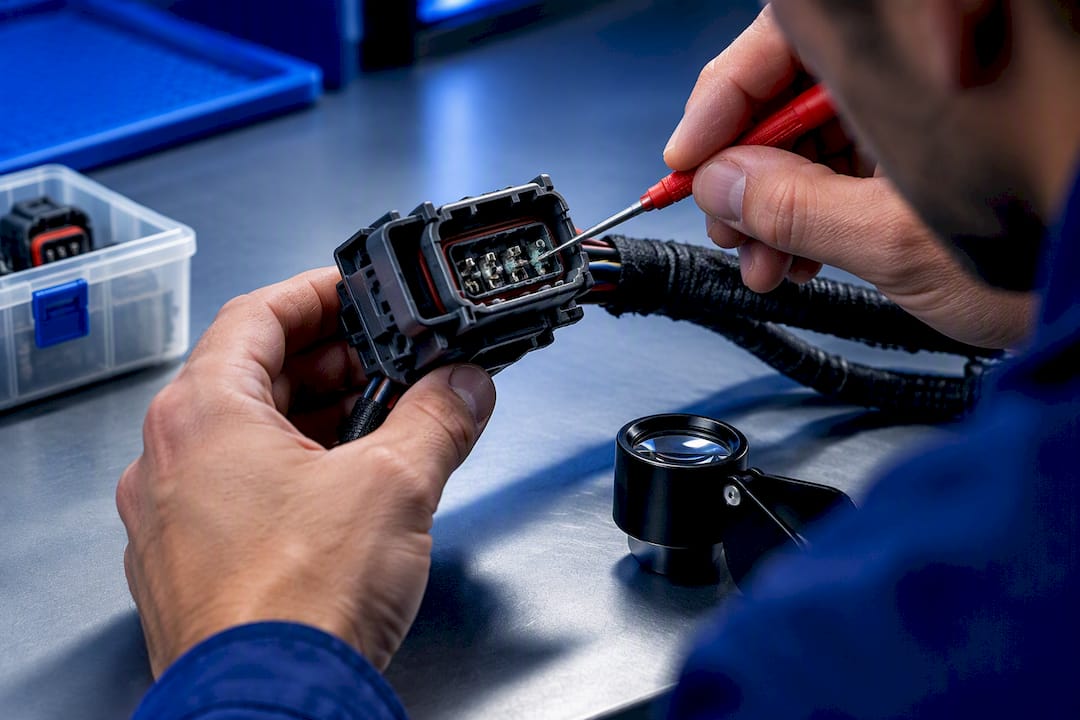
ABS wheel-speed sensors themselves are sealed and generally tolerate humidity well, but the wiring, connectors, and control-module housings around them are a different story. Corrosion at a connector pin or a compromised seal on a wiring harness can produce an intermittent or false ABS signal, which is why a persistent ABS warning light after a period of wet driving deserves attention rather than a shrug.
The bigger humidity risk to emergency braking performance actually sits upstream of the ABS logic itself, at the components that provide stopping force and assist. The Transport Canada finding on electric vacuum pump corrosion is the clearest example: moisture buildup corroded the pump, reducing brake assist and increasing both pedal effort and stopping distance, exactly the scenario where ABS needs full hydraulic force behind it to work as designed. ABS can only modulate the pressure it is given. If corrosion has already reduced assist or contaminated fluid has lowered your margin against fade, the system is compensating for a problem that started elsewhere.
If your ABS light comes on after heavy rain, a car wash, or a flooded road crossing and it does not clear within a short drive, treat that as a sign to have the wiring and connectors checked alongside the usual fluid and hardware inspection.
Practical takeaway for owners in humid climates
Diagnose before you replace parts. A squeak after a damp night rarely means anything, but a pedal that feels different means something has changed in the hydraulic or assist system, and that is not a guess you should make yourself. Follow your manufacturer’s fluid specification, log what you notice and when, and let a professional confirm the cause rather than throwing pads at a problem that might be corrosion or contaminated fluid instead.
— AAA
Get parts engineered for wet and humid driving
AAA Frictions built its HydroAdaptive ceramic pads specifically for the moisture-driven friction swings and corrosion exposure this article just walked through, so you are not left guessing whether your next set of pads will hold up through a rainy commute or a humid coastal summer. The Type 07 Brake Pads pair with SC Type Rotors for a combination designed around consistent pedal feel across wet and dry conditions alike.

If you are not sure which pad and rotor combination fits your vehicle, check the fitment details on the Type 03 Brake Pads page or reach out through the product search to confirm compatibility before you order. Getting the right fit matters more in humid climates than dry ones, since a poor match accelerates exactly the corrosion and contamination problems this article covers.
Sources
This article draws on Transport Canada’s preliminary determination on Ford F-150 brake vacuum assist failures, the Transport Canada light-vehicle brake standard, peer-reviewed tribology research on humidity and brake squeal, SAE research on moisture adsorption and braking, and a comprehensive study of humidity effects on pad and disc wear.
- A study of the influence of humidity on the friction and squeal generation of automotive brake pads
- Transport Canada: Light-vehicle brake standard (TSD)
FAQ
What is the 30/30/30 rule for brakes?
There is no universal, standardized “30/30/30 rule” for brakes recognized by manufacturers or regulators. If you have seen the phrase used online, it is likely a informal shorthand for gradual break-in braking, and it is not something backed by the Transport Canada or SAE sources referenced in this article.
Does humidity make brakes squeak?
Yes, surface moisture is a common cause of temporary squeaking, especially after an overnight dew or a car wash. Research on humidity and brake squeal found only a limited correlation between relative humidity and squeal, meaning the noise alone does not indicate dangerous wear, and it usually clears after a few normal stops.
Does humidity affect car performance beyond the brakes?
Humidity can affect engine air intake density and window fogging, but its most direct safety-relevant effect on a vehicle is on the braking system, through fluid moisture absorption and hardware corrosion. Pads engineered with moisture-clearing formulations are built to address the braking side of that equation specifically.
What are the first signs of master cylinder failure?
The earliest sign is usually a pedal that sinks slowly to the floor under steady pressure, or one that feels spongy and requires increasing travel to engage. Visible fluid leakage at the master cylinder reservoir is treated as a clear warning condition under the Transport Canada brake standard, and either symptom warrants an immediate inspection rather than continued driving.