

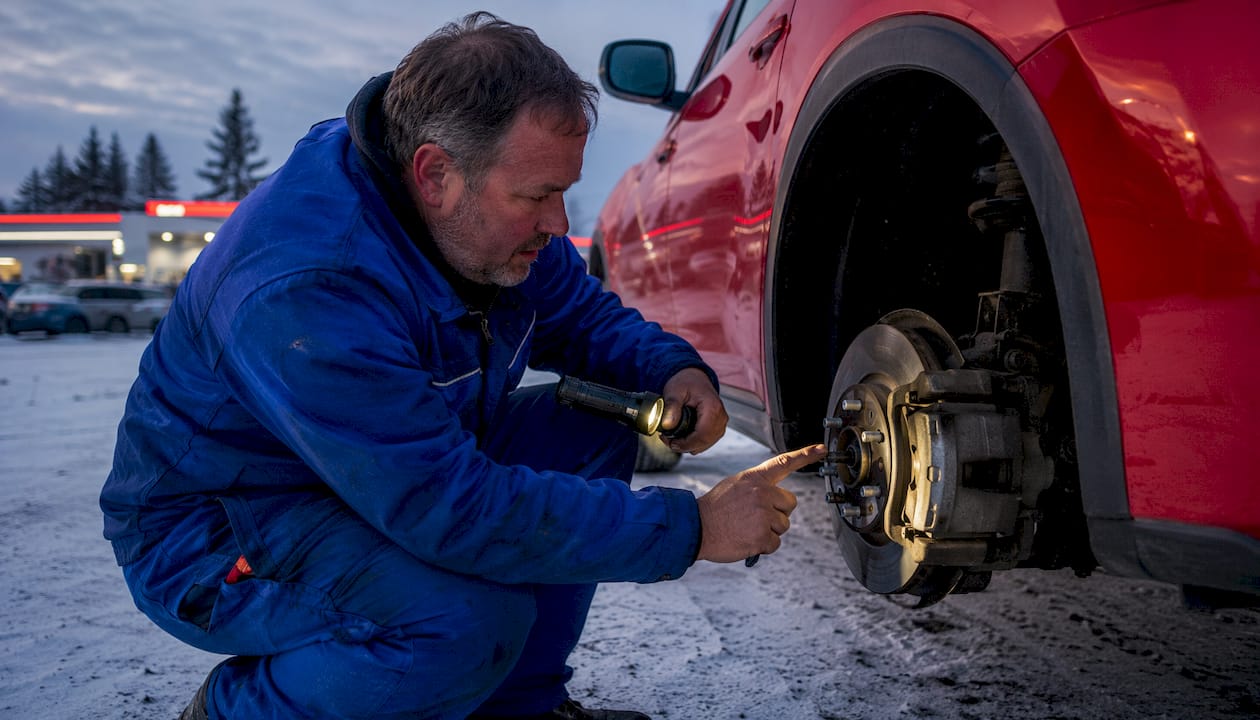
Brakes squeal when cold primarily because of three physical realities happening simultaneously. Overnight moisture settles on cast iron rotors and forms a thin rust film that creates a stick-slip friction event the moment your pads make contact. Cold temperatures cause metal components to contract, shifting pad-to-rotor clearances just enough to raise vibration frequencies into audible range. And brake pad compounds, particularly semi-metallic formulations, are measurably stiffer at low temperatures, transmitting vibration more readily than they would at operating temperature. The good news: this is almost always a transient cold-start condition that clears within a few brake applications as surfaces warm and moisture burns off.
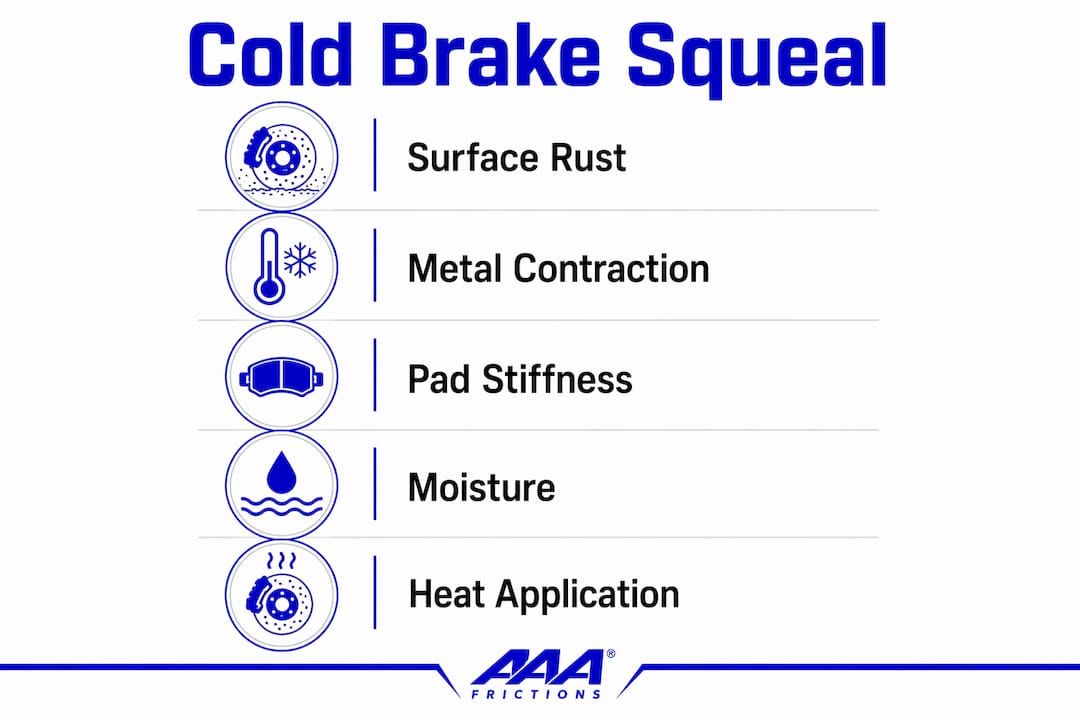
Here is a quick breakdown of what is actually happening:
- Surface rust: Cast iron rotors oxidize overnight in humid or cold air, leaving a thin rust layer that causes an audible scrape or squeal on the first stops.
- Metal contraction: Cold shrinks brake hardware, altering the fit between pads, clips, and calipers, which raises the system’s resonant frequency.
- Pad compound stiffness: Semi-metallic pads and budget formulations harden in cold air, vibrating more aggressively until heat restores their normal compliance.
- Self-clearing behavior: After several brake applications, the pads scrape rust away, surfaces warm, and the squeal typically disappears entirely.
Table of Contents
- How cold weather and moisture physically affect your brake components
- Common causes of brake squealing in cold conditions and how to address them
- When you should stop waiting and get your brakes inspected
- How Aaafrictions’ HydroAdaptive Technology addresses cold brake squeal
- Where Quebec drivers can find brake maintenance and parts
- Aaafrictions delivers quieter braking built for Quebec winters
- Key Takeaways
How cold weather and moisture physically affect your brake components
Quebec winters deliver exactly the conditions that stress brake systems most: overnight frost, road salt, freeze-thaw cycles, and persistent humidity. Understanding what each factor does to your hardware explains why cold weather brake noise is so consistent and predictable.
- Surface rust formation: Cast iron rotors develop a rust film in as little as one night of exposure to moisture. The first brake application sounds rough because the pad is literally scraping oxidized metal off the rotor face.
- Metal contraction: When temperatures drop, caliper brackets, slide pins, and anti-rattle clips all contract slightly. That dimensional shift changes how tightly pads sit in their abutments, creating conditions where vibration travels more freely through the system.
- Ice and debris accumulation: In hard Quebec winters, ice can pack around caliper slide pins and pad abutments, preventing smooth pad movement and generating noise that lasts longer than simple moisture squeal.
- Road salt intrusion: Salt accelerates corrosion on rotor faces and hardware surfaces, compounding the rust problem and degrading lubricant on slide pins faster than in salt-free environments.
Pro Tip: Park in a garage or covered structure when temperatures are forecast to drop below freezing. Reducing overnight moisture exposure on your rotors is the single lowest-effort way to cut cold-start brake noise in Quebec winters.
Heat from braking reverses most of these effects quickly. As the rotor surface reaches operating temperature, rust clears, metal expands back to its normal fit, and pad compounds soften to their designed friction profile. The system essentially resets itself within the first kilometer of driving.
Common causes of brake squealing in cold conditions and how to address them
Not every cold-start squeal has the same root cause. Identifying which factor is driving the noise tells you exactly how to address it.
- Surface rust on rotors: The most common cause. Clears on its own after a few stops. No action needed unless the noise persists beyond the first few minutes of driving.
- Stiff pad compound: Budget or semi-metallic pads are noisier when cold because their binder materials harden. Upgrading to a quality ceramic formulation reduces this significantly.
- Dry or hardened caliper slide pins: Old grease hardens in cold temperatures, causing pins to stick. This prevents the pad from releasing cleanly and generates squeal that can last well into the drive.
- Worn pad chamfers or shims: The chamfered edges and backing-plate shims on brake pads are engineered to damp vibration. When pads wear down, these features diminish, and cold-amplified vibration becomes audible.
- Missing or damaged anti-rattle clips: These small hardware pieces hold pads firmly in their abutments. A lost or corroded clip lets the pad rattle and vibrate, especially when cold metal has loosened the fit further.
- Wear indicator contact: A metallic squeal that does not fade after warming up is often the wear indicator tab touching the rotor. This is a deliberate warning signal, not a cold-weather artifact.
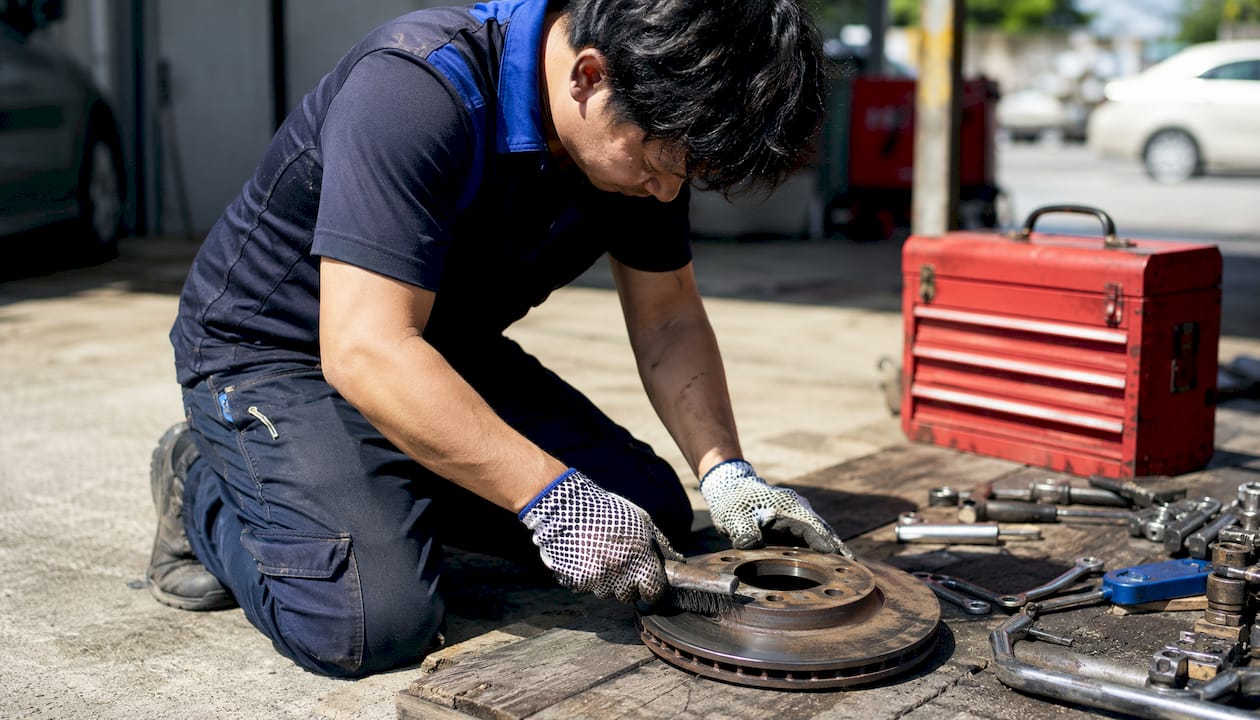
For quick fixes, perform several moderate stops from low speed to clear surface rust and warm the system. Inspect pad thickness and rotor condition visually. If slide pins feel stiff or show corrosion, clean and re-lubricate them. Replace anti-rattle clips if they are bent, corroded, or missing.
Pro Tip: When re-lubricating caliper slide pins, use a synthetic low-temperature grease rated for at least -40°C. Standard petroleum-based greases harden in Quebec winters and can cause the same hardware stiffness they were meant to prevent.
When you should stop waiting and get your brakes inspected
Most cold-start squeal resolves within the first few minutes of driving. When it does not, the noise is telling you something different. Knowing the distinction protects both your safety and your wallet.
- Squeal that persists after full warm-up: If the noise continues once the brakes have been used for several minutes, surface rust and cold compound stiffness are not the cause. Pad wear, glazing, or hardware failure is more likely.
- Increasing volume over days or weeks: A squeal that grows louder over time points to progressive wear, not a transient cold condition.
- Grinding or metal-on-metal scraping: This sound means pad material is gone and the backing plate is contacting the rotor. Stop driving and have the vehicle inspected immediately.
- Vibration through the pedal: Pedal pulsation combined with noise suggests rotor thickness variation or warping, which requires professional measurement and likely resurfacing or replacement.
- Warning light activation: A brake warning light alongside noise is a clear signal to seek professional service without delay.
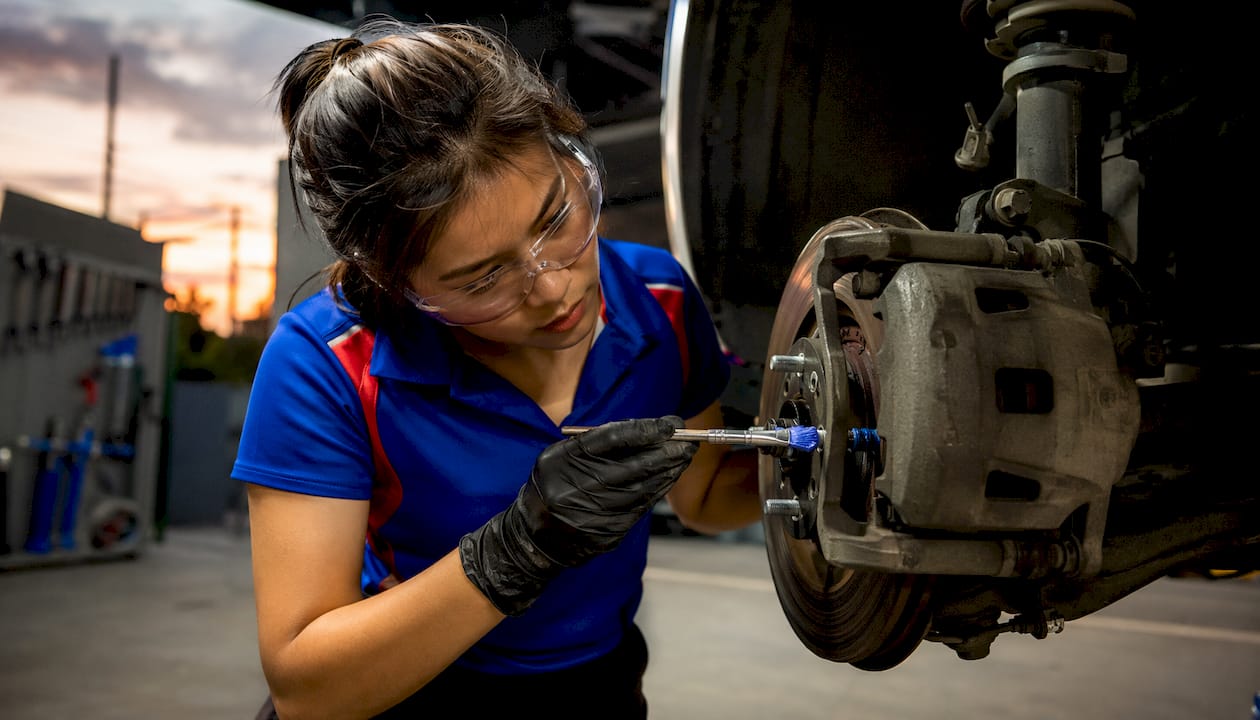
A licensed technician can measure pad thickness with a caliper, check rotor minimum thickness against manufacturer specifications, inspect slide pin condition, and verify that all anti-rattle hardware is present and functional. Catching worn pads before they reach the backing plate saves the cost of rotor replacement. You can also review brake warning signs to understand which symptoms require urgent attention versus routine maintenance.
How Aaafrictions’ HydroAdaptive Technology addresses cold brake squeal
Aaafrictions engineered its brake system specifically around the conditions that cause cold weather brake noise. The HydroAdaptive ceramic formulation is designed to clear moisture from the pad-rotor interface rapidly, reducing the rust film formation that drives most cold-start squealing. Unlike semi-metallic compounds that stiffen significantly below freezing, the ceramic matrix in Aaafrictions pads maintains a more consistent friction profile across a wide temperature band, which means less vibration transmission on those first cold stops.
The system extends beyond the pad itself:
- Corrosion-resistant rotors: Aaafrictions rotors use a surface treatment that resists overnight oxidation, reducing the rust layer that forms on standard cast iron rotors in humid Quebec conditions.
- ClimateFlex™ Brake Calipers: These calipers incorporate climate-adaptive lubrication that maintains hardware flexibility at freezing temperatures, preventing the slide pin stiffness that causes persistent cold-weather squeal.
- Integrated pad and rotor tuning: The friction profile of the pad compound is matched to the rotor surface finish, producing stable braking behavior across the full temperature range from a cold Quebec morning to highway operating temperature.
This is a complete braking ecosystem rather than a single-component fix. Addressing moisture management, hardware flexibility, and friction stability together eliminates the compounding factors that make cold brake noise so persistent in Canadian winters.
Where Quebec drivers can find brake maintenance and parts
For drivers who need in-person brake inspection, hardware servicing, or parts replacement, Canadian Tire locations across Quebec offer comprehensive automotive brake services, including pad and rotor replacement, hardware lubrication, and brake system inspections. Local service is particularly valuable for diagnosing cold-weather brake issues that require hands-on inspection of slide pins and anti-rattle hardware.
| Store Location | Address | Services Available | Pickup Options |
|---|---|---|---|
| Canadian Tire Beauport | — | Brake inspection, pad/rotor replacement, hardware service | Curbside pickup, local delivery |
| Canadian Tire Quebec Vanier | Quebec Vanier, QC | Brake inspection, pad/rotor replacement, parts | Curbside pickup, local delivery |
Both locations carry brake pads, rotors, and hardware kits. Curbside pickup is available for parts orders, and local delivery options make it practical to order components without visiting the store. For drivers who prefer to handle installation themselves, diagnosing squeaky brakes before purchasing parts helps narrow down exactly which components need attention.
Aaafrictions delivers quieter braking built for Quebec winters
Quebec’s combination of road salt, freeze-thaw cycles, and persistent winter humidity creates exactly the conditions that standard brake pads handle poorly. Aaafrictions’ HydroAdaptive brake system is built to perform where generic pads fall short: rapid moisture clearance at the pad-rotor interface, corrosion-resistant rotor surfaces that resist overnight rust formation, and ClimateFlex™ caliper hardware that stays flexible at -30°C.
The Type 07 ceramic pad set is a direct upgrade for drivers who are tired of that sharp morning squeal and want a system engineered for Canadian conditions rather than adapted from a warmer-climate design. Aaafrictions sells direct to consumers online, with vehicle-specific fitment available through the brake system finder. Find your vehicle, select your kit, and get brake components designed to handle what Quebec winters actually deliver.
Key Takeaways
Cold brake squeal in Quebec is almost always caused by surface rust, metal contraction, and pad compound stiffness, all of which respond to quality components and proper maintenance.
| Point | Details |
|---|---|
| Surface rust is the primary cause | Overnight moisture on cast iron rotors creates a rust film that clears after two to four brake applications. |
| Pad compound matters in cold | Ceramic pads maintain a more consistent friction profile at low temperatures compared to semi-metallic formulations. |
| Hardware lubrication is critical | Synthetic grease rated for -40°C prevents slide pin stiffness that causes persistent cold-weather squeal. |
| Persistent squeal needs inspection | Noise that does not fade after warm-up, or grinding sounds, signals pad wear or hardware failure requiring professional service. |
| Aaafrictions HydroAdaptive system | Combines ceramic pads, corrosion-resistant rotors, and ClimateFlex™ calipers to address all three root causes of cold brake noise. |