

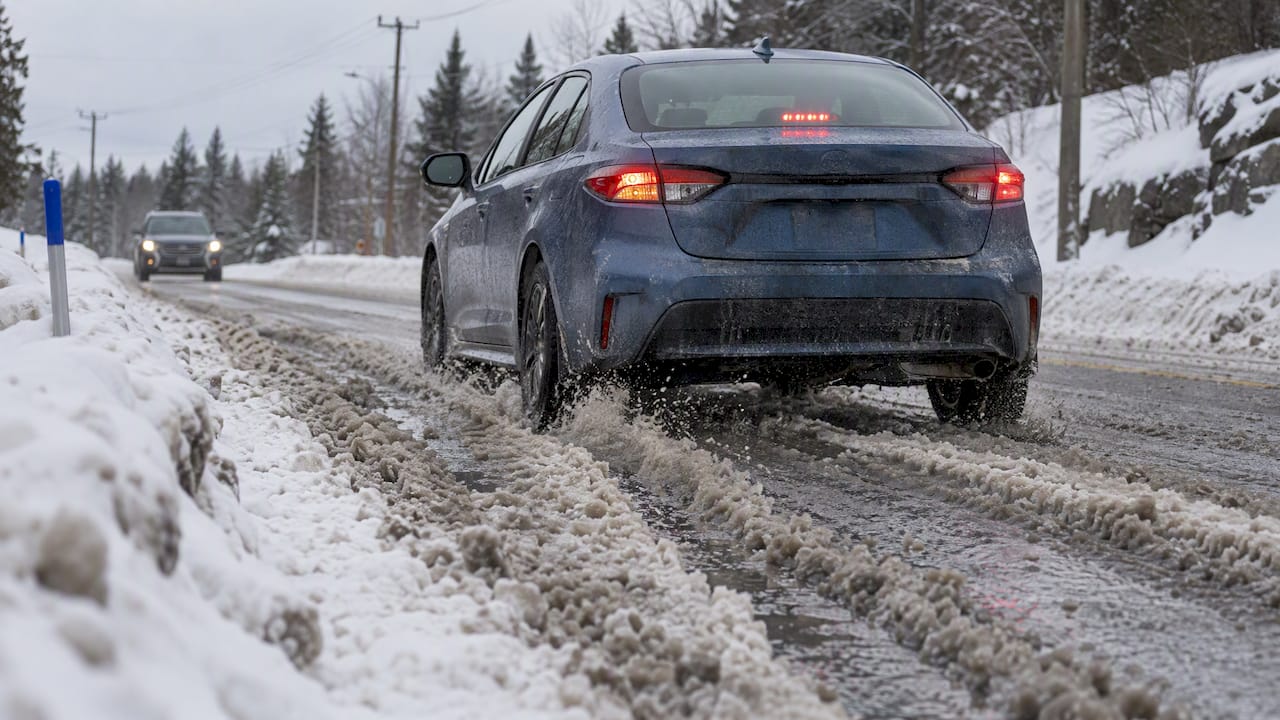
Slow down earlier than you think you need to, leave a longer following distance than usual, and brake gently in a straight line. ABS and ESC help you keep control while you do this, but they do not replace the technique. Before any of that, confirm you are running winter tires and check your tire pressure, since cold weather and soft slush both work against you.
TL;DR:
- Use four winter tires with at least 4 millimeters of tread, as they can reduce braking distance by up to 25% compared to all-season tires on snow and slush.
- Maintain tire pressure in cold weather to ensure proper contact patch and control, especially when driving through slush and packed snow.
- Brake progressively in a straight line, and avoid sudden, hard stops, since uneven grip from slush increases stopping distances and risks of skidding.
- Stick to following distances of four to six seconds, and reduce speed below the posted limit to compensate for increased resistance and lower traction.
- Respond calmly to skids by steering gently into the slide and avoiding overcorrecting, as controlled reactions improve the chances of recovery on slippery surfaces.
Table of Contents
- Why slush changes stopping distance and handling
- Prepare your vehicle for slush: tires, brakes, and basic checks
- How to brake in slush: step-by-step technique for controlled stops
- Speed and spacing: following distance and lane choices in slush
- If your car skids or pulls in slush: recovery steps
- Common mistakes drivers make in slush and how to avoid them
- Authoritative guidance and the brand’s technology: what helps in slush
- A practical checklist worth repeating
- Braking with confidence in wet and slushy weather
- FAQ
- Sources
Why slush changes stopping distance and handling
Slush behaves like two surfaces at once. It has the lubricating quality of water and the resistance of packed snow, so a tire can lose grip on one side of the contact patch while holding on the other. That uneven grip is what makes a car pull toward one lane without warning.
Cold tires make the problem worse. Rubber stiffens as temperatures drop, shrinking the window where the tread can flex into the road surface and clear water. Transport Canada notes that slush buildup between lanes can make lane changes harder and trigger sudden pulls as one wheel finds traction while another is still skating.
A few consequences follow directly from this:
- Stopping distances grow because less of the tire is gripping the road at any moment.
- A car can drift toward the shoulder or centre line even under light, steady braking.
- Deeper slush can briefly lift a tire the way standing water does, a short hydroplaning effect that interrupts steering feel.
None of this means slush is unmanageable. It means the margin for error is smaller, so the technique has to be more deliberate.
Prepare your vehicle for slush: tires, brakes, and basic checks
Most slush-related stops go wrong before the driver ever touches the brake pedal, because the vehicle was not ready for the conditions.
- Fit winter tires on all four wheels and look for the three-peak mountain snowflake symbol, keeping at least 4 millimetres of tread where possible, since CAA reports winter tires can cut braking distance by up to 25% on winter roads compared with all-season tires.
- Check tire pressure regularly in cold weather, since dropping temperatures lower pressure and reduce the contact patch that keeps the car tracking straight.
- Inspect brake pads and rotors for wear before winter sets in, since a thin pad or a scored rotor adds inches to every stop you make in slush.
- Clear packed snow and slush from wheel wells and the underbody, where buildup can interfere with suspension movement and, in some vehicles, brake clearance.
Road salt accelerates corrosion on brake hardware and bodywork alike, so a seasonal wash routine aimed at salt is worth adding to your winter checklist. Pairing the right tires with brakes rated for cold, wet conditions matters more in slush than in dry winter snow, a combination covered in more detail in our guide to winter tires and brakes.
How to brake in slush: step-by-step technique for controlled stops
The core move is simple: see trouble early, come off the gas early, and brake in a straight line before you need to turn.
- Scan well ahead for brake lights, slush ridges, or lane markings disappearing under slop, then lift off the throttle before you reach them.
- Apply the brake pedal progressively rather than stabbing it, giving the tires time to find grip instead of overwhelming it.
- Keep the steering wheel centred while braking hard. Steering and braking at the same time asks more of the tires than either does alone.
If your vehicle has ABS, press the pedal with steady, firm pressure and keep steering inputs small. You will feel pulsing through the pedal: that is the system cycling the brakes faster than you could by hand, and pumping it yourself only cancels out what it is doing. Transport Canada explains that ABS does not necessarily shorten stopping distance but helps you maintain steering control while braking, which is exactly why a straight line matters more than ever with ABS engaged. We go into more detail on this behaviour in our look at ABS on ice.
Without ABS, use gentle, rhythmic threshold braking: press until you feel the wheels start to lock, ease off slightly, then reapply. The goal is to stay just below lockup rather than above it.

Pro Tip: Practise an emergency stop in an empty, snow-covered lot at low speed so your foot learns what firm, steady ABS pressure feels like before you need it on the road.
Speed and spacing: following distance and lane choices in slush
Slush punishes drivers who follow at dry-pavement distances. Build in more room and more time before you need it.
- Stretch your following interval to roughly four to six seconds in slush, longer than the two to four seconds that work on clear pavement.
- Cut your speed below the posted limit when slush is deep enough to spray off the tires, since depth adds resistance that a limit sign does not account for.
- Avoid lane changes where slush has piled up between lanes, since that ridge can grab one side of the car and pull the wheel out of your hands.
- Drop to a lower gear or ease into light engine braking on moderate grades to take some load off brakes that are already working with less grip than usual.
These habits cost you very little time on a normal drive and buy you the seconds you need when the road surface turns unpredictable.
If your car skids or pulls in slush: recovery steps
A skid in slush is usually recoverable if you respond calmly and in the right order.
- Identify the type of slide. If the front end pushes wide, ease off the brake and look where you want to go. If the rear slides out, steer gently into the skid, in the direction the back of the car is moving.
- With ABS, hold firm, steady brake pressure and let the system manage wheel lockup while you steer smoothly.
- Without ABS, release the brake briefly the moment you feel the wheels lock, then reapply with lighter pressure.
- Avoid overcorrecting. A sharp countersteer often swings the car into a skid on the opposite side.
- Once you have control back, slow down further and find a safe spot to pull over and check the car before continuing.
Pro Tip: Keep your eyes and your steering aimed at the gap you want to reach, not at the obstacle you are trying to avoid. Cars tend to go where the driver is looking.
Common mistakes drivers make in slush and how to avoid them
A few habits undo good braking technique every winter.
- Trusting all-wheel drive or four-wheel drive to help with stopping: these systems improve traction for acceleration, not braking, so they do nothing to shorten a slush stop.
- Braking late and hard because a hazard appeared suddenly: scanning farther ahead and lifting off the gas sooner avoids the panic stop altogether.
- Running mismatched or worn tires: uneven tread depth across the car creates uneven grip exactly when you need all four tires working the same way.
Authoritative guidance and the brand’s technology: what helps in slush
Transport Canada and CAA both point to the same fundamentals: brake earlier, leave more room, and run proper winter tires. Their guidance also outlines where electronic aids stop being helpful.
- ABS keeps you able to steer while braking hard but does not guarantee a shorter stop.
- ESC can correct a developing skid by braking individual wheels, though it has limits and can be switched off when wheel spin is genuinely needed, such as in deep snow.
- Braking hardware matters alongside tires and driver technique. AAA Frictions designs its HydroAdaptive Technology to clear moisture from the pad and rotor surface and sustain friction in wet and slushy conditions, a relevant piece of the picture once the driving fundamentals are already in place.
A practical checklist worth repeating
Slow down before you think you need to, run four matched winter tires, check your tire pressure through the cold months, and brake smoothly rather than hard. Practise these in an empty lot before winter tests you on the real road.
— AAA
Braking with confidence in wet and slushy weather
Winter tires and good technique handle most of what slush throws at you, but the brake pads and rotors underneath still do the final work of stopping the car. AAA Frictions builds its pads and rotors around HydroAdaptive Technology, engineered to clear moisture quickly and hold friction steady as conditions shift from dry pavement to slush and back again.

The lineup includes Type 03 and Type 07 brake pads, along with SC Type and GC Type rotors finished for corrosion resistance through salted winter roads. Check your vehicle’s fitment and browse kits at AAA Frictions before the next slush storm catches your current pads off guard.
FAQ
Should you brake when skidding?
Yes, but how you brake depends on whether your car has ABS. With ABS, hold firm, steady pressure and steer smoothly. Without ABS, release the brake briefly the moment the wheels lock, then reapply with lighter pressure.
What’s the worst car to drive in the snow?
No single vehicle type is unsafe in snow on its own. The bigger factors are tire choice, tread depth, and driver technique, since a capable vehicle on worn all-season tires can struggle more than a basic car on proper winter tires.
What is ghost braking?
Ghost braking generally refers to a vehicle’s driver-assist or automated system braking unexpectedly without an obvious hazard present. It is not a term tied specifically to slush or manual braking technique covered here.
What to do when braking on ice?
Brake earlier and more gently than you would on dry pavement, and keep the car as straight as possible. Transport Canada advises leaving extra following distance and braking smoothly rather than reacting at the last moment, since sudden braking on ice is a common cause of skids.