

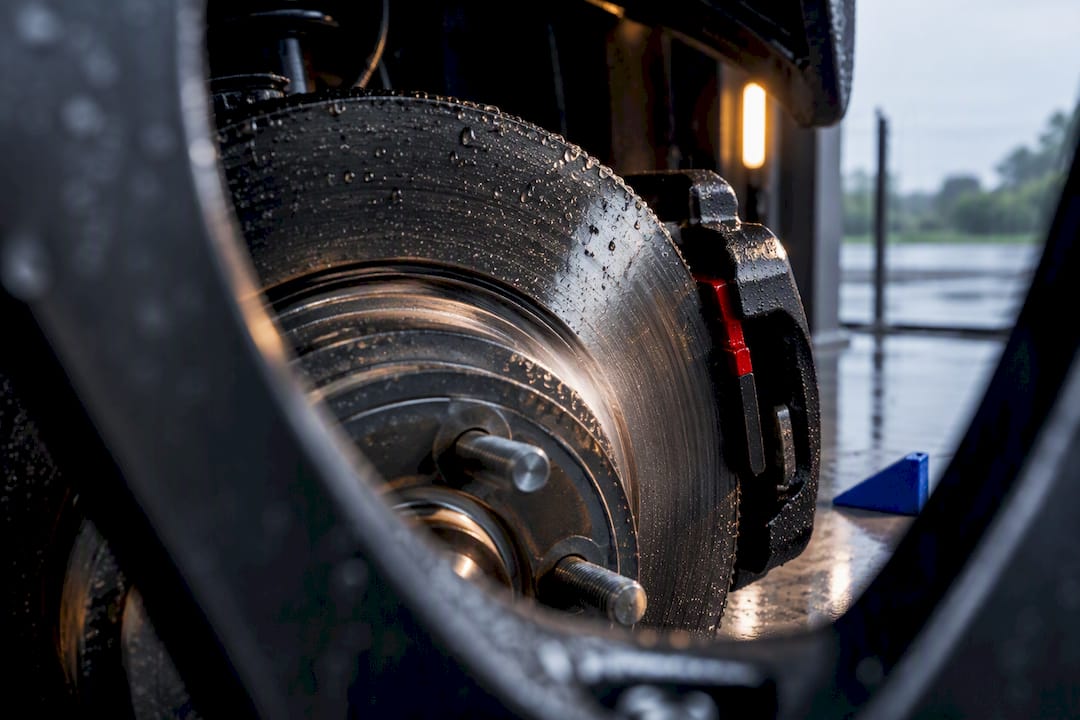
Most pedal changes you notice in the rain are temporary, caused by a thin film of water on the rotors or brief moisture pickup in the pad material, and they generally clear after a few normal stops. If the pedal stays soft, sinks lower than usual, or a warning light appears on the dash, treat that as a signal to slow down, increase your following distance, and arrange an inspection before you drive further.
TL;DR:
- Temporary pedal softness after driving through rain is normal and caused by water film on the rotors or moisture in the pad material, and it should clear after a few stops.
- Persistent soft, sinking pedals, warning lights, or vehicle pulls require immediate inspection to rule out issues like a caliper failure, low brake fluid, or fluid leaks.
- Applying gentle, continuous pressure while driving through deep water can prevent moisture buildup around the pads and rotors, maintaining braking effectiveness.
- Regular checks of brake fluid, rotor surface, pad wear, and tire condition are essential to prevent longer stopping distances and brake response issues in wet weather.
- Brake systems engineered with moisture management, like HydroAdaptive ceramic pads and rotors, help address water film and moisture absorption for more reliable braking on wet roads.
Table of Contents
- Mechanical and physical reasons pedal feel changes when it’s wet
- How to tell normal wet-weather braking from a real problem
- What to do right away when the pedal feels off in the rain
- Quick checks to find out what’s really going on
- Maintenance and habits that reduce wet-weather surprises
- How engineered braking systems address the water-film problem
- A safety-first note on wet-weather braking
- Where to find HydroAdaptive pads and rotors for your vehicle
- Sources
- FAQ
Mechanical and physical reasons pedal feel changes when it’s wet
When water sits between the pad and rotor, it briefly reduces the friction available on that first stop. This is why many drivers feel a soft or slightly delayed response right after driving through a puddle or heavy rain. The rotor surface must displace that film before the pad can grip fully, and light, steady braking helps this process.
There is also a slower-acting cause. Laboratory research on brake friction materials shows that moisture adsorption into the pad itself changes its dynamic modulus, lowering the in-stop friction coefficient at low speeds and sometimes producing a faint low-frequency noise along with the odd pedal feel.
A few other factors layer on top of that:
- Light surface rust or glaze can form on rotors after a short rain and briefly change how the pad grips.
- Brake fluid that has absorbed moisture over time may have a lower boiling point, which can cause a spongy pedal feel under harder braking.
- Rear drum brakes tend to hold water longer than open disc setups, so drum-equipped vehicles can feel the effect a little longer.
Moisture in brake pad material measurably lowers low-speed friction according to SAE research, which means the odd pedal feel you notice after a wet start is a real, documented mechanical effect rather than something imagined.
How to tell normal wet-weather braking from a real problem
A brief change in pedal feel is expected. A change that lingers, worsens, or comes with other warning signs is not.
- Normal: a slightly soft first stop after driving through water, light squeal or noise that fades within a stop or two, and even braking across both front wheels.
- Worth watching: pedal feel that stays odd for several stops in a row, especially in humid weather, since moisture trapped in the pad material can take longer to clear than a simple water film.
- Danger signs: a pedal that feels persistently spongy, travels closer to the floor than usual, pulls the vehicle to one side, triggers a warning light, or is paired with a visible fluid leak.
If your vehicle has antilock braking, expect a pulsing sensation through the pedal during hard stops on wet roads. That pulsing is the system doing its job, and Transport Canada advises applying continuous firm pressure rather than pumping the pedal when it activates. According to shop and driving-media guidance, a brief odd pedal on the first wet stop is common, but a pedal that stays spongy or sinks lower each time is a sign to get the system inspected.
What to do right away when the pedal feels off in the rain
- Slow down and open up more space between you and the vehicle ahead. Wet roads already extend stopping distances, and an odd pedal feel is a reason to give yourself more room, not less.
- Avoid sudden braking or quick lane changes until you have confirmed the brakes are behaving normally.
- On a clear, safe stretch of road, apply light, continuous pressure on the pedal for a few seconds. This helps sweep the water film off the rotors and restore normal friction, a technique detailed in our guide to drying brakes safely.
- If the pedal feels spongy or sinks noticeably, pull over when it is safe to do so. Check for a warning light, look for fluid pooling near the wheels, and do not continue driving if the pedal travels close to the floor.
Pro Tip: Apply slight, steady pressure on the brake pedal while still moving through deep water, rather than waiting until you’re clear of it. This keeps water from packing in around the pads and rotors in the first place, a technique Manitoba’s driver handbook recommends for maintaining braking effectiveness right after exiting standing water.
Quick checks to find out what’s really going on
Before assuming the worst, a few simple checks can narrow down the cause.
- Look at the brake fluid level and colour. Fluid that has gone dark or cloudy has likely absorbed moisture, which lowers its boiling point and can cause the spongy feel described in wet-climate brake fluid guidance.
- Inspect the pads and rotors for heavy rust, a glazed surface, or wear that looks uneven from one side to the other.
- After a short drive, feel for pulling to one side under light braking, and note whether one wheel area feels noticeably warmer than the others, which can point to a caliper that isn’t releasing properly.
- If any of these checks turn up something abnormal, that’s the point to request a brake fluid bleed, a hose inspection, or a professional caliper check rather than waiting it out. Our breakdown of pedal travel and what it means walks through this in more detail.
Tire condition plays a role too. Worn tread or underinflated tires increase stopping distance on wet pavement independently of anything happening at the brakes, and early rain mixing with road oil can make the surface unusually slippery, according to driver safety materials on wet roads. A pedal that feels fine but a stop that takes longer than expected may point to the tires, not the brakes.
Maintenance and habits that reduce wet-weather surprises

Brake fluid naturally absorbs moisture from the air over time, even in sealed systems. In humid or wet climates, that moisture buildup lowers the fluid’s boiling point and raises the risk of a spongy pedal under hard braking, which is why routine fluid changes matter more for drivers in consistently wet regions.
A few habits keep the whole system working the way it should:
- Replace pads and rotors when wear patterns or rust become persistent rather than occasional, since friction materials designed for moisture management clear water more consistently than a badly worn set.
- Check tire tread depth and pressure regularly. Both affect how a wet stop feels and how far it takes to complete.
- Clean visible brake dust and grime from wheels periodically, since built-up deposits can interact with moisture on the rotor surface; a quick removal method keeps that surface cleaner between services.
- Before wet seasons set in, have a shop check fluid condition, pad thickness, and rotor surface as one routine visit rather than waiting for a warning sign.
Brake fluid contaminated with moisture often causes a spongy pedal feel, longer stopping distances, and a darker fluid colour, according to wet-climate maintenance guidance, which is a useful checklist for anyone unsure whether a fluid change is overdue.
How engineered braking systems address the water-film problem
The mechanisms described earlier, a water film sitting between pad and rotor, and moisture slowly working its way into the pad material, are the two problems that weather-adaptive friction design tries to solve directly. AAA Frictions built its HydroAdaptive ceramic technology around clearing moisture quickly from the friction surface, aiming to keep pedal response steady rather than letting a water film build up on the first stop.
- The technology targets the same water-film and moisture-adsorption mechanisms described in the SAE research above, rather than treating wet-weather pedal feel as unavoidable.
- Readers who want the deeper mechanical explanation can review our HydroAdaptive technology overview.
- Drivers looking for hands-on fixes in the meantime can check our guide to restoring pad grip after water exposure.
A safety-first note on wet-weather braking
Most of what drivers feel in the rain is normal physics working itself out over a stop or two. The exceptions matter more than the rule: a pedal that sinks, a warning light, or a pull to one side is never something to wait out. When in doubt, a quick check with a shop or a look through our diagnostic resources costs far less than guessing wrong on a wet road.
— AAA
Where to find HydroAdaptive pads and rotors for your vehicle
If your checks point to worn pads or rotors rather than a passing water film, replacing them with parts built for moisture management is a straightforward next step. Several product lines are engineered around this exact problem.

- Type 03 Brake Pads and Type 07 Brake Pads are HydroAdaptive ceramic pad options built to clear moisture from the friction surface.
- SC Type Rotors and GC Type Rotors pair with those pads to manage corrosion and moisture at the rotor surface.
- Use the fitment search on our product pages to confirm the right parts for your vehicle, or reach out to our support team if you’re not sure which kit fits.
Sources
- Manitoba Driver’s Handbook – Wet brakes
- Effect of moisture adsorption on low-speed and moderate-speed braking (SAE)
- Automatic emergency braking — Transport Canada
- Why you should change your brake fluid | Bruno Automotive
- Driving
FAQ
Why do my brakes feel weird when it rains?
A thin water film on the rotors briefly lowers friction on the first stop, and moisture can also work its way into the pad material and change how it grips at low speed. This feeling usually clears after a stop or two of normal braking, as described in wet-brake guidance from Manitoba’s driver handbook.
What does a failing caliper sound like?
A caliper that isn’t releasing properly often produces a grinding or dragging noise and can leave one wheel area noticeably warmer than the others after a short drive. If you notice pulling to one side along with an odd noise, that combination points to a mechanical issue rather than ordinary wet-weather pedal feel, and it is worth an inspection.
What drive mode is best for rain?
Most vehicles don’t have a dedicated rain mode, but choosing a lower gear or a traction-focused setting where available helps keep power delivery smooth on slippery roads. The more important habit is slowing down, increasing following distance, and letting antilock braking work with continuous firm pedal pressure instead of pumping, per Transport Canada’s guidance.
Would low brake fluid cause a soft pedal?
Yes, low or moisture-contaminated brake fluid is a common cause of a soft or spongy pedal, since air or excess moisture in the line lowers the fluid’s boiling point and reduces hydraulic firmness. Dark or cloudy fluid is a sign it has absorbed moisture and needs attention, according to wet-climate brake fluid guidance.