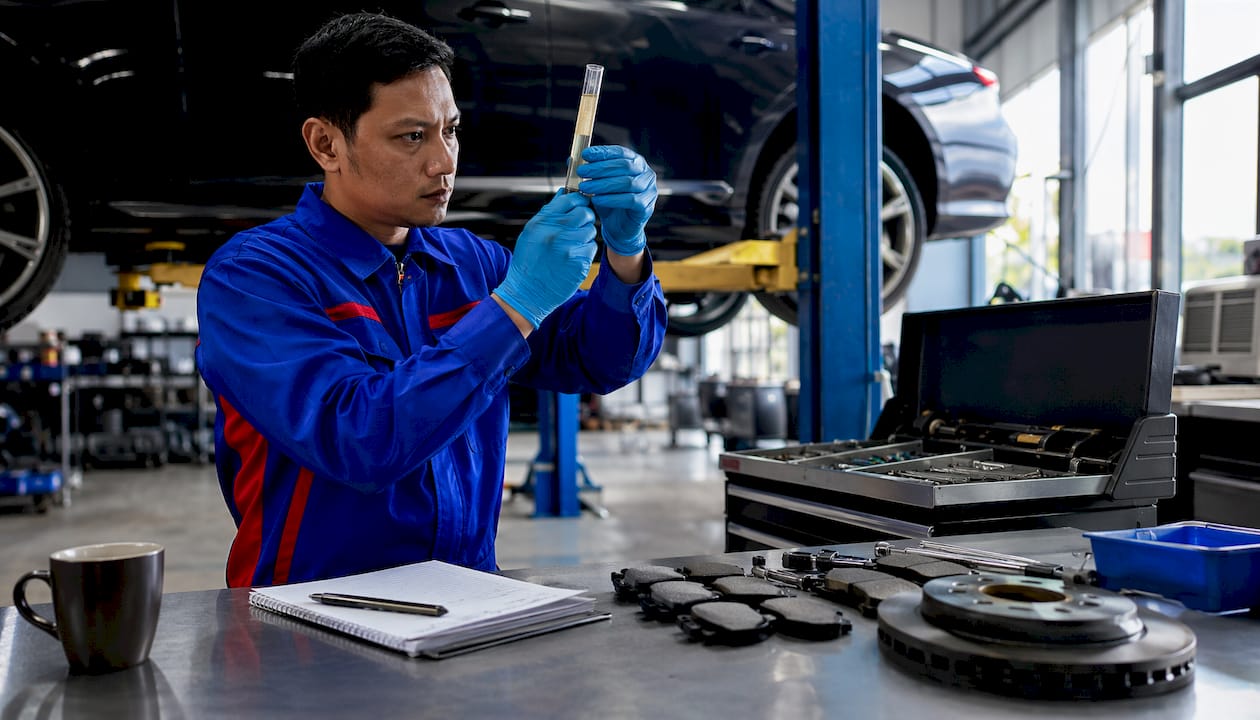
Moisture in brake fluid lowers its boiling point and can trigger vapor lock, a sudden and complete loss of hydraulic pressure. The immediate actions are to test your fluid’s water content or boiling point, flush and replace if it exceeds the wet threshold, and consider moisture-adaptive hardware in vehicles operating in high-humidity or heavy-use conditions.
Quick action checklist:
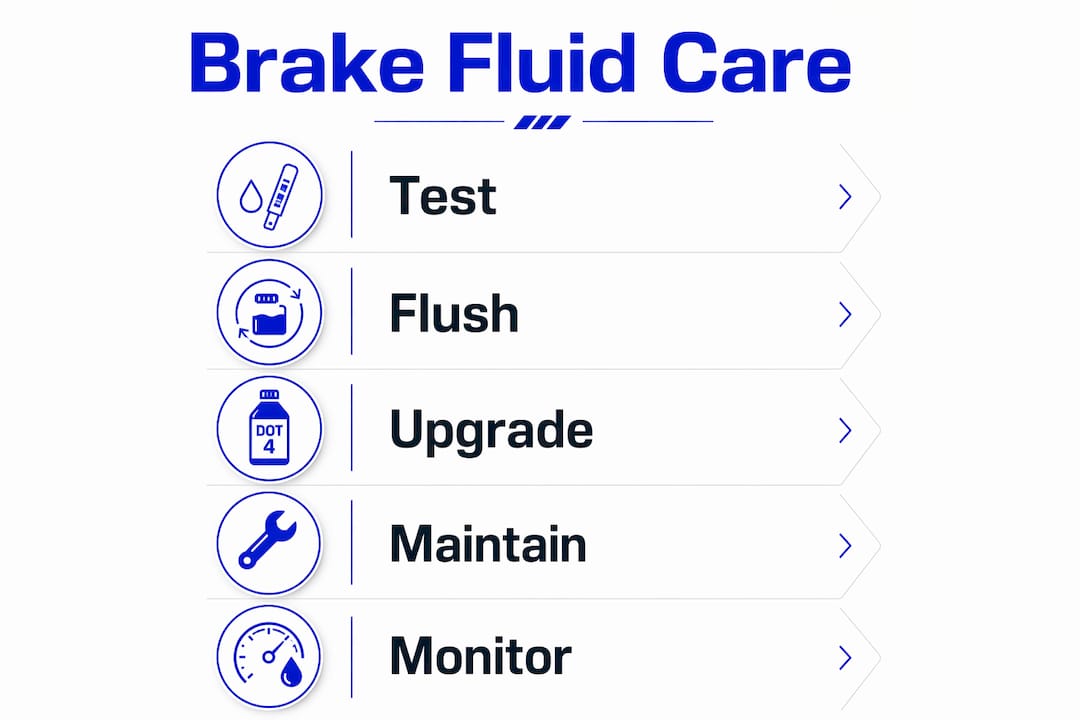
- Test fluid moisture level or boiling point at least once a year
- Replace fluid when water content approaches 3.7% or when the wet boiling point drops below the DOT minimums (DOT 3: ~140°C, DOT 4: ~155°C)
- Flush after any brake system opening or repair
- For recurring moisture issues or heavy-duty use in Newfoundland and Labrador’s wet climate, pair a fresh fluid service with a moisture-adaptive kit such as Aaafrictions’ HydroAdaptive system
DOT 3 fluid carries a minimum wet boiling point near the DOT standard, and DOT 4 sits at a higher minimum wet boiling point as specified by DOT standards. Once absorbed water pushes fluid past the wet threshold of 3.7% or below the specified wet boiling point minimums, the margin between normal braking and vapor lock narrows fast.
Table of Contents
- How does brake fluid moisture lower your boiling point and cause vapor lock?
- How to detect moisture in your brake fluid before it causes a failure
- When should you flush brake fluid in Canada — and what does it cost?
- What are your practical options for managing brake system moisture?
- How does HydroAdaptive technology address brake fluid moisture in Canada?
- How do you choose the right maintenance or upgrade path?
- Key Takeaways
- Why the standard flush schedule is not enough on its own
- Aaafrictions HydroAdaptive kits are available now for Canadian drivers
- Sources and further reading for mechanics and fleet managers
How does brake fluid moisture lower your boiling point and cause vapor lock?
Glycol-based brake fluids — DOT 3, DOT 4, and DOT 5.1 — are hygroscopic by design. They absorb water from the surrounding environment so that moisture distributes evenly throughout the fluid rather than pooling in one spot. That distribution prevents localized low-boiling hotspots that would otherwise create vapor pockets before the bulk fluid reaches its limit. It is a deliberate engineering trade-off: accept gradual boiling-point reduction in exchange for eliminating the more dangerous scenario of a single pocket of water boiling at 100°C inside a hot caliper.
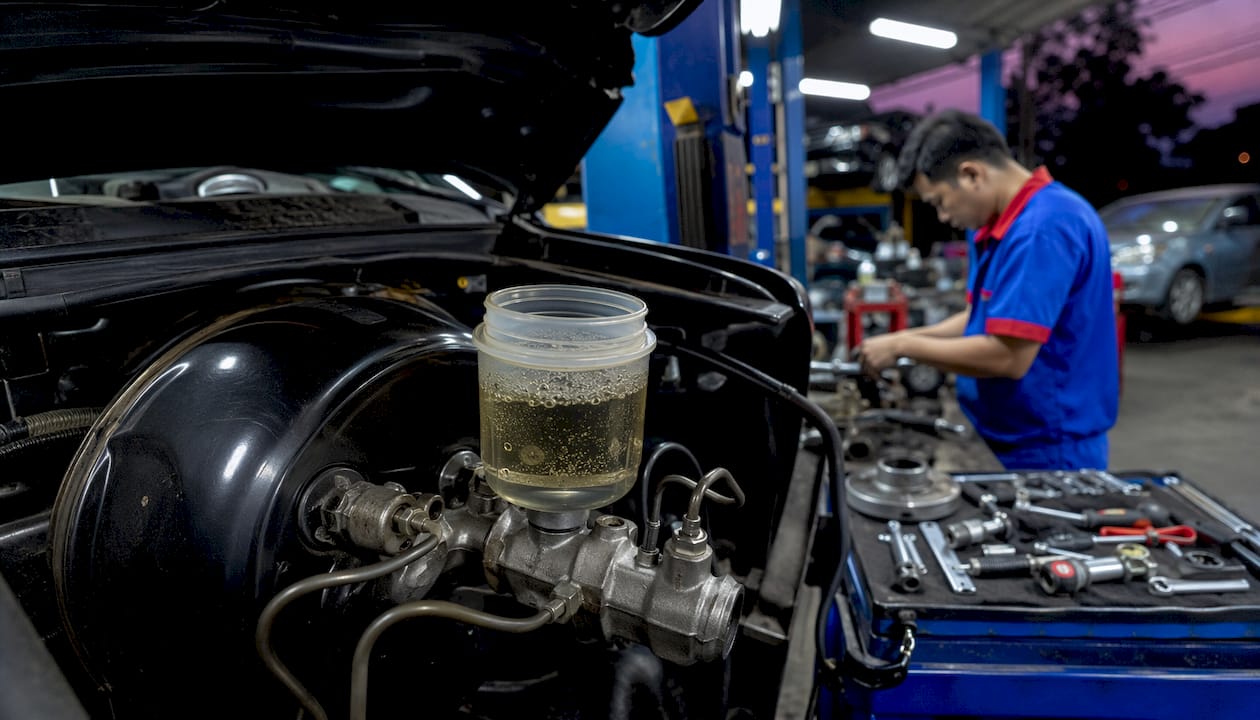
The problem is that the trade-off has a hard limit. MDPI research shows that after just four hours of exposure, fluid can absorb approximately 2.36% water by weight, and after 72 hours that figure can approach the permitted wet limit while the boiling point drops by roughly 106°C in controlled experiments. SAE data on a reference fluid shows the Equilibrium Reflux Boiling Point falling considerably as water content increases from low to higher percentages, illustrating the impact of absorbed moisture on boiling point.
DOT 5 silicone fluid is non-hygroscopic and does not absorb water, but it is not a universal fix. It is incompatible with most ABS and traction-control systems designed for glycol fluid, and any water that does enter the system pools locally rather than distributing, which creates its own localized boiling risk. For most Canadian vehicles, glycol-based DOT 4 or DOT 5.1 with a disciplined flush schedule remains the standard recommendation.
How to detect moisture in your brake fluid before it causes a failure
Symptoms that point toward elevated brake fluid water content include a spongy or soft pedal feel, brake fade after repeated hard stops, longer stopping distances than usual, and visible cloudiness or dark discoloration in the reservoir. A spongy pedal specifically suggests compressible vapor has already formed in the lines. ABS warning lights triggered after heat events can also indicate moisture-related hydraulic instability.
Diagnostic steps for owners and shops:
- Locate the master cylinder reservoir and visually check fluid color. Dark brown or black fluid is degraded, but clear fluid is not a clean bill of health.
- Use a chemical test strip or moisture-indicator strip dipped into a reservoir sample. Most strips read green (safe), yellow (monitor), or red (replace immediately at approximately 2.5% or above).
- Use a digital boiling-point tester for a more precise reading. These instruments heat a small fluid sample and report the boiling point directly, which you can compare against the DOT minimums.
- For shops, a conductivity meter or refractometer provides repeatable, calibrated readings and is worth the investment for any shop doing regular brake services.
- If petroleum contamination is suspected, perform a water-separation test: a few drops of fluid in water will separate cleanly if petroleum-based fluid has entered the system, signaling a full component replacement rather than a simple flush.
Pro Tip: Visual clarity is not a reliable indicator of fluid condition. Brake fluid can appear perfectly clear while already carrying dangerous moisture levels. Always use a test strip or boiling-point instrument rather than relying on color alone.
If you experience pedal fade or a suddenly soft pedal while driving, pull over safely and have the vehicle towed. Continued driving with suspected vapor lock is a serious safety risk.
When should you flush brake fluid in Canada — and what does it cost?
Moisture enters even sealed brake systems through microscopic pores in rubber hoses and seals, through condensation driven by heat cycling, and through every service opening. Corrosion inhibitors in the fluid deplete in roughly 36 months, after which internal metal components become vulnerable. That makes the service interval a real deadline, not a suggestion.
Recommended service cadence:
- Test fluid condition at least once a year, ideally at each seasonal tire change
- Replace fluid every 24–36 months regardless of test results, or sooner if moisture tests show levels approaching 3.7% or the wet boiling point minimum.
- Flush immediately after any brake system repair, caliper replacement, or line work
- Vehicles used for towing, mountain driving, or repeated hard stops should be tested every 12 months without exception
Typical cost in Canada:
| Service | DIY cost (fluid + tools) | Shop service (labour + fluid) |
|---|---|---|
| ABS-equipped system flush | Not recommended DIY | — |
Costs vary by vehicle, shop rate, and region. ABS systems require pressure cycling during the flush to clear moisture from the modulator, which adds time and cost.
Used glycol brake fluid is a hazardous waste in Canada. Do not pour it down the drain. Return it to your local auto parts retailer, a licensed auto shop, or your municipal hazardous waste depot.
What are your practical options for managing brake system moisture?
Three distinct paths exist, and most vehicles benefit from combining at least two.
Maintenance-first: A disciplined test-and-flush schedule is the foundation. Keep brake lines in good condition, replace cracked rubber hoses promptly, and never leave the reservoir cap off during service. This path works well for daily commuters in moderate climates with no history of brake fade.
Fluid chemistry change: Switching from DOT 3 to DOT 4 or DOT 5.1 raises the wet boiling point threshold and slows the rate at which performance degrades. DOT 5.1 offers the highest wet boiling point among glycol fluids and is compatible with ABS systems. The trade-off is higher fluid cost and the need for a complete flush when switching grades. DOT 5 silicone avoids moisture absorption entirely but requires full system compatibility verification and is not suitable for most modern ABS-equipped vehicles.
Hardware upgrades: Desiccant-equipped reservoirs and improved reservoir caps reduce atmospheric ingress. At the friction interface, moisture-adaptive pads and rotors address the performance gap that persists even after a fresh fluid service. When a rotor surface carries a film of water, standard pads take longer to clear it and restore full friction. Aaafrictions’ ClimateFlex™ Brake Calipers are engineered to work within this moisture-management ecosystem, maintaining consistent caliper function across the temperature and humidity swings common in Atlantic Canada.
| Approach | Frequency | Relative cost | Wet-weather performance | Maintenance burden |
|---|---|---|---|---|
| Test-and-flush schedule | Annual | Low | Baseline | Moderate |
| Fluid upgrade (DOT 5.1) | Every 2–3 years | Low–medium | Improved | Low after switch |
| Moisture-adaptive hardware | At pad/rotor replacement | Medium–high | Significantly improved | Low ongoing |
| Full kit (fluid + hardware) | Combined service | Medium–high | Best | Low |
How does HydroAdaptive technology address brake fluid moisture in Canada?
Standard ceramic pads perform well in dry conditions but can experience a brief friction drop when a wet rotor surface hasn’t been cleared. Aaafrictions’ HydroAdaptive formulation is engineered specifically to clear moisture from the friction interface faster, maintaining consistent friction output through rain, snow, and the high-humidity conditions that define Newfoundland and Labrador’s driving environment.
Aaafrictions products designed for moisture management:
- Type 03 Brake Pads + GC Rotors Kit: HydroAdaptive ceramic pads paired with GEOMET-coated rotors for corrosion resistance; suited to daily drivers and commuter vehicles
- Type 07 Brake Pads + GC Rotors Kit: Higher-performance HydroAdaptive+ ceramic formulation with GC GEOMET rotors; designed for SUVs, minivans, and heavier-duty applications
- ClimateFlex™ Brake Calipers: Climate-adaptive caliper design that maintains consistent pedal feel and hydraulic response across temperature extremes
All kits are available for Canadian vehicles and ship to Newfoundland and Labrador. Before installation, verify fitment using the vehicle-specific search on the Aaafrictions site, confirm the recommended fluid type for your DOT grade, and pair the kit installation with a fresh brake fluid service for best results. During bedding-in, perform 8–10 moderate stops from 50 km/h to allow the pad compound to transfer evenly onto the rotor surface.
Pro Tip: When a customer presents with recurring brake fade or repeated moisture-test failures, the right response is not just another flush. Pair the fresh DOT 4 or DOT 5.1 service with HydroAdaptive pads and GEOMET-coated rotors. The fluid addresses the hydraulic side; the friction materials address the surface side. Both together close the performance gap.
How do you choose the right maintenance or upgrade path?
Work through this decision flow during a single service visit:
- Test first. Use a digital boiling-point tester or moisture strip. Record the water percentage or boiling point reading.
- Assess duty cycle. City commuter, highway driver, towing, or performance use? Heavy-duty and towing applications degrade fluid faster and benefit most from hardware upgrades.
- Check climate exposure. Newfoundland and Labrador’s coastal humidity accelerates moisture ingress. Annual testing is the minimum; twice yearly is better for coastal or high-precipitation areas.
- Match to a path. Water content below 2% and no fade symptoms: schedule next test in 12 months. Water content between 2% and 3.7%: flush now and retest in six months. Water content above 3.7% or wet boiling point below DOT minimums: flush immediately and evaluate hardware upgrade.
- Ask the right questions at installation. Confirm kit compatibility with your vehicle’s ABS system, ask about recommended torque specs and bedding-in procedure, and verify the fluid type the shop will use.
Red flags that mean act now, not later:
- Pedal fade after moderate repeated stops at highway speeds
- ABS fault codes appearing after heat events
- Visible corrosion on calipers, rotors, or brake line fittings
- Any confirmed petroleum contamination in the system
Key Takeaways
Moisture in brake fluid is a measurable, manageable risk: test annually, flush at threshold, and pair hardware upgrades with fresh fluid to close both the hydraulic and friction-surface gaps.
| Point | Details |
|---|---|
| Test annually, minimum | Use a digital boiling-point tester or moisture strip; clear fluid does not mean safe fluid. |
| Flush at threshold | Replace fluid when water content approaches 3.7% or wet boiling point drops below DOT minimums (DOT 3: ~140°C, DOT 4: ~155°C). |
| Moisture enters sealed systems | Rubber hoses allow diffusion; corrosion inhibitors deplete in roughly 36 months even without visible leaks. |
| Hardware upgrades close the surface gap | Moisture-adaptive pads and GEOMET-coated rotors address friction-surface moisture that fluid maintenance alone cannot fix. |
| Aaafrictions HydroAdaptive kits | Type 03 and Type 07 kits with ClimateFlex™ calipers are available for Canadian vehicles and engineered for wet-climate performance. |
Why the standard flush schedule is not enough on its own
The conventional advice to flush brake fluid every two years is a reasonable starting point, but it treats the hydraulic side of the system as the only variable. In practice, the friction interface matters just as much. A freshly flushed system with standard pads still experiences a measurable friction drop the moment a wet rotor surface hasn’t been cleared. In Newfoundland and Labrador, where rain, coastal fog, and freeze-thaw cycles are routine from October through May, that gap shows up in real stopping distances.
The research supports a combined approach. MDPI data shows how quickly water content rises under real-world exposure conditions. Ferodo’s vapor lock analysis explains why even a modest boiling-point drop creates a compressibility risk. Together, they make the case for treating fluid maintenance and friction-material selection as a single system rather than two separate line items. A shop that recommends a flush without evaluating the pads and rotors is solving half the problem.
For fleet managers and shops advising customers in Atlantic Canada, the practical communication point is straightforward: moisture risk is cumulative, it is not visible, and it affects both the fluid and the friction surface simultaneously. Addressing both in the same service visit is more cost-effective than returning for a second repair after a fade event.
Aaafrictions HydroAdaptive kits are available now for Canadian drivers
Drivers in Newfoundland and Labrador dealing with wet roads, coastal humidity, and hard winters need a braking system that performs consistently from the first stop of the morning to the last on a rain-soaked highway. Aaafrictions’ HydroAdaptive technology pairs moisture-clearing ceramic friction materials with corrosion-resistant GEOMET-coated rotors and ClimateFlex™ calipers, giving you a complete moisture-management ecosystem rather than a single-component fix.
The Type 03 and Type 07 kits cover a wide range of Canadian vehicles, from daily commuters to SUVs and minivans. Each kit is designed for straightforward shop installation and pairs directly with a fresh DOT 4 or DOT 5.1 brake fluid service. Use the vehicle search on the Aaafrictions site to confirm fitment for your specific make, model, and year, then bring the kit to your preferred shop with a request for a simultaneous fluid flush. That single service visit addresses both the hydraulic and friction-surface sides of moisture management at once.
Sources and further reading for mechanics and fleet managers
The following references support the technical claims in this article and are suitable for shop standard operating procedures and customer education:
- MDPI: Research on and Analysis of Brake Fluid Impact on Brake System Performance — primary research on hygroscopic behavior, boiling-point degradation, and wet threshold data
- Ferodo Technical Tips: Vapour Lock N°1 — authoritative explanation of vapor lock mechanics; best for customer education and shop training
- ALLDATA: Check brake fluid condition during maintenance — inspection cadence guidance and DOT wet boiling-point minimums; suitable for shop SOPs
- Fluid Fixers: Brake Fluid Moisture in Sealed Systems — explains diffusion through rubber and inhibitor depletion timelines
- PhoenixSystems: Brake Fluid Contamination — water-separation test procedure for petroleum contamination diagnosis
- OB’s Auto Services Blog — practical local maintenance advice for Canadian vehicle owners
- Aaafrictions: HydroAdaptive Formulation — technical formulation detail for mechanics evaluating moisture-adaptive pad chemistry
- Aaafrictions: ClimateFlex™ Brake Calipers — caliper design specifications and compatibility notes
For shop SOPs, the MDPI study, Ferodo brief, and ALLDATA guidance provide the strongest technical foundation. For customer-facing education on brake fluid basics, the Fluid Fixers and PhoenixSystems pages are accessible and well-structured.
This article provides general maintenance information. Confirm service intervals, fluid specifications, and disposal requirements with your vehicle manufacturer, a qualified mechanic, or your provincial hazardous waste authority for your specific situation.