

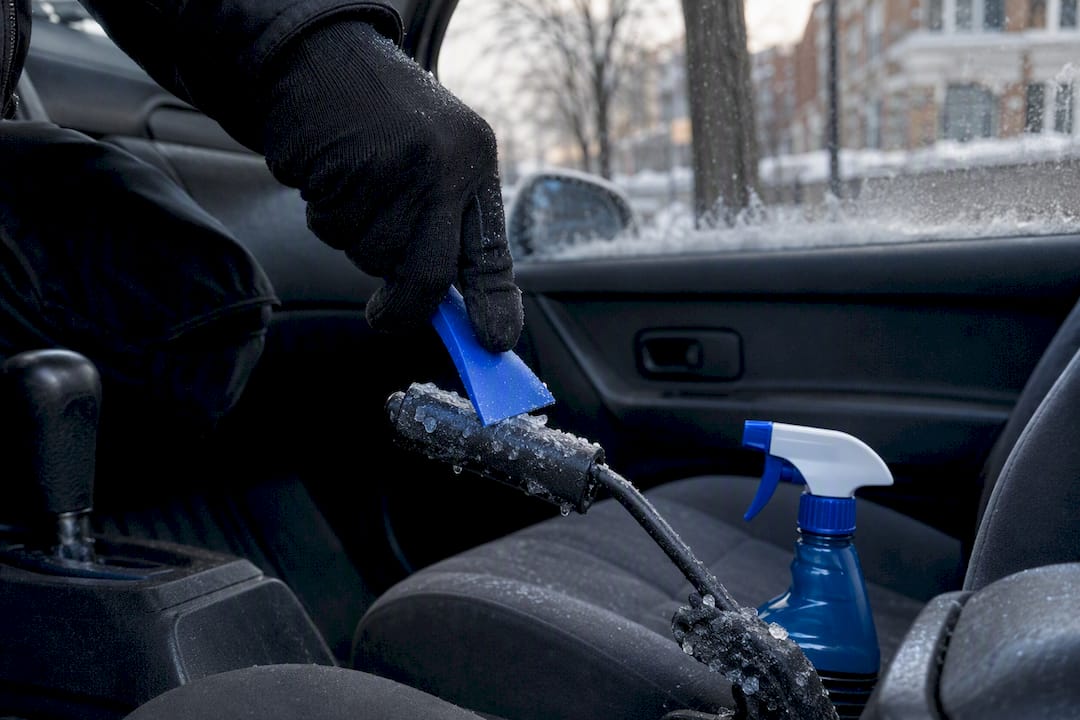
Start the engine and warm the cabin and undercarriage for 10 to 15 minutes, then hold the foot brake while cycling the parking brake lever or EPB button several times. Rock the car gently between Drive and Reverse to help break the bond. If nothing loosens within a few tries, or you smell burning or see smoke, stop immediately and call a tow. Never drive any distance with a parking brake that’s even partly engaged.
TL;DR:
- The most common cause of a frozen parking brake is moisture trapped inside the cable housing or around the drum, which responds best to gentle heat and mechanical persuasion.
- For ice-related freezing, targeted low heat such as a hair dryer and gentle tapping are safer than boiling water, which risks cracking components or re-freezing.
- A seized cable typically shows as a stiff handle or button and can often be freed by gentle rocking, lubrication, and controlled tapping, but a malfunctioning electronic actuator requires professional repair.
- Repeated attempts, especially with excessive force or if smoke or burning smells appear, can cause damage; these signs indicate it is time to call a tow rather than keep trying.
- Addressing underlying issues like rust or cable corrosion through regular inspections, lubrication, and using moisture-shedding brake components can prevent recurring freezing during winter.
Table of Contents
- How Do You Fix a Frozen Parking Brake?
- What’s Actually Causing Your Parking Brake to Stick?
- Freeing the Brake by Cause: Ice, Rust, or Electronic Failure
- When Is It Unsafe to Keep Trying?
- How to Stop This From Happening Again
- Winter Emergency Kit: What to Keep on Hand
- Why Winter-Ready Brake Components Cut Down Repeat Freezing
- A Practical Note From Aaafrictions
- Winter-Ready Pads and Rotors Worth Checking Before Spring
- Sources
How Do You Fix a Frozen Parking Brake?
A frozen parking brake almost always responds to heat, patience and mechanical persuasion, in that order. Before you touch a wrench or a hair dryer, understand what you’re actually working against: moisture that froze overnight inside the cable housing or between the shoes and drum. That ice bond is usually the easiest of the three common culprits to beat, which is why the steps below start with the gentlest options first.
-
Warm the car for several minutes. Let the engine run and the cabin heat build. Chassis warmth radiates outward and softens ice trapped near the rear brake assembly.
-
Cycle the release mechanism. On a manual lever, pull it fully and release it several times. On an electronic parking brake, press and hold the release button while pressing the foot brake at the same time. This mimics the normal engagement cycle and can shake ice loose.
-
Rock the vehicle between Drive and Reverse. Small, gentle shifts create torque reversals that often free a seized cable without any disassembly at all.
-
Apply targeted heat. A hair dryer or a heat gun on its lowest setting, aimed at the cable entry point or drum, thaws frozen moisture without the risks that come with boiling water or an open flame.
-
Tap the hub or drum with a rubber mallet. A few firms but controlled taps can break the ice or light corrosion holding the shoe against the drum. Try the release again after each tap, up to about 10 attempts total.
-
Know your limit. If none of this works after a reasonable number of tries, or you notice smoke, a burning smell, or heat radiating off the wheel, stop and call for professional help.
Pro Tip: Never pour hot or boiling water on a frozen brake. The sudden temperature swing can crack components or cause instant re-freezing that seizes the mechanism even harder than before.
What’s Actually Causing Your Parking Brake to Stick?
Before you keep working at it, figure out which of three problems you’re dealing with, because the wrong approach can waste time or cause damage. A parking brake that won’t release almost always traces back to one of three root causes: frozen moisture, a rusted or seized cable, or a failed electronic actuator.
- Loose handle or button with no resistance usually points to a cable that’s frozen or seized somewhere along its length, not at the brake itself.
- Stiff handle or a button that gives no feedback suggests a mechanical bind or, on EPB-equipped vehicles, an actuator or module fault.
- A lit EPB warning light is a strong signal the problem is electrical, not something ice or a mallet will fix.
- Visible ice or packed slush around the wheel confirms frozen moisture as the likely cause, especially after a wash or slushy commute followed by a hard freeze.
- Heavy surface rust or a car parked untouched for weeks points toward corrosion, since rust welding can form in just a few days when salt and moisture are both present.
- A wheel that won’t turn by hand or grinds when it moves means stop troubleshooting and call for a tow.
Freeing the Brake by Cause: Ice, Rust, or Electronic Failure
Once you know what you’re dealing with, the fix changes. Treating a corroded cable like a simple ice jam, or forcing an EPB mechanically, wastes effort at best and causes real damage at worst.
If it’s frozen moisture:
- Aim a hair dryer or low-setting heat gun directly at the cable entry point and the drum area.
- Pile snow or a towel around the sides of the undercarriage to trap warm air near the brake assembly, which speeds heat transfer to the rear components.
- Wait a short while, then attempt the release again.
- Skip the boiling water. Thermal shock can crack fittings or refreeze the mechanism instantly.
If it’s a seized or corroded cable:
- Rock the vehicle between Drive and Reverse in short bursts to use drivetrain torque against the seized point.
- Apply a penetrating lubricant to any exposed sections of the cable, following the product’s brake-safe rating.
- Tap the drum or hub gently with a rubber mallet to break loose surface rust.
- If you’re comfortable jacking the car safely, removing the wheel gives direct access to inspect the shoe and drum, but only attempt this if you have the right equipment and a stable, level surface.
If pads are fused to the rotor or drum:
Tapping the rotor with a mallet sometimes breaks the bond, but a heavily rust-welded assembly may need the wheel off and the shoe or pad manually freed or replaced entirely.
If it’s an EPB actuator failure:
Stop. Do not force the mechanism mechanically. EPB systems require electronic overrides and diagnostic tools, and forcing a motorized caliper risks further electrical damage that turns a moderate repair into an expensive one.
Rough cost ranges give you a sense of what you’re facing: a cable replacement typically runs on the lower end of brake repairs and is a common DIY job for confident home mechanics. Caliper or shoe service costs more and often calls for a lift and specialty tools. An EPB actuator replacement sits at the top of the range and almost always requires a shop with the right diagnostic software.
When Is It Unsafe to Keep Trying?
Some situations call for a tow, not another attempt at the mallet or the hair dryer.
- Stop immediately if you smell burning, see smoke, or feel excessive heat coming off the wheel.
- Stop after several release attempts or reasonable heating time with no progress. Repeated force at that point risks damage rather than a fix.
- Never drive any distance with a partially engaged brake. Even a short trip can warp the rotor, glaze the pad, or in extreme cases start a fire.
- When you call for a tow or a shop appointment, tell them whether the vehicle has a manual lever or an EPB, whether the warning light is on, and which wheel feels hot or locked. That detail alone can cut diagnostic time in half.
How to Stop This From Happening Again
A frozen parking brake is rarely a one-time bad break. It’s usually a pattern that repeats every cold snap until you address the habit or the hardware behind it.
- Use the parking brake regularly, even in winter, unless the forecast calls for a hard freeze right after a wet drive. Regular use keeps the mechanism moving and prevents the rust-weld that forms during long idle periods.
- Inspect rubber boots and cable housings at every oil change. Cracked boots let moisture in, and a worn boot is one of the most common failure points that leads to a frozen or seized cable.
- Lubricate the cable where the manufacturer recommends it. A light coat of the right penetrating lubricant keeps moisture from bonding to bare metal.
- Skip the parking brake on wet, below-freezing nights when you have a safe alternative, like leaving the car in gear or using wheel chocks on level ground.
Winter Emergency Kit: What to Keep on Hand
- Hair dryer or portable heat gun (low setting) plus a long extension cord
- Rubber mallet and a brake-safe penetrating lubricant
- De-icer or isopropyl alcohol spray for ice around the wheel well
- Jack, rated jack stands, wheel chocks, gloves, and safety glasses
- Skip the DIY route entirely if you lack a flat, safe place to jack the car. A dead battery in cold weather often shows up alongside a frozen brake, so keeping basic winter gear in the trunk covers more than one emergency at once.
Why Winter-Ready Brake Components Cut Down Repeat Freezing
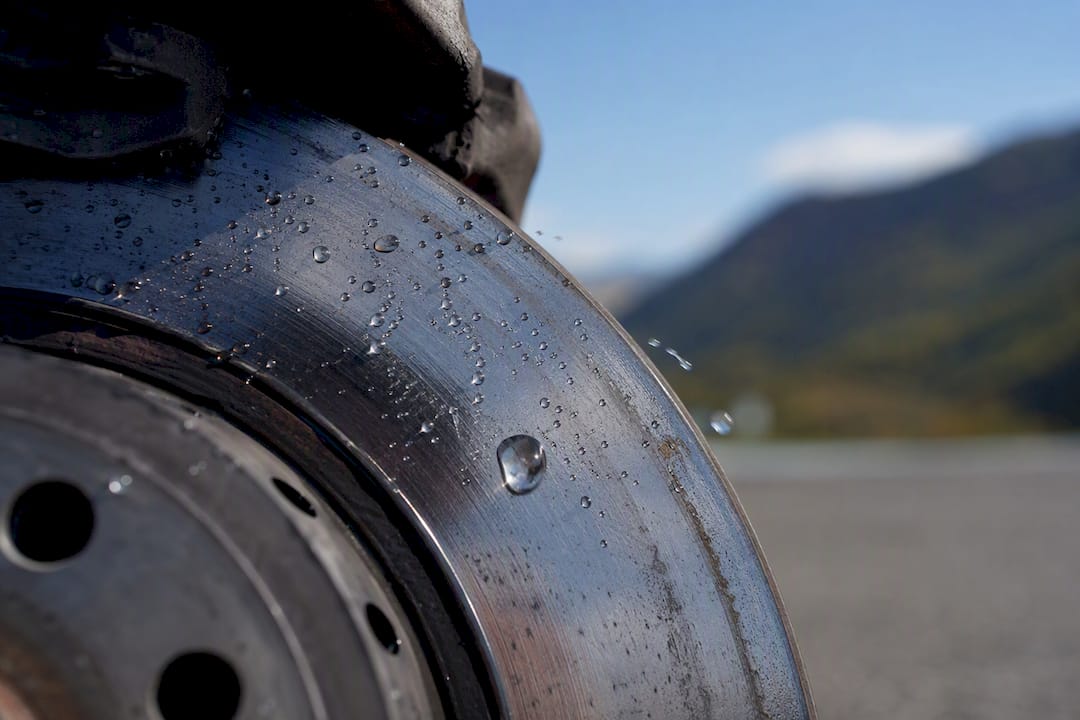
Moisture is the root cause behind most frozen parking brakes, so components engineered to shed it matter. HydroAdaptive ceramic technology is built to clear moisture from the friction surface quickly rather than let it sit and freeze. Corrosion-resistant rotors and sealed cable hardware reduce the trapped moisture and rust-weld risk that causes shoes to fuse to drums in the first place.
A Practical Note From Aaafrictions
The single habit that prevents most winter parking-brake calls is simple: use it regularly, even in the cold, and get the boots and cable checked at every service visit. When in doubt, or when the EPB light is on, call a shop before you call it fixed yourself.
— AAA
Winter-Ready Pads and Rotors Worth Checking Before Spring
If your parking brake has frozen more than once, the components underneath deserve a look before next winter tests them again. Aaafrictions builds its Type 07 HydroAdaptive+ ceramic pads and corrosion-resistant GEOMET-coated rotors specifically to shed moisture faster than standard components, which lowers the odds of the rust-weld and ice bonding that jam a parking brake in the first place.

Check vehicle fit on the product page before you order, since pad and rotor compatibility varies by make and model. If your brake is currently seized from a rust-welded drum or a failed actuator, upgrading parts won’t fix that on its own. Get it freed and inspected by a shop first, then use winter-ready components to keep it from happening again next season.