

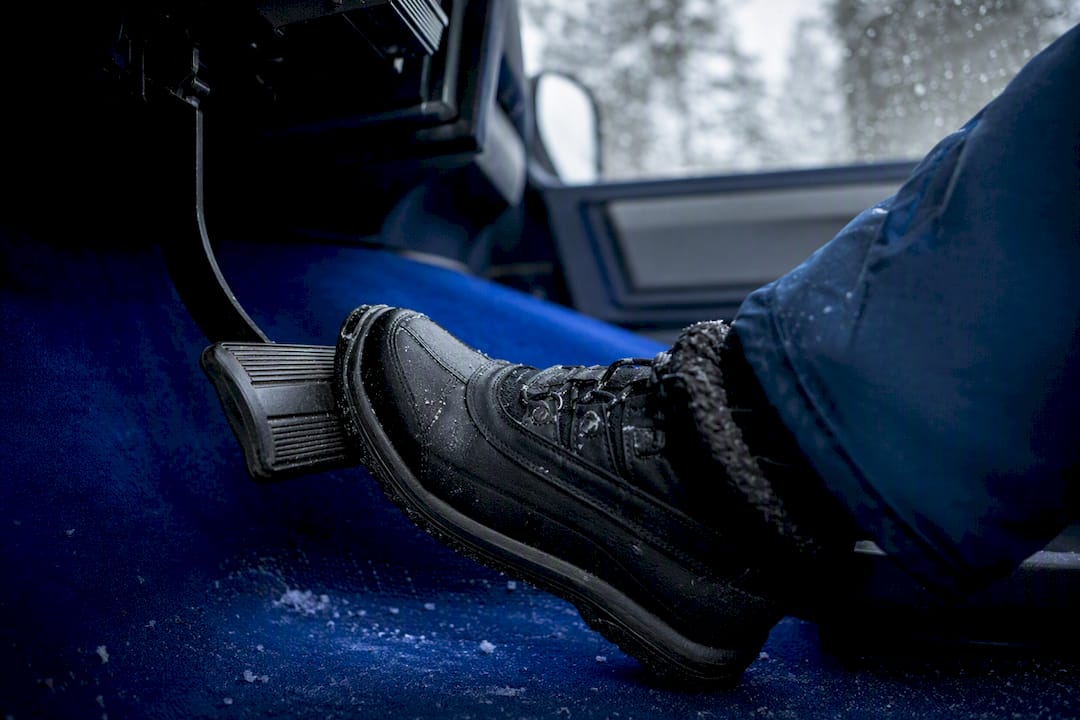
A soft or sinking brake pedal in cold weather is never something to shrug off. Treat it as a genuine safety issue until you have proven otherwise. The most likely causes are trapped air in the hydraulic lines, moisture-contaminated brake fluid, or an internal master cylinder bypass, and cold temperatures often expose these weaknesses because shrinking seals reveal problems that were already forming. A pedal that firms up when you pump it but sinks again under steady pressure points to trapped air or fluid movement in the lines, not a cold-weather quirk that will resolve on its own.
Before you drive anywhere, run through this:
- Check the fluid reservoir level and look for a cracked or missing cap seal.
- Scan the dashboard for an illuminated ABS or brake warning light.
- Press the pedal to the floor once, slowly, with the engine off, and note how far it travels.
Pro Tip: A pedal that goes to the floor with no resistance, or that comes with an ABS light, means you stop driving and arrange a tow rather than a test drive.
Key Takeaways
A soft brake pedal in cold weather almost always traces back to trapped air, moisture-degraded fluid, or master cylinder wear, not the temperature itself.
| Point | Details |
|---|---|
| Treat it as urgent | A sinking or floor-touching pedal, or one paired with an ABS light, means stop driving and arrange a tow. |
| Run the static hold test | A 60-second hold that creeps toward the floor with no leak signals a master cylinder bypass. |
| Pumping is temporary | A pedal that firms with pumping but sinks again indicates trapped air, not a resolved fault. |
| Fluid ages on a schedule | Moisture content above roughly 3% is a practical trigger for a full brake fluid flush. |
| Match parts to the pattern | Bleed for air, replace the master cylinder for bypass, and inspect hoses and calipers for leaks or drag. |
Table of Contents
- Why Soft Brake Pedal Symptoms Show Up in Cold Weather
- What to Check Right Now, Before You Drive
- Diagnostic Tests That Actually Isolate the Cause
- Matching the Fix to What You Found
- Preventing the Problem Before Next Winter
- How Weather-Adaptive Components Support a Firmer Pedal
- What the Winter Soft-Pedal Complaint Really Tells You
- Frequently Asked Questions
- Sources
Why Soft Brake Pedal Symptoms Show Up in Cold Weather
Cold weather doesn’t create brake problems out of nothing. It reveals ones that were already there. Two separate mechanisms are usually at play, and they behave differently, which matters when you’re trying to diagnose your own car.
Brake fluid itself is hygroscopic, meaning it pulls moisture from the air over time through microscopic gaps in hoses, seals, and the reservoir cap. That absorbed water can drop the fluid’s wet boiling point significantly once moisture builds up. Lower boiling points mean the fluid is more prone to forming vapor pockets under heat and pressure, and moisture sitting in steel lines and inside the master cylinder also drives internal corrosion. This is a slow-burn problem that has nothing to do with today’s weather forecast.
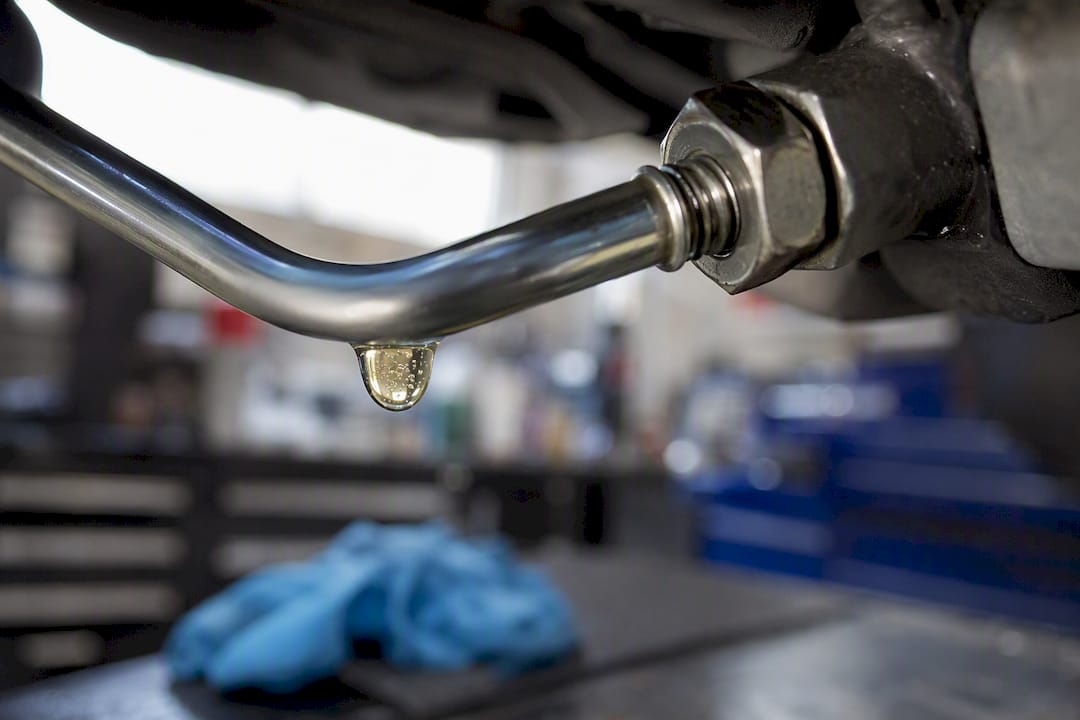
Cold has its own separate effect on the hardware. Rubber seals in calipers, wheel cylinders, and the master cylinder contract slightly as temperatures drop. Aging hoses get more brittle. Fittings at banjo bolts and flare unions shrink just enough to open a path for air. Older vehicles often show their first spongy pedal complaint in late fall or early winter for exactly this reason: a seal that was marginal all summer finally lets air in once the mercury drops.
The distinction that matters for diagnosis:
- Air intrusion is compressible and shows up as sponginess that responds, temporarily, to pumping.
- Moisture saturation doesn’t make the pedal feel soft on its own. It shows up under hard, repeated braking as fade or a spongy feel that develops after heat builds in the system.
- Master cylinder bypass produces a pedal that sinks steadily under hold, with no external leak anywhere.
Rain and slush often get blamed here too, but wet rotors typically cause a brief loss of bite on the first stop rather than a persistently soft pedal. If the pedal stays soft through an entire drive, rain isn’t the cause. A hydraulic fault is.
What to Check Right Now, Before You Drive
Your safety checks take less time than warming up the car, and they tell you whether you’re dealing with an annoyance or an emergency.
- Look at the pedal’s behavior. If it sinks slowly and continuously toward the floor under your foot, or if it hits the floor with no resistance, park it. That’s not a cold-weather feel. That’s a system that isn’t building pressure.
- Check dashboard lights. An illuminated ABS or brake warning light combined with a soft pedal is not a coincidence worth testing on the road.
- Look under the car and at each wheel for wet spots, drips, or fluid streaks near the calipers and lines.
- Listen for grinding or dragging when you roll forward at low speed, which can indicate a stuck caliper working against you rather than a fluid issue.
- Note the reservoir level. A low reservoir with no obvious external leak is one of the clearer signs of an internal problem, since fluid has to be going somewhere.
Pumping the pedal a few times to get a firmer feel will often work in the moment, but that firmness is temporary and simply relocates trapped air or compresses it slightly rather than fixing anything. Use it to get the car off the road safely, not as your commuting strategy for the week.
Diagnostic Tests That Actually Isolate the Cause
Guessing wastes time and money on the wrong parts. These four checks, done in order, usually point you or a shop straight at the failure.
- Static 60-second hold test. Engine off, pump the pedal a few times, then hold steady pressure for 60 seconds. If the pedal creeps steadily toward the floor with no visible external leak, that’s the signature of an internal master cylinder bypass, not trapped air.
- Engine-on variant of the same test. Run the hold test again with the engine running. If the pedal sinks with the engine off but holds firm with the engine on, the issue is isolated to a hydraulic or booster interaction rather than a pure fluid leak, which changes where a technician should look first.
- Pump test. A pedal that firms after several pumps but goes soft again once you stop pumping shows the classic trapped-air pattern rather than a mechanical part failure.
- Fluid condition check. Moisture test strips or an electronic boiling-point tester tell you in minutes whether the fluid itself is the problem, which avoids swapping calipers or a master cylinder when a simple flush would have solved it.
| Test | What it isolates | Likely cause if positive |
|---|---|---|
| 60-second static hold | Internal seal integrity | Master cylinder bypass |
| Engine on vs. off hold | Booster vs. hydraulic fault | Vacuum/booster issue |
| Repeated pumping | Air compressibility | Trapped air in lines |
| Fluid boiling-point test | Moisture contamination | Degraded fluid, needs flush |
An ABS light that stays on through these tests, or inconsistent behavior between wheels, means you’re past the point of a driveway diagnosis. That calls for a shop with proper scan tools on the hydraulic control unit.
Matching the Fix to What You Found
Once you know the pattern, the repair path gets a lot less mysterious.
- Trapped air with no leak: a proper shop bleed, or a full fluid flush if the fluid also tests high on moisture, usually restores a firm pedal completely.
- Master cylinder bypass: there’s no bleeding your way out of worn internal seals. Replacement is the only real fix once the static hold test confirms steady creep with no external leak.
- Leaking or collapsed hoses: a hose that’s ballooning internally or visibly seeping needs replacement, not a bleed, since it will keep drawing air back in.
- Sticking caliper: dragging or uneven wear alongside a soft pedal points to a caliper that needs freeing or replacing, which you can read more about in a guide to caliper sticking in winter.
- ABS or hydraulic control unit faults: these need specialized diagnostic equipment. If the ABS light is on and the pedal is sinking, arrange a tow instead of a drive to the shop.
Preventing the Problem Before Next Winter
Most soft-pedal emergencies are preventable months in advance, and the maintenance involved is inexpensive compared to a caliper or master cylinder replacement.
- Follow your manufacturer’s brake fluid change interval. Regular flushes are the most effective defense against moisture buildup, and a rough practical trigger many shops use is a moisture content above 3% by volume.
- Have hoses inspected for cracking, ballooning, or brittleness before temperatures drop. Stainless steel line kits resist the corrosion and collapse that rubber hoses develop with age.
- Check banjo bolts, flare unions, and any corrosion-prone fitting for seepage, since these are common entry points for the air that produces sponginess.
- Keep pads, rotors, and caliper slide pins serviced so the reservoir level stays stable and nothing draws air in through a compensating system.
Pro Tip: Run a simple pre-winter checklist every October: fluid level, fluid color and moisture test, a visual hose inspection, and a 60-second static hold test. It takes fifteen minutes and catches most of what turns into an emergency call in January.
How Weather-Adaptive Components Support a Firmer Pedal
Fixing a hydraulic fault gets you back to a normal pedal. It doesn’t necessarily make that pedal more consistent the next time temperatures swing hard. That’s where component-level engineering matters, particularly for drivers cycling between wet, freezing, and dry conditions in the same week.
- HydroAdaptive ceramic pad technology is built to clear surface moisture quickly and maintain a consistent friction profile as temperature bands shift, reducing the pedal variability that shows up when a cold, wet rotor meets a cold caliper.
- ClimateFlex calipers are engineered for stable seal behavior across temperature swings, addressing the same seal contraction that causes older hardware to start leaking air in winter.
- A parts upgrade makes practical sense once you’ve already fixed the hydraulic fault and the soft pedal keeps recurring every time the weather turns cold. At that point, the components themselves, not the fluid or the bleed, are the limiting factor.
Consistent pedal feel across a wet Tuesday and a frozen Thursday morning isn’t luck. It’s the product of hardware engineered to handle both conditions without asking the driver to compensate.
If your brake system has been recently repaired but still feels inconsistent once temperatures drop, a HydroAdaptive ceramic pad set is worth discussing with your technician as the next logical step rather than another round of bleeding.
What the Winter Soft-Pedal Complaint Really Tells You
Most advice on this topic treats cold weather as the villain, and that framing leads drivers to wait out the cold snap instead of fixing the actual fault underneath it. The temperature drop is a trigger, not a cause. A seal that was already marginal finally gives up, or fluid that was already saturated with moisture finally shows its lowered boiling point under real braking load.
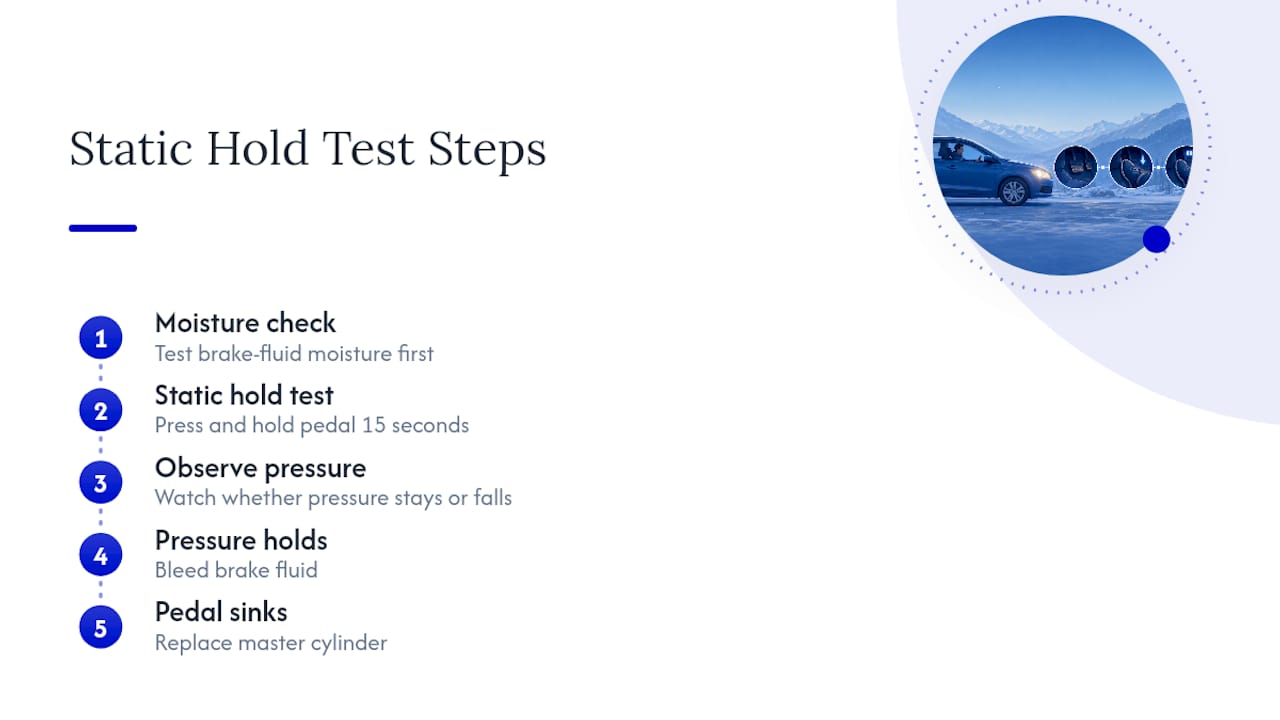
The static hold test deserves more attention than it gets. It’s a fifteen-second check that separates a bleed job from a master cylinder replacement, and skipping it is how drivers end up paying for parts that weren’t the problem. Prioritize that test, and the fluid moisture check, before anyone touches a wrench.
Where the industry undersells itself is component design. Standard rubber seals and standard pads were never engineered for the swing between a wet Tuesday and a frozen Thursday. That’s a solvable engineering problem, and it’s worth treating as one once the underlying hydraulic fault is actually fixed.
Frequently Asked Questions
Is a soft brake pedal in cold weather dangerous to drive on?
Yes. A pedal that feels spongy, sinks under steady pressure, or comes with an illuminated ABS light means the brake system isn’t building normal pressure. Get it inspected before driving at highway speeds.
Why do brakes feel soft after rain but fine on dry days?
A brief loss of bite on the first stop after rain is normal and comes from a thin film of water on the rotors. A pedal that stays soft through the entire drive points to a hydraulic issue, not the rain itself.
Can I just keep pumping the brake pedal to fix a soft brake pedal problem?
Pumping restores firmness temporarily by relocating trapped air, but it doesn’t address the underlying cause. Treat it as a way to get off the road safely, not a repair.
What does it mean if my brake pedal slowly sinks to the floor when I hold it?
That’s the signature of an internal master cylinder bypass, especially if there’s no visible fluid leak anywhere. It typically requires master cylinder replacement rather than a bleed.
How often should brake fluid be changed to prevent cold-weather brake pedal issues?
Follow your manufacturer’s recommended interval, and consider a flush sooner if a moisture test shows contamination above roughly 3% by volume, since that moisture is what lowers the fluid’s boiling point over time.
Sources
- Spongy brake pedal winter driving danger — TrustedLocalAuto
- How often should you flush your brake fluid? — Kenvo
- Brake Pedal Soft Causes: 6 Reasons & Fast Fixes — Engineer Wala
- Why do my brakes feel spongy? — KBB