

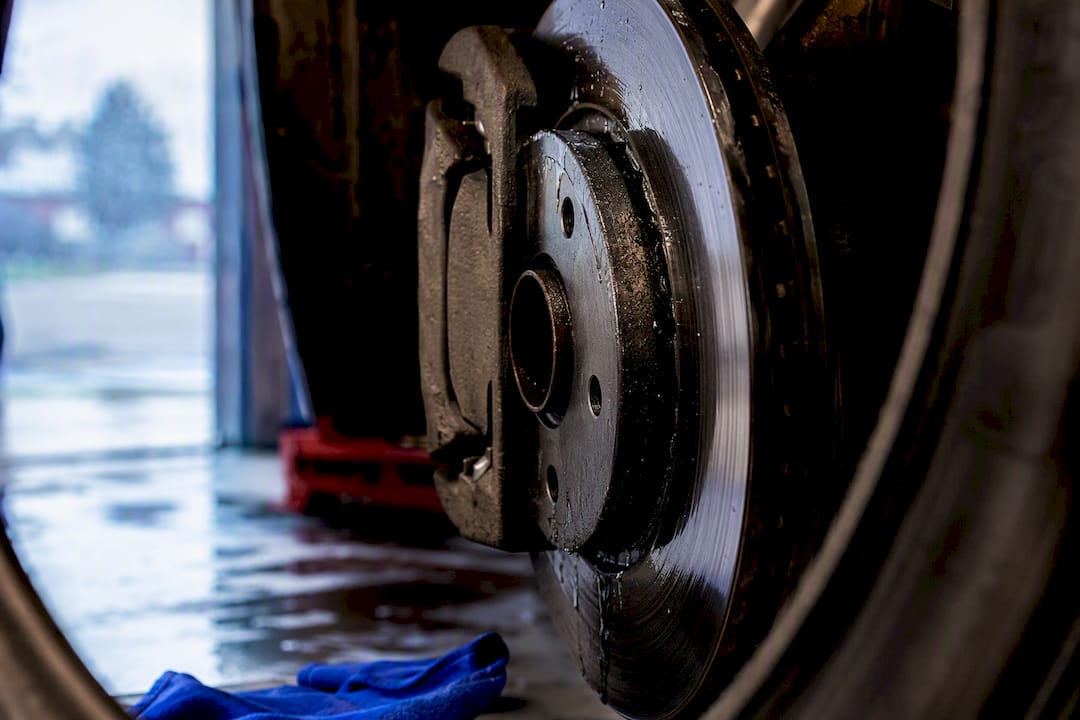
Water on brake pads almost always causes temporary friction loss, not permanent damage, and the fix is simple: slow down and tap the brakes gently a few times at low speed to dry the rotors. This restores normal stopping power within seconds in most cases. The exception is deep water immersion, road salt exposure, or contaminated floodwater, which can affect seals, fluid, or rotor surfaces and may call for a professional check.
TL;DR:
- Water causes temporary friction loss mainly by forming a film that lubricates the pad-rotor interface, increasing stopping distance significantly in extreme wet conditions.
- Applying gentle, steady brake pressure at low speeds can evaporate moisture and restore normal braking within seconds, but aggressive stops risk uneven lockup.
- Deep water immersion and road salt exposure can lead to genuine damage, such as seal breaches, fluid contamination, rust, and rotor pitting, requiring professional inspection.
- Semi-metallic and ceramic brake pads resist water-related friction loss better and recover faster due to hydrophobic binders and abrasive additives, especially in humid climates.
- Regular maintenance—checking for rust, uneven wear, and fluid clarity—helps prevent long-term damage after heavy water exposure on brakes.
Table of Contents
- What Water Does to Braking Friction (and How Much Stopping Distance Increases)
- How to Dry Wet Brakes Safely While Driving
- When Water Exposure Causes Real Damage
- Which Pad Materials Handle Moisture Best
- Maintenance Checklist After Heavy Water Exposure
- Why Weather-Adaptive Brake Design Matters More Than People Think
- Get a Brake System Built for Wet and Winter Roads
- Sources
What Water Does to Braking Friction (and How Much Stopping Distance Increases)
Water works its way between the pad and the rotor and forms a thin film that acts like a lubricant. Friction depends on direct, dry contact between those two surfaces, and a water layer interrupts that contact the same way oil interrupts grip on a road. Engineers call the result wet fade: a real, measurable drop in the coefficient of friction that shows up as a softer pedal and a longer stop.
The effect isn’t trivial. Transport Canada’s road safety guidance notes that stopping distance can increase significantly in extreme wet conditions before the moisture clears. That’s the gap between stopping in 40 meters and needing well over 100. Researchers modeling water film behavior have also found that surface tension effects at the pad edge, sometimes called meniscus forces, can shift adhesion by more than 30% at low slip speeds, which helps explain why wet braking sometimes feels grabby or uneven rather than uniformly weak, according to modeling published in Lubricants.
Watch for these signs after driving through standing water or heavy rain:
- A pedal that feels spongy or sinks lower than usual
- Noticeably longer stopping distance at normal speeds
- Squealing, grinding, or a scraping noise on the first few applications
- A pull to one side under braking
None of these symptoms mean your brakes have failed. They mean the system needs a moment to shed water before it performs normally again.
How to Dry Wet Brakes Safely While Driving
The fix is friction itself. Applying light, steady pressure to the pedal generates enough heat at the pad surface to evaporate the moisture film and bring the pad back into full contact with the rotor. This is standard guidance, not a workaround: Manitoba Public Insurance’s drivers handbook recommends exactly this technique after driving through water.
Here’s the sequence to follow:
- Ease off the gas and increase your following distance immediately.
- At a safe, low speed, apply gentle, consistent brake pressure two or three times.
- Confirm the pedal has returned to its normal firmness and the car stops evenly.
- Resume normal driving once braking feels consistent, staying alert for any recurring softness.
For more detail on the technique, see this walkthrough on drying brakes while driving.
Pro Tip: Avoid one hard, panicked stop to “test” wet brakes. A firm stop before the moisture clears can lock up unevenly. Several gentle applications work faster and safer than one aggressive one.
When Water Exposure Causes Real Damage
Most wet-brake encounters are cosmetic non-events. A few scenarios cross the line into genuine concern.
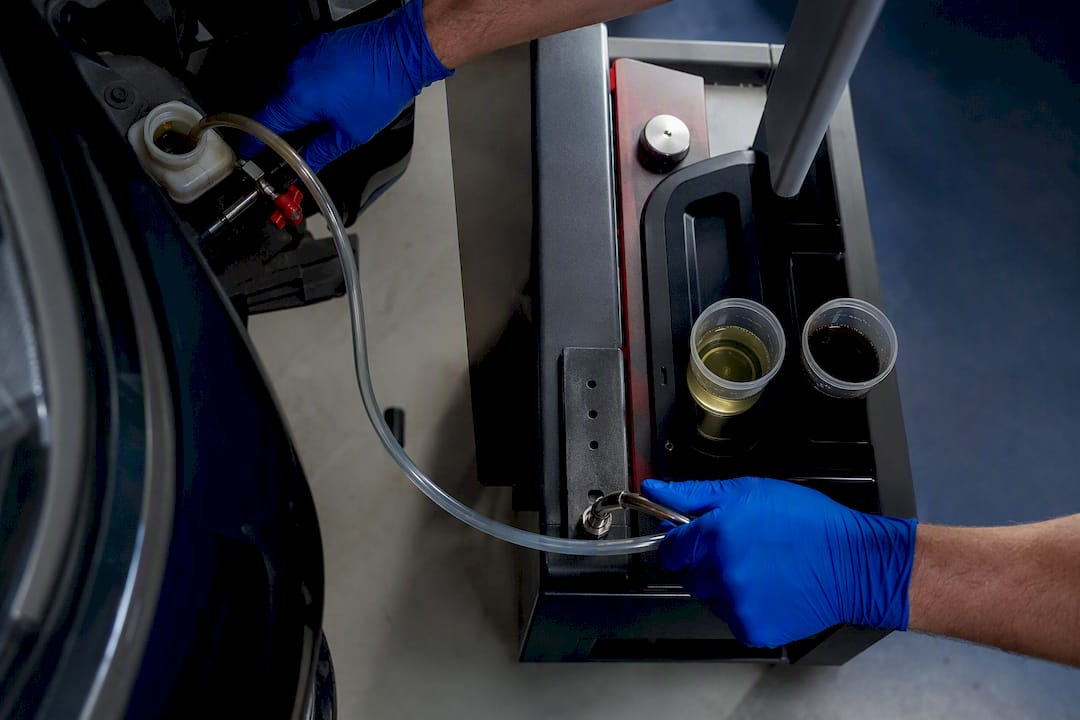
Deep water immersion, think flooded intersections or a stalled crossing, can push water past seals and into the hydraulic system. Brake fluid is hygroscopic, meaning it absorbs moisture readily, and contaminated fluid has a lower boiling point, which raises the risk of vapor lock or internal corrosion, according to engineering guidance on wet brake safety. That’s a fluid-flush situation, not a “drive it off” situation.
Thermal shock is rarer but worth knowing about: dunking extremely hot rotors into cold water, the kind of scenario you’d see after hard mountain descents followed by a stream crossing, can stress the metal enough to cause warping or cracking.
Then there’s corrosion. Flash rust can form on exposed rotor surfaces within minutes of moisture contact, and road salt dramatically speeds up pitting and uneven wear, per practical guidance on brakes and water exposure. Watch for:
- Rust that doesn’t wipe away after normal driving
- Persistent grinding or a rough pedal feel days later
- Visible pitting on the rotor face
- Fluid that looks cloudy or discolored
Which Pad Materials Handle Moisture Best
Not all friction materials respond to water the same way. Semi-metallic and ceramic formulations generally resist wet friction loss better and recover faster than standard NAO (non-asbestos organic) pads, according to SAE research on humidity effects on brake friction. The difference comes down to formulation chemistry as much as material category.
- Hydrophobic binders repel water at the molecular level instead of absorbing it into the pad structure.
- Abrasive additives help physically sweep the water film off the rotor surface during the first few pedal applications.
- Corrosion-resistant rotor coatings slow flash rust and reduce pitting on the metal surface itself, addressing the corrosion stiction risk documented in research on moisture behavior and stiction.
Internal pad moisture matters too. A SAE Mobilus study on moisture sorption and desorption found that pads lose absorbed moisture rapidly once they reach roughly 130°C, and that moisture content measurably shifts hardness and friction coefficient before that point. In plain terms: pads don’t just have water on them, they can hold water in them, and the material determines how fast that moisture releases under heat. For more on how pad chemistry governs this behavior, see brake pad friction and mu behavior.
Maintenance Checklist After Heavy Water Exposure
A quick inspection after a serious water event catches problems before they become expensive ones.
- Listen for grinding, grabbing, or noise that persists beyond a few dry drives.
- Check for uneven pad wear or a pedal that feels different than before the exposure.
- Inspect fluid color and clarity if the vehicle was submerged past the wheel hubs; flush the system if contamination is suspected.
- Rinse salt and road grime off the undercarriage as soon as possible after winter driving.
- Park in a dry space when you can, especially after storms or flooding events.
- Schedule a professional inspection if you notice flash rust that doesn’t clear with normal driving. Details on that specific issue are covered in this guide to flash rust on rotors.
Rotor surface buildup can compound moisture problems too. If deposits are affecting how water sheds off the rotor face, guidance on removing brake dust safely is worth a look before your next inspection.
Why Weather-Adaptive Brake Design Matters More Than People Think
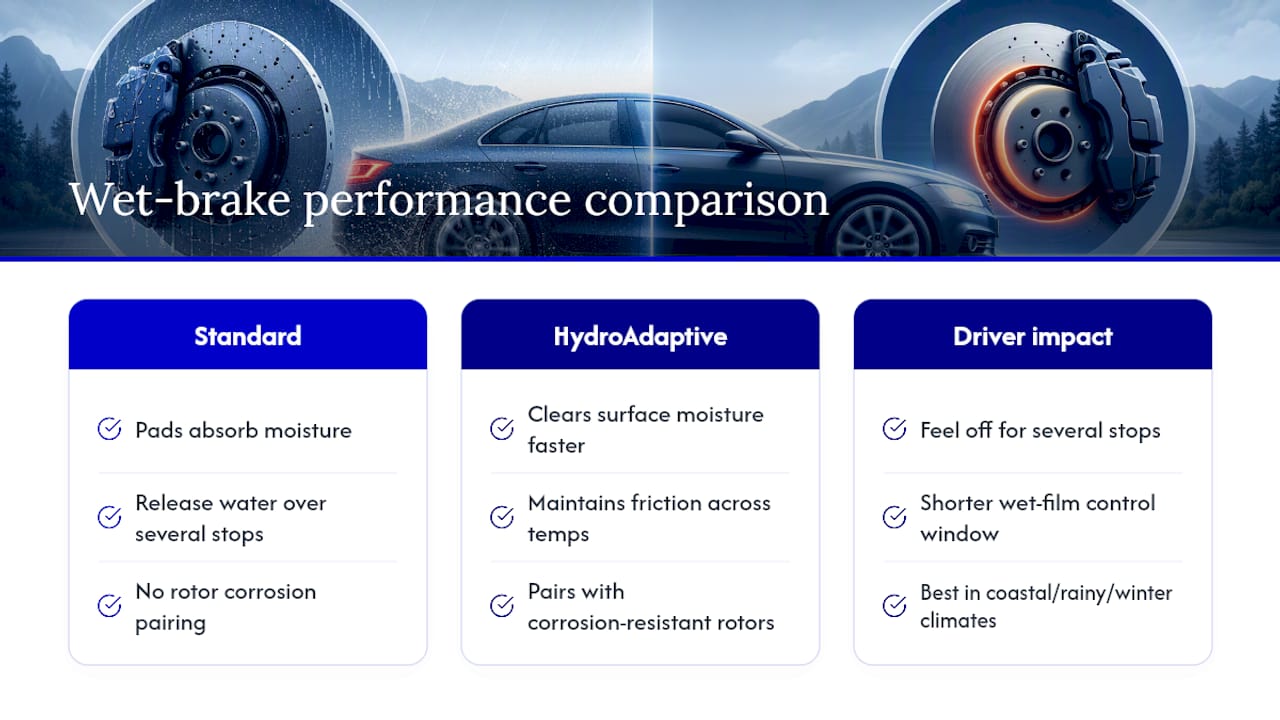
Most drivers treat wet brakes as a rain-day inconvenience. That’s a mistake. Moisture sorption research shows pads can act as reservoirs, slowly releasing absorbed water across multiple braking cycles rather than shedding it all at once, which is why a car can feel slightly off for several stops after a humid night, not just the first one.
That’s the gap standard pad formulations were never built to close. HydroAdaptive Technology targets that exact window: engineered to clear surface moisture faster, hold friction consistency across temperature swings, and pair with corrosion-resistant rotor coatings that resist the flash rust cycle salt and standing water create. Drivers in coastal, rainy, or hard winter climates feel this difference most, since their brakes rarely get a fully dry week to reset. It won’t rewrite the physics of a water film, but it shortens how long that film controls your stopping distance.
— AAA
Get a Brake System Built for Wet and Winter Roads
If wet fade and flash rust are recurring headaches rather than rare surprises, the fix isn’t more careful driving. It’s a pad and rotor combination engineered for that exact problem. Some brake systems use ceramic formulations designed to clear moisture faster and hold friction steady across rain, slush, and cold snaps, paired with corrosion-resistant coated rotors that resist the flash rust cycle standing water creates.

Full details on how the formulation manages moisture at the friction surface are on the HydroAdaptive technology page. If you’re weighing pad chemistry more broadly, this breakdown of ceramic versus semi-metallic brake pads covers the tradeoffs in plain terms. When you’re ready to check compatibility, search your vehicle’s fitment on the AAA Frictions site and confirm the pad and rotor kit matches your make, model, and year before ordering.
Sources
- Transport Canada — road transportation safety standards and guidance
- Manitoba Public Insurance — drivers handbook: wet brakes
- SAE Mobilus — moisture sorption–desorption study (2022)
- PMC/NCBI — study on corrosion stiction and moisture behavior