

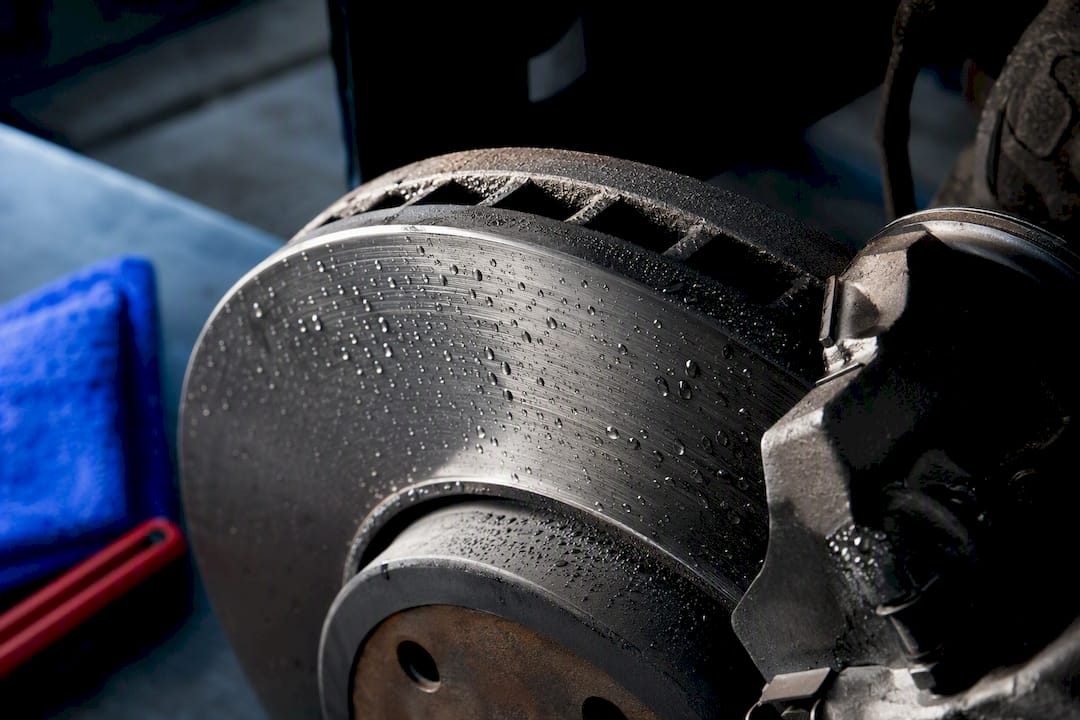
Brake shudder in rain almost always traces to flash rust forming on the rotor surface, a thin water film disrupting pad contact, or sticking hardware that only reveals itself under wet load. The safe move the moment you feel it is to ease off, add following distance, avoid hard pedal inputs, and get to dry pavement to see if it clears. Transport Canada and BCAA both back gentler, earlier braking in wet conditions as the first line of defence.
TL;DR:
- Flash rust is the main cause of rain-related brake shudder and usually clears with a few gentle stops on dry pavement, not requiring repairs.
- Sticking caliper pins, uneven rotor thickness, or worn tires can cause persistent shudder regardless of weather, indicating mechanical faults.
- Gentle, pulsed braking and a quick test on dry pavement help distinguish surface rust from true hardware issues requiring professional inspection.
- Proper maintenance, including matching pad compounds to rotor coatings and keeping tires in good condition, significantly reduces the likelihood of wet-weather shudder.
- AAA Frictions’ HydroAdaptive technology and corrosion-resistant rotors are designed to improve wet-weather brake response and minimize flash rust buildup.
Table of Contents
- What causes brake shudder only when it’s wet
- What quick checks can you do right now?
- Short-term fixes you can try immediately
- When wet-weather shudder means a real mechanical fault
- How mechanics diagnose it and what repairs typically cost
- Preventing shudder before the next rainfall
- AAA Frictions on HydroAdaptive technology and quick fixes
- How weather intensity and temperature change the shudder
- Do ABS and stability control help with wet shudder?
- What happens if you ignore repeated wet shudder?
- Which pad and rotor materials handle rain best?
- A final word on safety-first braking
- Explore AAA Frictions weather-adaptive pads and rotors for your vehicle
- Sources
- FAQ
What causes brake shudder only when it’s wet
Rain-only shudder has a short list of real culprits, and most of them have nothing to do with a warped rotor.
Flash rust is the most common one. Cast-iron rotors oxidize within minutes of getting wet, especially after sitting overnight or through a car wash. That thin rust layer creates uneven friction across the rotor face. An SAE study on rotor corrosion and judder found that oxide films cause braking-induced vibration specifically during the early stage when the pad is grinding that rust back off. It’s not damage. It’s a cleaning process happening under your foot.
Pad chemistry matters more than most drivers realize. The same SAE research found friction material composition changes how quickly that oxide layer clears and whether the removal phase produces judder at all. Some pad compounds scrub rust evenly; others clean it in patches, which is exactly what produces a pulsing pedal.
A thin water film between pad and rotor can also cause brief stick-slip behaviour, a rapid grab-and-release cycle that feels like vibration but disappears within a stop or two as the film gets displaced.
Here’s what separates a benign wet-weather symptom from an actual rotor problem:
- True heat warp (rare, despite the name) usually shows up under hard, repeated braking regardless of weather, not specifically in rain.
- Thickness variation (DTV), where the rotor has thinned unevenly from pad deposits, causes shudder in both wet and dry conditions, though wet exposure can make it feel worse.
- Sticking caliper guide pins or a collapsed brake hose create uneven clamping force that becomes far more noticeable once tyre grip drops in the rain.
- Worn or mismatched tyres amplify all of the above. Transport Canada notes that traction control has real limits on slippery surfaces, meaning even a perfectly good brake system can feel unstable if the tyres underneath it can’t hold the road.
Pro Tip: A light orange haze on your rotor after a rainy night is almost never a red flag on its own. What matters is whether a few gentle stops clear it evenly. If it does, you’re watching flash rust do exactly what it’s supposed to do.
What quick checks can you do right now?
Before you assume the worst, run through a short, safe triage.
- Slow down and widen your following distance. This is the Transport Canada baseline for any slippery-condition symptom, rain included. Avoid hard braking and sudden steering while you assess what’s happening.
- Pay attention to pedal feel. A firm, high pedal that just pulses is consistent with flash rust. A soft, sinking pedal is a different problem entirely, and it means stop testing and get help.
- Notice which wheel, if any, feels warmer or smells different after a few light stops. Uneven heat often points to a dragging caliper rather than a rotor surface issue.
- Once you reach dry pavement, make two or three gentle stops from low speed. If the shudder disappears completely, you were likely dealing with a wet-surface effect, not a mechanical fault.
- If the shudder returns on dry pavement, treat it as a real fault, not a weather quirk, and plan a shop visit.
Pro Tip: Do this test somewhere with no traffic behind you, like an empty lot. You want room to brake gently and repeatedly without pressure to keep pace.
Watch for immediate red flags that override this whole checklist: a sudden soft or sinking pedal, a wheel that locks under light braking, an ABS or brake warning light, or the car pulling hard to one side. Any of those means pull over safely and stop driving.
Short-term fixes you can try immediately
If you’re mid-drive and the shudder shows up, a few low-risk techniques can clear it without putting you at risk.
- Pulsed light braking. From a safe, low speed, apply gentle, repeated pedal pressure rather than one long squeeze. Five or six light stops is usually enough to scrub a thin rust layer evenly.
- Head for dry pavement. Drying the rotor surface under normal driving is far safer than trying to “burn it off” with a hard stop, which can glaze the pad and make the problem worse.
- Check tyre pressure at your next stop. Underinflated tyres flex more in standing water and can create the same pulsing feeling as a brake issue, especially on one side.
- Avoid deep ruts and standing water when you can. Rolling through uneven puddles hits one side of the car with more resistance, which can mimic or worsen shudder.
Pro Tip: Never test a shudder by braking as hard as you can, repeatedly, hoping it “clears itself.” That’s how you turn a light surface issue into a genuinely warped or scored rotor.
When wet-weather shudder means a real mechanical fault
Some symptoms have nothing to do with weather at all. They just get more obvious once wet roads reduce your margin for error.
- Shudder that persists after several dry, gentle stops points to actual rotor thickness variation or a contact-pattern problem, not surface rust.
- A soft or sinking pedal almost always means air or a leak in the hydraulic system. The Vehicle Inspection Manual lists insufficient pedal reserve and fluid leaks as reject criteria for exactly this reason.
- Grinding or metallic scraping signals worn-through pad material or a caliper hardware failure, not a rust film.
- A strong pull to one side usually points to a sticking caliper or mismatched tyre wear rather than anything wet-weather related.
- A locked wheel under light braking, or an ABS/brake warning light are hydraulic or sensor faults that need inspection before you drive further.
- Swollen or soft brake hoses, another Vehicle Inspection Manual flag, cause exactly the kind of uneven pressure that feels like shudder under load.
If you’re seeing any of these alongside the wet-weather symptom, it’s not a rain problem wearing a mechanical costume. It’s a mechanical problem that rain happened to expose.
How mechanics diagnose it and what repairs typically cost
A shop working through wet-only shudder complaints usually runs a fairly standard sequence.
- Visual inspection for pitting, scoring, and pad wear pattern across the rotor face.
- Rotor runout and DTV measurement with a dial indicator to rule out actual thickness variation.
- Pad transfer and contact pattern check, looking for uneven deposits that suggest the pad and rotor aren’t cleaning evenly.
- Caliper slide pin and piston movement test, since a sticking pin creates uneven clamping that only shows up under load.
- Brake hose inspection for swelling or internal collapse, both explicit criteria in the Vehicle Inspection Manual.
- Tyre and alignment check, since a mismatched or worn tyre can produce symptoms nearly identical to a brake fault.
Light surface rust and even minor contact-pattern issues can often be resolved with a rotor skim and a pad replacement using a matched compound. Rotors with deep pitting or corrosion, however, generally need full replacement rather than machining, since removing enough material to clean the surface would leave them too thin for safe use.
Cost bands vary a lot by vehicle and region, but a rough shape holds across most shops: pad replacement alone tends to sit at the lower end, while a full pad-and-rotor job per axle runs meaningfully higher, especially if caliper service or a hose replacement gets added to the ticket. Ask for a written estimate before work starts, since the diagnostic step often determines whether you’re looking at a simple pad swap or a more involved hydraulic repair.
Preventing shudder before the next rainfall
Most rain-triggered shudder is preventable with a handful of maintenance habits, not a full brake overhaul.
- Keep all four tyres matched and correctly inflated. BCAA’s wet-weather guidance is explicit that mismatched tyres create unequal wet traction, which shows up as unstable braking even when the brakes themselves are fine.
- Rotate tyres and check alignment on schedule. Uneven tyre wear contributes to the same asymmetric braking feel that people often blame on rotors.
- Inspect rotors for pitting early, before light surface rust becomes deep corrosion that needs a full replacement instead of a simple clean-up.
- Match your pad compound to your rotor type rather than mixing components designed for different friction profiles; this is where weather-adaptive pad categories, built to clear moisture quickly and resist flash rust, genuinely outperform standard ceramic pads.
- Keep your wheels clean of road salt and grime, since buildup around the rotor and caliper accelerates corrosion in exactly the areas that cause uneven contact.
AAA Frictions on HydroAdaptive technology and quick fixes
AAA Frictions built its HydroAdaptive Technology specifically around the wet-weather pattern described above. The company states that this patented ceramic system clears moisture from the pad and rotor surface quickly and maintains consistent friction through rain, snow, and humidity, addressing the delayed response and inconsistent pedal feel that standard ceramic pads can show in wet climates.
For drivers dealing with recurring flash rust or corrosion in humid or coastal regions, our guide to brakes slipping in rain walks through the same driver checks covered above, alongside product-specific fitment notes. Our rotor flash rust explainer breaks down exactly when a rust film is harmless and when it signals a rotor that needs replacing.
How weather intensity and temperature change the shudder
Light drizzle after a dry spell tends to produce the sharpest flash rust response, since the rotor has had time to develop a fresh oxide layer before the rain even starts. Heavy, sustained rain behaves differently. Once the rotor stays wet for an extended period, the water film effect tends to dominate over rust, producing a lighter, more consistent pulsing rather than the sharper judder of early-stage rust removal.

Cold rain compounds both problems. Lower temperatures slow the rate at which brake heat evaporates surface moisture, so a rotor that would dry out in seconds on a mild day can stay wet through several stops in near-freezing conditions. This is part of why Transport Canada groups rain and winter driving guidance together: the physics of reduced traction and slower moisture clearing overlap heavily between the two.
Humidity without active rainfall still matters. A humid morning after an overnight temperature drop can leave a thin condensation layer on rotors even with no rain falling, producing the same brief shudder on your first few stops of the day. If you notice shudder specifically on your first stop of a damp morning and never again once the car’s been driven a few minutes, that pattern points squarely at moisture and light rust rather than a hardware fault.
Do ABS and stability control help with wet shudder?
ABS and electronic stability control don’t fix the underlying cause of wet-weather shudder, but they change how it feels and how safe it is to drive through. ABS pulses brake pressure automatically when it detects wheel lockup, which is exactly the failure mode that reduced wet traction makes more likely. If your brakes are already prone to uneven contact from flash rust, ABS activation can mask some of that unevenness by modulating pressure faster than a driver’s foot could.
Electronic stability control works on a different layer entirely, comparing your steering input to the vehicle’s actual path and applying individual brake pressure to correct a slide. It won’t smooth out a pulsing pedal, but it can prevent a rotor-contact issue from turning into a loss of directional control.
Transport Canada is direct about the limits here: traction and stability systems help but cannot overcome a genuine loss of grip on a sufficiently slippery surface. A shuddering rotor combined with worn tyres and standing water can still exceed what any electronic system can correct. Treat ABS and ESC as a safety net under wet-weather shudder, not a substitute for addressing the cause.
What happens if you ignore repeated wet shudder?
A single wet-weather shudder episode that clears on dry pavement causes no lasting harm. Repeated episodes, especially ones a driver keeps “solving” with harder braking instead of gentle pulsing, are a different story.
Aggressive braking against an uneven, partially rusted rotor surface can glaze the pad face, hardening it in a way that reduces its ability to bite evenly going forward. That glazing tends to make future flash rust removal messier, not cleaner, creating a cycle where each wet episode gets slightly worse than the last.
Left unaddressed, uneven contact patterns gradually develop into genuine thickness variation across the rotor, the kind that causes shudder in both wet and dry conditions. At that point you’re no longer dealing with a weather quirk. You’re dealing with a rotor that needs machining or replacement, plus pads that may need replacing early because of uneven wear.
Caliper hardware pays a price too. Guide pins exposed to repeated wet cycles without cleaning or lubrication are more prone to sticking over time, which creates the uneven clamping force that produces pull and vibration independent of rotor condition. Catching wet shudder early, and responding with gentle braking rather than repeated hard stops, is what keeps a surface-level rust issue from becoming a full brake-system repair.

Which pad and rotor materials handle rain best?
Standard ceramic pads perform well in dry conditions but can show a lag in wet-weather response, since their friction chemistry wasn’t formulated around rapid moisture clearing. Semi-metallic pads clean rust faster in some cases but often trade that for more noise and dust.
Rotor coatings matter as much as pad chemistry. Semi-coated rotors, like AAA Frictions’ SC Type Rotors, protect the non-friction surfaces from corrosion while leaving the braking surface itself ready to bed in normally. GEOMET-coated rotors, such as the GC Type Rotors, go a step further with corrosion resistance built into the coating itself, which matters most in humid or coastal regions where flash rust forms fast and often.
On the pad side, weather-adaptive ceramic compounds designed specifically to clear moisture quickly, like Type 03 and Type 07, are built around the exact stick-slip and oxide-removal behaviour described in the SAE judder research. If you’re replacing pads or rotors specifically because of recurring wet shudder, matching a weather-adaptive pad to a corrosion-resistant rotor addresses both halves of the problem rather than just one.
A final word on safety-first braking
Most rain-only shudder is a surface issue that clears with gentle driving, not a sign your brakes are failing. But three quick actions belong in every driver’s habit: slow down early, pulse the brake gently rather than stomping it, and retest on dry pavement. Three red flags override all of that: a soft pedal, a locked wheel, or a pull to one side. Any of those means stop and get inspected.
— AAA
Explore AAA Frictions weather-adaptive pads and rotors for your vehicle
If your wet shudder keeps coming back even after gentle braking and dry pavement, it’s likely time to look at the hardware itself rather than just your driving technique. AAA Frictions builds its lineup specifically around that gap: standard ceramic pads that lag in wet response versus a compound engineered to clear moisture and resist flash rust from the start.

For most daily drivers dealing with recurring corrosion, Type 03 Brake Pads offer the core HydroAdaptive formulation at an entry point suited to routine wet-climate driving. Drivers in harsher humidity or coastal salt exposure often pair pads with a corrosion-resistant rotor, either the SC Type Rotors for semi-coated protection or the GC Type Rotors for full GEOMET coating. If you want the stronger wet-weather response profile, Type 07 Brake Pads target that specifically.
Before ordering, confirm fitment for your vehicle and, if you’re not doing the install yourself, talk to a mechanic about pairing pads and rotors correctly. Our pad selection guide walks through matching compound to driving conditions so you order the right set the first time.
Sources
- 10 tips for driving safely in heavy rain — BCAA
- Brake rotor corrosion and friction-cleaning effect on vehicle judder performance — SAE
- Vehicle Inspection Manual 2025
FAQ
How do you fix a brake shudder that only happens in rain?
Start with gentle, pulsed braking at low speed to clear flash rust or a thin water film, then drive to dry pavement and test again with light stops. If the shudder persists after drying out, it’s likely a mechanical issue like caliper drag or rotor thickness variation that needs a shop visit rather than a driving fix.
Why do my brakes sound rough when it rains?
Rough or gritty sounds in the rain usually come from surface rust being scrubbed off the rotor by the pad, which is a normal, temporary process according to SAE research on rotor corrosion. If the sound turns to grinding or metallic scraping, that points to worn pad material instead and needs inspection.
What does it mean if your brakes shudder?
Shudder generally means uneven contact between the pad and rotor, caused by surface rust, thickness variation, a sticking caliper, or occasionally a warped rotor from heat. In wet conditions specifically, flash rust and thin water films are the most common causes, and they usually clear with gentle driving rather than requiring repair.
Why are my brakes locking up in the rain?
Wheel lockup in rain points to reduced tyre traction combined with braking force the road surface can’t support, a limit that Transport Canada notes even traction control can’t always overcome. If lockup happens under light, normal braking rather than hard stops, treat it as a hydraulic or ABS fault and get it inspected before driving further.
Can weather-adaptive brake pads actually reduce shudder in rain?
AAA Frictions’ HydroAdaptive pads are formulated specifically to clear moisture and resist flash rust faster than standard ceramic compounds, which is why pairing them with a corrosion-resistant rotor addresses the wet-shudder pattern from both sides.