

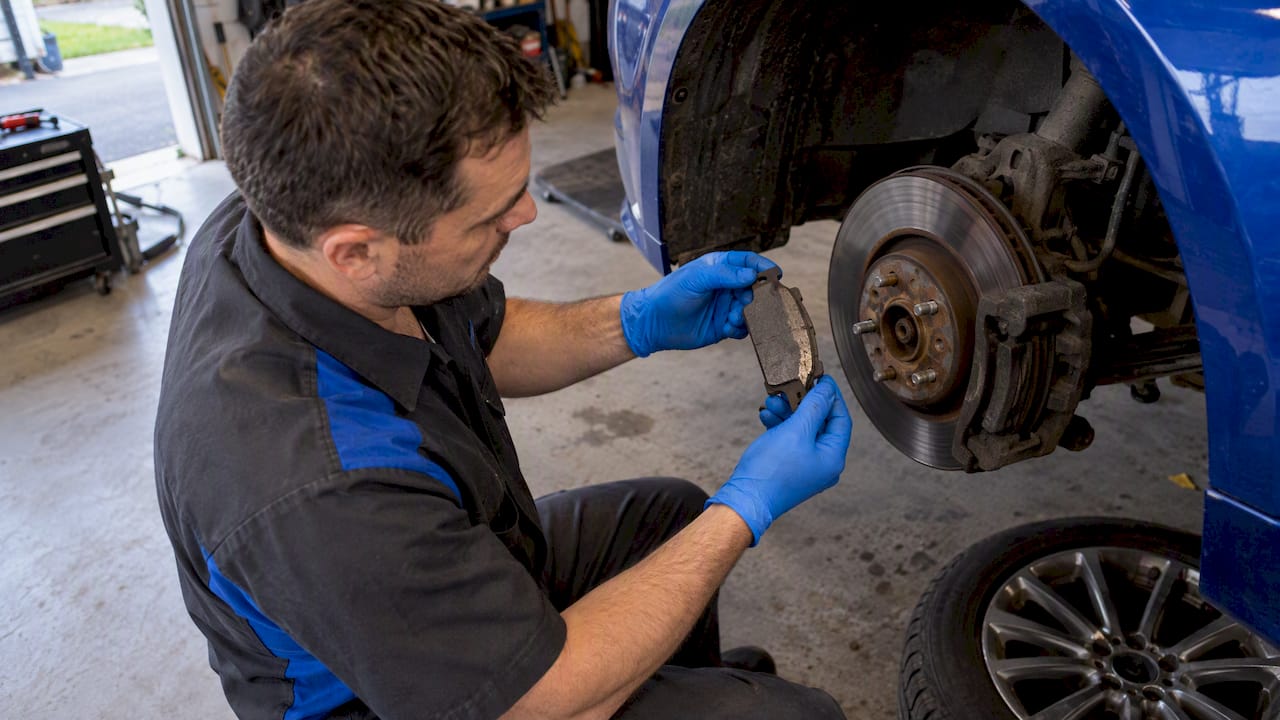
Squealing, grinding, a spongy pedal, vibration, pulling to one side, or a lit brake warning light all point to worn brake pads that need inspection. Grinding or a brake-wear light that stays on means you should get your brakes checked right away, since continued driving can damage your rotors. Below, we break down each sign so you can match it to what you’re noticing.
TL;DR:
- Grinding, sudden braking loss, or a warning light that remains on calls for same day inspection; continued driving can damage rotors and affect braking systems.
- A spongy pedal can signal worn pads, air in brake lines, or a failing master cylinder, so have the full braking system inspected.
- Compare lining with your owner’s manual minimum and inspect through wheel spokes; dashboard warning systems can fail, as a software recall demonstrated.
- After rain or a car wash, soft braking may come from moisture and should clear with light braking; persistent softness warrants inspection.
Table of Contents
- 1. Common signs your brake pads are worn
- 2. Why each sign happens: the mechanics behind the symptoms
- 3. Quick checks you can do before visiting a shop
- 4. When to see a mechanic and what to expect
- 5. Transport Canada standards on wear indicators and warning lights
- 6. Ceramic versus traditional brake pads: do wear signs differ?
- 7. How wet or humid conditions change what you’ll notice
- 8. How HydroAdaptive Technology interacts with wear signs
- 9. Why timely replacement matters with modern braking systems
- 10. Our take on staying ahead of worn pads in changing weather
- Weather-ready pads for drivers who don’t want surprises
- FAQ
- Sources
1. Common signs your brake pads are worn
Most drivers notice one or two symptoms before the rest show up, so it helps to know the full list and where each one ranks on the urgency scale.
- Squealing or high-pitched noise: this is usually the first sign of wear, caused by a built-in metal tab designed to make noise before pads reach their limit, and it often gets louder or more frequent over a few weeks.
- Grinding or metallic scraping: a harsh, scraping sound while braking means pad material is likely gone and metal is contacting metal, which calls for an immediate inspection.
- Soft or reduced brake responsiveness: a pedal that sinks closer to the floor or needs more pressure to slow the car can point to worn pads, though it can also signal a fluid or hydraulic issue.
- Vibration or pulsing: a pulsing sensation through the pedal or steering wheel when braking often relates to rotor condition, but worn or unevenly seated pads can contribute.
- Pulling to one side: if the car drifts left or right under braking, one side’s pads may be wearing faster than the other.
- Visible wear: thin pad material, an exposed metal backing plate, or grooves on the rotor surface are all signs you’re due for a closer look.
- Brake warning lights: a brake-wear or brake-system icon on the dashboard is designed to flag exactly this kind of problem.
- Burning smell or heavy dust: excessive dust or a burning odour after driving can mean pads are overheating or wearing abnormally; our partners at Diamondbrite note that dust buildup is common and can be cleaned safely with a short dwell time.
- Longer stopping distances or Gabby brakes: if stopping takes noticeably longer, or the brakes bite too hard too early, pad performance has likely declined.
- Uneven or unusually fast wear: pads wearing much faster than expected often trace back to a sticking caliper or worn slide pins rather than the pads themselves.
2. Why each sign happens: the mechanics behind the symptoms
That squeal comes from a small, soft metal tab built into the pad, positioned to rub against the rotor once the friction material wears down close to its minimum thickness. It’s designed to be audible well before the pad is dangerously thin.
Grinding is a different story. Once the lining is gone entirely, the pad’s metal backing plate contacts the rotor directly, which can gouge the rotor surface and turn a simple pad job into a pad-and-rotor job.
A soft or spongy pedal is often tied to worn pads but is not exclusive to them. Air in the brake lines or a failing master cylinder can produce the same feeling, which is why a proper inspection checks the whole system, not just the pads.
Vibration usually comes from rotor run-out or heat-affected spots on the rotor surface rather than the pad material itself. It tends to show up specifically under braking, which helps separate it from suspension or tire vibration.
Uneven wear across one axle commonly points to a caliper that isn’t releasing fully or slide pins that have seized, sometimes alongside an alignment issue.

3. Quick checks you can do before visiting a shop
You can catch a lot of this yourself with a flashlight and a few minutes in your driveway.
- Look through the wheel spokes at the pad pressed against the rotor; your owner’s manual will specify the minimum lining thickness for your vehicle, and anything close to it is worth flagging.
- Check for a visible metal wear indicator or lining that looks paper-thin; a few millimetres or less usually means replacement is close.
- Inspect the rotor surface for deep grooves, scoring, or a bluish discolouration from heat.
- Watch the dashboard. A brake-wear or brake-system light that stays on while driving is a signal to get checked promptly rather than wait it out.
- Park on level ground, set the parking brake, and use wheel chocks before inspecting anything near the wheels, and leave actual repair work beyond a visual check to a qualified technician.
Pro Tip: Take a photo of the pad through the wheel spokes with your phone flash on; it’s an easy way to compare thickness over time without removing anything.
4. When to see a mechanic and what to expect
Grinding, a sudden loss of braking force, or a brake warning light that won’t turn off all warrant a same-day visit rather than waiting for a scheduled service.
A licensed inspection typically covers:
- Pad thickness measurement against the manufacturer’s minimum spec.
- Rotor thickness and a check for scoring or warping.
- Caliper operation, confirming it releases and clamps evenly.
- Brake fluid level and condition.
Inspections are usually done the same day, and pad replacement often takes one to three hours per axle depending on the vehicle and shop workload. Cost depends on pad material, vehicle complexity, and whether rotors need resurfacing or full replacement, so a local shop estimate is more useful than any general figure. Hang on to your owner’s manual and service records; they help a shop diagnose faster and matter for resale history.
5. Transport Canada standards on wear indicators and warning lights
Transport Canada’s technical standards for brake systems require either an acoustic or optical wear indicator, or a way to visually check lining wear from outside or underneath using only the tools normally supplied with the vehicle. In practice, that means combining a dashboard light with an actual look at the pad.
If a brake-wear light stays on while you’re driving, Transport Canada’s guidance is to check your owner’s manual and get to a licensed repair facility right away, since the light is meant to flag a problem before it becomes serious.
Electronics aren’t foolproof, either. A documented recall involved a software issue that could prevent the brake wear warning light from activating when pads needed replacement.
A software problem prevented the brake wear warning light from turning on when pads required replacement, which is why a visual check still matters alongside the dashboard.
Transport Canada recall notice, 2024
6. Ceramic versus traditional brake pads: do wear signs differ?
Ceramic and traditional semi-metallic pads wear differently, and that changes what you notice first. Ceramic pads tend to produce less visible dust and a quieter wear pattern, so the squeal from the wear indicator is often the clearest early signal rather than a buildup of dust on your wheels.
Semi-metallic pads, by contrast, tend to generate more dust and can produce a slightly different noise profile as they near the end of their life, sometimes including a faint grinding sound even before the lining is fully gone, simply because of the metal content in the friction material.
In both cases, the core warning signs still apply: squeal, grinding, thinning lining, and dashboard lights. The difference is mostly in how loudly or visibly those signs present themselves, not whether they happen. If you’re used to the dust pattern of one pad type and switch to the other, it’s worth checking lining thickness visually rather than relying only on how much dust has built up on your wheels, since that cue changes between pad types. For a closer look at squeal specifically, our breakdown of brake pad and rotor squeaking covers how to tell harmless bedding noise from a real wear signal.

7. How wet or humid conditions change what you’ll notice
Moisture changes braking behaviour before it changes the pads themselves. Water or humidity on the rotor surface can create a thin film that temporarily reduces friction, which can feel like reduced responsiveness even when the pads are in good shape.
This matters for diagnosis because a soft-feeling pedal after driving through heavy rain, a car wash, or a humid morning isn’t necessarily a sign of worn pads. It often clears after a few seconds of light braking as the rotors dry. If that softness persists well after the roads have dried out, it’s a better indicator that the pads themselves are due for a look rather than the moisture being the cause.
Humidity can also accelerate rotor corrosion over time, especially on vehicles parked outside through wet seasons, and surface rust on rotors can mimic the feel of uneven wear until it’s worn off by normal driving. If you’ve had water sitting on your pads or rotors for an extended period, our guide on restoring wet brake pads’ grip walks through how to get full friction back quickly rather than guessing whether it’s a wear issue.
8. How HydroAdaptive Technology interacts with wear signs
Our HydroAdaptive ceramic formulation is built around clearing moisture quickly so that friction stays consistent across rain, snow, and humid conditions rather than dropping off when the rotor surface gets wet. That doesn’t change the fundamental wear process. Pad material still wears down over time and the same signs, squeal, thinning lining, dashboard alerts, still apply.
What it does affect is false alarms. Because moisture is managed more rapidly, a damp morning is less likely to produce the kind of brief pedal softness that can be mistaken for worn pads, which makes genuine wear signs easier to trust when they do show up. Consistent friction across weather conditions means you’re not second-guessing whether a spongy moment was moisture or a maintenance issue.
9. Why timely replacement matters with modern braking systems
Modern vehicles increasingly rely on anti-lock brakes, stability control, and electronic brake-force distribution systems that assume a baseline level of friction and pad thickness to work as designed. Worn pads change that baseline, which can affect how well those systems perform in an emergency stop.
Delaying replacement past the point of grinding or a lit warning light doesn’t just risk rotor damage. It also means the broader braking system is compensating for less friction than it was designed around, at the exact moment you need full stopping power. Replacing pads promptly keeps the whole system working the way it was engineered to.
10. Our take on staying ahead of worn pads in changing weather
We build HydroAdaptive ceramic pads specifically to keep friction consistent in rain, snow, and humidity, since inconsistent weather is where braking confidence tends to break down. Replacing pads promptly also protects your rotors from the kind of grooving that grinding causes. For questions on fitment, our product pages are a good starting point.
— AAA
Weather-ready pads for drivers who don’t want surprises
We engineer our brake pads to manage moisture quickly, so rain, slush, and humid mornings don’t translate into inconsistent stops. That consistency matters most exactly when you’re already relying on your brakes the hardest.

- Our Type 03 Brake Pads suit drivers looking for everyday ceramic performance with HydroAdaptive moisture management.
- Our Type 07 Brake Pads are built for winter-ready, higher-performance HydroAdaptive+ braking.
- For help matching pads to your vehicle and driving conditions, our pad selection guide walks through fitment and material choices.
FAQ
How do I know if my brake pads need replacing?
Watch for squealing, grinding, a soft pedal, vibration while braking, pulling to one side, or a lit brake warning light. A quick visual check through the wheel spokes, comparing lining thickness to your owner’s manual’s minimum spec, confirms it.
How do you change brake discs?
Changing brake discs, also called rotors, involves safely lifting the vehicle, removing the wheel and caliper, swapping the old rotor for a new one, and reinstalling the caliper and pads before torquing the wheel back on. This job involves working near a loaded suspension and brake system, so it’s best left to a licensed repair facility unless you have the right tools and experience.
How much does it cost to replace brake pads?
Cost depends on pad material, your vehicle, and whether rotors need resurfacing or replacement, so a local shop estimate gives the most accurate number for your situation. Labour typically runs one to three hours per axle, which also factors into the total.
Do worn brake pads make noise when driving?
Yes, a high-pitched squeal is usually the first sign, caused by a built-in wear indicator tab, and a grinding sound means the lining is likely gone and metal is contacting the rotor. Both are worth acting on, with grinding needing prompt attention to avoid rotor damage.
Is it safe to keep driving with a brake warning light on?
No, Transport Canada’s guidance is to check your owner’s manual and get to a licensed repair facility promptly if a brake warning light stays on while driving. Since electronics can occasionally fail to trigger as intended, pairing the dashboard check with a visual inspection of the pads is the safer approach.
Sources
- TECHNICAL STANDARDS DOCUMENT No. 135, Revision 5 (Transport Canada)
- Transport Canada recall — brake wear indicator software issue (Jaguar)
- Brake pads: what to look for (Consumer Reports)