

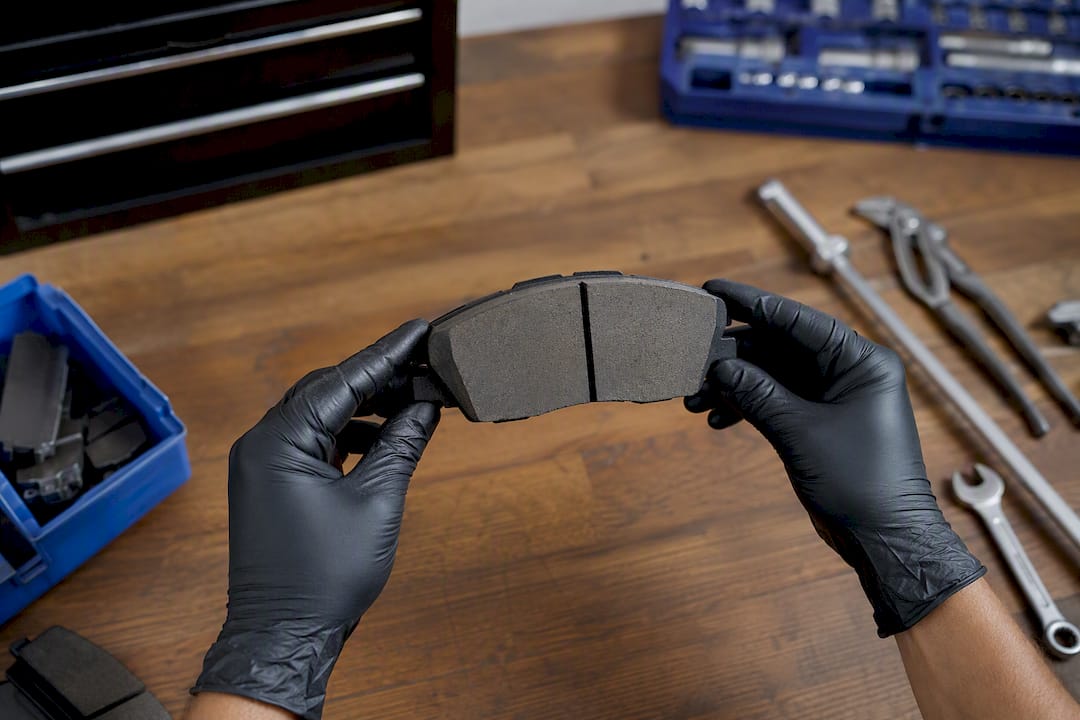
Choose ceramic pads for quiet, low-dust daily driving. Choose semi-metallic pads for towing, heavy loads, mountain or winter driving, and spirited driving where heat builds fast. Organic or NAO pads still have a place, but only when your vehicle’s owner manual actually lists them as an approved option, and usually only for lighter-duty use. Before you buy anything, confirm your exact fitment (VIN, year, make, model, trim) and inspect your rotors, because pads-only replacement on a scored or thinned rotor wastes money and compromises stopping power.
- Ceramic: best for commuters and most passenger cars that want a quiet cabin and clean wheels
- Semi-metallic: best for towing, heavy SUVs and trucks, mountain routes, and cold climates where cold bite matters
- Organic/NAO: reasonable for light-duty use only when your OEM fitment guide lists it as an option
- Next step: confirm exact fitment and check rotor thickness and surface condition before ordering pads
Key Takeaways
Choosing the right brake pads comes down to matching material to your driving conditions, confirming exact fitment, and inspecting rotor condition before you buy pads alone.
| Point | Details |
|---|---|
| Match material to use case | Ceramic suits daily commuting; semi-metallic suits towing, mountain routes, and cold climates. |
| Confirm fitment before ordering | Use a VIN or year/make/model/trim lookup to avoid the most common return reason. |
| Inspect rotors first | Scored, rusted, or below-minimum-thickness rotors call for a rotor and pad kit, not pads-only. |
| Respect the 3mm threshold | Replace pads at or below 3mm of remaining friction material rather than waiting for grinding. |
| Weather performance matters | Aaafrictions’ HydroAdaptive ceramic kits are engineered to clear moisture and hold consistent friction in rain, snow, and humidity. |
Table of Contents
- What Brake Pads Actually Do
- What Makes a Good Brake Pad? A Quick Evaluation Checklist
- Ceramic vs. Semi-Metallic vs. Organic: Which Pad Type Fits Your Driving?
- How to Choose Brake Pads: A Step-by-Step Checklist
- Warning Signs and What “3mm” Means for Replacement
- Why HydroAdaptive Ceramic Pads Matter in Mixed Weather
- Why the Bed-In Process Determines How Your New Pads Actually Perform
- What to Check in a Brake Pad Warranty and Quality Certification
- What We Think Most Buying Guides Get Wrong
- Ready to Order? Match Your Vehicle to the Right Kit
- Sources
What Brake Pads Actually Do
Every time you press the brake pedal, the pads clamp against the rotors and convert your car’s kinetic energy into heat through friction. That’s the entire job. How well a pad does that job, and how it behaves as things heat up, depends almost entirely on what it’s made of and how it’s built.
A brake pad isn’t just a block of material. It’s an assembly:
- Friction material (the compound that contacts the rotor)
- Binders and fillers that hold the compound together and shape its heat response
- A steel backing plate that the friction material bonds to
- Shims that dampen vibration and reduce squeal
- Wear sensors on many modern pads that trigger a dashboard warning
Change any one of those pieces and you change how the pad sounds, how much dust it throws, and how fast it wears your rotors.
What Makes a Good Brake Pad? A Quick Evaluation Checklist
Every pad on the market is a set of trade-offs. Before you compare products, know what you’re actually judging.
- Cold bite – how strongly the pad grips on the first hard stop of the day, before everything’s warmed up
- Fade resistance – how well stopping power holds up under repeated heavy braking, like a long mountain descent
- Rotor friendliness – how abrasive the compound is, and how much wear it puts on your rotors over time
- Dust and noise (NVH) – how much visible dust collects on your wheels, and whether the pad squeals under normal use
- Fitment completeness – whether hardware, shims, and wear sensors are included, or need to be sourced separately
Ingredients drive most of this. Phenolic resins act as heat-resistant binders in most friction formulas, while fillers like mica and vermiculite are added specifically to quiet the pad down and manage how it handles heat, according to a technical review of brake friction materials. Pad geometry matters too. Chamfered edges and slots, for instance, are a deliberate design choice that cuts down on squeal, as explained in this breakdown of chamfered brake pads.
Pro Tip: Don’t judge a pad by its coefficient of friction alone. A pad with aggressive cold bite but poor fade resistance can feel great in the parking lot and scary on a long downhill grade.
Ceramic vs. Semi-Metallic vs. Organic: Which Pad Type Fits Your Driving?
This is the decision most drivers actually need help with, and it comes down to matching material to how you drive.
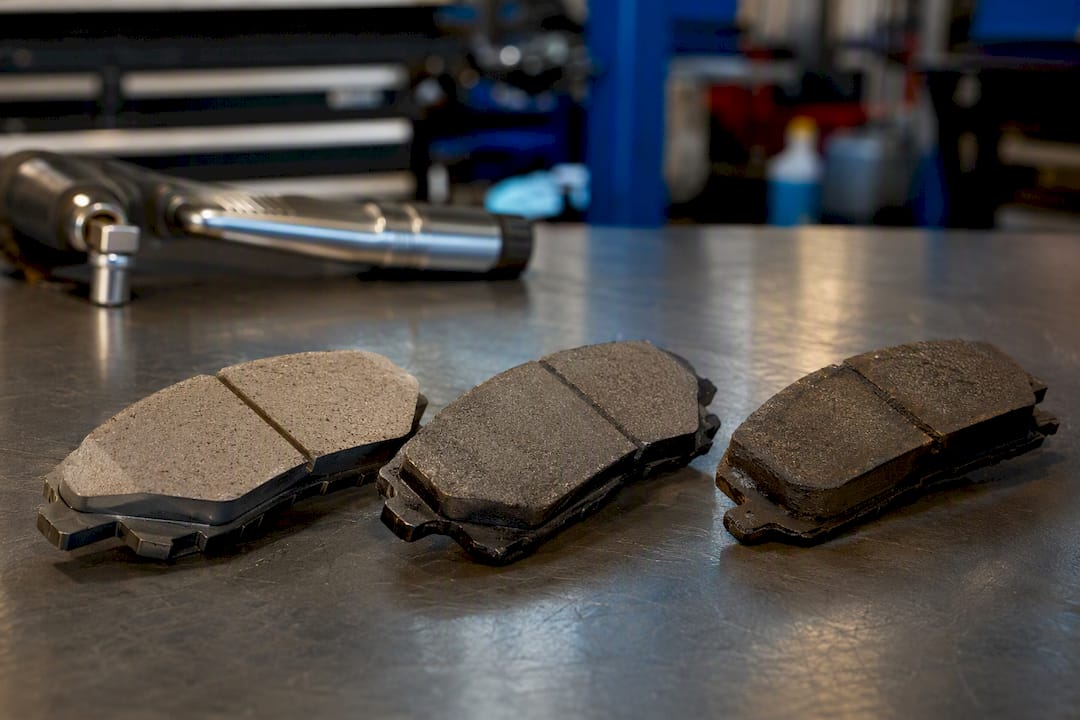
Ceramic pads are the default recommendation for daily commuting and most passenger cars. They run quiet, produce light-colored dust that’s easy to wash off your wheels, and they’re gentle on rotors, which extends rotor life, as explained in how to protect alloy wheels with ceramic coatings. The trade-off has historically been heat ceiling: older ceramic formulas could lose some bite under sustained, extreme heat. That gap has narrowed. Modern ceramic and low-steel hybrid blends have closed much of the historic cold-bite disadvantage while keeping dust and noise low, so don’t assume “ceramic” automatically means “soft” performance anymore.
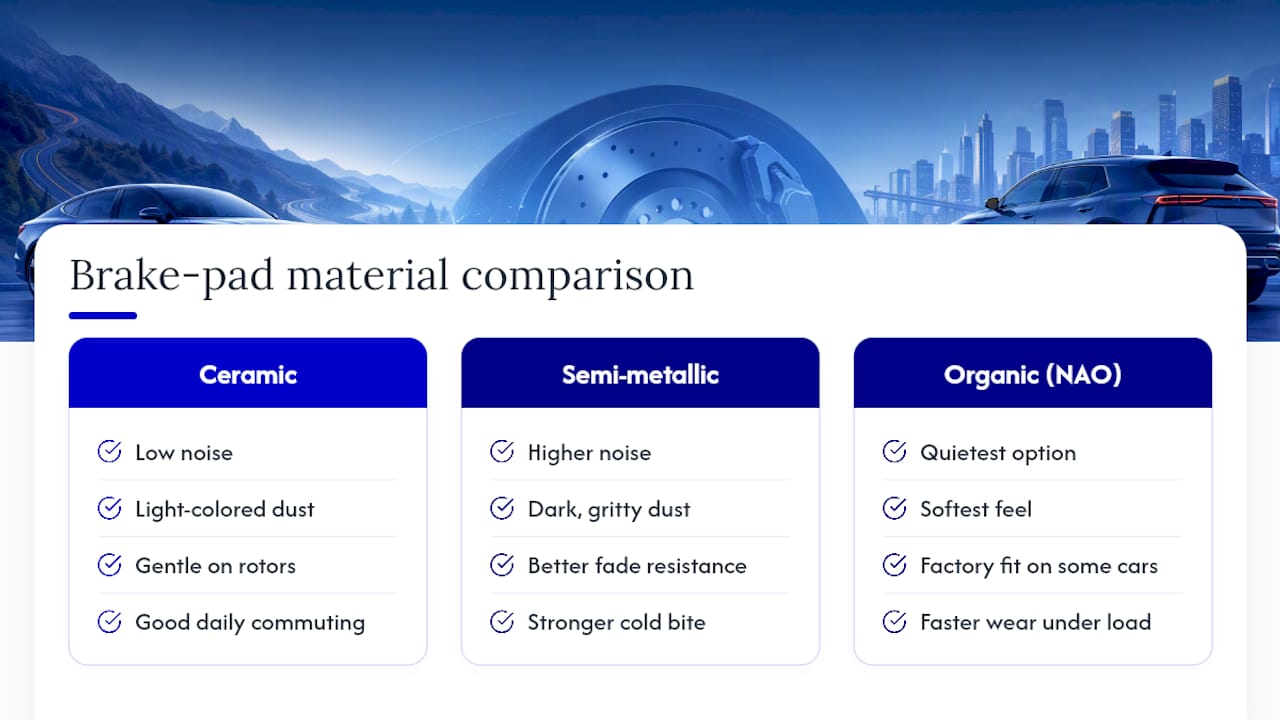
Semi-metallic pads typically contain 30 to 70 percent metal content, and that metal is what gives them superior cold bite and fade resistance compared with ceramic compounds, per AutoZone’s material breakdown. That makes them the right call for towing, heavy SUVs and trucks, repeated mountain descents, and cold-climate driving where you need immediate bite before things warm up. The cost is more noise, darker and grittier dust, and faster rotor wear over the life of the pad.
Organic (NAO) pads are the quietest, softest option and remain factory-correct on some lighter vehicles. Use them only where your owner’s manual or parts lookup lists NAO as an approved fitment. They wear faster under load and aren’t built for towing or performance driving.
If you want a full side-by-side, our ceramic versus semi-metallic breakdown walks through the material science in more depth.
How to Choose Brake Pads: A Step-by-Step Checklist
Choosing brake pads isn’t complicated once you work through it in order. Skip a step and you risk buying pads that don’t fit, or pads that fight a rotor that’s already past its service life.
- Confirm fitment first. Look up your pads by VIN, or by exact year, make, model, and trim. Fitment errors are the single most common mistake buyers make, and manufacturers consistently point to a proper fitment check as the correct starting point, not an afterthought.
- Check front versus rear. Front and rear axles often call for different pad specs, since the front axle typically handles more braking load.
- Match material to your driving. Commuter, tow rig, winter driver, weekend track car; each points toward a different compound, as covered above.
- Inspect your rotors. Measure thickness against the minimum spec stamped on the rotor, and look for scoring, rust pitting, or blue heat spots. If rotors are compromised, a rotor and pad kit beats pads-only, since fresh pads bedded against a damaged rotor wear unevenly and can cause pulsation.
- Confirm hardware and sensors. Check whether your kit includes new shims, clips, and wear sensors, and note if your vehicle has an electronic parking brake that requires a special caliper reset procedure during installation.
- Plan your bedding procedure and check the return policy. Every pad needs a proper break-in, and you want a clear return path if fitment turns out to be off despite your best lookup.
Pro Tip: Search your exact vehicle through a fitment lookup tool before adding anything to your cart. It takes two minutes and prevents the most common (and most annoying) return.
Warning Signs and What “3mm” Means for Replacement
Brake pad lifespan varies widely, generally landing somewhere between 25,000 and 70,000 miles depending on driving style, pad material, and terrain. City stop-and-go driving and mountain routes both shorten that range considerably.
Watch for these signs that mean an inspection can’t wait:
- A high-pitched squeal, which is often a built-in wear indicator doing its job
- Grinding, which usually means the friction material is gone and metal is contacting metal
- A soft or spongy pedal
- Vibration or pulsation through the pedal or steering wheel under braking
The industry rule of thumb is the 3mm guideline: once remaining friction material drops to about 3 millimeters, plan for replacement immediately rather than waiting. If your rotor also shows deep grooves, blue heat spots, or causes pulsation, a pad-and-rotor kit is the better value, since it avoids paying for labor twice and gives new pads a clean surface to bed against.
Why HydroAdaptive Ceramic Pads Matter in Mixed Weather
Standard ceramic pads perform well in dry, predictable conditions. Rain, humidity, and snow are a different problem entirely, since moisture on the rotor surface can delay full friction contact right when you need it most.
Aaafrictions built HydroAdaptive Technology specifically to address that gap. The formulation is designed to clear moisture rapidly and maintain consistent friction across rain, snow, and humid conditions, rather than losing bite in the first half-second of a wet stop.
- Vehicle-specific kits pairing HydroAdaptive ceramic pads with corrosion-resistant rotors
- Consistent pedal feel across seasonal weather shifts, not just in ideal conditions
- Fitment confirmation available through our product search tool before you commit to a kit
For drivers who deal with real seasonal swings rather than a single climate all year, that moisture-clearing behavior is the practical difference between a pad that works on paper and one that works on a wet Tuesday morning commute.
Why the Bed-In Process Determines How Your New Pads Actually Perform
New brake pads don’t perform at their rated potential straight out of the box. They need a bed-in period, sometimes called a break-in, where the friction material transfers a thin, even layer onto the rotor surface. That transfer layer is what the pad is designed to grip against, and until it forms, you’re braking on raw pad material meeting a bare rotor.
Skip or rush this step and you’ll likely notice two problems fairly quickly: uneven noise, often a persistent squeal that never fully goes away, and reduced stopping power that shows up as a longer pedal or a feeling that the brakes never quite “wake up.” A proper bedding sequence, generally a series of moderate stops from higher speed followed by a cool-down period, avoiding full stops that could glaze the pad surface, gives that transfer layer time to form evenly across the rotor face.
Replacing hardware alongside pads and following the manufacturer’s specific bedding procedure both reduce squeal and speed up the formation of a stable transfer layer, according to guidance from A-Premium. This matters more than most buyers assume, because two identical pad sets, one bedded correctly and one rushed, can feel like completely different products for the life of that pad. If you’ve ever installed new pads and thought they felt worse than the old ones for the first week, an incomplete bed-in is almost always the reason.
Don’t judge a new pad’s performance in the first 200 miles. Give the bed-in process room to finish before you decide whether the pad is right for your car.
What to Check in a Brake Pad Warranty and Quality Certification
Warranty terms and quality markings tell you more about a pad than the marketing copy on the box. Before you commit to a set, look for a few specific things.
Coverage length and scope matter most. Some warranties cover manufacturing defects only, while others extend to premature wear under normal use. Read the fine print on mileage caps and whether the warranty transfers if you sell the vehicle before the pads wear out.
Quality certifications and compliance markings, when a manufacturer lists them, are worth checking against your region’s requirements, particularly copper content restrictions that some jurisdictions have introduced for environmental reasons. A pad that meets a recognized friction test standard has at least been through a consistent testing protocol, rather than relying on unverified claims about stopping distance.
Also look at what happens if fitment turns out to be wrong despite your best VIN lookup. A straightforward return policy matters just as much as the warranty itself, since even a careful fitment check can occasionally hit a data mismatch between what a parts catalog lists and what’s actually on your car. Buying from a source that stands behind both the product and the fitment guidance, rather than one that treats a return as your problem, is worth confirming before checkout, not after a pad shows up that doesn’t fit.
What We Think Most Buying Guides Get Wrong
Most brake pad advice treats ceramic and semi-metallic as a permanent, fixed rivalry, ceramic for comfort, metallic for performance, pick a side and move on. That framing is outdated. Modern ceramic and hybrid formulations have closed much of the old cold-bite gap, which means the real decision point for most drivers isn’t material category anymore. It’s climate and load.
Where conventional advice really falls short is weather. Most guides compare pads on dry-pavement metrics: dust, noise, fade resistance, and stop there. But a huge share of stopping distance variability in the real world comes from wet, cold, or snow-covered pavement, not track-day heat. A pad that’s excellent on a dry Tuesday and sluggish in the first half-second of a rainy Thursday morning commute isn’t actually the safer daily choice, even if its spec sheet reads better.
Prioritize fitment and rotor condition first, always. After that, weigh your actual climate as heavily as your driving style. If you live somewhere with real seasonal swings, moisture-clearing performance deserves the same attention you’d give cold bite or dust levels.
— AAA
Ready to Order? Match Your Vehicle to the Right Kit
If you’ve read this far, you already know the trade-offs between ceramic and semi-metallic, and you know your rotors need a look before anything gets bolted on. Aaafrictions built its entire product line around closing the one gap most pad comparisons ignore: performance when the pavement is wet, snowy, or humid, not just when it’s dry and warm.

Every kit pairs HydroAdaptive ceramic pads with corrosion-resistant, climate-adaptive rotors, so you’re not solving half the problem. Start on our product fitment search and enter your vehicle details to see the exact kit built for your car, whether that’s a Toyota Highlander, a Lexus ES330, or another platform entirely. Want the technical detail behind the formulation first? Visit our technology page before you buy, or head straight to the landing page to browse current kits. If your exact fitment doesn’t show up in a search, our support team can confirm it directly rather than leaving you guessing.
Sources
- Technical review of brake friction materials (DOI:10.1002/vnl.22149, 2024)
- Ceramic vs Semi-Metallic Brake Pads: Which Should You Choose? | AutoZone