

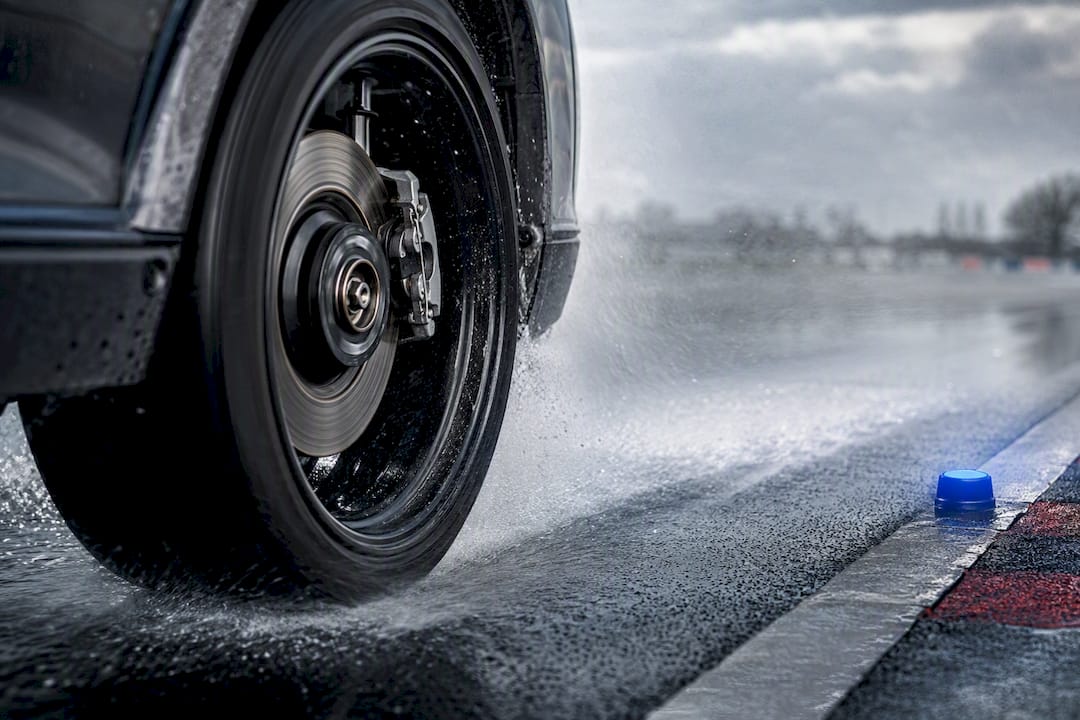
Yes, a properly chosen complete brake kit reliably improves braking performance, reduces fade, and often costs less than buying parts separately once you factor in fitment, labor, and warranties. The main wins are consistent heat management under repeated hard stops, matched components that wear evenly and stay quiet, and better total value than a piecemeal rotor-and-pad purchase. Kits earn their keep most in towing, winter driving, or frequent hard braking. Below, we break down what’s actually inside a kit, what it costs, and how HydroAdaptive technology fits into the picture.
TL;DR:
- Matched brake kits improve heat management, reduce noise, and prevent uneven wear, making them especially beneficial for towing, winter driving, and frequent hard stops.
- Properly designed kits include compatible rotors, pads, hardware, and sometimes calipers, with features like venting and slots to minimize brake fade during repeated braking.
- Sourcing a full kit generally costs less and simplifies installation with warranty coverage, especially when rotors or calipers are warped or worn past refurbishment.
- Accurate fitment depends on vehicle-specific details like VIN and wheel clearance, and improper sizing can cause hardware or clearance issues, especially in salt-prone climates.
- Climate-adaptive kits with HydroAdaptive technology clear moisture quickly, maintaining consistent braking performance in wet or cold conditions across various vehicle types.
Table of Contents
- What’s inside a complete brake kit and why matched parts matter
- How a full kit improves stopping distance, fade resistance, and pedal feel
- What a complete brake kit actually costs versus buying parts piecemeal
- Making sure a brake kit actually fits your vehicle
- How long a brake kit lasts and what keeps it performing
- Why climate-adaptive kits change the winter braking equation
- When a full kit actually proves its worth on the road
- Where to check fitment and order a HydroAdaptive kit
- Sources
What’s inside a complete brake kit and why matched parts matter
A complete brake kit typically bundles rotors, pads, and the hardware clips and shims that keep everything seated correctly. Some kits step up to include calipers, braided stainless lines, and a recommended high-temperature brake fluid. The difference between a kit and a box of unrelated parts comes down to how those pieces were engineered to work together.
Pads and rotors each have a friction curve, meaning the amount of stopping force they generate changes with temperature and speed. When a manufacturer designs a pad and rotor as a pair, that curve is tuned so the two components heat up and wear down at compatible rates. Mismatched parts, on the other hand, tend to produce uneven pad transfer, noise, and premature wear during the bedding-in period.
Kit categories differ by intended use:
- Street kits prioritize quiet operation, low dust, and everyday durability.
- Towing and heavy-duty kits use thicker rotors and pads formulated for sustained heat.
- Performance kits often add two-piece or slotted rotors and more aggressive compounds for repeated hard stops.
If you want a deeper breakdown of what separates a bundled kit from sourcing components individually, the fitment and wear-pattern differences show up fastest in the first few thousand miles.
How a full kit improves stopping distance, fade resistance, and pedal feel
Brake fade happens when repeated hard stops generate more heat than the rotor and pad can dissipate, causing friction to drop right when you need it most. Rotor design plays a direct role here. Vented rotors move air through internal channels to shed heat faster, while two-piece rotors separate the hat from the friction ring so the two parts expand independently instead of warping against each other. Slotted or drilled rotor surfaces help clear gas and debris that build up between the pad and rotor face during hard use.
Pad compound matters just as much as rotor geometry. A pad matched to its rotor maintains a more stable coefficient of friction as temperatures climb, which is what keeps your pedal feeling firm instead of soft during a long downhill or a series of hard stops in traffic. Buyer guides and technical write-ups consistently point to matched pad and rotor kits as the difference between predictable braking and a pedal that goes long right when you’re counting on it, largely because managing heat and matching characteristics reduces fade during repeated stops.
Statistic Callout: Heavy-vehicle brake standards under SAE recommended practice J992 set specific minimum stopping performance for both cold and hot brakes, along with recovery requirements after wet-brake exposure. That’s the industry benchmark manufacturers design against, not a marketing claim.
For passenger vehicles, Canada’s Technical Standards Document No. 135 defines the equipment requirements and integrity thresholds that every brake system, stock or aftermarket, has to meet. A quality kit should meet or exceed that baseline, not just scrape by it. Worth noting: no kit eliminates fade entirely under extreme conditions. What a well-matched kit does is push that fade threshold higher and make the transition more predictable, so you get more warning and more margin before performance drops.
What a complete brake kit actually costs versus buying parts piecemeal
Buying rotors, pads, and hardware as a bundle almost always beats sourcing them separately once you add up shipping, part-matching risk, and warranty headaches. Retailer analyses consistently show that bundling parts into a kit reduces total cost and installation time compared to piecing together individual components from different sellers.
Three cost tiers cover most vehicles:
- Budget kits with coated rotors and ceramic or semi-metallic pads cover daily driving needs without excess spending.
- Mid-range kits add better coatings, upgraded hardware, and sometimes braided lines, which is where most enthusiasts land for the best mix of durability and cost.
- Performance kits with two-piece rotors, upgraded calipers, or stainless lines carry the highest price, driven mainly by the caliper and rotor construction.
Labor adds another variable. A straightforward pad-and-rotor swap on one axle typically runs one to two hours per axle at a shop, while a kit that includes caliper replacement or brake line bleeding takes longer. Common add-ons at install time include fresh brake fluid, new lines, or rotor resurfacing if you’re keeping an existing caliper.
The decision rule is simple: if your rotors are within spec and unscored, replacing pads alone (or pads with new rotors) is fine. Once rotors are warped, undersized from resurfacing, or your calipers are original past 100,000 miles, a full kit is the more sensible buy, since fitment and warranty coverage come bundled with a proven combination of durability and value that piecemeal parts rarely match.
Making sure a brake kit actually fits your vehicle
Fitment problems cause more brake kit disappointment than any performance shortfall. Before you order anything, confirm the basics.
- Look up your kit by VIN or exact trim, not just make and model, since rotor diameter and hub offset vary across production years.
- Check wheel clearance, especially if you run aftermarket wheels smaller than stock, since upgraded rotors and calipers need real clearance margin.
- Confirm caliper and pad clearance if you’re pairing a new rotor with an existing caliper.
- Match the kit type to how you actually drive: a commuter kit is wrong for someone who tows regularly, and a track-oriented kit is overkill for a car that never leaves the highway.
Red flags to watch for include rotors specified larger than your wheel package can clear, kits missing hardware clips or shims, and coatings that look thin or inconsistent, particularly relevant if you drive somewhere salt and moisture are part of winter. Coated rotors and corrosion-resistant hardware matter more in climates with frequent road salt exposure, and skipping that detail is how rotors start rusting within a season.
Pro Tip: Before you order, have your VIN, current tire and wheel size, and whether you tow or haul regularly written down. Most fitment mistakes happen when buyers guess at trim level instead of confirming it.
How long a brake kit lasts and what keeps it performing
Pad life depends heavily on compound, driving style, and climate. Ceramic pads tend to run cooler and last longer in stop-and-go city driving, while semi-metallic compounds handle sustained heat better under towing or mountain driving but wear faster overall. Aggressive stop-and-go driving or frequent short trips in freezing weather will shorten lifespan versus steady highway commuting.
A few maintenance habits keep a kit performing like it should:
- Bed in new pads and rotors with a series of moderate stops before pushing them hard, since proper bedding-in sets the friction transfer layer that determines long-term quiet operation.
- Replace brake fluid on a regular schedule since it absorbs moisture over time, which lowers its boiling point.
- Inspect hardware clips and shims periodically for rust or wear, especially after a winter season.
- Check warranty terms for fitment guarantees and whether corrosion is covered, not just manufacturing defects.
Why climate-adaptive kits change the winter braking equation
Most brake fade discussions focus on heat. Moisture is the other half of the problem, and it’s the half most kits ignore. Water on a rotor surface creates a thin film that delays full pad contact, which is why the first stop after driving through a puddle or slush often feels soft.
Aaafrictions built HydroAdaptive technology specifically around that gap. The ceramic formulation clears moisture from the rotor surface faster than standard compounds, which preserves consistent friction instead of letting wet conditions rob you of stopping power during that critical first pedal application.
- Vehicle-specific kits, like the Honda Pilot 2003-2008 fitment, pair HydroAdaptive pads with GEOMET coated rotors for corrosion resistance.
- EV and hybrid applications, including the Nissan LEAF 2011-2013, address the lighter, less frequent brake use pattern that can let rust build up faster on rotors.
- Climate-adaptive calipers and lubricants keep pedal feel consistent whether you’re braking in July heat or January slush.
Consistent stopping across seasons isn’t a luxury feature. It’s the baseline every driver should expect once they understand what causes the gap between dry-pavement performance and wet or cold-weather performance.
When a full kit actually proves its worth on the road
A daily commuter driving through winter slush notices the difference in the first hard stop after a wet morning, when moisture clearing keeps the pedal firm instead of soft. Someone towing a trailer through mountain grades feels it on a long downhill, where fade resistance means the brakes still bite at the bottom instead of fading halfway down. A weekend driver pushing a car hard on a favorite backroad notices it in pedal consistency lap after lap, not just the first stop.
The common thread across all three is matching the kit to the actual use case, not the most expensive option on the shelf. A towing rig doesn’t need a track-oriented pad compound, and a commuter doesn’t need two-piece rotors. Buy for how you actually drive, and the kit will do exactly what it’s built for.
— AAA
Where to check fitment and order a HydroAdaptive kit
Everything covered above, heat management, matched wear, corrosion resistance, and consistent wet-weather stopping, comes standard in how Aaafrictions engineers its kits. The HydroAdaptive ceramic formulation and GEOMET-coated rotors aren’t an upsell tacked onto a standard pad. They’re built into every vehicle-specific kit from the ground up, so you’re not choosing between winter performance and everyday value.

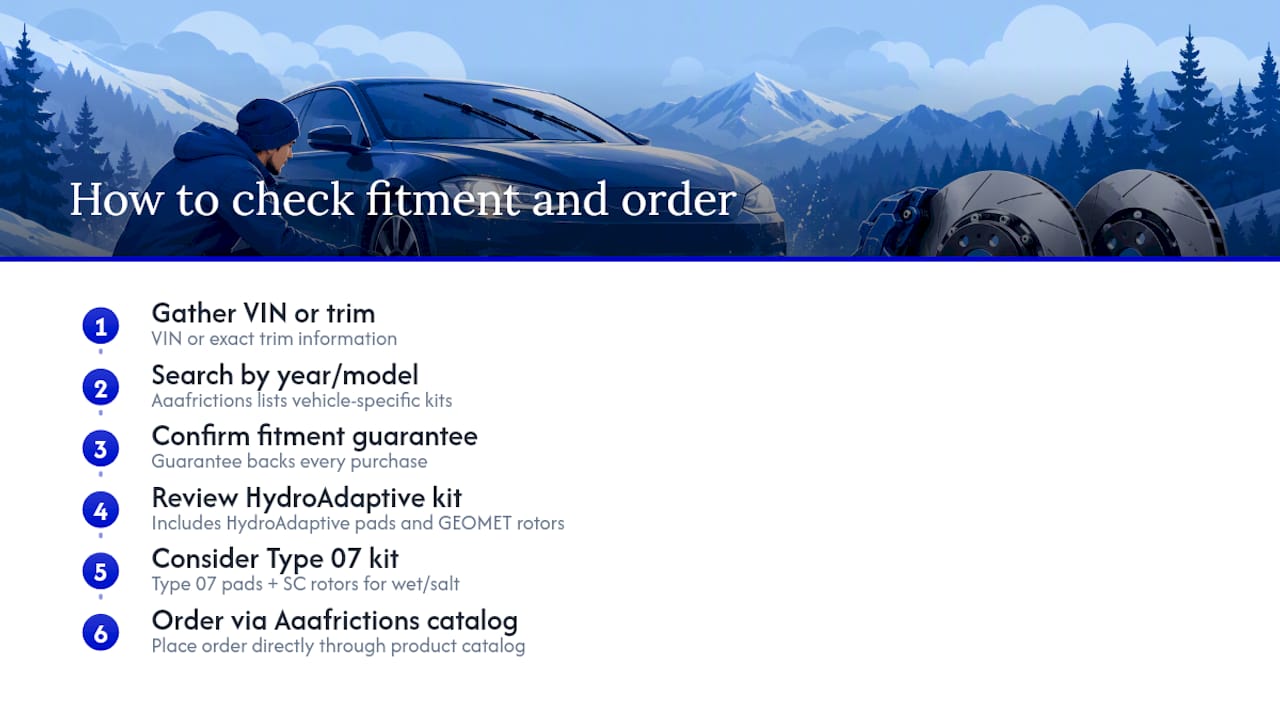
Checking fitment starts with your VIN or exact trim, the same information you’d gather before ordering any kit. Aaafrictions lists kits by specific vehicle year and model, including applications like the Ford SSV Plug-In Hybrid 2019, so you’re not guessing at rotor diameter or caliper clearance. Fitment guarantees back every purchase, which removes the ordering risk that comes with piecing together parts from multiple sellers.
If you’re weighing pad compounds against a full rotor-and-pad kit, the Type 07 Brake Pads with Type SC Rotors Kit is a solid starting point for drivers in wet or salt-heavy climates. Confirm your vehicle’s fitment, review the HydroAdaptive formulation, and place your order directly through the Aaafrictions product catalog.
If corrosion protection matters where you park, it’s also worth reading up on protecting alloy wheels with ceramic coatings as a companion step to corrosion-resistant rotors.
Sources
- TECHNICAL STANDARDS DOCUMENT No. 135, Revision 5
- Brake Kit braking performance: What You Need to Know – Car Truck Advisor
- Advantages of Buying Brake Parts as a Kit: Avoid Costly Mistakes
- Ultimate Brake Kits Buying Guide – Parts Avenue