

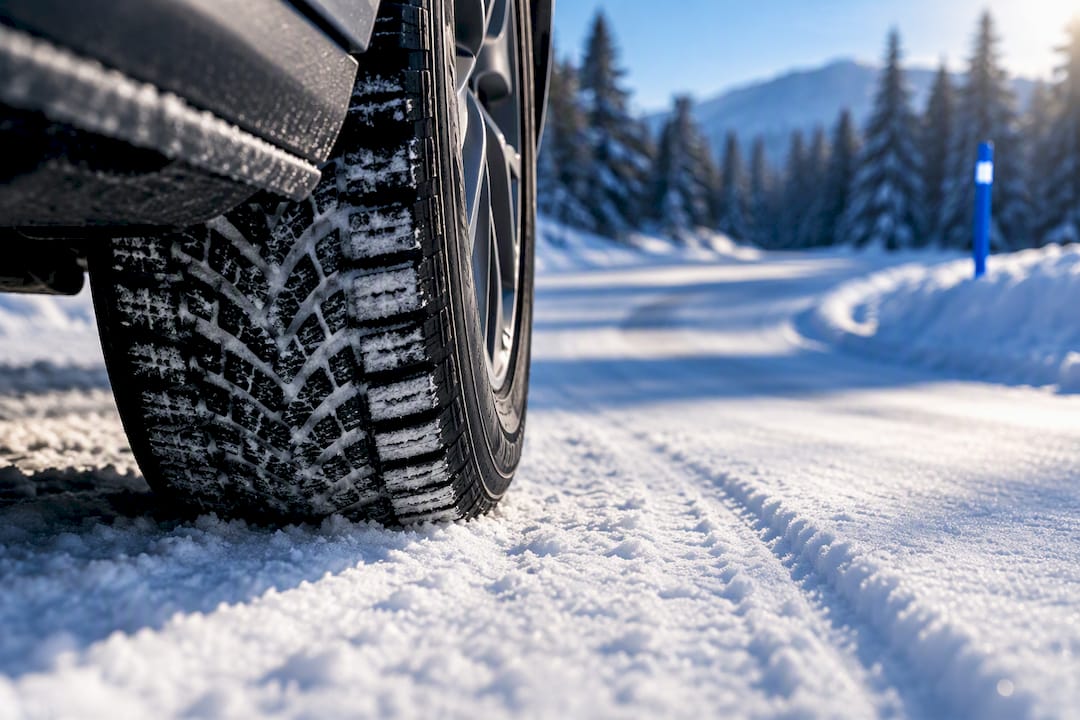
Winter stopping distance is controlled primarily by your tyres, not your brake pads. Fit winter tyres carrying the three-peaked mountain and snowflake symbol first, since tyre-road friction sets the physical limit on how quickly you stop. Performance brake components improve pedal consistency and moisture handling on top of that foundation, but they cannot manufacture grip that your tyres don’t have. Inspect both systems now, before the first snowfall.
TL;DR:
- Winter tyres with the three-peaked mountain and snowflake symbol are essential, as tyre-road friction determines stopping distance on snow and ice.
- Cold temperatures, moisture, and packed snow significantly reduce available friction, making tyre grip the limiting factor for safe braking.
- Upgrading to climate-adaptive brake pads and corrosion-resistant rotors improves pedal feel and brake response during repeated stops, especially in humid or salty conditions.
- Proper vehicle maintenance, including rotor and pad inspection, sliding caliper pins, and cleaning salt residue, is critical to avoiding brake performance issues in winter.
- Effective braking in snow and ice relies on steady threshold force or ABS activation, early slowing, and gradual steering inputs to prevent loss of control.
Table of Contents
- How cold, moisture and snow change braking physics
- Do you need special winter brake pads or rotors?
- Why winter tyres matter more than brake upgrades for stopping distance
- Winter brake maintenance and moisture-management checklist
- How to brake in snow and ice with confidence
- When to upgrade brakes for winter and what to look for
- Our take: tyres first, climate-adaptive brakes second
- Winter-ready brake pads and rotors from AAA Frictions
- Sources
- FAQ
How cold, moisture and snow change braking physics
Every stop on snow or ice comes down to one number: the friction available between rubber and road. Cold temperatures, standing water, packed snow, and black ice each reduce that number in different ways, and your brake system can only work with whatever grip the tyre delivers underneath it.
Winter tyres solve part of this by staying flexible in temperatures where all-season rubber stiffens up. CAA notes that winter tyre compounds keep their flexibility below about 7°C, which lets the tread bite into snow and ice instead of skating across it. Wide performance tyres, tuned for dry pavement grip, often lose that advantage entirely once temperatures drop and roads turn slick.
Moisture changes the equation for your brakes, too. Slush and road salt accelerate corrosion on rotors and calipers, and that buildup can change how evenly a pad contacts the rotor surface.
A few mechanical realities matter here:
- Cold, dry pavement still offers decent grip, but wet cold (near 0°C with slush) is often the worst combination for both tyres and brakes.
- Packed snow and black ice can cut available friction dramatically compared with clear asphalt.
- ABS is built to preserve steering control during hard braking, not to shorten stopping distance on its own.
- Road salt exposure speeds up rotor corrosion and can affect pad-to-rotor contact over a winter season.
Understanding these limits explains why tyre-road friction, not brake hardware, governs your snow stopping distance in almost every scenario.
Do you need special winter brake pads or rotors?
Standard ceramic pads can behave inconsistently once temperature and humidity drop low enough. SAE’s proposed test method for cold-condition brake pad robustness found that friction lining material composition affects performance in cold and humid cycles, with some linings showing extended stopping response or failure modes under severe cold. That’s a material science problem, and it’s a real one.
Winter-oriented pad and rotor design tends to focus on a handful of features:
- Climate-adaptive friction compounds that resist glazing and stay consistent across temperature swings.
- Pad shapes engineered to shed moisture faster from the friction surface.
- Semi-coated rotors that resist the surface rust common after slush exposure.
Pro Tip: A pad upgrade changes how your pedal feels stop after stop, not the absolute stopping distance your tyres allow. Judge upgrades by consistency, not by miracle grip claims.
These upgrades matter most for drivers doing repeat hard stops, towing in winter conditions, or running fleet and municipal vehicles where corrosion and pedal fade cause real downtime.
Why winter tyres matter more than brake upgrades for stopping distance
If you’re choosing where to spend money before winter, tyres win every time. Transport Canada and CAA testing both point to winter tyres as the single biggest factor in shortening stopping distance on snow and ice, because the tread compound and pattern are doing the actual work of gripping the road surface.

The three-peaked mountain and snowflake symbol (3PMSF) marks tyres tested for severe snow performance, separate from the milder “mud and snow” rating some all-seasons carry. Tread depth and siping (the small slits cut into the tread blocks) add mechanical grip that a warm-weather tyre simply doesn’t have.
That said, brakes still have a job to do:
- On repeat downhill braking, consistent pad performance prevents fade that no tyre can fix.
- In wet-cold conditions near freezing, moisture-shedding pad design reduces the lag between pedal input and bite.
- In corrosion-prone regions with heavy salt use, rotor coatings protect against the rust that causes uneven wear.
Pro Tip: Pair winter tyres with a brake system that manages moisture well, and you get both the grip and the pedal consistency needed for real winter stops.
Winter brake maintenance and moisture-management checklist
Most winter braking complaints trace back to maintenance gaps, not pad chemistry. Transport Canada’s vehicle preparation guidance warns that corrosion, moisture, and seized hardware degrade braking performance well before a compound ever reaches its limits.
Work through this before the snow arrives:
- Check pad thickness and rotor condition, including any lip or grooving on the rotor edge.
- Confirm caliper slide pins move freely. Seized slides cause uneven pad wear and pulling.
- Inspect brake hoses for cracking and confirm all warning lamps clear on startup.
- Test brake fluid condition. Fluid absorbs moisture over time, and contaminated fluid lowers its boiling point and can affect cold-weather response. Many manufacturers recommend a flush every two to three years regardless of mileage.
- Clean visible salt residue from calipers and rotor hats, and keep slide pins greased with the correct lubricant for the job.
Pro Tip: A protective coating approach on exposed metal components, paired with regular cleaning, cuts down the surface rust that road salt causes over a Canadian winter.
Soft pedal feel, pulling to one side, or new grinding noise are not “wait until spring” symptoms. Have them checked immediately.
How to brake in snow and ice with confidence
Technique matters as much as equipment once the wheels start losing traction. Get this part wrong and even a well-maintained brake system won’t save you.
- If ABS activates, press the pedal firmly and hold it. Transport Canada is clear that ABS is designed to preserve steering control, not pump for you: the pulsing you feel is the system doing its job.
- Without ABS, or on an older vehicle, use steady threshold braking: apply firm pressure just short of lockup, easing off slightly if the wheels start to slide.
- Slow down well before curves, intersections, or hills, and double your normal following distance in winter, since ice near freezing can be twice as slippery as ice at deeper cold.
- Steer through braking with smooth inputs. Abrupt steering or throttle changes mid-stop are what actually trigger a slide.
- Practice low-speed emergency stops in an empty lot early in the season, so you learn exactly how your specific vehicle, tyres, and ABS behave on ice before you need that knowledge on a real road.
When to upgrade brakes for winter and what to look for
Not every driver needs a brake upgrade before winter. A few signs point toward one: fading pedal feel after repeat stops, visible rotor corrosion despite regular cleaning, or a duty cycle that includes towing, heavy cargo, or frequent mountain driving.
If you’re shopping, prioritize these criteria over price alone:
- Friction material with documented robustness in cold and humid cycles, not just a “ceramic” label.
- Moisture-shedding pad geometry that clears water and slush from the contact surface quickly.
- Rotor coatings built for corrosion resistance in salt-heavy regions.
- Confirmed fitment for your exact make, model, and year before ordering.
Installation matters too. Whether you go with a shop or handle it yourself, correct torque on caliper hardware and a proper bedding-in period after fitment are what let new pads and rotors reach their full performance. A post-install check of pedal feel and pulling within the first few hundred kilometres catches most issues early.
AAA Frictions built its HydroAdaptive ceramic technology specifically around this moisture-and-cold challenge, and it’s worth a look if you’re already leaning toward an upgrade.
Our take: tyres first, climate-adaptive brakes second
Winter safety starts with tyres. That’s not a hedge, it’s physics: no pad compound overcomes low tyre-road friction. Once tyres are sorted, moisture-shedding friction materials and corrosion-resistant rotor coatings close the remaining gap, especially for drivers facing repeat stops or salt-heavy roads. If you’re weighing an upgrade, check your vehicle’s fitment page or reach out to a specialist before you buy.
— AAA
Winter-ready brake pads and rotors from AAA Frictions
AAA Frictions is the option built specifically for the moisture and cold problem this article just walked through, not a general-purpose pad repackaged for winter marketing. Our HydroAdaptive ceramic formulation is engineered to clear moisture fast and hold friction steady across temperature swings, which is exactly the failure point standard ceramic pads run into once the mercury drops.

Three product lines cover most winter upgrade needs. Type 07 Brake Pads use the full HydroAdaptive ceramic formulation for drivers who want the strongest cold and moisture response. Type 03 Brake Pads cover alternative fitments where a Type 07 isn’t listed for your vehicle. For rotors, SC Type Rotors and GC Type Rotors both add corrosion-resistant coatings built to handle a salted road season without surface rust creeping in.
Check your vehicle’s fitment on the product page, order the matching pad and rotor set, and book a post-install pedal check once your installer has bedded in the new components.
Sources
- Winter tires (CAA)
- Proposed test method for brake pad lining robustness in cold conditions (SAE)
- Preparing your vehicle for winter (Transport Canada)
FAQ
Are performance brakes good for daily driving?
Yes, provided the friction material handles temperature swings without excessive noise or dust. HydroAdaptive-style ceramic pads are built for daily use across seasons, not just track conditions, since consistent pedal feel matters more for commuting than raw peak grip.
What is the best way to brake in snow?
Press firmly and hold if ABS activates, or use steady threshold braking without ABS. Slow down early and double your following distance, since stopping distances on ice near freezing can be far longer than on cold, dry pavement.
Are high-performance tyres good in the snow?
Generally no. Performance tyres are tuned for dry-pavement grip and stiffen in cold temperatures, losing the flexibility that winter tyres maintain below about 7°C. A 3PMSF-rated winter tyre will outperform a summer or performance tyre on snow in almost every case.
What’s the worst car to drive in the snow?
Any vehicle running summer or worn all-season tyres in deep cold, regardless of drivetrain or brake quality. All-wheel drive helps with acceleration but does nothing for stopping distance, which still depends entirely on tyre-road friction.
Do AAA Frictions pads help with winter braking specifically?
Yes. The HydroAdaptive ceramic formulation is designed to clear moisture quickly and hold friction steady across wet and cold conditions, which addresses the pedal inconsistency drivers often notice with standard pads in winter weather.