

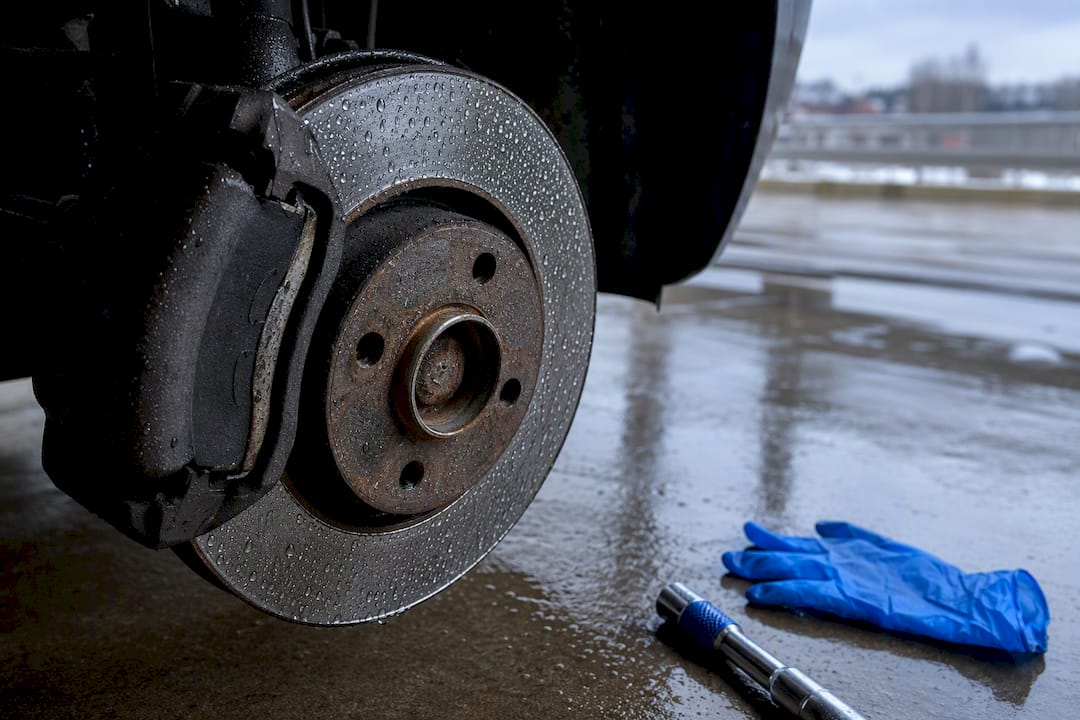
Quiet or noisy brakes in rain are usually temporary, caused by a thin water film or light surface rust rather than a mechanical fault. Start with a gentle low-speed brake test in a safe area: a few light stops, then firmer ones, checking for pull or dragging. If the pedal feels normal and the car stops straight, you’re fine to continue. If you notice dragging, poor stopping, or a warning light, stop driving and have the vehicle inspected, and check Transport Canada recall guidance if the symptom persists. Some brake pad manufacturers engineer their pads to address wet-weather variability.
TL;DR:
- Most rain-related brake noise is caused by temporary water films or light rust that usually clear after a few stops, unless symptoms persist or worsen.
- Quick checks include low-speed, straight-line braking tests in a safe, quiet area and visual inspection for stuck calipers, oily pads, or uneven rust around the rotor.
- If symptoms continue after drying and burnishing, or if brakes drag, heat excessively, or warning lights appear, professional inspection is necessary.
- Preventive measures like anti-corrosion coatings and proper pad bedding can reduce recurring noise, while avoid using lubricants on the brake friction surface.
- Rain can alter brake feel temporarily but persistent noise or drag may indicate corrosion or a mechanical fault requiring parts replacement.
Table of Contents
- Why wet weather changes the way your brakes sound and feel
- Quick checks you can run right after a wet drive
- Fixes that restore quiet braking and stop it from coming back
- When wet-weather brake noise needs a professional look
- How HydroAdaptive technology fits into wet-weather braking
- What actually matters when you’re chasing quiet brakes
- Choosing brake parts built for wet-weather driving
- Where to check recalls and technical standards
- Sources
- FAQ
Why wet weather changes the way your brakes sound and feel
A brake system relies on direct, dry contact between the pad and the rotor. Rain interrupts that contact in a few predictable ways, and most of them clear up on their own within a few kilometres of driving.
The most common cause is a thin water film across the rotor surface. That film briefly changes the friction between pad and rotor, which alters the vibration pattern that produces sound. Depending on your pad material and rotor condition, this can show up as squeal, a dull thud, or, just as often, brakes that feel unusually quiet because the water is temporarily muting normal pad contact.
Surface rust and glazing are the second common cause. Rotors are bare cast iron at the friction surface, and a few hours of rain or even overnight humidity can leave a fine layer of rust across that surface. Until it wears off through a handful of stops, that rust changes contact and produces noise. According to AAA Frictions, this kind of surface rust or pad glazing is one of the most frequent reasons drivers notice a change in wet-weather brake feel, and it’s typically a cosmetic issue rather than a mechanical one.
The third cause is more serious: caliper sticking, contaminated pads, or moisture intrusion in the parking brake mechanism. These aren’t cosmetic. Transport Canada recall records document cases where moisture and corrosion in parking-brake or caliper assemblies caused rear brake noise, dragging, or outright failure requiring dealer inspection and part replacement.
The difference between a transient symptom and a mechanical one comes down to persistence and pattern:
- Transient: noise or altered feel fades within a few stops and doesn’t return until the next wet exposure.
- Persistent: noise continues after several dry stops, or is joined by pulling, dragging, or a soft pedal.
- Escalating: what started as light squeal becomes grinding, scraping, or a burning smell.
Transient symptoms are water film or light rust. Persistent or escalating symptoms point toward corrosion or a sticking component, and that’s where recall history matters. What looks like ordinary rain noise can, in some documented cases, be the early stage of a fault that later required a service campaign.
Quick checks you can run right after a wet drive
Before assuming the worst, run through a short sequence to confirm whether your brakes just need drying out or need a professional look.
- Find a safe, quiet area with no traffic, ideally a straight, flat stretch.
- Accelerate to a low speed, then apply the brakes gently and note the pedal feel.
- Repeat with a firmer stop, watching for the vehicle pulling to one side.
- Check each wheel visually for a caliper that looks stuck, pads that appear wet or oily, a rotor with an uneven rust ring, or any fluid weeping near the wheel.
- Drive a short distance with light, repeated stops to let friction heat evaporate residual moisture, then retest.
Drying works well for a thin water film or light rust and usually restores normal feel within a few stops, according to AAA Frictions’ guidance on wet brake pads. It does nothing for a stuck caliper or contaminated pad, so if the symptom returns immediately after drying, treat it as mechanical rather than weather-related.
Certain signs mean you should stop driving and call for help rather than continue testing: a wheel that’s noticeably hotter than the others or dragging, visible steam or smoke, a strong pull under braking, or an ABS warning light that won’t clear.

Pro Tip: Do the low-speed test in a straight line with no other vehicles nearby, and stop the test the moment you feel anything beyond mild noise or vibration.
Fixes that restore quiet braking and stop it from coming back
Most wet-weather noise responds to simple, low-cost remedies before any parts need to come off the car.
Burnishing is the first move: several controlled stops from a low speed generate enough heat to clear light rust and re-seat the pad against the rotor surface. If rust is visible but light, a non-acid wheel cleaner or a light rubbing compound on the rotor face can speed that process along, an approach AAA Frictions outlines for drivers dealing with grinding after rain. What you should never do is spray a general-purpose lubricant such as WD-40 onto the pads or rotors. It reduces friction on the surfaces meant to grip, which turns a noise complaint into a stopping-distance problem.
Cleaning and burnishing have limits. If a rotor shows deep scoring, uneven wear, or rust that comes back within a day of clearing, replacement is the right call rather than repeated cleaning. The same goes for pads that have absorbed oil, grease, or brake fluid: contaminated friction material doesn’t recover, it gets replaced.
- Anti-corrosion coatings on rotors slow the rust cycle that causes recurring noise in wet climates.
- Proper pad bedding-in after any pad replacement reduces glazing and evens out friction across the surface.
- Shims and anti-squeal lubricant on the pad’s backing plate, never the friction face, cut down vibration-driven noise without affecting stopping power.
- A seasonal check of caliper slides and parking-brake components catches early corrosion before it seizes anything.
Pro Tip: Apply anti-squeal lubricant only to the back of the pad and the caliper hardware, never the pad’s friction surface facing the rotor.
When wet-weather brake noise needs a professional look
Some symptoms move past the do-it-yourself stage the moment you notice them.
- Dragging that doesn’t clear after drying or driving a short distance.
- Reduced stopping distance or a pedal that sinks lower than usual.
- Brake fluid leaks, visible as wetness or drips near a wheel.
- A smoking or unusually hot wheel after normal driving.
- Repeated ABS or ESP warning lights, especially after rain.
A shop dealing with these will typically check caliper slides and seals, inspect the parking-brake mechanism for corrosion, resurface or replace pads and rotors, and apply anti-corrosion treatment where needed, similar to the campaign detailed in Transport Canada’s Hyundai service bulletin. It’s also worth checking your vehicle’s VIN against Transport Canada’s recall database, since corrosion-related brake recalls are more common than most drivers expect.
How HydroAdaptive technology fits into wet-weather braking
Weather-adaptive pad technology is designed for exactly the transient symptom described above: a thin water film that briefly changes friction. AAA Frictions built its HydroAdaptive Technology to clear that moisture quickly and keep friction consistent, which is a different job from fixing corrosion or a stuck caliper.
- Helps with: water film on the rotor surface, inconsistent pedal feel right after rain, gradual noise from surface moisture.
- Doesn’t help with: a corroded caliper slide, a parking-brake mechanism seized by rust, or scored rotors from long-term neglect.
Readers who want the mechanical detail behind the claim can find it on AAA Frictions’ technology page, which lays out how the formulation and rotor coatings are meant to behave across wet and dry conditions.
What actually matters when you’re chasing quiet brakes
Cheap fixes handle most rain-related noise, and there’s no reason to replace parts before you’ve tried drying and burnishing. Where drivers go wrong is treating persistent dragging or corrosion the same way. That’s a shop visit, not a cleaning job. Weather-adaptive pads and anti-corrosion care pay off over years in wet climates, not in one dry afternoon.
— AAA
Choosing brake parts built for wet-weather driving
If rain-related brake noise keeps coming back, the parts themselves may be working against you rather than the weather.

Certain brake pads use technology designed to clear moisture from the friction surface, while specific rotors add corrosion-resistant coatings that resist the rust cycle behind recurring wet-weather noise.
- Some pads target consistent pedal feel across wet, humid, and cold conditions.
- Certain rotors pair with those pads to resist surface corrosion between drives.
- Check fitment and details on the Type 03 Brake Pads and Type 07 Brake Pads product pages before ordering.
Where to check recalls and technical standards
- Search your vehicle by VIN on Transport Canada’s recall database.
- Review brake water-recovery test criteria in Technical Standards Document 135.
- See the full regulatory list in the Motor Vehicle Safety Regulations.
Sources
- Transport Canada recall 2018053 — Mitsubishi
- Technical standards document (TSD 135) — Transport Canada
- Motor Vehicle Safety Regulations (C.R.C., c. 1038) — Transport Canada
FAQ
Why are my brakes so loud in the rain?
Rain leaves a thin water film or light surface rust on the rotor, which changes how the pad grips and often produces squeal or a grinding sound until it clears. This is usually temporary and fades after a few stops, though Transport Canada recall records show it can point to corrosion if the noise persists.
Is it okay to do brakes in the rain?
Routine brake work such as a pad swap can be done in wet conditions if the work area is dry and safe, but any inspection depending on visibility, like checking for hairline rotor cracks, is easier and safer in dry conditions. If you’re diagnosing a wet-weather noise, it’s best assessed while it’s actually happening or right after.
Why do my brakes feel more sensitive when it rains?
A wet or lightly rusted rotor surface changes the initial bite of the pad, which can make braking feel sharper or, in other cases, momentarily less responsive until the water clears. This shift is normal and matches the kind of water-exposure performance change addressed in Technical Standards Document 135.
Can I spray WD-40 on my brakes to stop squeaking?
No. Spraying a general-purpose lubricant on the pads or rotors reduces the friction those surfaces need to stop the vehicle, turning a noise issue into a safety hazard. Use a dedicated brake cleaner and, per AAA Frictions’ guidance, keep any lubricant limited to the hardware behind the pad, never the friction face.