

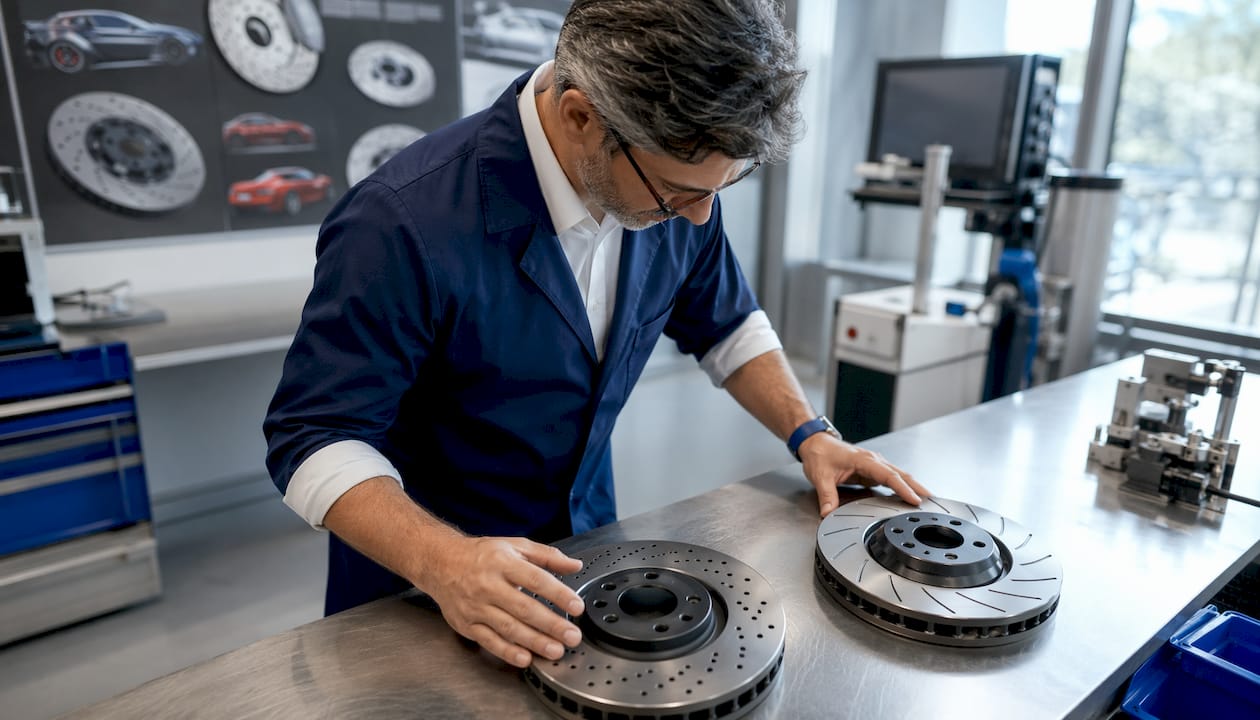
Drilled rotors are the better choice for street-focused drivers in wet climates who want improved initial bite and a clean look. Slotted rotors are the right call for towing, heavy loads, repeated hard stops, and track use, where structural durability and consistent pad-surface maintenance matter more than water evacuation. Most daily drivers in Alberta, however, don’t need either—a quality vented rotor paired with the right pad compound will outperform a poorly matched drilled or slotted setup every time.
Quick scenario guide:
- Daily commuter (city/highway): Stock vented or quality coated rotor. No upgrade needed unless you’re chasing aesthetics.
- Wet/rainy conditions (Alberta spring melt, coastal routes): Drilled or drilled+slotted for faster water evacuation and initial bite.
- Towing or hauling (trucks, SUVs, trailers): Slotted. More thermal mass, better pad-surface refresh under sustained load.
- Spirited mountain driving (Banff, Jasper corridors): Slotted or hybrid, depending on rotor quality and pad pairing.
- Track days or endurance use: High-quality slotted only. Drilled rotors carry real cracking risk under repeated thermal cycling.
- Show car / visual priority: Drilled or hybrid for aesthetics, with the understanding that structural trade-offs apply.
Table of Contents
- How do drilled, slotted, and hybrid rotors actually compare?
- How brake rotors actually work — the short engineering version
- What drilled rotors do well — and where they fall short
- What slotted rotors do well — and the trade-offs you accept
- Do drilled + slotted rotors actually deliver the best of both?
- Common myths and real risks you should know about
- How to choose the right rotor: a decision checklist for Alberta drivers
- What to expect for maintenance, lifespan, and cost in Canada
- Canadian climate conditions and what they mean for your rotor choice
- Key Takeaways
- The scenario-first approach is the only one that holds up
- Aaafrictions all-weather brake kits for Alberta drivers
- Authoritative sources and further reading
How do drilled, slotted, and hybrid rotors actually compare?
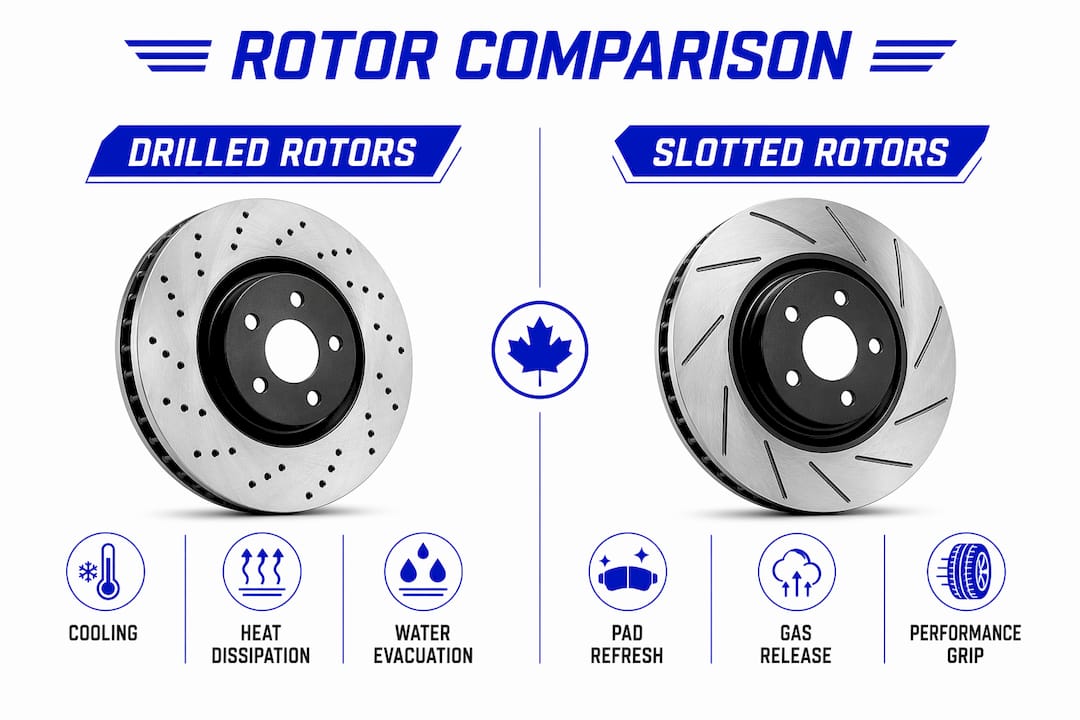
The table below maps the three main performance rotor types across the dimensions that matter most for Canadian driving conditions.
| Dimension | Drilled | Slotted | Drilled + Slotted |
|---|---|---|---|
| Best for | Street/wet, aesthetics | Towing, track, heavy loads | Aggressive street, occasional track |
| Cooling / heat dissipation | Moderate (contact patch) | High (pad cleaning effect) | Moderate–High |
| Pad interface / wiping action | Minimal | Strong anti-glaze action | Moderate |
| Cracking / structural durability | Lower (stress risers at holes) | High | Moderate (inherits hole risk) |
| Pad wear rate | Moderate | Higher than blank | Higher |
| Noise and dust | Low–Moderate | Moderate (possible hum) | Moderate |
| Cost and maintenance | Moderate | Moderate | Moderate–High |
| Wet / snow / Canadian climate | Good initial bite | Good debris evacuation | Good overall |
A few practical notes worth flagging for Alberta drivers specifically:
- Slotted rotors preserve more thermal mass than drilled designs, which matters when you’re descending the Icefields Parkway with a loaded trailer.
- Drilled rotors break the water film at the contact patch quickly, which translates to a more confident first stop on a wet Edmonton street.
- Rotor vane geometry — the internal venting design — often contributes more to overall heat shedding than surface drilling alone. Don’t overlook it when comparing specs.
- For salted winter roads, a corrosion-resistant coating on any rotor type is worth more than the surface pattern.
How brake rotors actually work — the short engineering version
A brake rotor does two things: it provides a friction surface for the pad to grip, and it absorbs and dissipates the heat that friction generates. The vented rotors on most modern vehicles use internal vanes between two rotor faces to draw air through the disc as it spins, pulling heat away from the braking surface. That internal geometry, not the surface pattern, is the primary cooling mechanism.
Holes and slots modify the surface interaction in specific ways:
- Holes create air pathways at the contact patch and prevent a vacuum from forming when the rotor contacts water, which speeds up water egress and improves initial wet-weather bite.
- Slots act as a continuous wiper across the pad face, scraping away glazed material, gas, and debris to keep the friction surface fresh and consistent.
- Neither modification replaces the thermal capacity of the rotor’s mass. Remove material, and you reduce the rotor’s ability to absorb heat before it needs to shed it.
Pro Tip: When a mechanic assesses a rotor upgrade, the three numbers that actually matter are lateral runout (should be under 0.05 mm on most passenger vehicles), minimum thickness (stamped on the rotor hat), and pad compound compatibility. A premium drilled rotor paired with the wrong pad will underperform a mid-grade slotted rotor with the right compound.
What drilled rotors do well — and where they fall short
Drilled rotors are engineered around one primary advantage: managing the pad-to-rotor interface in wet conditions. The holes prevent a thin water film from hydroplaning between pad and disc, so wet-weather bite arrives faster than with a blank rotor. For a street driver in a climate with frequent rain or spring melt, that’s a real functional benefit, not just marketing.
Drilled rotor advantages:
- Faster water evacuation at the contact patch, improving initial wet-weather stopping response
- Convective cooling effect at the pad interface during moderate street driving
- Minor reduction in unsprung weight compared to blank rotors of the same diameter
- Visual appeal — a legitimate consideration for show builds and open-spoke wheels
Drilled rotor drawbacks:
- Reduced thermal mass means less heat absorption capacity before fade sets in
- Holes act as stress risers in the cast iron; repeated thermal cycling can initiate micro-cracks that propagate with sustained abuse
- Less total pad contact area, which can accelerate wear with aggressive pad compounds
- Not suitable for endurance track use, heavy towing, or vehicles with high curb weight
Manufacturing quality changes the risk profile significantly. High-quality drilled rotors use chamfered hole edges and sometimes cryogenic heat treatment to reduce crack initiation. A cheap drilled rotor with sharp-edged holes is a different product entirely. If you’re buying drilled, pay for the quality — the geometry of those holes matters more than the pattern looks.
What slotted rotors do well — and the trade-offs you accept
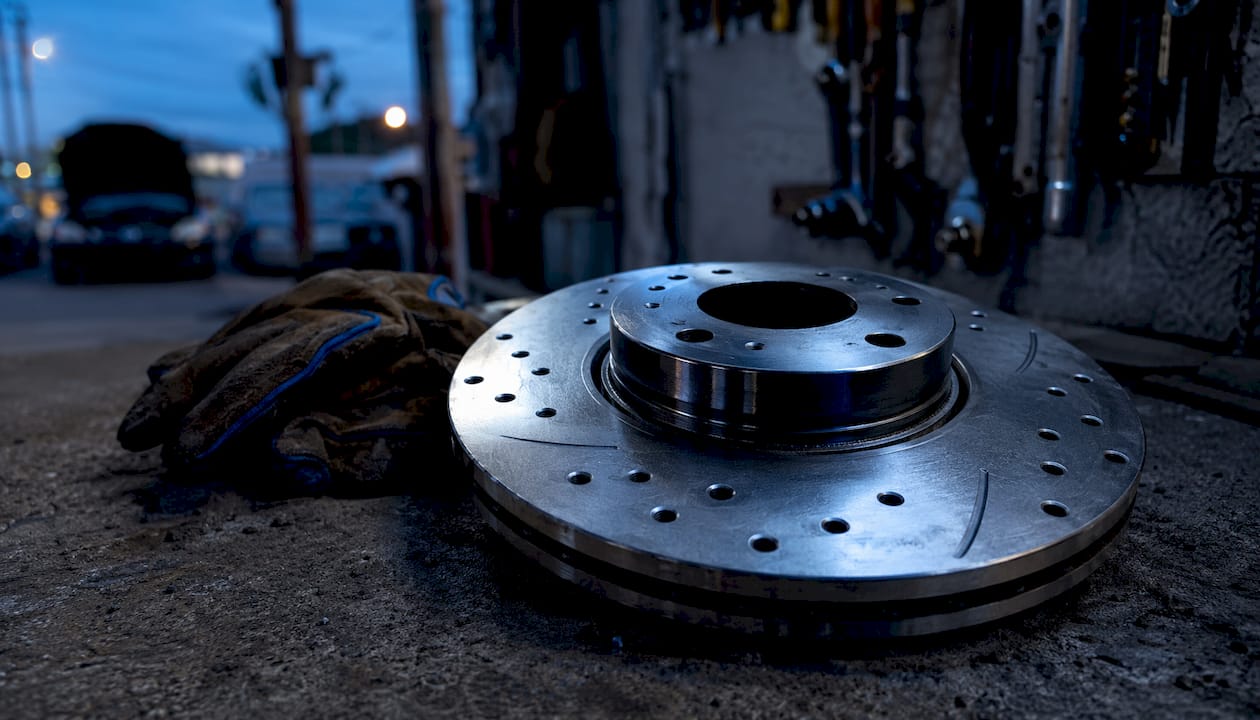
Slotted rotors solve a different problem than drilled ones. Their primary job is pad-surface maintenance. As the rotor spins, the slot edges continuously scrape the pad face, removing glazed material, combustion gases, and debris. The result is a consistently fresh friction surface that resists brake fade under repeated hard stops — exactly what towing, mountain descents, and track driving demand.
Slotted rotor advantages:
- Strong anti-glaze action keeps the pad surface active through repeated high-energy stops
- Better structural integrity than drilled designs because material is removed from the surface, not through the disc
- Consistent friction profile under sustained thermal load
- Preferred in most racing environments for gas and water evacuation without the cracking risk of holes
Slotted rotor drawbacks:
- Increased pad wear relative to blank or drilled rotors — the slot edges are abrasive on the pad compound
- Possible humming or light scraping sound, especially with harder pad compounds
- Slightly more brake dust in some pad and rotor combinations
- Overkill for a light commuter vehicle that rarely sees sustained braking
Slot geometry matters more than most buyers realize. Curved or J-hook slot shapes, developed to tune pad-refresh aggressiveness, also reduce stress concentration compared with straight cuts. A well-designed curved slot is quieter, gentler on pads, and more effective at debris evacuation than a basic straight slot at the same price point.
Do drilled + slotted rotors actually deliver the best of both?
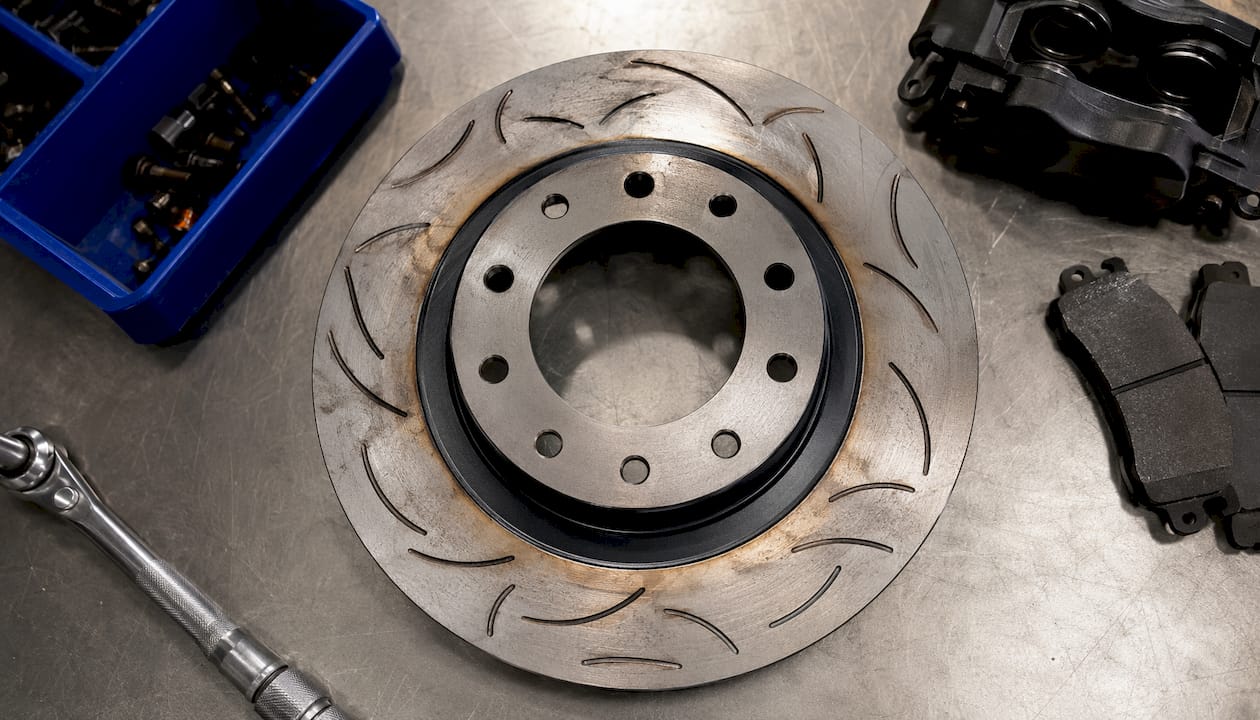
The hybrid approach is appealing in theory: combine the water evacuation of drilled holes with the pad-cleaning action of slots, and you get a rotor that handles wet streets and spirited driving equally well. In practice, the trade-offs stack rather than cancel. Hybrid rotors inherit the cracking risk of the drilled design and the accelerated pad wear of the slotted design, while the cooling benefit remains moderate rather than exceptional.
When a hybrid rotor makes sense:
- Street performance cars driven spiritedly on weekends but not tracked seriously
- Drivers who want the visual appeal of drilled rotors with slightly better pad-surface maintenance than a drilled-only design
- Occasional canyon runs or mountain passes where both water evacuation and pad freshness matter
When to choose a single-purpose rotor instead:
- Endurance track sessions: choose high-quality slotted only
- Heavy towing or hauling: slotted, for the thermal mass and structural durability
- Pure daily commuting: vented OEM-spec or coated rotor, no surface machining needed
- Budget-constrained builds: a quality slotted rotor at mid-tier pricing outperforms a cheap hybrid
The extra cost of a hybrid rotor is only justified when your driving genuinely splits between wet-street performance and occasional spirited use. If you’re mostly commuting with the odd spirited run, a quality slotted rotor with a good street pad is the more durable and cost-effective choice.
Common myths and real risks you should know about
Myth: Drilled rotors dramatically cool your brakes.
The holes do create localized airflow at the contact patch, which helps during moderate street use. But they also remove thermal mass — the rotor’s ability to absorb heat before it needs to shed it. Under sustained hard braking, a drilled rotor reaches its thermal limit faster than a slotted or blank rotor of the same diameter. The internal vane geometry does far more for overall heat management.
Real risk: Cracking around drilled holes.
Cast iron heats and cools unevenly around a hole. The material near the hole edge cycles through thermal stress at a different rate than the surrounding disc, which is how micro-cracks initiate. Under repeated extreme thermal cycling — track sessions, mountain descents with a load — those cracks propagate. When you see a crack extending from a hole toward the rotor edge, replacement is not optional.
Warping vs. runout — what’s actually causing that pedal pulsation?
True rotor warping from heat is less common than most drivers think. Pedal pulsation usually comes from uneven pad material transfer onto the rotor surface, or from lateral runout caused by improper torquing of wheel fasteners. Slotted rotors are less prone to uneven pad deposits because the slots continuously clean the surface. Drilled rotors can accumulate pad material around hole edges, which contributes to pulsation over time.
Winter corrosion in Alberta:
Road salt is aggressive on bare cast iron. An uncoated rotor will develop surface rust within days of exposure, which is normal and wipes off during the first few stops. The concern is edge corrosion and corrosion around drilled holes, which can accelerate crack initiation on lower-quality rotors. A protective coating — specifically a zinc-based or GEOMET-type finish on the hat, vanes, and non-contact surfaces — is worth specifying for any rotor used year-round in Alberta.
How to choose the right rotor: a decision checklist for Alberta drivers
Work through these questions before you buy. They’ll narrow the field faster than any spec sheet.
- What is your primary use? Daily commuting, towing/hauling, spirited street driving, or track use? This single answer eliminates most options immediately.
- What is your vehicle’s curb weight and load? Heavier vehicles and towing applications generate more sustained heat. Slotted rotors are the safer call above a certain load threshold.
- How visible are your wheels? Open-spoke wheels on a show build make the rotor a visual element. Drilled or hybrid rotors are legitimate choices when aesthetics matter.
- What are your typical road conditions? Wet spring roads and salted winter pavement in Alberta favor water-evacuating designs and corrosion-resistant coatings over raw performance gains.
- What is your budget and maintenance tolerance? Slotted rotors increase pad wear. If you’re not prepared to replace pads more frequently, factor that into the total cost.
- Ask your mechanic or parts supplier: What pad compound is compatible with this rotor? Can this rotor be resurfaced, or is it replace-only? Does it carry a warranty against cracking? What manufacturing treatments (chamfering, cryogenic processing) does the drilled rotor use?
Quick decision paths:
- Light commuter in Edmonton or Calgary, mostly highway: quality vented or GC-coated rotor, no surface machining required
- Towing in the Alberta mountains: slotted, paired with a high-temperature street pad
- Weekend canyon carver, occasional Banff runs: slotted or hybrid depending on rotor quality and budget
- Track day driver: high-quality slotted only, paired with a track-rated pad compound
Pad and rotor compatibility is the most underrated factor in this decision. Rotor quality and correct pad pairing matter more than surface pattern for everyday performance and longevity.
What to expect for maintenance, lifespan, and cost in Canada
Rotor and pad costs in the Canadian market vary by vehicle class and rotor type. Entry-level drilled or slotted rotors for a compact or mid-size sedan typically fall in the affordable price range. Mid-tier performance rotors for trucks and SUVs cost more. Premium climate-adaptive kits with coated rotors and matched ceramic pads are the highest priced, depending on vehicle fitment.
| Rotor type | Expected rotor lifespan | Relative pad wear | Resurfaceable? |
|---|---|---|---|
| Vented (blank) | Moderate lifespan | Baseline | Resurfaceable if above minimum thickness |
| Drilled | Shorter lifespan | Moderate | Limited resurfacing ability due to hole geometry |
| Slotted | Moderate lifespan | Higher pad wear | Resurfaceable (limited cuts) |
| Drilled + Slotted | Shorter lifespan | Higher pad wear | Limited resurfacing ability |
These ranges assume moderate street driving and correct pad pairing. Aggressive driving, towing, or mismatched pad compounds compress them significantly.
Practical maintenance guidance:
- Inspect rotors for cracks, scoring, and minimum thickness at every pad change
- Measure lateral runout if you feel pedal pulsation — don’t assume the rotor needs replacement before checking runout first
- Slotted rotors can often be resurfaced once; drilled rotors have limited resurfacing potential because each cut reduces the material around the holes
- Replace rotors in axle pairs to maintain even braking balance
- In Alberta’s salt season, rinse the undercarriage regularly — corrosion on the rotor hat and vanes accelerates faster than on the braking surface
For a brake system guide covering light-vehicle pad and rotor interaction in performance contexts, the go-kart brake safety guide from GoKarts USA offers a useful reference on friction fundamentals that translate directly to passenger vehicle applications.
Canadian climate conditions and what they mean for your rotor choice
Alberta’s driving environment creates a specific set of demands that the standard drilled-vs-slotted comparison doesn’t fully address. Road salt from October through April, freeze-thaw cycles that leave standing water on roads even in sub-zero temperatures, and long mountain descents under load all stress the braking system in ways that a dry-climate comparison ignores.
In wet and salty conditions, moisture management and corrosion resistance often outweigh the marginal cooling gains that drilling offers. A drilled rotor with no protective coating will develop corrosion around the hole edges faster than a slotted rotor with a zinc or GEOMET-type finish. That corrosion accelerates the stress concentration that leads to cracking, compressing the rotor’s useful life.
Aaafrictions’ HydroAdaptive ceramic formulation addresses this directly. The technology is engineered to rapidly clear moisture from the pad-to-rotor interface, maintaining consistent friction even when the rotor surface is wet or cold. Paired with GC-coated rotors — which use a GEOMET-type protective finish on all non-contact surfaces — the system reduces both moisture-related performance loss and the corrosion that shortens rotor life in Alberta’s salt season.
Pro Tip: For Alberta year-round driving, pair HydroAdaptive ceramic pads with GC-coated rotors. The ceramic formulation maintains a stable friction profile across the temperature range you’ll encounter from January through July, and the coating protects the hat and vanes through salt season without compromising the braking surface.
Climate-adaptive note: Aaafrictions’ HydroAdaptive technology is specifically engineered for the moisture and temperature variability that Canadian drivers face. Proprietary performance data and application-specific test results are available on the Aaafrictions product pages for vehicle-specific fitments.
Key Takeaways
For most Alberta drivers, the right rotor comes down to use case first, surface pattern second — and corrosion protection matters as much as cooling geometry in a Canadian climate.
| Point | Details |
|---|---|
| Daily drivers rarely need an upgrade | Quality vented rotors are adequate for commuting; drilled or slotted designs add value mainly for towing, mountain driving, or track use. |
| Slotted rotors suit sustained load | Slotted designs preserve more thermal mass and resist glazing, making them the right choice for towing, heavy SUVs, and repeated hard stops. |
| Drilled rotors suit wet-street use | Holes evacuate water at the contact patch and improve initial wet-weather bite, with the trade-off of reduced thermal mass and cracking risk under extreme use. |
| Corrosion protection is critical in Alberta | Road salt accelerates corrosion around drilled holes and on rotor vanes; a GEOMET-type or zinc coating extends rotor life through salt season. |
| Aaafrictions HydroAdaptive kits | GC-coated rotors paired with HydroAdaptive ceramic pads address moisture management and corrosion in one matched system for Canadian conditions. |
The scenario-first approach is the only one that holds up
Most brake content leads with the pattern — drilled looks great, slotted performs better — and leaves you to figure out which applies to your truck, your commute, and your Alberta winter. That framing gets the logic backwards. The rotor surface pattern is the last decision, not the first. Start with what your vehicle does, how heavy it is, and what roads it runs on. The pattern follows from those answers, not the other way around.
The other thing that gets underweighted in most comparisons is corrosion. A drilled rotor with sharp, unprotected hole edges in a Calgary winter is a different product than the same rotor with chamfered holes and a GEOMET coating. The surface pattern debate is almost academic if the rotor corrodes around the holes before it reaches its thermal limits. For Canadian drivers, coating quality and pad compound compatibility deserve as much attention as the drilled-vs-slotted question itself.
Aaafrictions all-weather brake kits for Alberta drivers
If your vehicle sees Alberta winters, spring melt, and the occasional mountain pass, a matched rotor-and-pad system built for those conditions is a more practical upgrade than chasing a surface pattern.
Aaafrictions’ Type 07 HydroAdaptive+ ceramic pads paired with GC-coated rotors are engineered specifically for the moisture, cold, and road salt that define Canadian driving. The GC coating protects all non-contact rotor surfaces through salt season, while the HydroAdaptive ceramic formulation maintains consistent friction from cold morning starts through sustained mountain braking. The system is available as a complete front and rear kit for a wide range of vehicles, including trucks and SUVs that carry real loads. For drivers who want to confirm the right fitment for their vehicle, the vehicle-specific search tool on the Aaafrictions site returns matched kits by year, make, and model. Find your kit and place your order directly at aaafrictions.ca.
Authoritative sources and further reading
- Disc Brake — Wikipedia: Comprehensive technical reference covering rotor geometry types, slot and drill configurations, and the physics of disc brake operation. Useful for understanding the engineering basis of each rotor design.
- AME Motorsport: Drilled vs Slotted Rotors Engineering Guide: Detailed engineering breakdown of how holes and slots affect thermal mass, stress concentration, and pad interface behavior. Primary source for cracking risk and hybrid trade-off analysis.
- Race Technologies: Advantages of Cross Drilled and Slotted Discs: Covers slot geometry, pad-refresh mechanics, and the role of internal vane design in heat dissipation. Relevant for understanding why slot shape matters.
- AutoGuru: Brake Rotors — Which Are Right for Me?: Practical consumer-facing guide confirming that most daily drivers don’t need upgraded rotors; useful baseline for the decision checklist.
- Aaafrictions HydroAdaptive Formulation: Technical product page describing the HydroAdaptive ceramic system and its moisture-management properties for Canadian climate conditions.
- Aaafrictions Brake Rotors — SC Type: Product detail page covering rotor coating options and corrosion-resistance specifications relevant to Alberta’s salt-season driving.