
What are high carbon rotors, and why do they outperform standard cast iron?
High carbon rotors are cast iron brake rotors engineered with a carbon content higher than that found in standard G3000 iron rotors. That difference in metallurgy changes how the rotor behaves under heat, vibration, and repeated heavy braking. For drivers in British Columbia, where wet winters, mountain descents, and road salt are routine, the engineering behind these rotors matters more than the marketing label.
Here is what the elevated carbon content actually delivers:
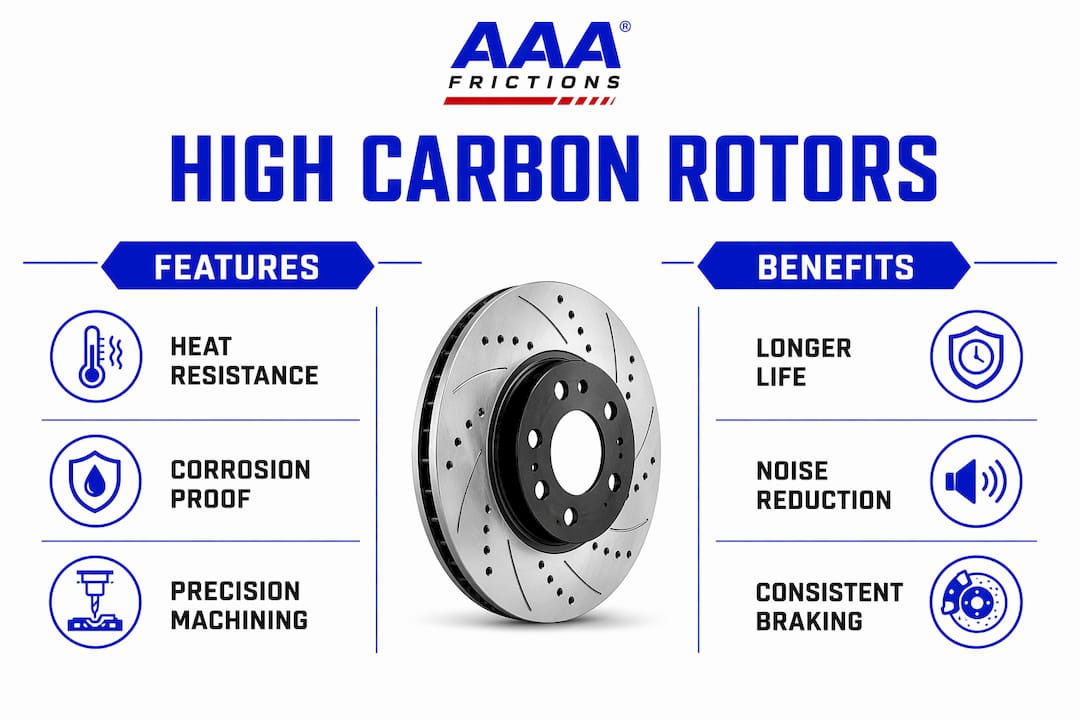
- Superior heat dissipation. The denser carbon-flake microstructure conducts thermal energy away from the friction surface faster, reducing cracking risks during sustained or emergency braking.
- Noise and vibration suppression. Carbon flakes act as internal cushions that interrupt the harmonic waves responsible for brake squeal. High carbon rotors are 100% more effective in noise suppression than standard G3000 iron rotors.
- Consistent friction profile. The rotor maintains stable behavior across a wider temperature band, which matters on long descents like those on the Sea-to-Sky Highway.
- Preferred in performance and European vehicles. Many OEM brake systems on modern performance and European platforms already specify high carbon metallurgy because the thermal and acoustic benefits align with their design priorities.
One important caveat: “high carbon” is a foundry designation, not a universal regulated standard. Actual carbon content varies by manufacturer, so verified specifications matter more than the label alone.
Table of Contents
- Key product features to evaluate when selecting high carbon rotors
- Where and how to buy high carbon rotors in Canada
- How to choose the right high carbon rotors for your vehicle
- How Aaafrictions’ HydroAdaptive Technology raises the standard for high carbon rotors
- Installation and maintenance tips for high carbon rotors
- Aaafrictions delivers weather-ready braking for British Columbia drivers
- Key Takeaways
Key product features to evaluate when selecting high carbon rotors
Choosing a quality rotor goes beyond carbon percentage. The microstructure of the carbon flakes, the precision of the machining, and the surface protection all determine how long the rotor performs in real-world conditions.
- Anti-corrosion coatings. GEOMET coatings are dry-processed and sweep away harmlessly during braking, making them well suited for Canadian roads where salt and moisture accelerate surface rust. E-coatings offer a similar protective layer on non-friction surfaces.
- Machining tolerances. Look for disc thickness variation of .010mm and lateral runout of .050mm. These tight tolerances translate directly to smoother pedal feel and reduced vibration at the wheel.
- Vane design and cooling geometry. Rotor vane design, thickness, and cooling capacity significantly influence overall performance. Upgrading the material alone without compatible vane geometry leaves thermal performance on the table.
- Warranty and certifications. Manufacturer certifications and product warranties are reliable indicators of build quality. A rotor backed by a documented warranty signals that the manufacturer stands behind its metallurgical claims.
- Customer reviews. Verified reviews from drivers in similar climates, particularly those dealing with wet or cold conditions, give you a practical read on long-term durability that spec sheets cannot.
Pro Tip: Before purchasing, confirm the rotor’s minimum thickness specification and cross-reference it with your OEM brake pad dimensions. A rotor that is technically compatible but near its wear limit will underperform regardless of its carbon content.
Our GC brake rotors page covers how these quality markers translate into real-world noise reduction and braking consistency.
Where and how to buy high carbon rotors in Canada
Availability for high-performance brake rotors in Canada has improved considerably through direct-to-consumer e-commerce. You no longer need to source through a dealer or specialty shop to access quality components.
- Online direct-to-consumer vendors. Aaafrictions ships vehicle-specific brake kits directly to customers across British Columbia and Canada, eliminating the markup and wait time associated with traditional retail channels.
- Vehicle-specific fitment. Always confirm rotor diameter, bolt pattern, hub bore, and minimum thickness against your vehicle’s service manual before ordering. A rotor that fits the caliper bracket but has the wrong vane depth will compromise cooling.
- Complete brake kits. Purchasing a full brake pad and rotor kit guarantees pad-to-rotor compatibility from the start. Mixing components from different manufacturers introduces friction profile mismatches that can increase wear and noise.
- Anti-corrosion priority for Canadian buyers. British Columbia’s coastal rain, mountain road salt, and freeze-thaw cycles accelerate rotor surface oxidation. Rotors with advanced coatings resist rust and maintain performance consistency through seasonal transitions.
- Warranty and support. Confirm that the vendor offers warranty service within Canada. Cross-border warranty claims add delays and costs that erode the value of an otherwise solid product.
Price tiers in the Canadian market reflect coating quality, machining precision, and brand certification. Entry-level high carbon rotors tend to skip GEOMET or equivalent coatings, which shortens service life in wet climates. Mid-tier and premium options with certified coatings and tight tolerances represent better long-term value for most BC drivers.
How to choose the right high carbon rotors for your vehicle
The selection process is straightforward when you work through it systematically. Start with your vehicle’s OEM specifications, then layer in your driving conditions and budget.
- Verify your current rotor type. Many modern European and performance vehicles already ship with high carbon rotors from the factory. Confirm what is installed before purchasing an aftermarket upgrade.
- Match rotor geometry to your vehicle’s weight and use. A heavier SUV or minivan needs rotors with adequate vane depth and thermal mass. A lighter sedan can use a thinner vane profile without sacrificing cooling.
- Prioritize corrosion protection for BC conditions. GEOMET or equivalent coatings are not optional for drivers in coastal or mountain regions. They are the difference between a rotor that lasts three winters and one that surfaces rust within months.
- Choose kits over individual components. Pad and rotor kits from a single manufacturer ensure the friction profile is matched to the rotor’s carbon-flake microstructure. See our SC type brake rotors page for fitment guidance.
- Review certifications and warranties. A documented manufacturer certification confirms the rotor meets stated metallurgical and dimensional standards. Warranty coverage tells you how confident the manufacturer is in that claim.
- Factor in total cost of ownership. A lower-priced rotor without corrosion protection may need replacement twice as often in a BC climate. The math usually favors the coated, certified option.
Pro Tip: Consult your vehicle’s service manual for the OEM rotor specification, then use that as your baseline. Any aftermarket rotor should meet or exceed those dimensions and carbon content figures, not simply approximate them.
How Aaafrictions’ HydroAdaptive Technology raises the standard for high carbon rotors
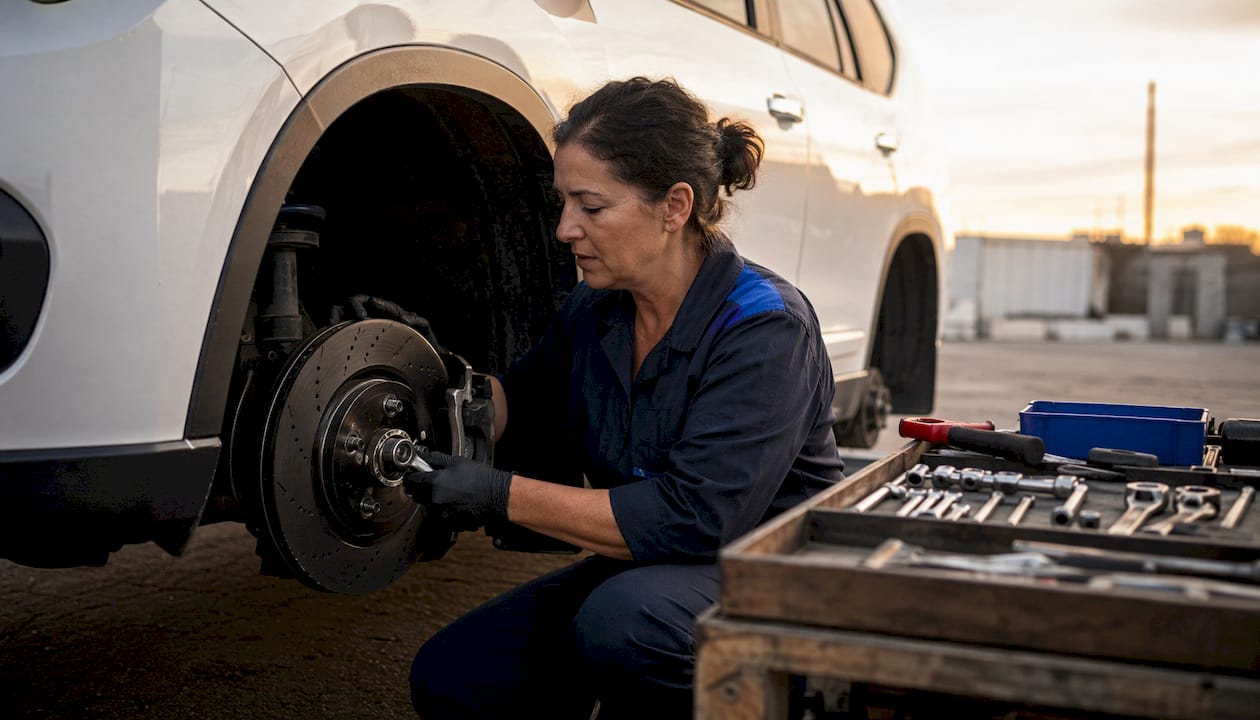
Standard high carbon rotors handle heat and noise well. Aaafrictions’ system is built around a specific challenge that standard rotors do not fully address: moisture.
British Columbia’s rain, coastal humidity, and winter snowfall create conditions where rotor surface moisture degrades friction consistency before the brake pad even fully engages. Aaafrictions’ HydroAdaptive Technology addresses this directly through a patented ceramic formulation that rapidly clears moisture from the rotor surface, maintaining friction output across wet, humid, and cold conditions.
- Moisture management built into the system. The ceramic compound actively displaces water film rather than waiting for heat to burn it off, which means the first brake application in wet conditions performs like the tenth.
- GEOMET-coated rotors as standard. Aaafrictions’ GC type rotors ship with GEOMET anti-corrosion coating, protecting non-friction surfaces through the full range of BC seasonal conditions.
- Precision manufacturing tolerances. Every rotor in the Aaafrictions ecosystem is machined to tight dimensional standards, supporting the smooth pedal feel and vibration-free stops that high carbon metallurgy promises.
- Climate-adaptive caliper lubricants. The full brake kit includes lubricants formulated for temperature stability, preventing caliper drag and uneven pad wear in cold or wet conditions.
- Manufacturer certifications and system-level testing. Aaafrictions’ kits are tested as complete systems, not as individual components, which is why the brand sells pads and rotors together.
Pro Tip: Opt for a complete Aaafrictions brake kit rather than replacing rotors alone. The HydroAdaptive ceramic pad formulation is calibrated to the GC rotor’s carbon-flake microstructure. Mixing in a third-party pad resets that calibration and reduces the system’s moisture-clearing efficiency.
Installation and maintenance tips for high carbon rotors
Proper installation protects the investment you made in quality metallurgy. A correctly installed high carbon rotor performs as engineered; a poorly installed one develops vibration and uneven wear regardless of its carbon content.
Follow a structured vehicle maintenance schedule that includes brake inspection at regular intervals. For BC drivers, that means checking rotor thickness and surface condition before each winter season and after any extended mountain driving.
Key installation and maintenance practices:
- Bed-in the rotors and pads together. New rotors require a break-in sequence of progressive stops to transfer an even layer of pad material onto the rotor surface. Skipping this step causes uneven deposits and vibration.
- Torque wheel fasteners to spec. Over-torqued lug nuts warp rotors over time. Use a calibrated torque wrench and follow the vehicle manufacturer’s specification.
- Clean hub contact surfaces. Rust or debris on the hub face causes rotor runout even when the rotor itself is machined to tight tolerances. Clean the hub before mounting.
- Inspect rotor thickness at every pad change. High carbon rotors have a minimum thickness specification. Measuring at multiple points across the friction surface catches uneven wear early.
- Avoid aggressive braking immediately after washing. Water on the rotor surface during the first few stops after a wash can cause temporary uneven pad transfer. Gentle initial braking lets the surface dry evenly.
For vehicles with higher mileage, high-mileage service practices apply to the brake system as well. Caliper slides, brake fluid condition, and hose integrity all affect how well even the best rotors perform.
Aaafrictions delivers weather-ready braking for British Columbia drivers
If you have been comparing rotor options and want a system built specifically for the conditions BC roads create, Aaafrictions offers something the standard aftermarket does not: a complete brake ecosystem where every component is engineered to work together in wet, cold, and variable-temperature environments.

The Type 07 brake pad and GC rotor kit pairs HydroAdaptive ceramic pads with GEOMET-coated high carbon rotors, matched by vehicle fitment and tested as a unit. You get the noise suppression and heat management of high carbon metallurgy, plus the moisture-clearing performance that standard rotors cannot provide. No guesswork on compatibility, no mixing pad compounds from one brand with rotors from another.
Browse the full Aaafrictions catalog at aaafrictions.ca to find the kit built for your vehicle, or explore the HydroAdaptive formulation to understand exactly how the technology works before you order.
Key Takeaways
High carbon rotors outperform standard cast iron in heat management, noise suppression, and corrosion resistance, making them the practical choice for British Columbia’s demanding driving conditions.
| Point | Details |
|---|---|
| Carbon content matters | High carbon rotors contain 3.6%–3.9% carbon versus 3.0%–3.5% in standard rotors, improving thermal conductivity and reducing cracking risk. |
| Noise suppression advantage | Carbon flakes disrupt harmonic waves causing brake squeal. High carbon rotors are 100% more effective in noise suppression than standard G3000 iron rotors. |
| Corrosion protection is critical | GEOMET and equivalent coatings are essential for BC drivers facing road salt, coastal rain, and freeze-thaw cycles. |
| Buy kits, not individual parts | Matching pads and rotors from one manufacturer ensures friction profile compatibility and consistent pedal feel. |
| Aaafrictions HydroAdaptive system | Aaafrictions pairs GEOMET-coated high carbon rotors with moisture-clearing ceramic pads, engineered as a complete system for Canadian weather. |