
For most Canadian drivers, the best brake rotors are GEOMET-coated or climate-adaptive coated rotors paired with matched ceramic pads in a vehicle-specific kit. The combination of corrosion-resistant coating on the hats and vanes, engineered venting for heat dissipation, and moisture-managing pad chemistry addresses the exact failure modes that Nova Scotia winters and salted roads create. Before you buy, confirm your vehicle’s fitment specs and look specifically for a coated rotor option, not a bare cast-iron unit.
What to prioritize at a glance:
- Coated rotors (GEOMET, zinc/aluminum, or equivalent) for non-contact area protection
- Matched pad and rotor kits engineered for salt-belt climates
- Vehicle-specific fitment confirmation before ordering
- Warranty terms that apply to Canadian buyers
Table of Contents
- How Canadian winters destroy rotors faster than you think
- What rotor types actually mean for Canadian driving conditions
- OEM versus aftermarket: what Canadian buyers should actually consider
- How to choose the right rotor for your vehicle and driving style
- Rotor lifespan, replacement costs, and what shortens service life in Canada
- Installation and winter maintenance steps that protect your investment
- Why Aaafrictions’ HydroAdaptive + GEOMET kits are the recommended choice for Canadian winters
- Regional availability and pricing across Canadian provinces
- Key Takeaways
- What most brake rotor guides get wrong about Canadian conditions
- Aaafrictions’ HydroAdaptive + GEOMET kits: ready to order for Canadian drivers
- Useful sources for further research
How Canadian winters destroy rotors faster than you think
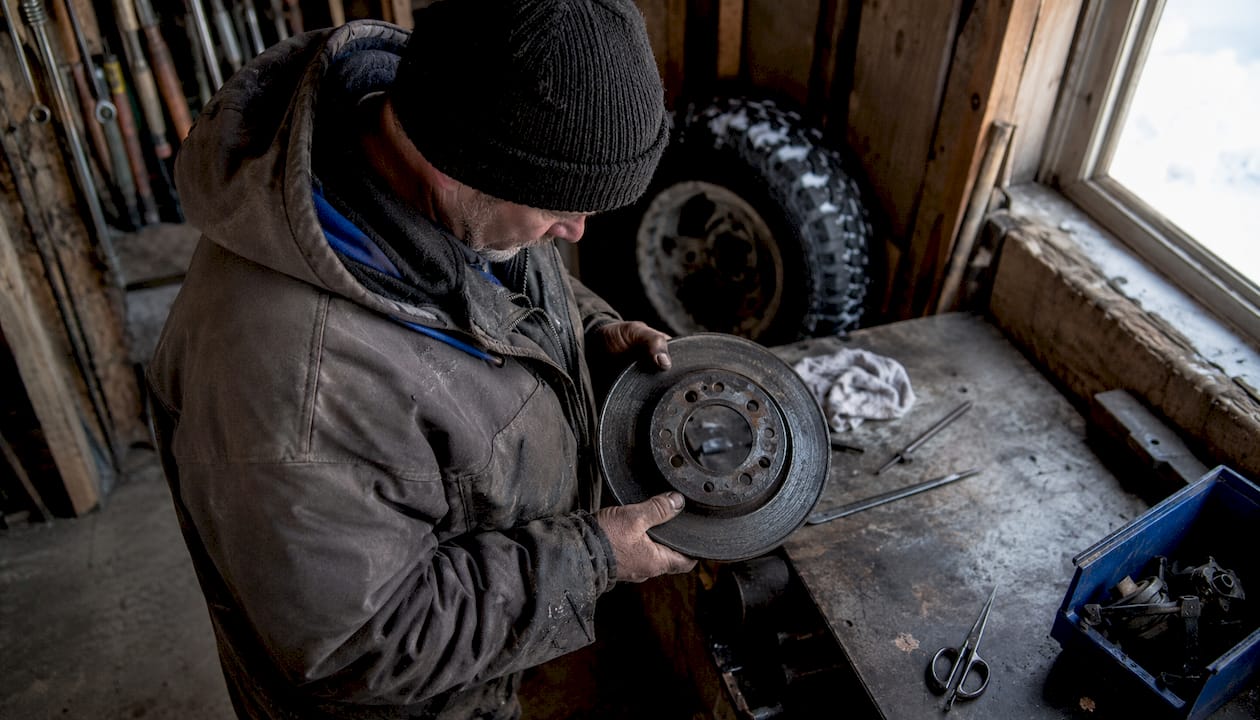
Nova Scotia roads get heavy salt treatment from November through April, and that brine doesn’t just sit on the surface. It works into rotor hats, vane channels, and the hub mating face, accelerating corrosion well beyond what drivers in drier climates experience. Freeze-thaw cycles compound the problem: moisture expands in micro-cracks, widens them, and leaves the cast iron structurally weaker before the rotor even reaches its service limit.
The practical symptoms show up in predictable ways:
- Surface rust on the swept area after a vehicle sits overnight — cosmetic, cleared by the first few stops
- Hat and vane corrosion that is not cleared by braking — this is the functional problem
- Pedal feedback changes as uneven corrosion creates thickness variation across the friction path
- Accelerated wear on non-contact areas that eventually compromises rotor integrity
Independent testing confirms that the gap between premium and budget rotors is most visible in exactly these two areas: pedal feedback and corrosion resistance. For salt-belt drivers, that gap is not a minor comfort difference — it is the difference between rotors that last two winters and rotors that need replacement after one.
The key distinction: cosmetic surface rust on the friction path clears itself during normal driving. Corrosion on hats and vanes does not. That is what coatings are specifically engineered to address.
What rotor types actually mean for Canadian driving conditions
Understanding rotor geometry and coating options helps you avoid paying for features that don’t serve your driving style, or worse, choosing a design that performs poorly in salt-belt conditions.
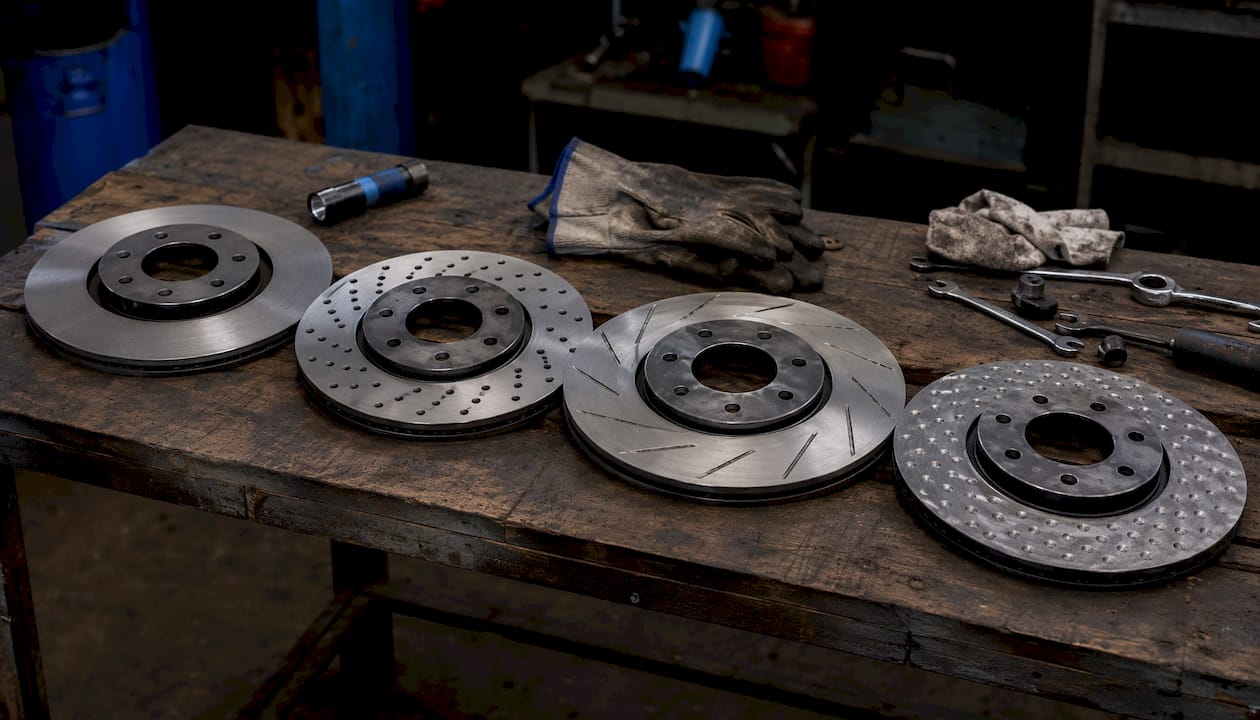
Plain/blank rotors are the standard choice for daily commuters. A quality plain rotor with a proper coating outperforms a drilled or slotted unit for most Nova Scotia drivers because there are no stress-concentration points where salt can accelerate cracking.
Drilled rotors look aggressive and do improve wet-weather gas evacuation, but the holes create stress risers in the cast iron. In climates with repeated freeze-thaw cycles and heavy brine exposure, those stress points can develop micro-cracks faster. For daily street driving in Canada, drilled rotors are generally a poor trade-off.
Slotted rotors channel gas and debris away from the pad surface and handle heat better under sustained load. They are a reasonable choice for towing or spirited driving, but they wear pads faster and produce more dust than plain rotors.
Dimpled rotors offer some of the gas-evacuation benefit of drilled rotors without the full stress-riser problem. EBC’s dimpled-and-slotted design is one example used in the performance segment.
Vented rotors use internal vane channels to move air through the rotor body and dissipate heat. Most modern vehicles already use vented front rotors from the factory. The vane configuration matters: OEM-style vane geometry tends to provide efficient airflow without introducing noise.
Coatings are where the Canadian decision gets specific. GEOMET and zinc/aluminum coatings protect the hat, vanes, and outer edge — the areas that never contact the pad and therefore never self-clean. The friction path itself will have its coating abraded away by the pads during normal use; that is expected and normal. What you are paying for with a coated rotor is protection of everything the pads don’t touch.
Pro Tip: For salt-belt daily driving in Nova Scotia, choose a coated plain or coated vented rotor over drilled designs. Save slotted or dimpled options for trucks that tow regularly or vehicles used for performance driving where heat management is the primary concern.
OEM versus aftermarket: what Canadian buyers should actually consider
Both OEM and aftermarket rotors have legitimate roles. The decision comes down to what your original equipment lacked and what your driving conditions demand.
OEM rotors guarantee fitment, known balancing specs, and a predictable friction profile matched to your factory calipers and pads. Factory mill precision balancing reduces pedal pulsation complaints and is a published feature of several OEM replacement lines. For drivers in mild climates or those who simply want a like-for-like replacement, OEM is a defensible choice.
The problem for Canadian drivers is that many factory rotors — particularly on vehicles built for North American markets — ship without meaningful corrosion protection on hats and vanes. GM OE rotors, for example, use a coating that helps initially but can rust significantly within a few winters in salt-heavy regions.
Aftermarket kits engineered specifically for salt-belt climates can outperform OE when they combine moisture-management pad chemistry with coated rotors and stainless hardware. Climate-targeted aftermarket kits often outlast uncoated OE parts precisely because the coating and material choices were made with corrosion in mind, not just friction performance.
OEM pros for Canadian buyers:
- Guaranteed fitment and hub compatibility
- Known balancing and runout specs
- Predictable pad wear behavior
OEM cons:
- Often uncoated or lightly coated on hats/vanes
- No moisture-management engineering in the pad compound
- Replacement cost at dealerships is typically higher
Aftermarket pros:
- Coated options available across most fitments
- Matched pad/rotor kits reduce compatibility guesswork
- Climate-specific engineering available
Aftermarket red flags:
- Unclear metallurgy grade (look for G3000 cast iron or better)
- Warranty shorter than 12 months or excluding Canada
- Community reports of warping within the first season
Pro Tip: If your original rotors had no coating on the hats and you live in a heavy-salt region like coastal Nova Scotia, a vehicle-specific coated aftermarket kit is the stronger long-term choice. Matched kits that include hardware reduce installation variables and improve reliability.
How to choose the right rotor for your vehicle and driving style
The right rotor starts with three criteria: coating type, rotor engineering suited to your use case, and confirmed vehicle-specific fitment. Get those three right and the rest of the decision falls into place.
Step-by-step selection checklist:
- Confirm your vehicle’s rotor diameter, thickness, and minimum thickness spec from the owner’s manual or a fitment database.
- Identify your driving profile: daily commute, towing, performance driving, or mixed use.
- Decide on rotor type: plain/vented coated for commuting; slotted or dimpled for towing or spirited use.
- Verify coating type: look for GEOMET, zinc/aluminum, or a named proprietary coating on hats and vanes.
- Check pad compatibility: a matched kit eliminates the risk of mismatched friction profiles.
- Confirm wheel clearance: some aftermarket rotors with larger hats can interfere with certain wheel designs.
- Review warranty terms: confirm the warranty is honored for Canadian buyers and covers the expected service period.
Questions to ask on any product page:
- What coating is applied, and does it cover the hat, vanes, and outer edge?
- What is the metallurgy grade of the cast iron?
- What are the runout and thickness variation specs?
- Does the warranty apply to Canadian purchasers, and what is the claims process?
Red flags to avoid:
- No stated metallurgy grade
- Coating described only as “painted” with no named standard
- Minimum thickness spec missing from the product listing
- No hardware included in a kit claiming to be complete
Rotor lifespan, replacement costs, and what shortens service life in Canada
Expected rotor lifespan varies significantly by rotor class, and Canadian salt exposure compresses those intervals compared to what manufacturers publish for temperate climates.
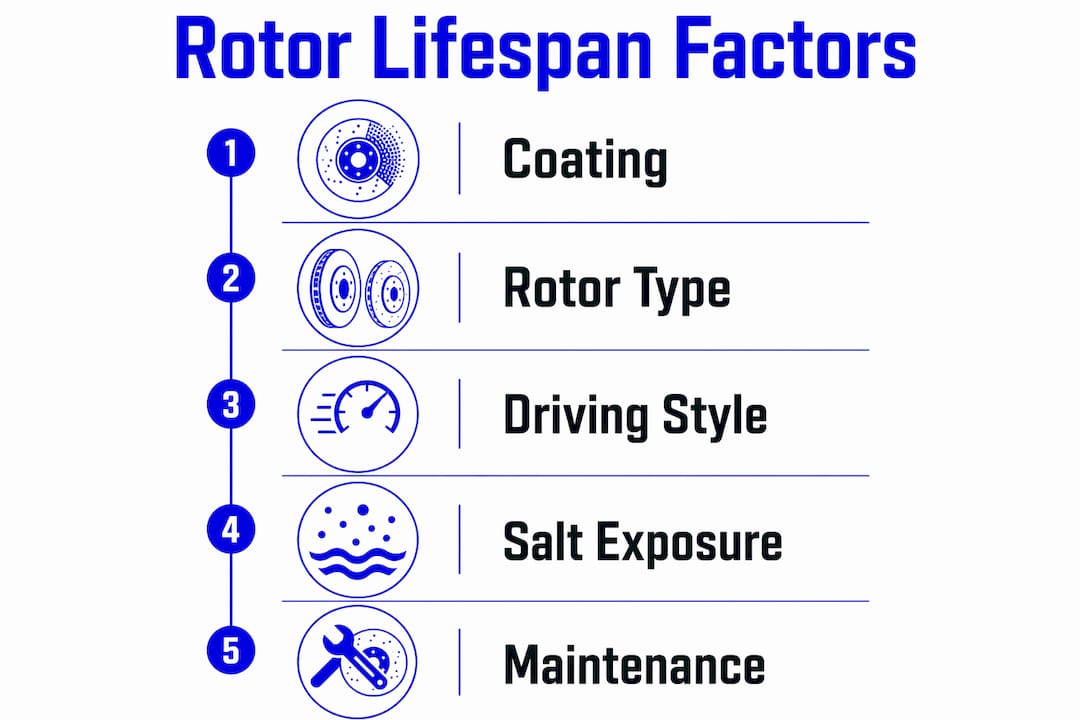
Bargain-priced rotors commonly warp or develop uneven wear within months under real-world salt-exposed conditions. Mid-grade coated rotors present a better lifecycle cost when you factor in replacement frequency.
| Rotor Class | Typical Lifespan (Canadian Conditions) | Approximate Cost per Axle (CAD) | Common Warranty |
|---|---|---|---|
| Economy (uncoated) | several winters | $40–$80 | 12 months or less |
| Mid-grade coated | multiple years | $80–$160 | 12 months |
| Premium coated kit (pads + rotors + hardware) | several years | — | — |
Cost drivers beyond the rotor itself include: metallurgy grade, coating type, whether matched pads and hardware are included, and labor. A DIY installation on a coated kit saves $150–$250 in shop labor in most Nova Scotia markets, but only if you have access to a torque wrench and a clean workspace.
Owner community consensus consistently favors mid-grade or better rotors for long-term durability in salted-road areas. The extra cost at purchase is almost always recovered in avoided early replacement.
Pro Tip: Resurfacing is only worthwhile when a rotor is above minimum thickness and the surface irregularity is minor. In heavily corroded hubs common in Nova Scotia, replacement is almost always the better call — a resurfaced rotor on a corroded hat will develop runout problems quickly.
Installation and winter maintenance steps that protect your investment
Proper installation and seasonal care extend rotor life more than most drivers realize. A coated rotor installed on a corroded hub face will develop lateral runout within weeks, regardless of its quality.
Installation sequence:
- Clean the hub mating face with a wire brush and brake cleaner before mounting the rotor.
- Verify rotor runout with a dial indicator after mounting — acceptable lateral runout is typically under 0.05 mm.
- Install new hardware (shims, clips, caliper slide pins) included in the kit; reusing old hardware introduces noise and uneven pad pressure.
- Torque wheel nuts in a star pattern to the vehicle’s specified torque value.
- Bed the pads and rotors with 8–10 moderate stops from 50 km/h, allowing cooling between each.
Winter maintenance checklist:
- Rinse wheel wells and rotor hats with fresh water after heavy salt exposure, especially after highway driving
- Inspect hat and vane areas at each tire rotation for corrosion buildup
- Re-torque wheel nuts after the first 100 km following installation
- Replace rotors and pads as a matched set — mixing worn pads with new rotors accelerates uneven wear
For drivers who choose uncoated rotors, painting rotor hats with high-temp caliper paint before installation is a common mitigation step in salt-belt climates. It does not replace a proper coating but reduces the unsightly corrosion visible through open-spoke wheels.
A complete brake-system upgrade may also include performance brake lines to reduce pedal flex, particularly on older vehicles where rubber lines have softened.
Why Aaafrictions’ HydroAdaptive + GEOMET kits are the recommended choice for Canadian winters
The core claim is straightforward: Aaafrictions’ Type 07 HydroAdaptive+ kits with GC GEOMET-coated rotors combine climate-adaptive pad chemistry with corrosion-resistant rotor coatings to deliver consistent pedal feel and extended non-contact-area protection in salt-belt winters. That combination directly addresses the two failure modes that matter most in Nova Scotia: corrosion on hats and vanes, and degraded pedal feedback from moisture interference at the pad/rotor interface.
Features that map directly to Canadian driving needs:
- HydroAdaptive moisture management: the pad compound is engineered to rapidly clear moisture from the friction interface, maintaining consistent pedal feel in rain, snow, and humidity
- GEOMET coating on hats, vanes, and outer edge: protects all non-contact areas from salt-induced corrosion across multiple winters
- Matched pad and rotor engineering: the friction profile is developed for the specific rotor geometry, eliminating the compatibility guesswork of mixing brands
- Stainless hardware included: reduces the corrosion-driven noise and uneven pressure that develops when old hardware is reused
- Validated vehicle-specific fitment: kits are built for confirmed applications, from compact crossovers like the Honda CR-V to trucks like the Ford Ranger
For warranty and support, confirm the warranty length and Canadian return/shipping policy at checkout. Aaafrictions ships to Canadian addresses; check the product page for current shipping terms applicable to Nova Scotia.
Pro Tip: Use Aaafrictions’ vehicle fitment tool to confirm the correct kit for your year, make, and model before ordering. The HydroAdaptive technology page explains the pad chemistry in detail if you want to verify the engineering behind the moisture-management claim.
Regional availability and pricing across Canadian provinces
Brake rotor availability and pricing vary across Canada in ways that matter to buyers outside major urban centers. In Nova Scotia and Atlantic Canada generally, the retail parts network is thinner than in Ontario or British Columbia. This means local shop inventory often skews toward economy-grade uncoated rotors. Mid-grade coated options and premium matched kits are less consistently stocked at brick-and-mortar locations in smaller markets.
Pricing reflects this. Economy rotors at regional auto parts retailers typically run $40–$80 per rotor. Mid-grade coated options from the same retailers range from $80–$160 per rotor. Premium matched kits with pads and hardware are rarely stocked locally in Atlantic Canada and are almost always an online order.
Online purchasing closes that gap. Direct-to-consumer e-commerce platforms ship vehicle-specific kits to all Canadian provinces, often at prices below what regional retailers charge for comparable mid-grade parts. For Nova Scotia buyers, the practical recommendation is to confirm fitment online, compare kit pricing including shipping, and factor in that a matched kit ordered online typically arrives with everything needed for a complete installation, reducing the risk of a second trip for missing hardware.
Quebec and Ontario buyers have the widest in-store selection, with performance-oriented retailers stocking GEOMET-coated and slotted options across a broader range of fitments. Western Canada, particularly Alberta and British Columbia, has strong availability of performance-oriented rotors given the higher concentration of truck and SUV owners. Atlantic Canada buyers consistently get the best value by purchasing coated kits online rather than settling for whatever uncoated economy stock is available locally.
Key Takeaways
For Canadian drivers, coated climate-adaptive rotor kits with matched pad chemistry deliver the best combination of corrosion resistance, pedal consistency, and long-term value in salt-belt conditions.
| Point | Details |
|---|---|
| Coating is the priority | GEOMET or zinc/aluminum coatings protect hats and vanes; the friction path self-cleans during normal use. |
| Avoid economy uncoated rotors | Bargain rotors commonly warp or corrode within one to two winters under Canadian salt exposure. |
| Matched kits reduce risk | Paired pad and rotor kits eliminate friction-profile mismatches and include the hardware needed for a complete installation. |
| Online ordering fills the gap | Atlantic Canada retail stock skews toward economy uncoated parts; coated kits are reliably available online with Canadian shipping. |
| Aaafrictions for salt-belt fitment | Aaafrictions’ HydroAdaptive + GEOMET kits are engineered for moisture management and corrosion resistance across Canadian winters. |
What most brake rotor guides get wrong about Canadian conditions
Most brake rotor guides written for a general North American audience treat corrosion as a cosmetic issue and performance as the primary differentiator. For a driver in Halifax or Cape Breton, that framing is backwards.
The performance gap between a mid-grade coated rotor and a premium track-oriented drilled rotor is largely irrelevant on a daily commute. What matters is whether the rotor still has structural integrity and consistent thickness after two Nova Scotia winters. A drilled rotor with stress risers exposed to repeated brine soaking and freeze-thaw cycling is a worse choice for that driver than a plain coated rotor with proper venting, even if the drilled unit looks more impressive.
The other underappreciated point is pad chemistry. Most guides evaluate rotors in isolation, but the pad/rotor interface is a system. A coated rotor paired with a pad compound that doesn’t manage moisture will still deliver inconsistent pedal feel on a wet morning. That is exactly the problem HydroAdaptive chemistry is designed to solve: maintaining friction consistency when the interface is wet, not just when it is dry and warm.
The practical takeaway is to evaluate your braking system as a matched ecosystem, not as individual components. Coating, metallurgy, pad chemistry, and hardware all interact. A vehicle-specific kit that engineers those elements together is a more reliable investment than assembling the same components separately from different brands.
Aaafrictions’ HydroAdaptive + GEOMET kits: ready to order for Canadian drivers
Nova Scotia drivers dealing with salt, slush, and freeze-thaw cycles need a braking system built for those exact conditions, not a general-purpose rotor that happens to be available locally. Aaafrictions’ vehicle-specific kits combine GEOMET-coated rotors with HydroAdaptive ceramic pads and stainless hardware in a single confirmed-fitment package.

Every kit is assembled for a specific year, make, and model, so you are not guessing at compatibility. The GEOMET coating protects hats and vanes through multiple salt-belt winters, and the HydroAdaptive pad compound maintains consistent pedal feel whether you are braking on a dry highway or a wet Nova Scotia back road in November. Kits for common Canadian vehicles, including SUVs, trucks, and hybrids, are available with Canadian shipping.
Find your vehicle’s kit using the fitment tool, or browse the full Type 07 + GC GEOMET kit range to compare options. Canadian orders ship directly to your door, and warranty terms are available on each product page.
Useful sources for further research
These sources informed the analysis and recommendations in this guide. Each offers a different angle for buyers who want to verify claims or go deeper before purchasing.
- Independent real-world kit testing: comparative performance testing of coated and non-coated kits, with findings on pedal feedback and corrosion resistance in salt-belt conditions.
- Bosch QuietCast rotor review: detailed breakdown of aluminum/zinc coating coverage, precision balancing specs, and owner reports across multiple winters.
- DIY kit installation review: long-term reviewer experience with matched kits, including notes on surface rust behavior and installation steps for salt-belt drivers.
- Owner community discussion on rotor value: forum consensus from experienced owners on coating performance, metallurgy, and real-world longevity in salted-road areas.
- Aaafrictions HydroAdaptive technology overview: technical explanation of the HydroAdaptive pad chemistry and GEOMET rotor coating system, including moisture-management engineering details.
- Aaafrictions vehicle fitment search: confirms available kit options by year, make, and model for Canadian buyers ready to purchase.
Recommended
- Type 07 Brake Pads + GC Rotors Kit – AAA Frictions
- Front and Rear Brake Kit for Nissan TITAN 2017-2024, Type 07 HydroAdaptive+ Ceramic Disc Brake Pad and Rotor Set with GC Type GEOMET Coated Rotors
- Front and Rear Brake Kit for Honda HR-V 2016-2022, Type 07 HydroAdaptive+ Ceramic Disc Brake Pad and Rotor Set with GC Type GEOMET Coated Rotors
- Front and Rear Brake Kit for Toyota Sienna 2021-2024, Type 07 HydroAdaptive+ Ceramic Disc Brake Pad and Rotor Set with GC Type GEOMET Coated Rotors