
For most U.S. drivers, Aaafrictions’ HydroAdaptive-matched brake kits are the recommended all-weather choice. They pair ceramic pads with GC-type GEOMET-coated rotors engineered to manage moisture at the pad-rotor interface, which is the exact failure point that causes cold-start fade and wet-weather inconsistency. If you want a single system that handles rain, road salt, and mixed highway-to-city driving without compromise, that is your pick.
Two category alternatives cover specific needs:
- Daily drivers on a budget: OEM-style blank rotors from a reputable supplier. They extend pad life, resist cracking better than drilled designs under normal street loads, and keep repair costs predictable. Performance upgrades can easily triple the cost of a standard brake job compared with staying OEM-equivalent.
- Track or heavy repeated braking: A high-carbon performance rotor with matched performance pads. The carbon-centered framework improves heat diffusion under sustained thermal load where a standard blank would fade.
Quick picks by use-case:
- Daily commuting: Fully coated OEM-style blank or Aaafrictions GC-type matched kit
- Towing / long downhill grades: High-carbon or thick-vaned rotor with matched pads
- Performance / spirited driving: Slotted high-carbon rotor with compatible performance pad
- Winter / salt-belt driving: Fully coated rotor (GEOMET or E-coat) with moisture-adaptive ceramic pad
Pro Tip: Never upgrade the rotor alone. A high-carbon rotor paired with a mismatched pad compound will produce more noise and uneven wear than a well-matched OEM-style set.
Table of Contents
- Which rotor brand category is best for your driving needs?
- How do rotor type and material actually change your braking?
- Why matching your rotors and pads extends life and protects safety
- How to choose the right rotor for your car: a practical buying checklist
- Why Aaafrictions’ HydroAdaptive kits are the right choice for U.S. all-weather driving
- Final verdict: best rotor pick by use-case
- Key Takeaways
- How professional mechanics actually pick rotors
- Aaafrictions matched brake kits: one stop for all-weather confidence
- Useful sources and further reading
Which rotor brand category is best for your driving needs?
Understanding how brand categories map to real driving conditions saves you from overpaying for features you will never use, or underspending on a rotor that fails early. The table below uses the comparison framework that matters most: what the rotor is best for, how long it lasts, what coating it carries, what material it uses, and whether it is widely available for your vehicle.
| Category | Best For | Durability / Mileage | Coating | Material | Price / Value | Warranty | US Availability |
|---|---|---|---|---|---|---|---|
| Aaafrictions HydroAdaptive Matched Kit | All-weather, daily + winter, mixed towing | Optimized for matched system service intervals | GC-type GEOMET or SC semi-coated | High-carbon ceramic-matched | Mid-range; full kit value | Included with kit | Vehicle-specific fitment lookup online |
| OEM-style blank suppliers | Budget daily driving, low-stress commuting | typical long service life under normal conditions | Varies; often plain or partial coat | Standard gray iron | Lowest cost | Varies by brand | Broad; most auto parts retailers |
| Performance specialists | Track, spirited driving, repeated heavy braking | Shorter street life; optimized for heat cycles | UV coat or minimal | High-carbon or composite | High | Varies | Specialty retailers; fitment-specific |
| Value / coated-rotor makers | Salt-belt daily drivers, budget-conscious | typical service life under salt-belt daily driving conditions | GEOMET or E-coat | Standard cast iron | Low to mid | Often limited | Wide; major online retailers |
A few practical notes on fitment: vane count, vane style (straight vs. curved), and wheel offset all vary by vehicle platform. An OEM-style blank built for a front-wheel-drive compact will not transfer to a rear-wheel-drive truck application without a fitment cross-check. Always verify the part number against your vehicle’s year, make, model, and trim before ordering.
Pro Tip: When comparing categories, prioritize coating coverage on the hat and vane interior, not just the rotor face. That is where corrosion starts on vehicles in salt-heavy states.
How do rotor type and material actually change your braking?
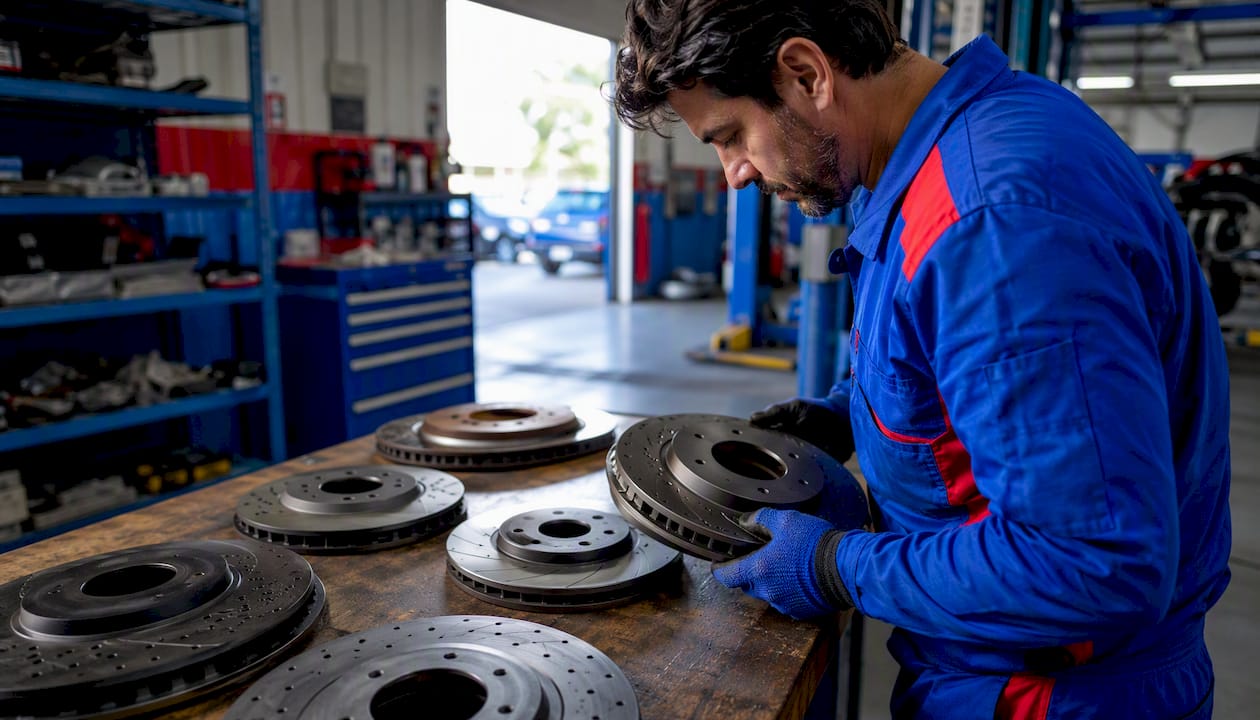
Blank steel rotors are the right choice for most street and daily driving. They offer the best combination of durability, pad friendliness, and crack resistance under the load profiles most drivers actually encounter. Performance variants earn their place only when sustained thermal loads exceed what a blank can manage.
Here is what each design actually changes:
- Blank rotors: Maximum pad contact surface, longest pad life, lowest cracking risk. The default for street use.
- Slotted rotors: Channels gases and debris away from the pad face for improved initial bite. Adds slight pad wear and a mild noise increase at low speed.
- Drilled rotors: Improves wet-weather water shedding but introduces stress concentration points. Poorly manufactured cross-drilled rotors crack under repeated heavy braking.
- High-carbon rotors: A carbon-centered framework raises the rotor’s thermal stability, reduces vibration, and produces more consistent heat diffusion across the friction surface. Paired with compatible pads, OE-quality high-carbon rotors reduce fade risk in repeated-heavy-use scenarios.
- GEOMET / E-coated rotors: GEOMET 360 is a water-based zinc-aluminum flake coating applied inside the vanes for broad corrosion resistance. E-coat is an electrodeposited alternative that some mechanics in salt-heavy regions prefer for longer hat-area protection.
- Carbon-ceramic rotors: Lighter, better heat management, longer life — but very high cost and different pad compatibility make them impractical for street-driven vehicles.
Pro Tip: Avoid combined slotted-and-drilled rotors unless a professional has confirmed your specific application generates enough heat to justify the design. On a street car, you get the pad wear of a slotted rotor and the cracking risk of a drilled one, with limited benefit from either.
One maintenance caution worth knowing: aggressive chemical cleaners and high-pressure solvents can weaken GEOMET-style zinc-aluminum coatings. Use a mild brake cleaner applied carefully, and follow the bedding procedure the manufacturer specifies. Skipping the bedding process on a coated rotor shortens its protective lifespan noticeably.
Why matching your rotors and pads extends life and protects safety
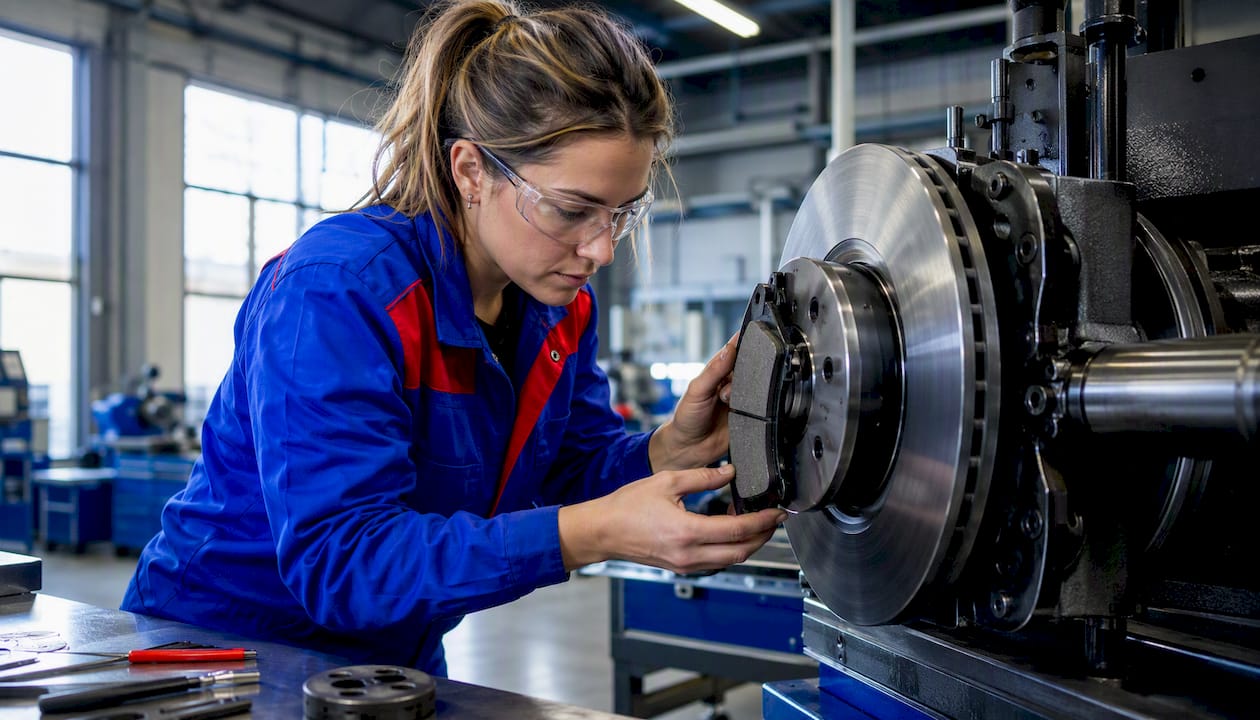
Matching rotor and pad chemistry to the same application profile preserves heat diffusion, reduces noise, and extends service intervals. A fully matched, application-specific system reduces noise, vibration, and fade while maintaining factory pedal feel in ways that mismatched generic components cannot replicate.
Realistic mileage by use-case
Mileage expectations vary widely depending on how and where you drive:
- Daily commuter (light city/highway mix): a typical long service life on quality blanks with matched pads under normal conditions
- Towing or frequent downhill grades: Service intervals can shorten significantly; heat cycles accelerate rotor wear and may cause parallelism loss faster
- Spirited or performance driving: Expect shorter intervals; thermal cycling is the primary wear driver
Salt exposure, trailer loads, and track use are the three variables that most aggressively shorten rotor life. A rotor that lasts 60,000 miles in Phoenix may need replacement in under 40,000 miles in a Chicago winter if it carries no corrosion protection on the hat and vane interior.
Maintenance actions that materially extend rotor life
- Correct bedding: Transfer a thin, even layer of pad material onto the rotor face during the first 200–300 miles of use. Skipping this step causes uneven deposits and vibration.
- Periodic parallelism inspection: Lateral runout above manufacturer spec causes pedal pulsation. Check at every pad replacement.
- Corrosion inspection on hats and vanes: Surface rust on the friction face clears with normal braking. Rust penetrating the hat or vane interior is a structural concern.
- Torque sequence and lug nut check: Over-torqued or unevenly torqued lug nuts introduce runout that mimics rotor warping.
On parts cost, OEM-style blank rotors generally cost a lower price range for common passenger vehicles. Fully coated or high-carbon premium rotors come at a higher price point. Labor costs for a full rotor replacement vary depending on vehicle and region.
Pro Tip: Inspect rotor thickness against the minimum spec stamped on the rotor hat at every pad change. A rotor at or below minimum spec cannot safely absorb heat, regardless of how good the pad is.
How to choose the right rotor for your car: a practical buying checklist
Choosing the right rotor comes down to matching the part to your vehicle, your climate, and your actual driving load. Generic “best” lists miss that context entirely.
What to verify before you buy
- Vehicle-specific fitment: Confirm year, make, model, trim, and whether your vehicle has a rear drum or disc setup. Vane count and offset must match OEM spec.
- Rotor thickness and minimum spec: The replacement rotor must meet or exceed the OEM minimum thickness. Never install a rotor already at or near minimum.
- Coating type: GEOMET for broad corrosion resistance; E-coat for salt-belt hat protection; plain for dry climates where cost is the priority.
- Material spec: High-carbon for towing, performance, or repeated heavy braking; standard gray iron for light daily use.
- Warranty terms: A credible supplier provides at least a one-year warranty against manufacturing defects. No warranty is a red flag.
- Machining tolerances: Precision-cast rotors with tight thickness variation reduce vibration from day one.
Questions to ask your retailer or technician
- Does this part number cross-reference to my OEM spec for vane count and offset?
- What heat-treatment or carbon content spec does the rotor carry?
- What is the return policy if the rotor shows runout out of the box?
- How long is the warranty, and does it cover coating failure?
Red flags to avoid
- Inconsistent casting thickness across the rotor face (visible or measurable)
- Marketing claims about “heat treatment” with no published spec or material data
- Coatings that require aggressive cleaning before installation
- No fitment data or part-number cross-reference available
- Warranty under 12 months on a new rotor
Decision flow by driving profile
- Daily commuter: OEM-style blank or fully coated replacement. Prioritize pad compatibility and fitment accuracy over exotic design.
- Winter / salt-belt driver: Fully or partially coated rotor with proven corrosion protection on hat and vane interior. Pair with a moisture-adaptive ceramic pad.
- Towing or long downhill loads: High-carbon or thick-vaned rotor. The extra thermal mass manages heat buildup that standard gray iron cannot absorb as consistently.
Understanding how brake calipers interact with your rotor and pad system is also worth reviewing before you buy, since caliper piston condition directly affects how evenly load is applied across the rotor face.
Why Aaafrictions’ HydroAdaptive kits are the right choice for U.S. all-weather driving
Standard aftermarket blanks solve the rotor replacement problem. Aaafrictions’ HydroAdaptive-matched kits solve the braking confidence problem, specifically the moisture and cold-start friction drop that standard blanks and generic ceramic pads do not address.
The HydroAdaptive ceramic system is engineered to actively manage moisture at the pad-rotor interface. In rain, humidity, or cold-start conditions, standard pads experience a brief but measurable friction drop as moisture sits between the pad face and rotor. Aaafrictions’ HydroAdaptive formulation clears that moisture layer rapidly, restoring consistent friction without the initial soft-pedal feel many drivers notice on wet mornings.
The kit system pairs two rotor types with matched pad chemistry:
- GC-type rotors: GEOMET-coated for full corrosion protection, including vane-interior coverage. Designed for daily drivers and winter-season use where salt and moisture are constant factors.
- SC-type rotors: Semi-coated for drivers who want corrosion protection on the hat and non-friction surfaces without the full GEOMET treatment.
Use-cases where HydroAdaptive shows a clear advantage:
- Rainy commutes where the first stop of the day needs to be as reliable as the tenth
- Salt-belt winters where rotor corrosion and cold-start friction loss compound each other
- Mixed stop-and-go highway and towing scenarios where pedal feel consistency matters across temperature bands
Vehicle-specific kits are available for a wide range of platforms. The Front and Rear Brake Kit for Honda HR-V 2016–2022 is one example of how the Type 07 HydroAdaptive pad and GC-type GEOMET rotor are matched to a specific compact SUV platform, preserving OEM fitment while upgrading weather-adaptive performance.
Final verdict: best rotor pick by use-case
| Use-Case | Recommended Category | One-Line Rationale |
|---|---|---|
| Daily commuting | OEM-style blank or Aaafrictions GC matched kit | Reliable, pad-friendly, and cost-effective for typical stop-and-go loads |
| Winter / salt-belt driving | Aaafrictions HydroAdaptive matched kit (GC-type) | GEOMET coating plus moisture-adaptive pad chemistry addresses both corrosion and cold-start friction drop |
| Towing / heavy loads | High-carbon thick-vaned rotor with matched pad | Thermal mass and carbon framework manage heat buildup that standard gray iron cannot absorb as consistently |
| Performance / track | High-carbon slotted rotor with performance pad | Slotting channels gases under sustained thermal load; high-carbon base resists fade |
For most U.S. drivers, the Aaafrictions HydroAdaptive matched kit covers daily, winter, and mixed-use driving in a single system. Choose a high-carbon performance category when your vehicle runs sustained heavy braking loads that exceed street-driving norms.
Pro Tip: Torque your lug nuts to spec in a star pattern after installation. Uneven torque is the single most common cause of rotor runout complaints in the first 500 miles.
Key Takeaways
A matched rotor and pad system built for your specific driving conditions and climate delivers more consistent braking confidence than any single premium component chosen in isolation.
| Point | Details |
|---|---|
| Match pads and rotors | Mismatched pad chemistry and rotor material cause noise, uneven wear, and shorter service life. |
| Blanks for street use | Blank rotors resist cracking and extend pad life better than drilled designs under normal driving loads. |
| Coat for your climate | GEOMET or E-coat rotors are the practical choice for salt-belt and wet-climate drivers; plain rotors suit dry regions. |
| High-carbon for heavy loads | Towing and repeated heavy braking demand a carbon-centered rotor framework for consistent heat diffusion. |
| Aaafrictions for all-weather | HydroAdaptive matched kits address moisture-driven friction drops that standard aftermarket blanks leave unresolved. |
How professional mechanics actually pick rotors
A typical mechanic prioritizes matched OE-quality specifications and predictable service intervals over exotic materials for daily-driven cars. The shop floor reality is straightforward: a customer who comes back in 18 months with noise or pulsation is a warranty problem. A customer who comes back in 60,000 miles for a scheduled replacement is a satisfied one.
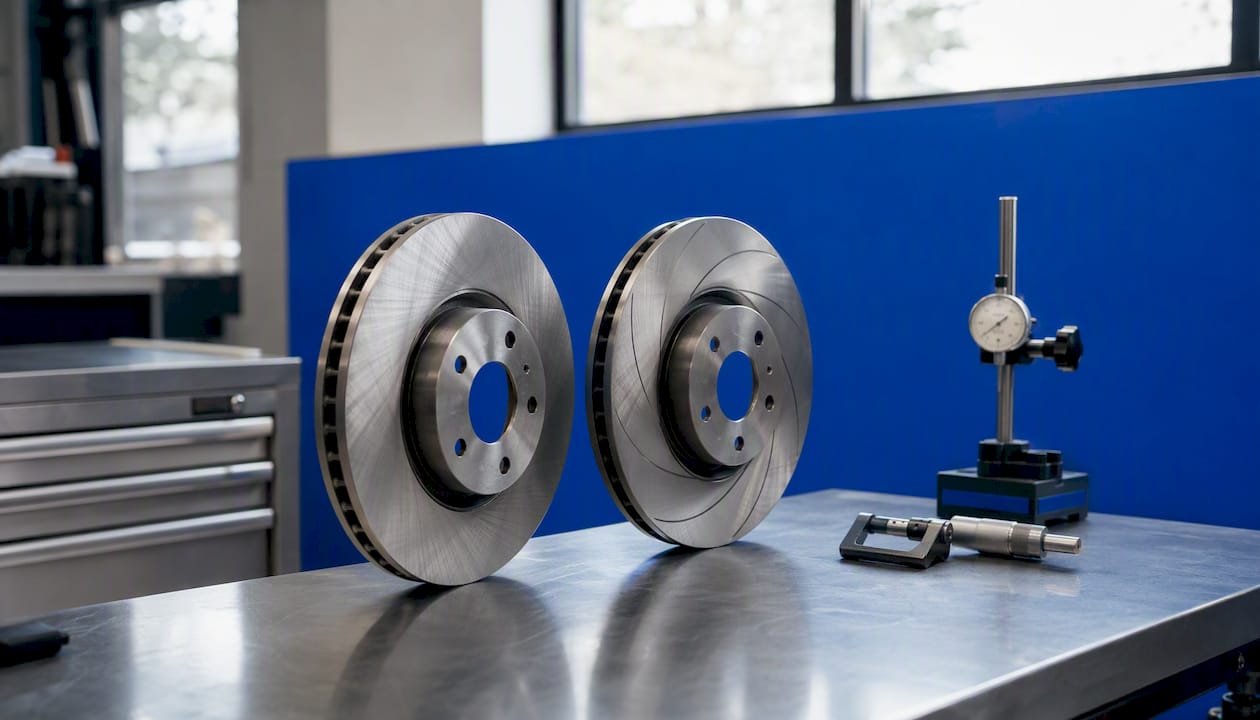
When we evaluate a rotor at installation, the first check is lateral runout with a dial indicator. Runout above 0.003–0.005 inches (depending on manufacturer spec) means the rotor goes back before the pads ever touch it. The second check is thickness variation across the friction surface. A rotor that varies more than 0.0005 inches in thickness will pulse under braking within a few thousand miles, regardless of brand.
For coastal and salt-belt customers, coating selection is a practical durability decision, not a cosmetic one. GEOMET-style coatings can show surface rust on rotor hats after a single harsh winter in heavy road-salt regions. Some mechanics prefer E-coated rotors or partial-coat strategies for better long-term hat protection in those environments. Neither coating is universally better; the right choice depends on the customer’s climate and how often they wash the vehicle.
Shop checks at installation:
- Dial indicator runout check before mounting pads
- Thickness variation measurement across at least four points on the friction surface
- Torque sequence in star pattern to OEM spec
- Bedding procedure completed within the first 200 miles
Aaafrictions matched brake kits: one stop for all-weather confidence
Weather-adaptive braking starts with the right system, not just the right rotor. Aaafrictions’ matched HydroAdaptive kits give you GC-type GEOMET-coated rotors and Type 07 ceramic pads engineered together for consistent pedal feel across rain, cold, and salt-belt conditions — the combination that standard aftermarket blanks and generic pads cannot replicate as a system.

Each kit includes matched front and rear rotors, HydroAdaptive ceramic pads, and hardware, all specified to your vehicle’s OEM fitment. The Type 07 Brake Pads + GC Rotors Kit is the flagship matched system, and vehicle-specific versions are available across a wide range of platforms. Use the fitment lookup tool on the Aaafrictions site to find the exact kit for your year, make, and model. Orders ship directly to you, and the product pages include fitment cross-reference data, coating specs, and warranty details so you know exactly what you are installing before it arrives.
Useful sources and further reading
The sources below back the technical claims in this article and offer additional depth for readers who want to go further.
| Source | What It Covers |
|---|---|
| Best Brake Rotors for High Performance Driving, DrivingLine | Rotor type comparison (blank, slotted, drilled, carbon-ceramic) with performance context |
| Ultra-Premium Disc Brake Rotors, ADVICS | High-carbon metallurgy, OE-spec machining, and matched system benefits |
| PowerStop Evolution GEOMET Rotor, Tire Rack | GEOMET 360 coating spec and corrosion resistance data |
| “Best” Coated Rotors?, BobIsTheOilGuy Forum | Mechanic and enthusiast reports on GEOMET vs E-coat in salt-belt conditions |
| Brake Caliper Buying Guide, AutoZone | Cost context for OEM-style vs performance brake component upgrades |
| Types of Car Brakes, Express Lube Arlington | General braking system overview for readers new to brake component selection |
| Aaafrictions HydroAdaptive Technology | Full technical explanation of HydroAdaptive ceramic formulation and rotor types |
| Aaafrictions Type 07 + GC Kit | Vehicle-specific matched kit product page with fitment and coating specs |