

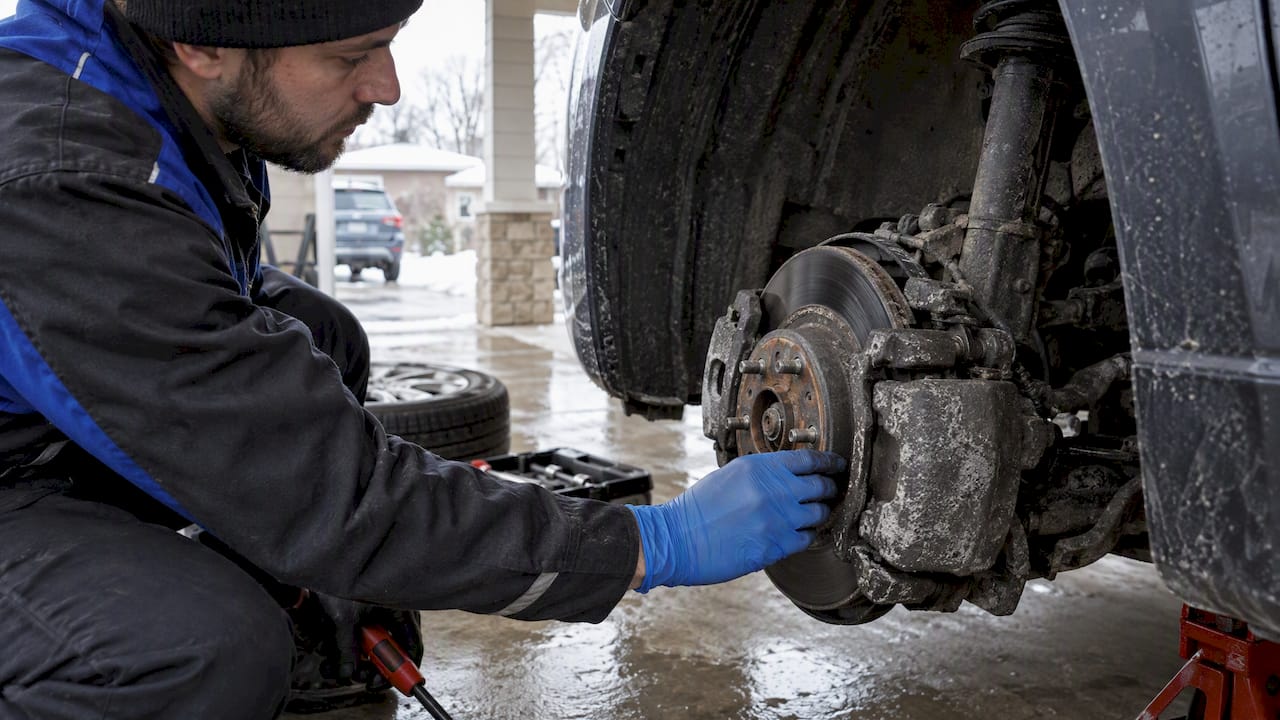
Yes, winter road salt can accelerate corrosion and can impair brakes, electrical systems and structural mounts. Rinse your undercarriage regularly, inspect brake and electrical components for early rust, and book professional repair if you notice a soft pedal, warning lights or unusual noises. The sections below walk through the science, the parts at highest risk, and a season-by-season prevention routine.
TL;DR:
- Repeated cycles of wet and dry conditions in combination with salt residue significantly speed up corrosion on structural and brake parts.
- Calcium chloride and magnesium chloride are especially aggressive salts that attract moisture at lower humidity, increasing corrosion risk.
- Regularly rinsing the undercarriage, inspecting for rust, and treating small spots help prevent severe structural failure, especially in frame mounts and brake components.
- Applying protective coatings before winter starts and drying the vehicle after driving on salty roads can greatly reduce corrosion damage.
- Rust on critical safety parts, such as control arms and brake calipers, requires professional inspection and replacement rather than simple cosmetic fixes.
Table of Contents
- How road salt speeds up corrosion
- Parts most at risk and how failure shows up
- Practical prevention routine: washing, coatings and daily habits
- Detecting and treating existing salt corrosion
- Maintenance checklist and seasonal timeline
- How salt corrosion affects your brakes
- Safety first: why we don’t treat brakes like a cosmetic repair
- Winter-ready brake pads and rotors from AAA Frictions
- FAQ
- Sources
How road salt speeds up corrosion
Cold alone does not rust a car. Corrosion needs moisture and an electrical path, and salt provides exactly that. When road salt dissolves in melting snow or slush, it forms an electrolyte solution that conducts electricity far more efficiently than plain water, which speeds up the electrochemical reaction that turns iron into rust. That is why a vehicle that sits in salty slush for weeks corrodes faster than one exposed only to rain.
Not all de-icers behave the same way. Canada’s overview of road salts covers the main types in use, including sodium chloride, calcium chloride, magnesium chloride and potassium chloride, along with brine mixes, and these vary in how aggressively they attract moisture and sustain corrosive conditions. Calcium chloride and magnesium chloride, in particular, can pull moisture from the air even at lower humidity levels than plain salt does, which keeps metal surfaces wet longer.
A few conditions make the damage worse:
- Repeated wet and dry cycles that keep reactivating the salt film on metal surfaces.
- Slush trapped in wheel wells, rocker panels and frame rails where it cannot drain or dry.
- High humidity days that extend the time metal stays damp, even without fresh precipitation.
Parts most at risk and how failure shows up
Salt does not damage every part equally. Some components fail in ways that are purely cosmetic, while others create real safety risk if ignored.
- Undercarriage, frame and suspension mounts: these are structural. Transport Canada’s defect investigation into a Mitsubishi recall documents corrosion that caused separation at control-arm mounting points, a failure mode corrected through inspection, anti-corrosion treatment or replacement.
- Brake system components: rotors, calipers, brake lines and battery junction boxes are all vulnerable. The same investigation notes internal corrosion in brake-related parts producing brake performance issues such as a hard pedal feel and longer stopping distances, a pattern worth checking for if your pedal suddenly feels different.
- Electrical connectors, fuses and body panels: a separate Transport Canada case involving a Ford recall found road salt and moisture entering battery junction boxes, corroding fuse and wiring terminals and causing lost electrical connectivity, including stalling or lighting problems. Visible rust blisters on rocker panels and wheel arches are an early warning sign worth tracking before it spreads.
Practical prevention routine: washing, coatings and daily habits
A consistent routine beats an occasional deep clean. Here is a sequence that keeps salt from sitting on vulnerable metal long enough to do damage.
- Rinse the undercarriage regularly during the salt season during salt season, using a low-pressure setting. High-pressure washing can force salt deeper into seals, bushings and electrical connectors rather than clearing it out.
- Apply protective coatings before winter starts, not partway through. A professional rust-proofing or undercoating treatment works best on a clean, dry vehicle; applying it over active corrosion, dirt or dampness traps contaminants underneath and can speed up rust rather than prevent it, according to conservation guidance on vehicle care.
- Clear slush from wheel wells and brake components after driving through heavily salted roads, and use non-acidic cleaners around wheels and calipers to avoid stripping protective coatings.
- Dry the vehicle before parking it in a warm garage. Bringing a salt-covered car straight into a heated space keeps the metal wet at a warmer temperature, which activates the corrosion reaction faster than leaving it to dry outside first.
Practical, hands-on guidance on removing salt deposits and protecting paint and metal through the season is covered in this road salt protection overview, which lines up with the rinse-and-dry approach above.
Pro Tip: Keep a low-pressure hose attachment in your winter kit. It clears salt from tight spaces without pushing it further into seals.

Detecting and treating existing salt corrosion
Catching corrosion early keeps a cosmetic problem from becoming a safety one. A short monthly check covers the parts that matter most.
- Look under the vehicle for surface rust on suspension arms, brake lines and frame rails, and note any flaking or pitting.
- Check the battery junction box and nearby fuses for white or green corrosion buildup around terminals.
- Inspect rotors and calipers for flash rust on the braking surface or staining that suggests moisture has been sitting there.
- If you find light surface rust, rinse it clean, remove loose flakes with a wire brush, and treat small spots with a rust converter rather than painting over active corrosion.
- Lubricate fasteners and hinges that show early stiffness, since corrosion often starts by seizing moving parts before it becomes visible.
A hard or sinking pedal, a dash warning light, or a steering pull are not do-it-yourself fixes. Transport Canada’s winter driving guidance recommends following the manufacturer’s maintenance schedule and having these systems inspected promptly rather than waiting for a routine service. If you are seeing a soft brake pedal in cold weather, that is worth a same-week inspection, not a wait-and-see approach.
Maintenance checklist and seasonal timeline
Spreading the work across the season keeps any single task manageable.
- Pre-winter: wash and wax the vehicle, clear debris from drains and door seals, and schedule professional rustproofing while the car is clean and dry.
- During winter: rinse the undercarriage roughly every two weeks, spot-clean wheel wells after driving on heavily salted roads, and do a quick visual check once a month for new rust spots.
- Spring: run a full decontamination wash to clear salt trapped in seams and wheel wells, then inspect those areas closely for early-edge corrosion and treat it before it spreads.
How salt corrosion affects your brakes
Brake rotors and calipers sit directly in the spray path of salted slush, which makes them one of the first places corrosion shows up. When moisture sits on bare rotor surfaces, it forms flash rust within hours, and repeated freeze-thaw cycles can pit the braking surface over time, affecting how evenly a pad contacts the rotor.
A few things are worth watching through the season:
- Flash rust on rotors after overnight parking is common and usually clears after a few stops, but deep pitting does not self-correct.
- Pads engineered for moisture management are built to clear water and road film quickly, which helps maintain consistent friction on wet, salted roads rather than a delayed bite.
- If pitting is visible, pedal feel has changed, or a caliper shows caliper corrosion around the piston or slides, replacement and professional installation matter more than cost-cutting on a safety system.
Safety first: why we don’t treat brakes like a cosmetic repair
Rust on a fender is an appearance problem. Rust on a control arm or inside a caliper is a safety problem, and we think owners should treat them that way. Follow your manufacturer’s maintenance schedule, use a licensed technician for anything brake or suspension related, and run through your inspection checklist before the season gets deep.
— AAA
Winter-ready brake pads and rotors from AAA Frictions
Once corrosion has pitted a rotor or let moisture settle into a caliper, patching the symptom rarely restores consistent stopping. Our pads are built to clear moisture quickly and hold friction steady across rain, slush and cold rather than losing bite the moment a rotor turns wet.

If your current rotors show pitting, uneven wear, or your pedal feel has drifted over the past season, that is a reasonable point to consider replacement rather than another round of touch-ups. Our Type 03 Brake Pads and Type 07 Brake Pads pair with corrosion-resistant SC Type Rotors, and you can check fitment and installation options on our product pages before ordering.
FAQ
What time of year should you rustproof your car?
Pre-winter, before road crews start applying de-icing salt, gives rustproofing the best chance to work. The vehicle needs to be clean and fully dry first, since coating over dirt or dampness can trap moisture underneath and speed up corrosion instead of preventing it.
What are the downsides of using salt on icy roads?
Road salt improves traction but accelerates corrosion on vehicles, bridges and infrastructure by creating a conductive electrolyte that speeds up rust. Canada’s overview of road salts also notes environmental effects on soil and waterways from the large volumes used each winter.
What dissolves salt corrosion?
Nothing dissolves rust that has already formed; it has to be mechanically removed or chemically converted. Rinsing clears surface salt before it reacts, while a rust converter can stabilize small areas of existing corrosion, but deep pitting on structural or brake parts usually needs professional repair rather than a home fix.
What is the best undercoating for salt?
There is no single undercoating that suits every vehicle, since the right choice depends on climate, driving conditions and how the vehicle is stored. What matters most is applying it to a clean, dry surface, ideally before salt season starts, since coating over existing corrosion or dampness can make things worse.
Sources
- Transport Canada recall 2016317 — Mitsubishi
- Transport Canada recall 2017274 — Ford
- Road salts overview — Environment and Climate Change Canada
- Preparing your vehicle for winter — Transport Canada