

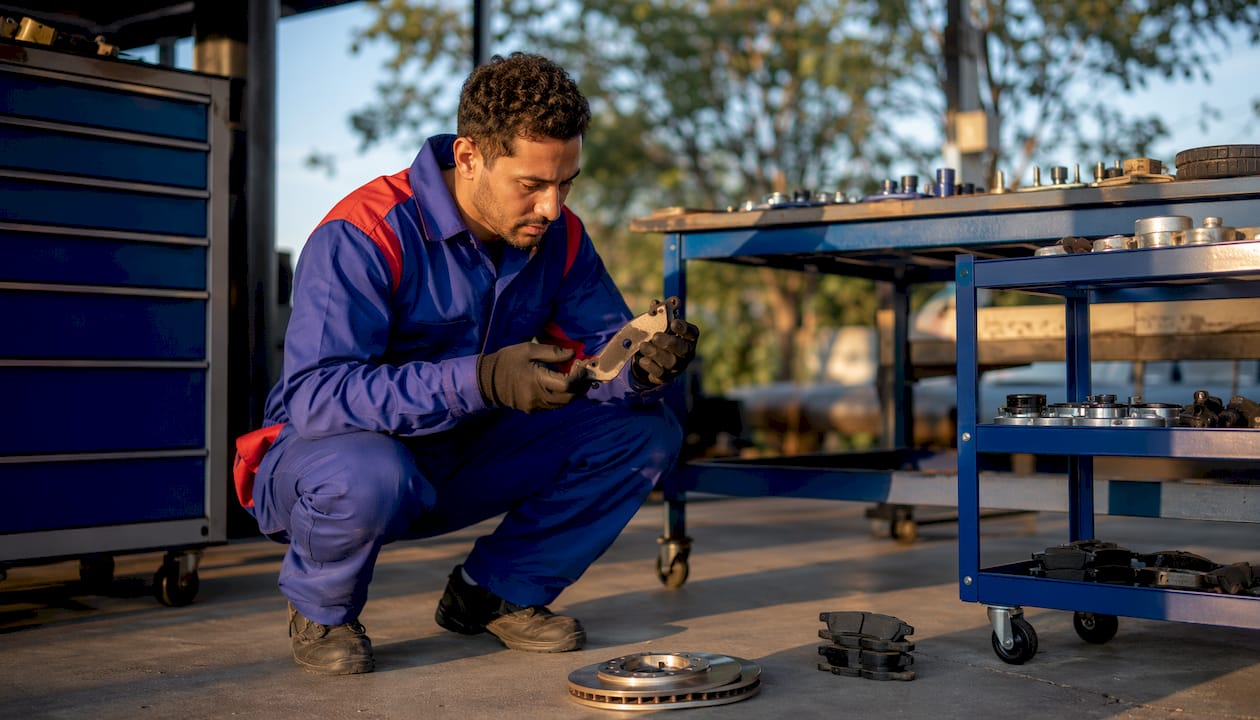
What are brake pad shims and why do you need them?
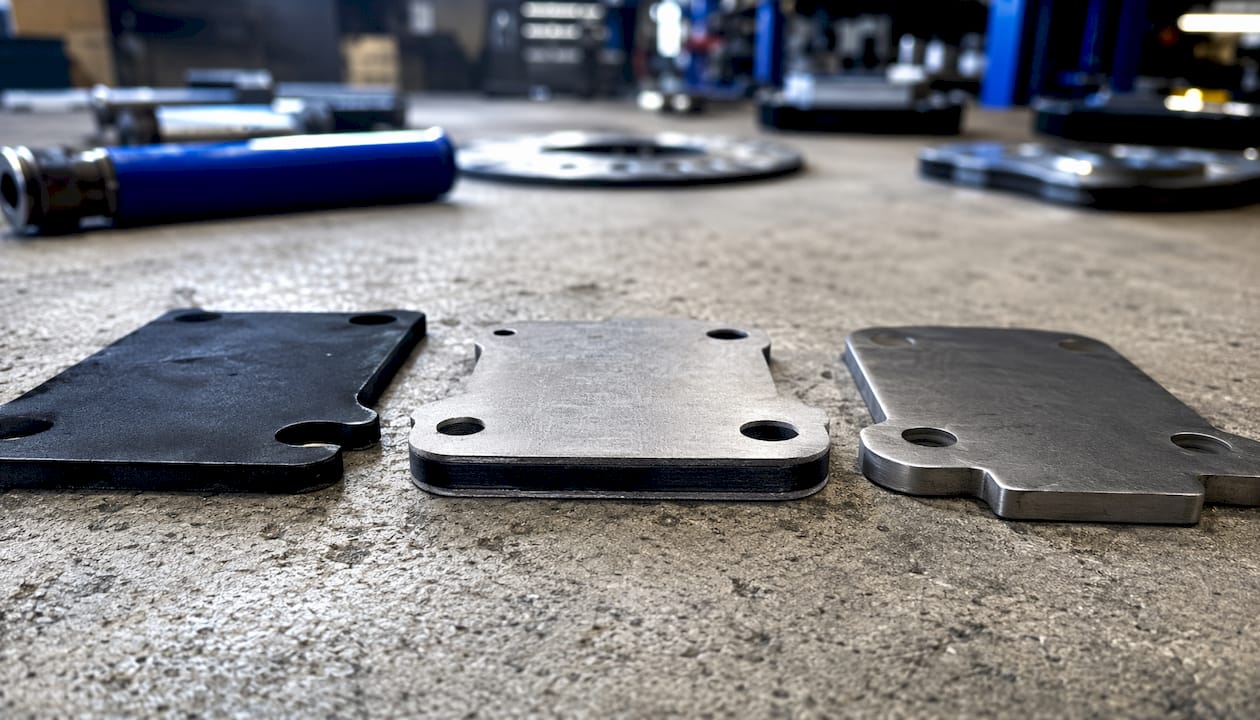
Brake pad shims are thin components installed between the brake pad backing plate and the caliper piston or caliper fingers. Their primary job is to decouple vibrations that travel from the friction material into the caliper, steering knuckle, and suspension, where those vibrations amplify into the high-pitched squeal most drivers recognize immediately. They are not strictly required for braking function, but every brake technician worth their experience will tell you to use them.
The benefits are concrete:
- Noise reduction: Shims absorb the high-frequency vibrations that cause brake squeal before they reach the caliper.
- Extended component life: Reduced vibration transfer means less micro-movement wear on caliper hardware and pad backing plates.
- Pedal feel stability: Proper shim installation helps maintain consistent pad-to-rotor contact, supporting a firm, predictable pedal.
- Corrosion buffering: Metal shims with coatings protect the interface between pad and caliper from moisture-driven corrosion, which matters in Ontario winters.
Shims come in three main material types. Rubber shims use flexible rubber or rubberized synthetics, typically 0.5 mm to 2 mm thick, to insulate the pad from vibration. Metal shims are thin steel or aluminum sheets, sometimes coated, that stiffen the interface and reduce friction between metal surfaces. Insulating shims attach directly to the pad backing plate and add mass to dampen vibrations at the source. Many modern brake pads ship with shims already bonded or clipped to the backing plate, which simplifies installation but comes with tradeoffs discussed below.
Industry practice consistently recommends using shims with every brake pad service. They are engineered components, not optional accessories.
Table of Contents
- How shims actually stop your brakes from squealing
- Can you install brake pads without shims, and can you reuse old ones?
- Brake pad safety standards in Ontario you need to know
- Key Takeaways
How shims actually stop your brakes from squealing
Every brake system produces vibration during a stop. Without a shim, that vibration travels from the friction material through the metal backing plate and directly into the caliper piston, then onward into the steering knuckle, strut, and spring. Those suspension components act as amplifiers. What starts as a minor pad vibration becomes the sharp squeal that makes passengers wince.
Brake shims are tuned components designed for specific vibration frequencies of a vehicle’s braking system. A generic shim pulled from a parts bin may not match your vehicle’s acoustic signature, and a mismatched shim can actually worsen noise rather than reduce it. This is why vehicle-specific shims matter.
The most effective designs use multi-layer construction with steel outer layers and a rubber or elastomer core. The steel provides structural rigidity while the elastomer core absorbs and dissipates vibrational energy before it can transfer. Single-layer soft metal shims offer some dampening, but they cannot match the performance of a properly engineered multi-layer design.
Shims also work best when they “float” between the pad and caliper rather than being permanently bonded to the backing plate. A permanently attached shim connects the pad and caliper rigidly, which defeats the decoupling function the shim is supposed to provide. High-quality brake pad manufacturers use spring tabs to hold shims in position without bonding them permanently.
For high-performance or track applications, rubber-coated shims can buckle under extreme heat. Perforated titanium shims offer superior heat resistance and maintain their vibration dampening properties under the thermal loads that racing generates. They also reduce conductive heat transfer into the caliper, which helps protect brake fluid from overheating.
Pro Tip: Apply a thin film of brake-specific lubricant to the shim contact surfaces before installation. Lubricant targets friction at sliding contact points, while the shim itself handles high-frequency vibrational noise. The two work together, but lubricant cannot replace shims for noise control.
Can you install brake pads without shims, and can you reuse old ones?
You can install brake pads without shims. Braking performance itself does not depend on them. What you lose is noise control and vibration management, and on Ontario roads, where temperature swings from January cold to summer heat stress every brake component, that tradeoff tends to show up quickly as squeal or pedal pulsation.
Reusing old shims is a different question, and the answer is more definitive. Old or damaged shims should not be reused because heat cycling and corrosion degrade their dampening properties over time. A shim that looks intact may have lost the elastomer compliance that made it effective. Reinstalling it almost always results in noise returning within a short period.
Key installation and maintenance points:
- Replace shims with every pad change. Reusing shims from a previous service is one of the most common causes of brake noise after a DIY job.
- Clean the caliper contact surfaces before fitting new shims. Rust scale or debris between the shim and caliper creates gaps that allow vibration to bypass the shim entirely.
- Verify correct placement. The inboard shim sits between the backing plate and the caliper piston; the outboard shim sits between the backing plate and the caliper fingers. Incorrect placement nullifies the noise dampening effect.
- Never apply grease to the friction face. Lubricant belongs on the shim contact surfaces and caliper slide pins, not on the pad surface that contacts the rotor.
- Check for pre-attached shims. Many pad sets include shims already bonded or clipped to the backing plate. Adding a second shim on top creates an over-thickness condition that can cause a spongy pedal or caliper clearance issues.
For drivers who want a complete system approach, Aaafrictions brake pad and rotor kits are engineered as matched assemblies, which removes the guesswork around shim compatibility and pad-to-rotor fit.
Brake pad safety standards in Ontario you need to know
Ontario’s Highway Traffic Act sets out vehicle safety requirements that directly affect brake maintenance decisions. Brake pads worn below safe limits are a defect that can result in a failed safety inspection or a roadside out-of-service order.
The general safety threshold for brake pad thickness in Ontario is a small minimum thickness above which pads remain safe and effective. Pads worn below this level cannot generate reliable stopping force, and the risk of metal-to-metal contact with the rotor increases sharply. For Ontario drivers dealing with wet spring roads, icy January conditions, or the stop-and-go traffic of the 401, staying above that threshold is not optional.
Practical compliance checklist for Ontario vehicle owners:
- Inspect pad thickness at every tire rotation, typically every 8,000–12,000 km, using a brake pad gauge or visual inspection through the caliper window.
- Check shim condition during every pad inspection. A corroded or delaminated shim is a sign the pad set needs attention sooner rather than later.
- Listen for wear indicators. Most pads include a metal wear tab that contacts the rotor and produces a high-pitched squeal when pads approach minimum thickness. That sound is a service signal, not just an annoyance.
- Do not confuse shim noise with wear indicator noise. A missing or degraded shim produces squeal under moderate braking; a wear indicator typically squeals continuously or under light pedal pressure.
- Use vehicle-specific components. Generic pads and shims not matched to your vehicle’s friction profile can affect stopping distance and noise behavior, both of which matter for a safety inspection.
Aaafrictions’ HydroAdaptive ceramic formulation is engineered specifically for the temperature and moisture conditions Ontario drivers face year-round, maintaining consistent friction behavior whether you are braking on a dry August highway or a wet November ramp. Each kit is built to meet or exceed OEM specifications, which supports both safety compliance and quiet operation.

Key Takeaways
Brake pad shims are engineered vibration-decoupling components that prevent brake squeal, protect caliper hardware, and support safe, consistent pedal feel across every brake service.
| Point | Details |
|---|---|
| Shims reduce brake squeal | They decouple vibrations between the pad and caliper before those vibrations amplify into noise. |
| Multi-layer designs outperform single-layer | Steel and elastomer core construction absorbs vibration more effectively than a single soft metal sheet. |
| Never reuse old shims | Heat and corrosion degrade dampening properties; replace shims with every pad change. |
| Ontario minimum pad thickness | Safety inspections in Ontario require brake pads to be above the minimum service thickness specified by regulation to pass. |
| Correct placement is critical | Inboard shim goes against the piston; outboard against the caliper fingers. Wrong placement eliminates the noise benefit. |
Recommended
- Ceramic vs. Semi Metallic Brake Pads: Which Is Actually Better for Your Vehicle? – AAA Frictions
- My Brakes Are Squeaking, But Is It Really Because of Your Brake Pads or Brake Rotors? – AAA Frictions
- How Much Does Replacing Brake Pads and Rotors Cost and How Much Should It Cost? – AAA Frictions
- Library – AAA Frictions