

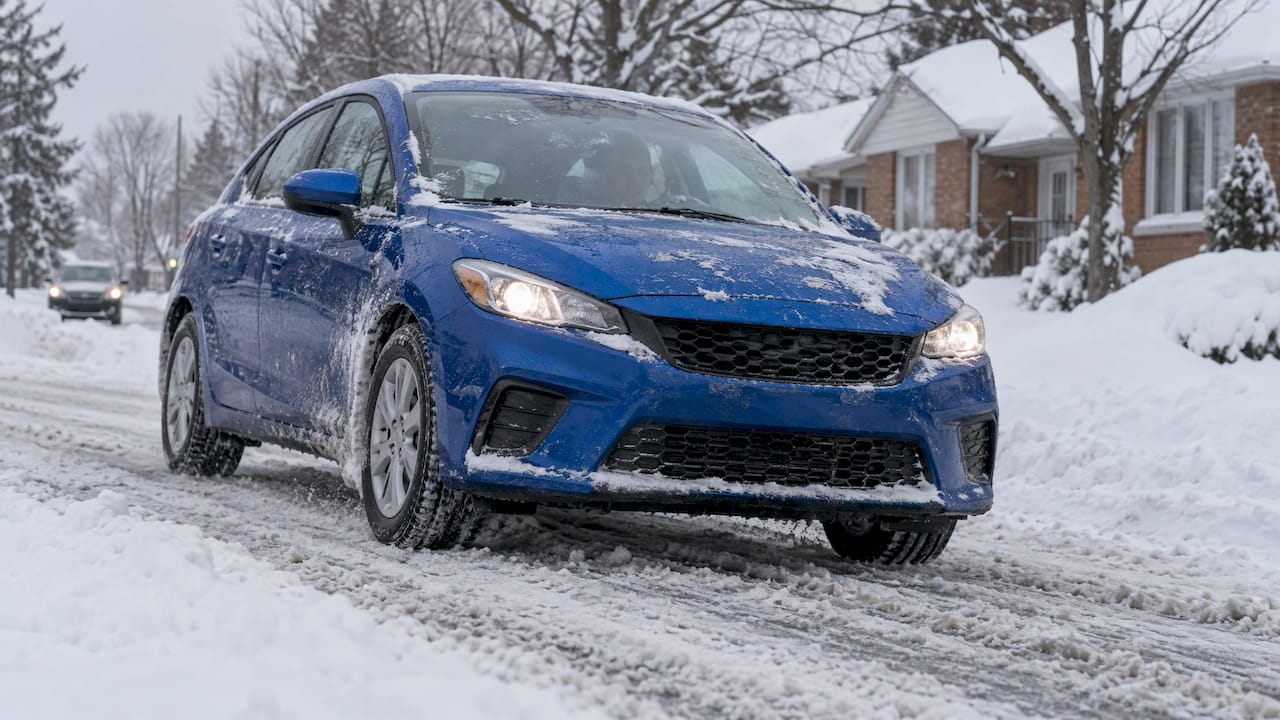
Ceramic brake pads can be driven all winter in Canada. They resist road salt, leave little dust and wear evenly. The one habit that matters is to treat the first stops of a freezing morning gently, because ceramic compounds take a short time to reach their working temperature. This guide explains what happens at the pad, the rotor and the caliper when snow, slush and brine hit your brakes, and how to set up your braking system so it stays consistent from November to April.
TL;DR
- Ceramic pads are a sound choice for snowy Canadian roads, with low dust and good resistance to salt.
- On a very cold start, the first stop can feel a little soft or long. Leave extra distance and brake gently until the pads warm up.
- Salt and brine attack the rotor, the caliper and the pad backing plate, so the whole system matters, not only the pad material.
- Winter tires shorten stopping distance far more than any brake upgrade. Brakes and tires work as a pair.
- Grinding that continues past the first few stops, a vibrating steering wheel or a dash warning light should be checked by a mechanic.
Table of Contents
- How ceramic pads behave in snow and freezing temperatures
- Why salt matters as much as snow
- Tires first, then brakes
- A winter-ready braking system, part by part
- Practical winter habits for ceramic pads
- When a noise or a feeling needs attention
- Our view: the system matters more than the pad
- Choosing AAA Frictions for snow and slush
- Frequently asked questions
- Sources
How ceramic pads behave in snow and freezing temperatures
Snow itself is not the problem for a brake pad. Pads sit behind the wheel, and the work they do happens in a small, hot contact patch between the pad and the rotor. What changes in winter is the starting temperature of everything in that contact patch, and the moisture and salt that arrive with it.
In deep cold, pad and rotor surfaces can feel “glassy” until they warm up. Mechaniq, a Canadian shop, describes the first few stops of the day feeling less confident, with the pedal needing a little more pressure, and rubber parts such as seals and flex hoses stiffening in the cold. That last point is easy to overlook. A firmer pedal on a frozen morning is not always the pad. Part of it is the hydraulic system and the caliper responding more slowly.
Ceramic compounds in particular warm up a little more slowly than semi-metallic ones. NXT Motors explains that in freezing weather the pad material stiffens, so the brakes can feel unusual on a cold start, and normally quiet ceramic pads can squeal. Its advice is practical: leave extra following distance on the first stops and apply the brakes gently while the pads warm up.
That advice is the whole answer for most drivers. Once the pads are at temperature, a good ceramic pad gives steady, quiet, clean braking. The job of the engineering is to shorten that warm-up window and keep friction stable once you are through it.

What a cold first stop feels like
Expect one or more of these on a very cold morning, usually only for the first few stops:
- A pedal that feels firmer than in summer.
- A slightly longer pedal push before the pads bite.
- A brief squeal at low speed.
- A light grinding sound if the car sat overnight after being parked wet. Surface rust can form on the rotors and clears after a few stops, according to Mechaniq.
These are warm-up behaviours. They should fade within the first few stops. If they do not, read the section on checks below.
Ceramic or semi-metallic for a snowy commute
The usual comparison is between ceramic pads and semi-metallic pads. Semi-metallic pads tend to grip immediately when cold. Ceramic pads trade a short warm-up for low dust, quiet operation, even rotor wear and strong resistance to salt. For a daily commute, school runs and city driving, where you are braking often and the pads warm up quickly, that trade suits most drivers well. We go deeper on the differences in our guide to ceramic versus semi-metallic brake pads.
The vehicles where the choice deserves more thought are heavy ones: large SUVs, vans loaded with passengers or cargo, and anything that tows or descends long mountain grades. In those cases, match the pad to the load and to the heat it will see. Our page on heavy duty brake pads for Canadian drivers covers how to think about that.
Why salt matters as much as snow
In most of Canada, the part of winter that does lasting damage to brakes is not the cold. It is brine. Road salt and de-icing chemicals spray up onto rotors, calipers and pads, and then sit on them overnight.
The damage shows up in three places:
- Rotors. Salt water leaves surface rust and, over time, pitting. Pitted rotor faces wear pads unevenly and can cause pedal vibration.
- Calipers. Corrosion on slides and pistons makes calipers sticky, which means uneven pad wear and a pad that drags. We cover this in our article on caliper corrosion in Ontario.
- Pad backing plates. Rust can creep between the friction material and the steel plate. In the worst case the friction material separates from its backing.
The trade press has noticed. The BRAKE Report notes that Canadian winters and comparable conditions in the northern United States are raising demand for corrosion-resistant backplates and low-temperature binders that resist salt-induced delamination. In other words, the pad compound is only one part of a winter-ready pad.
If you want to understand the chemistry on your own driveway, our explainer on magnesium chloride and rotor corrosion is a good next read. Salt exposure also reaches paint and underbody, and a guide to road salt protection for cars is useful for the rest of the vehicle.
Cars that sit
A vehicle parked wet for several days is the classic rust scenario. A thin film of rust forms on the rotor face and the pad can stick to it. If your car is a second vehicle, or you travel often, see our guide on brake rust in stored cars.
Tires first, then brakes
It is tempting to think of brake pads as the fix for winter stopping distance. They are not the main lever. Your tires are the only part of the car touching the snow. Vehicle Pick reports that dedicated winter tires cut stopping distance by an average of 38 feet across every vehicle tested, and that worn pads lengthen winter stopping distance substantially.
We take that seriously. Brakes can only slow the wheel. The tire decides how much of that force reaches the road. So the order of priority for a snowy-road setup is simple: winter tires first, then brakes that behave predictably, then your driving habits. Our article on tires first and performance brakes second for snow lays out that thinking in more detail.
A winter-ready braking system, part by part
When we design brake parts for Canadian weather, we treat the system as a set of components that each face a different winter problem. The same logic can guide your own choices, whichever parts you fit.
| Component | Winter problem | What to look for |
|---|---|---|
| Pads | Moisture, cold stiffening, brake dust that traps salt | Stable friction across a wide temperature range, low dust, corrosion-resistant backing |
| Rotors | Rust, pitting, uneven wear | Protective coating against moisture and road salt |
| Calipers | Stiff seals, sticking slides | Components that operate smoothly in both cold and heat |
| Lubricants and hardware | Dried-out grease, seized pins | Fresh, temperature-appropriate lubricant at every pad change |
Our range follows this table. HydroAdaptive ceramic pads are designed for moisture management and stable friction. GEOMET-coated rotors are designed to protect against corrosion from moisture and road salt. ClimateFlex calipers are designed for smooth operation through winter cold and summer heat. Each part addresses a different challenge, and together they support consistent braking across seasons.
Brake dust and rotor pitting
Dust is not only a cosmetic issue in winter. Dust packed onto a wet rotor holds salt against the metal. Low-dust ceramic formulations help keep that film off the rotor face. See our article on how HydroAdaptive pads handle winter brake dust and rotor pitting for the details.
Practical winter habits for ceramic pads
You do not need special skills, only a few habits.
- Warm the brakes gently. On a very cold morning, brake lightly and early over the first few stops. Leave extra following distance until the pedal feels normal.
- Rinse and dry when you can. Washing off brine at a wand wash, then driving a few minutes with light brake applications, helps dry the rotor faces. Our monthly checks to protect brakes from road salt corrosion give a simple routine, and our seven same-day steps for brine corrosion cover the days after a heavy salting.
- Replace pads in axle pairs. Change both front or both rear pads together so braking stays balanced.
- Service the caliper hardware at every pad change. Clean slides, fresh lubricant and free-moving pistons matter as much as the pad itself.
- Do not wait for the first snowfall. Fit pads and check rotors in the fall, when you can see and fix problems in dry weather.
When a noise or a feeling needs attention
Warm-up behaviour is normal. Persistent symptoms are not. Mechaniq advises drivers to listen for grinding or harsh scraping that continues past the first few stops, to notice whether the steering wheel vibrates under braking, and to pay attention to dash warning lights for ABS, traction or brake system alerts.
In practice:
- Grinding that does not clear after the first few stops: have the pads and rotors inspected by a qualified mechanic. Metal-on-metal contact damages rotors quickly.
- Steering wheel or pedal vibration under braking: often points to uneven rotor wear or a sticking caliper. Book an inspection.
- A brake, ABS or traction light that stays on: do not ignore it. A guide to ABS warning lights and what causes them can help you understand what the light may mean, but have the vehicle diagnosed before relying on it in winter conditions.
- A pull to one side when braking: this can come from a sticking caliper or uneven pad wear. Get it checked promptly.
Perspective
Our view: the system matters more than the pad
Most winter brake advice starts and ends with the pad material. We think that is too narrow. A ceramic pad in snow behaves well when it has a stable friction profile, a rotor that is not pitted, and a caliper that moves freely in the cold. Take away any one of those and the driver feels it at the pedal, whatever the pad is made of.
That is why we develop our rotors and pads as a matched system, and why we sell rotors only with compatible pads. The pairing is intended to keep friction predictable and temperature-band adaptability consistent, so that a damp Vancouver commute, a humid Ontario afternoon and a frozen Prairie morning feel like the same car.
The brief warm-up of a ceramic pad is a habit, not a hazard: brake gently, leave space, and let the system reach temperature. In return you get clean, quiet braking, low dust, and protection for the rotor face that keeps salt from taking hold. That is the trade we design for.
AAA
Choosing AAA Frictions for snow and slush
If you are ready to fit parts before the heavy salt season, start with our pads and rotors. Our Type 03 brake pads and Type 07 brake pads are built around HydroAdaptive ceramic technology for rain, humidity, snow and cold. For rotors, choose between SC Type rotors and GC Type rotors, both sold with compatible pads so the system works as designed.

Enter your vehicle on aaafrictions.ca to find the set that fits, whether you are a daily commuter, a rideshare or delivery driver with high mileage, or a DIY owner doing the work in your own garage.
Frequently asked questions
Are ceramic brake pads good in snow?
Yes. Ceramic pads are a good all-season choice for Canadian winters, with low dust and strong resistance to salt. Expect the first stop on a very cold morning to feel slightly softer until the pads warm up, and brake gently until then.
Why do my ceramic brakes squeak when it is cold?
Cold stiffens pad material, and ceramic pads warm up a little more slowly, so a brief squeal on the first stops is common. Moisture and a thin film of rust on the rotors after a wet night can add a short grinding sound. If the noise lasts beyond the first few stops, have the brakes inspected.
Are ceramic brake pads better for daily driving?
For most commuters, yes. Frequent braking keeps the pads warm, and the low dust and quiet operation are noticeable day to day. Drivers of heavy vehicles or those who tow should match the pad to the load.
Do I still need winter tires with good brakes?
Yes. Brakes slow the wheel, but the tire transfers that force to snow and ice. Winter tires are the first upgrade for stopping distance, and well-matched brakes are the second.
Should I replace pads in pairs?
Yes. Replace both front or both rear pads together, so braking force stays even from side to side. Service the caliper slides and hardware at the same time.
Sources
- How Does Temperature Impact Brake Performance on Cold Canadian Roads (Mechaniq)
- Are Ceramic Brake Pads Good? Pros, Cons and Best Uses (NXT Motors)
- EV Brake Pad Corrosion Reshapes Backing Plate Design (The BRAKE Report)
- 10 Best Sedans For Snow And Winter Roads (Vehicle Pick)