

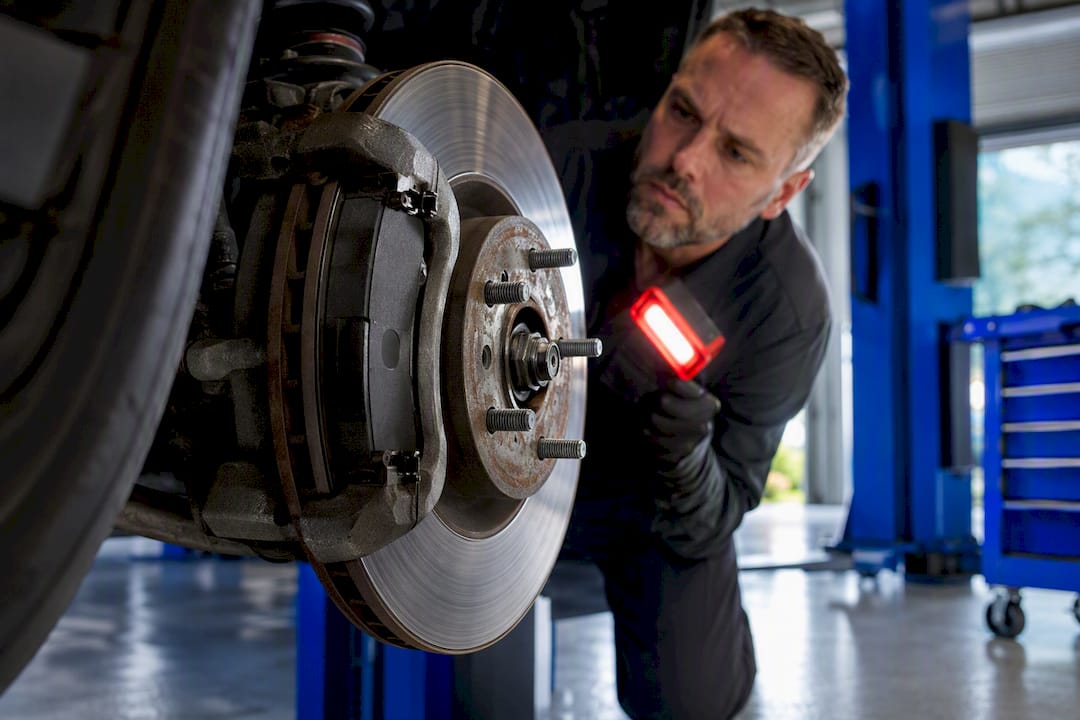
A little squeak after a new brake job is usually normal, caused by bedding-in, morning moisture, or dry hardware, and it typically fades within a few hundred miles. Persistent squeal that doesn’t fade, or any grinding, vibration, longer stopping distances, or a burning smell, means stop driving on it and get the car inspected right away.
TL;DR:
- Most brake squeak after installation results from bedding-in or moisture and typically fades within a few hundred miles unless performance issues arise.
- Persistent squealing, grinding, vibration, increased stopping distances, or a burning smell indicate a need for immediate professional inspection.
- Proper bedding-in, lubrication, and hardware installation are key to preventing noise, while moisture and temperature fluctuations can temporarily cause squeal.
- Using high-quality pads like ceramic or HydroAdaptive compounds and ensuring hardware is installed and torqued correctly can significantly reduce future noise.
- Regular maintenance, including hardware checks and avoiding contamination with lubricants or sprays on friction surfaces, helps keep brakes quiet long-term.
Table of Contents
- Why Do New Brakes Squeak? The Common Causes
- Normal Break-In Noise vs. a Problem: What’s the Real Timeline?
- Safe DIY Checks Before You Call a Shop
- What a Mechanic Checks During a Brake Inspection
- Choosing Pads and Hardware That Squeak Less Next Time
- How HydroAdaptive Technology Cuts Moisture-Related Squeak
- Brake Squeak Myths That Just Won’t Die
- How to Diagnose the Exact Cause of Your Brake Squeak
- Maintenance Habits That Keep Brakes Quiet Long-Term
- How Weather and Temperature Change the Way Brakes Sound
- Publisher Perspective: Sound Isn’t the Whole Story
- AAA Frictions: Built for the Mornings When Brakes Squeak Most
- Sources
Why Do New Brakes Squeak? The Common Causes
New pads and rotors need time to learn each other’s surface. That process, called bedding-in, lays down a thin transfer layer of friction material on the rotor face, and until that layer is even, the pad can catch and vibrate against bare metal, which you hear as squeak. It’s the single most common reason new brake pads make noise, and it’s also the most temporary.
A few other mechanical realities stack on top of that:
- Protective coatings. Some pads ship with a light film on the friction surface to prevent corrosion in storage, and that film has to wear off during the first stops before the pad grips cleanly.
- Moisture and surface rust. Rotors are bare cast iron. Leave a car overnight, or drive it through rain, and a thin layer of surface rust forms and squeaks until normal braking wears it off.
- Dry hardware. Caliper pins and backing plates need high-temperature brake lubricant at their contact points. Skip that step and the pad vibrates against metal instead of sliding smoothly.
- Missing shims or clips. These small parts damp vibration. Leave one out during installation and the pad has nothing to quiet it down.
- Glazing from overheating. Hard, repeated braking before the pad has bedded in can glaze the surface, hardening it and cutting friction, which produces a harder, more persistent squeal.
- Pad material. Semi-metallic pads run louder by design than ceramic compounds, simply because of what’s in the friction mix.
Normal Break-In Noise vs. a Problem: What’s the Real Timeline?
Most bedding-in squeak clears within the first few dozen stops, and moisture-related squeak usually disappears shortly after starting to drive once the rotors warm up and dry. If the noise is still there after a week of normal driving, or it gets louder instead of quieter, something beyond bedding-in is going on.
Pro Tip: Track how the squeak behaves over your first few hundred miles. Fading noise is a good sign. Squeak that holds steady or grows louder is your cue to get it checked.
Watch for these red flags, and treat each one as a reason to see a mechanic promptly, not eventually:
- Grinding or metal-on-metal sound means the pad material is gone or hardware has shifted out of place.
- Vibration through the pedal or steering wheel points to an uneven rotor surface or a stuck caliper.
- Longer stopping distance or a soft, sinking pedal signals reduced friction or a hydraulic issue.
- Burning smell often means a dragging caliper or overheating pad.
Mechanics consistently point out that sound alone isn’t the deciding factor; a squeak with no change in how the car stops is usually background noise, but a squeak paired with any performance change warrants inspection that day.
Safe DIY Checks Before You Call a Shop
Before you touch anything, let the car sit until the brakes are cool, set it in park or in gear, and chock the wheels if you’re working on an incline. Never reach toward a wheel with the engine running or the car unsupported on a jack alone.
- Look at each wheel with a flashlight. Check that the pad has even thickness side to side and that no clips, shims, or springs are visibly missing.
- Check for surface rust. A dull, orange haze on the rotor face after sitting overnight is normal and will clear with driving, not a defect.
- Confirm the pads seat flush. A pad sitting crooked in the caliper bracket usually means a shim slipped or a clip broke during installation.
- Run a bedding-in routine. From about 35 mph, brake moderately down to 10 mph without coming to a full stop, then let the brakes cool for a minute. Repeat this progressive stop sequence 8 to 10 times to help the transfer layer form evenly.
- Apply lubricant only where it belongs. A dab of high-temperature, metal-free brake lubricant on the caliper slide pins and the back of the pad’s contact points can quiet dry hardware.
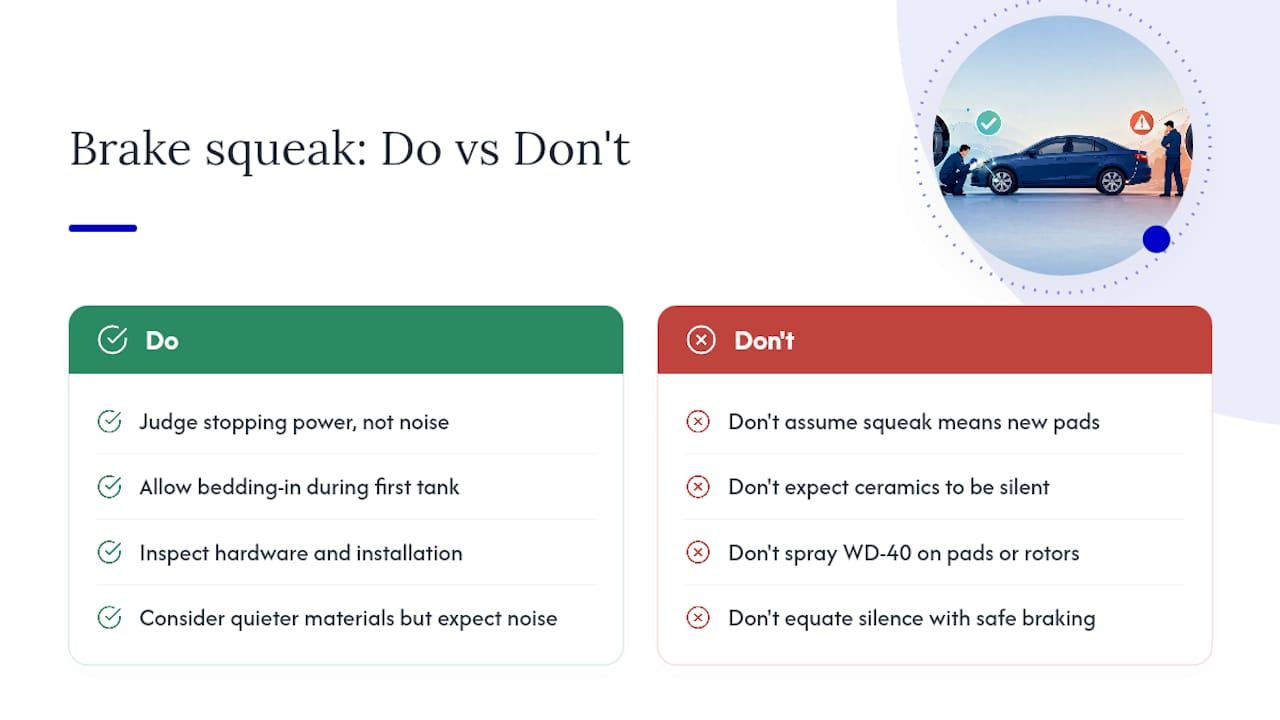
Never spray WD-40, penetrating oil, or any general aerosol lubricant on the pad or rotor friction surface. Doing so contaminates the friction material and can seriously reduce stopping power, which turns a noise complaint into a real safety risk.
If the squeak survives a proper bedding-in routine, or you find damaged hardware you’re not comfortable replacing yourself, stop there and hand it to a shop.
What a Mechanic Checks During a Brake Inspection
A proper inspection starts with pulling the wheel and tire off, not just listening with them on. From there, a technician typically works through:
- Pad thickness and wear pattern, comparing left to right for uneven contact.
- Rotor surface condition, checking for scoring, rust pitting, or warping.
- Hardware and shims, confirming clips, anti-rattle springs, and shims are present and correctly seated.
- Caliper operation, making sure the piston retracts fully and the slide pins move freely.
Common fixes run from a five-minute lubrication job to a full rotor resurfacing or pad swap if the originals were defective or contaminated. Cost and time mostly hinge on whether the issue is hardware (cheap, fast) or a rotor or caliper replacement (more parts, more labor).
Walk in with a short list of questions: Did you perform a bedding-in drive after install? Was high-temperature lubricant used on the pins? Are the correct shims installed for this pad? Were OEM-spec parts used, or an off-brand substitute? The answers tell you a lot about whether the shop did the job right the first time.
Choosing Pads and Hardware That Squeak Less Next Time
Pad material sets your baseline noise level. Semi-metallic pads offer strong stopping power but run noisier by nature; organic pads are quiet but wear faster and fade under heat; ceramic pads split the difference, staying quieter and cleaner while holding up well for daily driving.
Hardware matters just as much as compound:
- Insist on new shims and anti-rattle clips with every pad swap. Don’t reuse worn ones.
- Confirm the shop applies anti-squeal paste or high-temp lubricant to the pad’s mounting ears and the caliper’s slide pins.
- Ask that hardware be torqued to spec. Loose caliper bolts are a quiet vibration waiting to become a loud one.
- Require a bedding-in drive before the car leaves the lot, not just a road test around the block.
If quiet, everyday braking matters more to you than track-day heat resistance, ceramic pads are the more sensible default.
How HydroAdaptive Technology Cuts Moisture-Related Squeak
Thin surface films, whether rust, dew, or bedding-in residue, create a temporary mismatch between pad and rotor, and that mismatch is what you hear as squeak. Aaafrictions built HydroAdaptive technology specifically to clear moisture from the friction interface faster, so the pad reaches consistent contact sooner instead of chattering against a wet or rusted surface. That’s a meaningful difference for drivers who deal with rain, humidity, or overnight dew on a regular basis. Vehicle-specific kits are available through the technology overview page for drivers who want to check fitment.
Brake Squeak Myths That Just Won’t Die
“Squeaky brakes always mean you need new pads.” Not true. A squeak from new pads usually means the opposite problem: the pads are barely broken in. Worn-out pads are more likely to grind or squeal continuously than chirp intermittently.
“Ceramic pads never make noise.” Ceramic compounds run quieter on average, but no pad material is immune to moisture squeak, dry hardware, or bedding-in noise. Material choice lowers the odds of squeak; it doesn’t eliminate them.
“If it squeaks, the brakes aren’t working right.” Sound and stopping power are two different systems. A brake can squeal loudly and stop the car perfectly, and a brake can go eerily silent while barely slowing you down at all. Judge the stop, not just the noise.
“WD-40 on the pads will fix a squeak.” This one causes real damage. Spraying any general lubricant onto the friction surface contaminates the pad and rotor, cutting stopping power exactly where you need it most.
“New brakes should be completely silent from day one.” Some noise during the first tank of driving is standard, not a defect. The transfer layer that makes braking smooth and quiet simply hasn’t formed yet.
“Squeaking only happens with cheap parts.” Premium pads bed in too. Installation quality, hardware condition, and weather exposure affect noise regardless of price point.
How to Diagnose the Exact Cause of Your Brake Squeak
Start by isolating when it happens. Squeak only on the first stop of the day, gone by the third or fourth application, almost always points to overnight moisture or rust. Squeak that shows up under light braking but disappears under firm braking usually traces back to a loose or unlubricated component vibrating at low pad pressure.
Listen for location. A front-only squeak versus a rear-only squeak narrows your search to one axle immediately, and a sound that changes with steering input (rather than braking) often means a wheel bearing or suspension part, not the brakes at all.
Check the calendar against the squeak. If the noise started right after installation and hasn’t changed in three weeks, that’s a hardware or lubrication issue, not bedding-in, since bedding-in noise should be trending down, not holding steady.
A visual and tactile inspection settles most remaining questions: pull the wheel, look for uneven pad wear, feel for rough spots on the rotor face, and wiggle the caliper to check for play in the slide pins. If none of that turns up an obvious cause and the squeak persists past a full bedding-in cycle, a shop with a brake lathe and the ability to pull the caliper apart is your next step.
Maintenance Habits That Keep Brakes Quiet Long-Term
Squeak prevention is mostly about keeping moisture and friction under control before they become problems. A few habits go a long way:
Drive a short bedding-in sequence every time you get new pads or rotors, even if a shop tells you it isn’t necessary. Avoid hard, sudden stops for the first 200 to 300 miles, since aggressive braking before the transfer layer forms is one of the fastest routes to glazing.
Have hardware, pins, and shims inspected at every pad change, not just when a squeak shows up. Lubrication dries out over time even without a defect, and a five-minute regrease during a routine service catches the issue before it becomes noise.
Park in a garage or covered area when you can. Overnight dew and rain are the two biggest daily contributors to surface rust that squeaks on the first stop, and reducing exposure reduces the frequency of that particular noise.
Address grinding or vibration immediately rather than waiting for the next scheduled service. Letting hardware issues sit doesn’t just risk more noise. It risks uneven rotor wear that costs more to fix later.
How Weather and Temperature Change the Way Brakes Sound
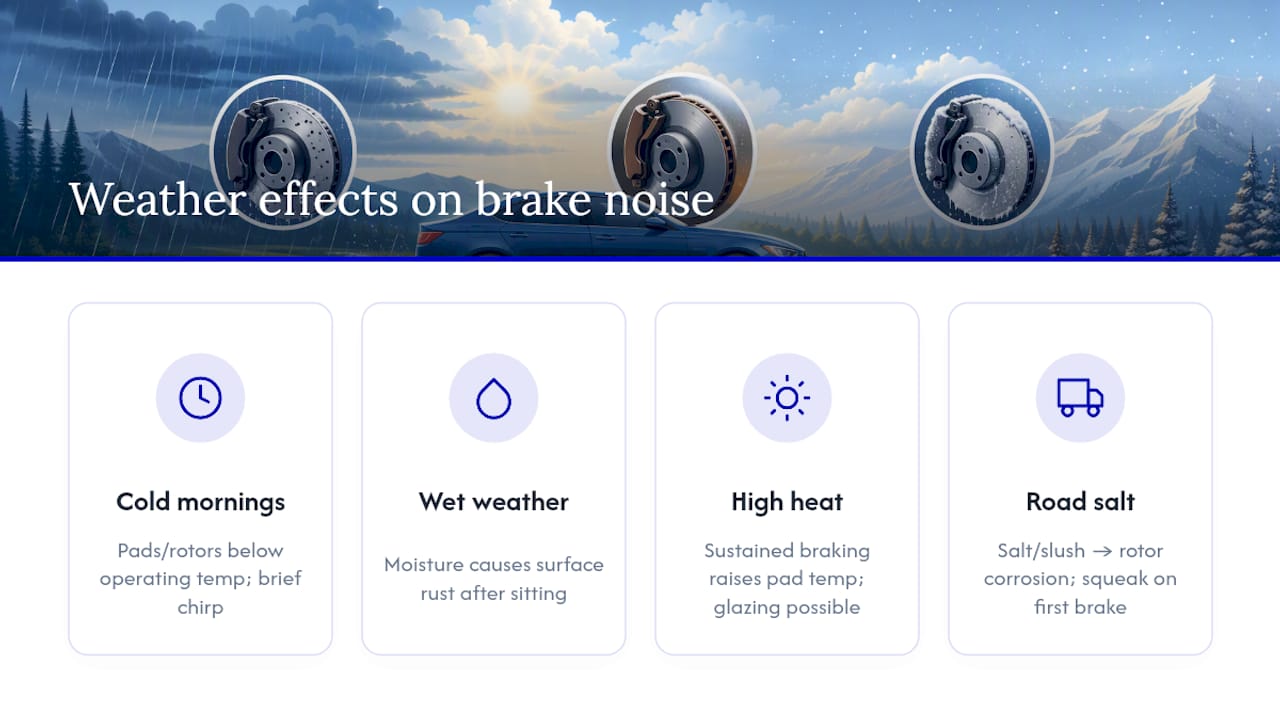
Cold mornings and wet weather are the two biggest environmental drivers of brake noise, and they work through slightly different mechanisms. Cold pads and rotors haven’t reached their ideal operating temperature, so friction behaves less predictably for the first mile or two, which can produce a brief chirp that clears as everything warms up.
Humidity and rain create the moisture layer that leads to surface rust, and that layer is thickest after the car sits still for hours, which is exactly why brake squeal shows up most in the morning. Heat works the opposite direction: sustained hard braking on a hot day, especially in stop-and-go traffic or coming down a long grade, pushes pad temperature up fast, and that’s the scenario most likely to glaze a pad that hasn’t fully bedded in yet.
Seasonal shifts matter too. Vehicles that see road salt or slush accumulate more surface corrosion on rotors over winter, and that corrosion often announces itself as squeak the first few times you brake after a snow or salt exposure event. None of these conditions are unusual or a sign of bad parts. They’re just physics interacting with whatever is bolted to your wheels.
Publisher Perspective: Sound Isn’t the Whole Story
Mild squeak that fades with bedding-in and a few dry mornings isn’t worth losing sleep over. Persistent or worsening noise, or any change in how the car actually stops, is worth a shop visit the same week. Judge your brakes by performance first. Sound is a clue, not a verdict.
— AAA
AAA Frictions: Built for the Mornings When Brakes Squeak Most
If moisture is the recurring reason your brakes squeak, the fix isn’t more patience. It’s a pad formulated to clear water off the friction surface faster than a standard compound can. Aaafrictions engineered HydroAdaptive ceramic pads specifically for that gap: rapid moisture clearance, consistent friction across rain, humidity, and cold, and a bedding-in period that behaves more predictably because the pad isn’t fighting a wet rotor on top of everything else.

For drivers who deal with damp mornings, seasonal rain, or winter slush more often than not, that consistency matters more than a marginal price difference on generic pads. Check vehicle compatibility and browse HydroAdaptive brake kits to see what fits your car, or start with the technology breakdown if you want to understand the formulation before you buy.
Sources
- Why Your Brakes Squeak And When You Should Actually Worry — Motor1
- Squeaky brakes: causes and solutions | RAC Drive
- New Brakes Squeaking? What You Should Know — Firestone Complete Auto Care
- Why Do My Brakes Squeak After New Pads and Rotors — WikiHow