

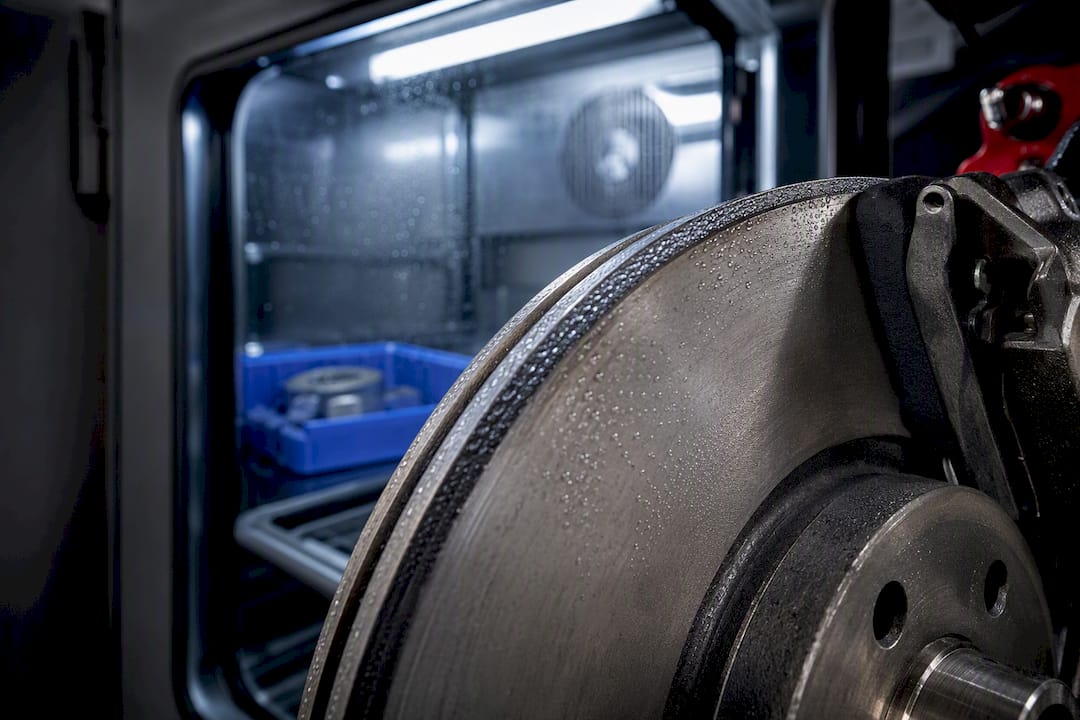
Most brake squeal in humid or damp weather is temporary, caused by moisture and light surface rust, not a mechanical fault. The safe first move is a few gentle, firm stops from around 30 mph, traffic permitting, to dry and polish the rotor surface. If the noise persists alongside grinding, vibration, or a change in how the car stops, treat it as a signal to get the brakes inspected.
TL;DR:
- Humidity and surface rust cause temporary brake squeal, but persistent noise accompanied by grinding or vibration indicates mechanical issues needing inspection.
- SAE research shows humidity can alter friction levels in various brake pad materials by more than 10%, impacting squeal propensity.
- Gentle stops from around 30 mph after rain or wash usually dry and polish rotors, but repetitive squealing may signal a sticking caliper or rotor corrosion.
- Storing vehicles in garages and maintaining lubrication of caliper components can significantly reduce humidity-related surface oxidation and squeal.
- HydroAdaptive technology in brake pads addresses moisture buildup, stabilizing friction and reducing squeal duration more effectively than standard ceramic pads.
Table of Contents
- What causes brake noise in humid or damp conditions
- Normal squeal or a real problem? How to tell the difference
- Quick fixes you can try safely right now
- Maintenance habits that cut down on humidity-driven squeal
- How HydroAdaptive Technology addresses moisture-related noise
- A brief squeak isn’t a crisis, but don’t ignore the pattern
- Want a hardware fix instead of a workaround?
- Sources
- FAQ
What causes brake noise in humid or damp conditions
Cast iron rotors start forming flash rust within hours of exposure to dew, humidity, or leftover water from a car wash. That thin layer of surface corrosion is abrasive enough to squeal against the pad until normal driving wears it away, as Motor1 explains in its breakdown of overnight rotor rust.
The deeper cause sits in the tribofilm, the microscopic layer of oxides and pad debris that forms on the rotor surface during braking. Humidity changes how that film absorbs water and bonds to the pad, which shifts the friction dynamics in ways that make some pad formulations noticeably more prone to squeal, according to research on tribofilm behaviour under environmental change.
This is not a minor or anecdotal effect. SAE testing on friction materials found that:
- Humidity and temperature swings measurably change pad wear, disc wear, disc roughness (DTV), and squeal propensity, according to a comprehensive SAE study on humidity effects on friction materials.
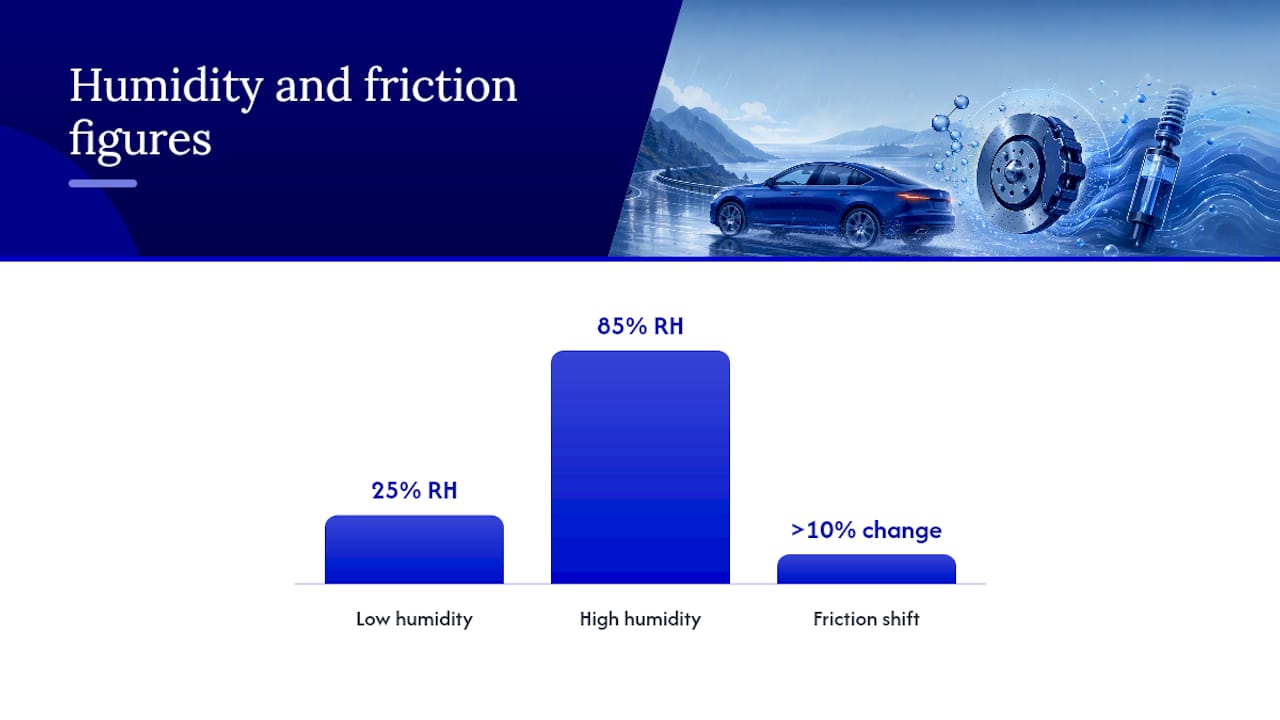
- Dynamometer testing across a humidity range of 25% to 85% found friction levels in NAO and semi-metallic pads can shift by more than 10%, directly affecting how likely a brake is to squeal, per SAE research on humidity, temperature, and squeal propensity.
Even ceramic pads aren’t immune. Moisture adsorption affects ceramic-rich friction materials too, which is exactly the gap climate-adaptive formulations are engineered to close, based on findings in a 2023 study on moisture and advanced friction materials. Pad type, rotor coating, and how long the vehicle sat before you drove it all factor into whether you hear a squeal at all.
Normal squeal or a real problem? How to tell the difference
Run through this quick triage before you assume the worst:
- Listen for duration. A high-pitched squeal that fades after two or three stops, or clears up within the first few minutes of a drive, almost always points to moisture or light flash rust.
- Check for consistency. If the noise shows up only after rain, a wash, or an overnight parking stretch in damp air, that pattern matches environmental squeal, not mechanical wear.
- Watch for grinding. A continuous grinding sound, especially one that doesn’t change with weather, usually means the pad material has worn down to the wear indicator or backing plate.
- Feel for vibration. Pulsation through the pedal or steering wheel while braking suggests warped rotors or uneven pad contact, not humidity.
- Note any pulling. If the car pulls to one side under braking, or the brake warning light comes on, that’s a mechanical issue that needs inspection regardless of the weather.
OEM service guidance backs this distinction directly: some noise after washing or in wet conditions is expected and often resolves with a bit of gentle driving, but persistent noise warrants a professional look, per BMW and NHTSA customer service guidance on brake noise.
Quick fixes you can try safely right now
If you’ve just confirmed the noise fits the “temporary” pattern, work through these steps in order:
- Check your surroundings first. Find a safe stretch of road with light traffic before doing anything else. Safety comes before diagnosis.
- Do two or three gentle, firm stops from about 30 mph. This warms the rotor surface enough to burn off moisture and polish away light flash rust, a technique consistent with OEM guidance on drying brakes after washing.
- Avoid spraying water directly at brake components, and skip wheel or tire shine products near the rotor and pad. Contamination from cleaners is a known cause of noise and binding, and a guide to safe brake dust removal covers cleaning methods that won’t leave residue behind.
- Do a quick visual check. Look through the wheel spokes for heavy rust streaking, an uneven rotor edge, or a caliper that looks stuck partway out.
Pro Tip: If the squeal comes back every single morning regardless of weather, don’t keep repeating the polishing drive. That pattern often points to a sticking caliper slide pin rather than simple moisture, and it’s worth having a technician check it before the pad wears unevenly.
If the noise doesn’t clear after a proper drying drive, tell your mechanic exactly when it happens (cold starts only, after rain, all the time) and whether it comes with vibration. For a deeper look at how water affects pad grip in the short term, see this breakdown on restoring wet brake pad performance.
Maintenance habits that cut down on humidity-driven squeal
Storage matters more than most drivers assume. A vehicle parked in a garage overnight is far less exposed to the dew and condensation that seed flash rust than one left in an open driveway. Combine that with these habits:
- Take the car on a normal drive with a few firm stops every few days if it’s mostly parked, rather than sitting for a week untouched.
- Keep shims, anti-rattle clips, and caliper slide pins lubricated and free of corrosion. A worn or dry clip is often what turns a light squeak into a persistent one.
- Ask your shop about rotor coatings or hydrophobic finishes designed to slow flash rust formation, especially if you live somewhere humid or coastal.
- Don’t over-resurface rotors chasing a squeal. Repeated machining thins the rotor and can push disc thickness variation (DTV) in the wrong direction. Replacement is often the better call once a rotor is already thin.
Drivers in consistently damp or coastal climates should expect this cycle to repeat more often, since ambient moisture accelerates surface oxidation faster than it does in dry regions, a pattern Motor1’s reporting on rotor corrosion lays out clearly.
How HydroAdaptive Technology addresses moisture-related noise
HydroAdaptive Technology addresses an engineering problem where standard ceramic pads lose consistent friction and develop noise when moisture gets between the pad and rotor. Its formulation aims to clear moisture rapidly and stabilize the tribofilm faster than conventional pads manage on their own.
That matters because the friction changes researchers measure in humid conditions aren’t imaginary. They show up in dynamometer testing, and a 2023 study on moisture adsorption in advanced friction materials points to exactly this kind of material response as the reason climate-adaptive formulations exist in the first place.
- Faster tribofilm stabilization means less time spent in the “wet squeal” window after rain or a wash.
- Reduced surface oxidation on compatible rotor coatings helps limit flash rust buildup between drives.
- Maintained friction levels across wet and dry conditions support more consistent pedal feel.
Moisture management in a pad formulation can shorten how long squeal lasts and how often it returns. It does not replace a caliper inspection, a worn pad replacement, or a fix for a warped rotor.
Read more on the engineering behind this approach on our HydroAdaptive technology overview.
A brief squeak isn’t a crisis, but don’t ignore the pattern
Brief squeaks after rain or an overnight dew are common enough that we’d rather see drivers stay calm than assume the worst. A short polishing drive and a quick visual check under the wheel usually settle the question within minutes.
That said, safety comes first. If grinding, vibration, or a warning light shows up, skip the guesswork and book an inspection. For drivers who want hardware built around this exact problem, our technology overview covers the engineering in more depth.
— AAA
Want a hardware fix instead of a workaround?
The HydroAdaptive lineup is designed for drivers looking for brake pads that reduce uncertainty about squeal causes; standard ceramic pads lose grip consistency in wet conditions, and these pads are engineered to clear moisture fast and hold friction steady instead.

The Type 03 Brake Pads and Type 07 Brake Pads are both built on the HydroAdaptive formulation, giving you a pad option regardless of your vehicle’s driving demands. Pair either with SC Type Rotors or GC Type Rotors for corrosion resistance that directly targets the flash rust behind most humidity-related squeal. Not sure which pad fits your vehicle? Our guide on choosing the right brake pads walks through the differences by driving condition. Browse the current lineup and match a kit to your vehicle on the AAA Frictions site today.
Sources
- BMW / NHTSA customer service guidance on brake noises (MC-10170577)
- Why brake rotors rust overnight — Motor1
FAQ
Why do my brakes squeal when it’s humid?
Humidity changes how the tribofilm, the thin oxide layer between pad and rotor, forms and absorbs moisture, which shifts friction behaviour and triggers squeal. SAE testing confirms this effect is measurable across common pad materials, not just anecdotal.
Is it normal for brakes to squeak in hot weather?
Yes, though the mechanism differs slightly from humidity squeal. Heat can dry out lubricants on caliper hardware and change pad friction levels, and SAE dynamometer testing found temperature shifts alone can move friction levels enough to affect squeal propensity.
Is it normal for brakes to make noise after it rains?
Yes, this is one of the most common and least concerning brake noises drivers report. Flash rust forms on the rotor within hours of rain exposure, and a few gentle stops usually clears it, consistent with OEM guidance on post-wash and wet-weather brake noise.
Why do my brakes make noise in cold weather?
Cold, wet mornings combine two squeal triggers at once: overnight condensation seeds flash rust, and cold pad material can be stiffer until it warms up. A short drive with a couple of firm stops typically resolves it, and if it doesn’t, that’s a sign to have the caliper hardware checked.
Can new brake pads reduce humidity-related noise?
Pad formulation matters. HydroAdaptive pads from AAA Frictions are engineered to clear moisture and stabilize friction faster than standard ceramic pads, which can shorten how long wet-weather squeal lasts. Current pricing for the Type 03 and Type 07 pad sets is available on the AAA Frictions site.