

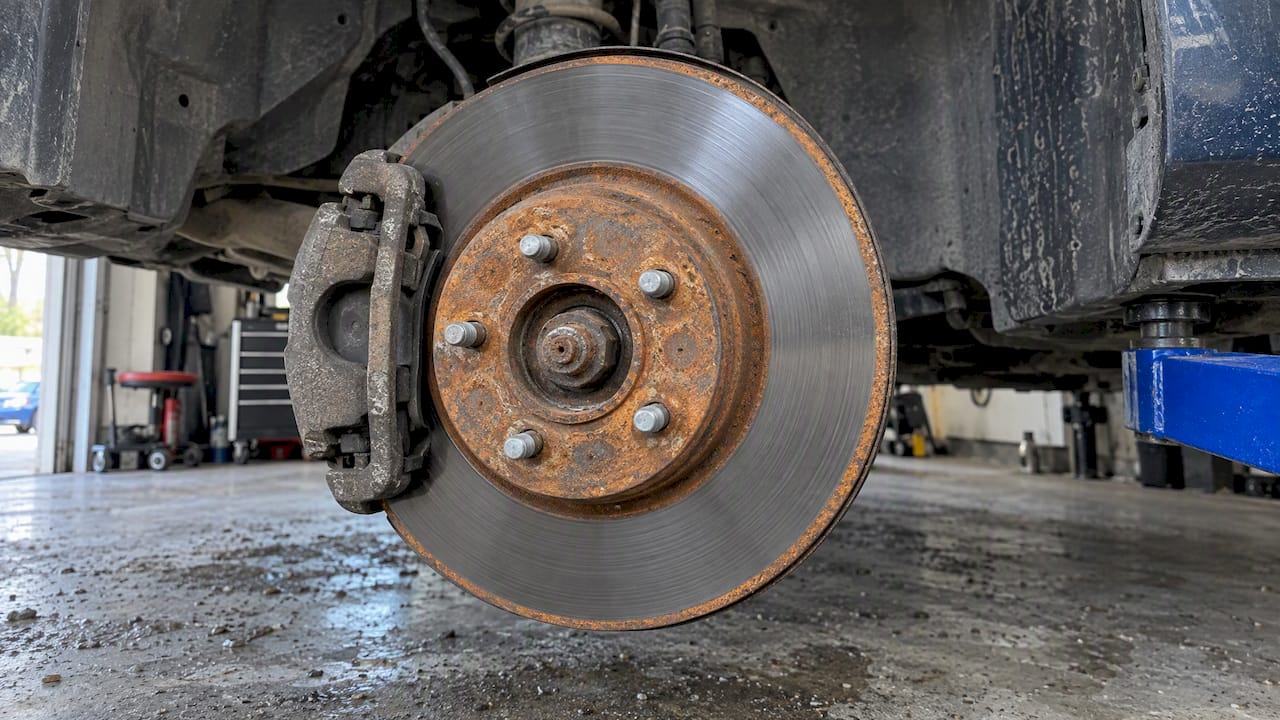
Orange rust on a rotor hat is usually cosmetic flash rust, and it rarely affects how the car stops. The one thing to do first is take a short drive with several moderate stops so the pads can wipe the friction face clean. If you hear grinding, feel pedal pulsation or steering pull, or find one wheel noticeably hotter than the others, stop driving and have the brakes inspected.
TL;DR:
- A squeal that fades after several stops is usually normal, but grinding, vibration, steering pull, one unusually hot wheel, deep pitting, or flaking warrants inspection.
- For remaining surface rust, brush the hat and edges, then use brake cleaner; keep oils off friction faces and stop if hardware is seized.
- Replace rotors at or below the stamped minimum thickness, or when deep pitting, grooves, delaminated pads, or seized brake hardware remain.
- Coated rotors protect the hat and edges, while rinsing road salt, avoiding parking with wet rotors, and checking slide pins monthly help limit corrosion.
Table of Contents
- What rotor hat rust is and why it forms
- How to tell cosmetic surface rust from corrosion that matters
- Quick fixes and safe DIY cleaning for rotor hat rust
- Prevention: coatings, painted hats, zinc plating and GEOMET or semi-coated rotors
- When to resurface or replace rotors and related hardware
- Our view: rust is a design problem as much as a maintenance one
- Rotor and pad options that cut down on corrosion worries
- FAQ
- Sources
What rotor hat rust is and why it forms
The rotor hat is the centre section that bolts to the hub. Around it sit the cooling vanes and the friction face, the flat surface the pads clamp against. Because the pads only touch the friction face, the hat and the outer edge are the parts that show lasting rust.
Cast iron rusts fast. A film of water, a rainy night or a wash can leave an orange haze within hours. Water can briefly lubricate the friction face too, but it also drives flash rust, and road salt turns a passing film into steady corrosion if it sits for weeks.
Material matters as well. Tribology tests on brake disc materials found that humidity and salt spray cut the friction coefficient by 40% for cast iron and 25% for chromium steel, but only 5% for an aluminium composite. That composite showed the best behaviour under those test conditions. It tells you why cast iron rotors need protection and care in wet, salty climates.

How to tell cosmetic surface rust from corrosion that matters
Start with what you can see and hear. Then move to the checks a technician would make. A technician-oriented brake guide says light surface rust is normal and usually clears after a few stops, while the hat and outer edge keep their rust because the friction face cleans itself.
- Wipes away or stays: an orange film that clears after a few stops is cosmetic. Deep pitting or flaking that does not clear is not.
- Noise and feel: a squeal that fades after several stops is normal. Grinding, vibration or steering pull is not.
- Measurements: shops compare rotor thickness to the minimum spec, check runout, and measure pad thickness and pitting depth.
- Pad edges: look for pad edges lifting or the backing plate separating.
- Hot wheel or seized slide pins: one wheel running much hotter points to a dragging brake.
Corrosion can do more than stain. An industry bulletin warns that advanced corrosion can cause pad delamination and shim de-bonding, especially where heavy road salt is used.
If any red flag shows up, treat it as a shop job. Our primer on flash rust on rotors explains what usually clears and what does not.
Quick fixes and safe DIY cleaning for rotor hat rust
Most light rust needs no tools. Work through these steps in order and stop when the rust is gone.
- Drive a short distance on a dry road, with several moderate stops. Check for noise and feel.
- If rust remains, lift the vehicle safely on proper stands and remove the wheel.
- Clean the hat and other non-friction areas with a wire brush, then spray with brake cleaner. Keep oils and protectants off the friction face.
- For stubborn surface rust on the friction face only, use fine sandpaper or fine steel wool with light, even strokes. Wipe with brake cleaner.
- Refit the wheel and tighten the lug nuts to the torque spec in your owner’s manual.
- Repeat the short drive to confirm the brakes feel normal.
Pro Tip: Never put grease or anti-seize on the friction face. Use it only where the manufacturer says, such as the hub mating surface.
Stop the DIY work if hardware is seized, or if you find pitting, heavy grooves or pad delamination. If the rotor does not come off, our guide to removing a rusted rotor covers safe steps. For a car that sat unused, see stored-car brake rust.
Prevention: coatings, painted hats, zinc plating and GEOMET or semi-coated rotors
Protection works best when the coating covers what the pads never touch. Several routes exist:
- High-temperature paint: a low-cost way to shield the hat on a standard rotor.
- Zinc plating: a thin sacrificial layer that slows rust on the hat and edges.
- GEOMET-style or semi-coated rotors: protect the hat, vanes and edges while leaving the friction faces bare so the pads bed in normally.
Routine care adds more than any coating. Avoid parking right after a wash while the rotors are wet. Rinse the underbody and wheel wells to clear road salt, and our monthly salt-corrosion checks give a simple routine. Check caliper slide pins monthly and lubricate them per the manufacturer’s guidance. Our slide pin maintenance guide walks through it. For the paint and body side of salt defence, this road salt protection guide covers what works over a winter.
Pro Tip: Coatings will not rescue a rotor where salt is trapped or hardware is failing. Pair them with regular rinsing and slide pin checks.
When to resurface or replace rotors and related hardware
Some findings settle the question quickly:
- Rotor thickness at or below the minimum stamped on the rotor.
- Deep pitting or grooves that a clean-up will not remove.
- Pad backing plate delamination.
- Severely corroded or seized hardware.
Machining makes sense only when the rotor stays above minimum thickness and the runout is correctable. Otherwise the rotor gets replaced, and pads and hardware often go with it, because new rotors paired with corroded hardware wear unevenly. Our notes on checking minimum rotor thickness and rotor pitting help you judge where yours stands.
Shops also look for rust under the pad. Corrosion there can lift a pad edge or separate the friction material from its backing plate, which is why a clean-looking friction face is not the whole story. A Transport Canada recall notice shows what advanced corrosion can lead to: seized components, dragging brakes and reduced parking brake performance.

Our view: rust is a design problem as much as a maintenance one
We build our rotors and pads around moisture, because moisture is what starts the corrosion cycle. Our products are designed to support braking performance in wet conditions. Our HydroAdaptive formulation page goes deeper on the technical detail. If you want a fitment check for your vehicle, contact our support team.
— AAA
Rotor and pad options that cut down on corrosion worries
If rust keeps returning, the rotor itself is the place to fix it. Our SC Type Rotors and GC Type Rotors are designed to resist corrosion. Paired with our Type 03 or Type 07 HydroAdaptive ceramic pads, they are built to keep braking consistent in rain, humidity and snow.

Check the product pages for your vehicle’s fitment and order online.
FAQ
Is it okay to have rust on rotors?
Light orange surface rust is normal and usually clears after a few stops. Deep pitting, flaking or rust under the pad is not, and it needs a professional inspection.
What takes rust off of rotors?
Normal braking removes rust from the friction face. For the hat and edges, use a wire brush and brake cleaner. For stubborn spots on the friction face, use fine sandpaper or fine steel wool, then clean with brake cleaner.
What causes the orange stains on my rotors?
Flash rust from water on cast iron causes it, often after rain, a wash or a night outside. Road salt makes it form faster and stay longer.
How to keep rotors from rusting?
Choose coated or semi-coated rotors to protect the hat and vanes. Rinse off road salt, avoid parking right after a wash, and check slide pins monthly. These habits reduce rust rather than eliminate it.
Sources
- Effects of humidity and corrosion on the tribological behaviour of the brake disc materials
- Transport Canada Recall – 2018053 – MITSUBISHI – Canada.ca
- BULLETIN No.02.04.18
- Rust on brake rotors: causes, fixes, and prevention