

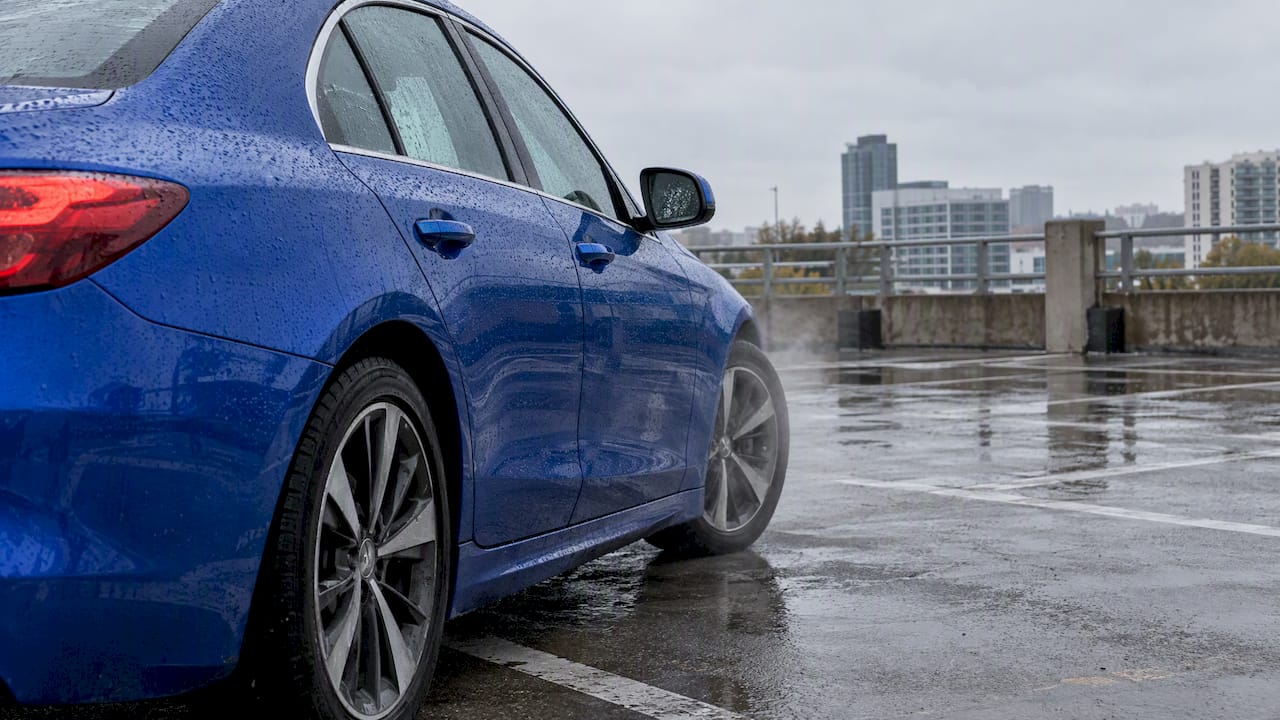
A faint smell from your brakes after rain is usually harmless. It most often comes from hot brake parts meeting water, from a thin film of surface rust on the rotors, or from new pads still settling in. A sharp burning smell, visible smoke or a change in pedal feel is different. In that case, stop driving and have the brakes inspected.
This guide explains what causes each smell, how to tell the harmless kind from the kind that needs a mechanic, and what you can do to keep your braking steadier through wet and salty Canadian weather.
TL;DR
- Steam from hot brakes hit by water or slush, and surface rust on rotors after rain, are common and usually temporary causes.
- New pads and rotors can give off a warm, sweet, metallic odour for the first few drives while they heat-cycle.
- A sudden burning smell, smoke, a soft pedal, grinding or pulling to one side on brakes that are not new means you should get them checked right away.
- Regular inspection, clean rotors and a matched pad and rotor set help keep braking consistent in rain, humidity and road salt.
Table of Contents
- What you are actually smelling after rain
- Why rain makes brake smells more noticeable
- Normal or not: how to tell the difference
- What to do when you smell your brakes
- Warning signs that need a mechanic soon
- After deep water or flooded roads
- Our perspective
- Keeping your braking consistent through wet and salty weather
- Our weather-ready brake range
- FAQ
- Sources
What you are actually smelling after rain
Three things explain most brake smells after rain. They differ in how they smell, how long they last and what they mean, so it helps to separate them.
Hot brakes meeting water
Brakes turn motion into heat. After a long downhill or a stretch of firm braking, the rotors and pads can be very hot. Drive through a deep puddle, slush or a wet patch of road and the water hits hot metal and flashes to steam. Driving.ca notes that hot brakes splashed by snow, slush or water can produce steam.
You may notice a hot, damp smell coming up from the wheels, sometimes with a little vapour. It fades once the parts cool down. If it fades within minutes and the car feels normal, there is usually nothing more to it.
Surface rust and moisture on the rotors
Brake rotors are bare metal where the pads grip. Rain, humidity and road salt reach that surface directly. A 2023 manufacturer service bulletin hosted by NHTSA explains that brake discs are exposed to water, salt, snow and dirt, and that the friction surfaces cannot simply be protected with an anti-corrosion coating, because the pads have to grip them.
That is why rotors can show a light orange or brown film after a rainy night. Mitsubishi Motors Canada says small brown spots on rotors after rain or snow are surface rust, which can cause temporary noise and is usually removed quickly by normal braking.
The smell from this is often subtle: a metallic, earthy or slightly musty note when you first brake. We cover the rust itself in more detail in our guide to flash rust on rotors.

New pads and rotors settling in
If you recently had brake work done, the smell may have nothing to do with the rain. Driving.ca says new brake parts can give off unusual odours and small amounts of smoke as they heat-cycle. It describes a warm, sweet, metallic smell that goes away after a few drives as normal.
Rain only makes it more noticeable, because wet roads encourage you to brake earlier and the steam carries the scent. If your pads are new, it is also worth reading about new brakes that squeak, since smell and noise often appear together in the first days.
Why rain makes brake smells more noticeable
Rain does not create a new problem so much as expose small ones. Here is how it plays out in everyday driving.
- Temperature contrast. Hot parts and cold water produce steam and a brief odour, especially after braking hard on a hill.
- Moisture on bare metal. Rotors can develop a film of rust within hours of being wet, particularly overnight or after the car sits.
- Light use. When a vehicle sits for long periods or the brakes are only used lightly on short trips, the same NHTSA-hosted bulletin says moisture and road salt can corrode the friction surfaces. The pads then have to scrub that layer off the next time you brake.
- Closed windows and ventilation. With the fan on recirculate in the rain, smells from outside can feel stronger inside.
Salt matters most in the Canadian winter and early spring. If you want a wider look at protecting the rest of the car, this overview of road salt protection for cars covers what tends to work. For the brakes specifically, repeated short trips, long parking and salty slush are the combination that lets corrosion build on the friction surfaces. Our monthly road salt corrosion checks set out a simple routine.
Normal or not: how to tell the difference
Use this table as a first check. It is a guide to what to look at, not a diagnosis.
| What you notice | Likely cause | What to do |
|---|---|---|
| Steam and a hot, damp smell after a puddle or slush, gone within minutes | Water on hot brake parts | Keep driving gently and let the brakes cool |
| Faint metallic or musty smell and a brief scrape at the first stops after parking in rain | Surface rust on rotors being cleared by the pads | Brake normally; it should clear within a short time |
| Warm, sweet, metallic smell on new parts, fading over a few drives | Heat-cycling of new pads or rotors | Follow the bedding instructions and keep an eye on it |
| Sudden smoke or an unfamiliar odour on brakes that are not new | Possible serious trouble | Have a professional look at it right away |
| Burning smell with a pulling feeling, or a wheel that is very hot | A brake that is not fully releasing | Stop safely and arrange an inspection before driving further |
| Burning smell with a soft or spongy pedal | Possible fluid or hydraulic problem | Pull over safely and arrange professional repair |
The sources behind these rows are consistent. Driving.ca says that sudden smoke or an unfamiliar odour from brakes that are not new or recently serviced could signal serious trouble. Haynes Manuals adds that a burning smell can result from a brake that fails to disengage fully, and that driving with dragging brakes is unsafe and can cause further damage quickly.
What to do when you smell your brakes
The right response depends on how long the smell lasts and what else is happening. Work through these steps in order.
- Think about what just happened. Did you drive through deep water or slush, or come down a long hill? If so, steam is the likely cause. Slow down, leave extra space and let the brakes cool.
- Think about recent work. If pads or rotors were replaced in the last few days, a mild smell that fades is expected as the parts heat-cycle.
- Check the pedal. It should feel firm and consistent. Michelin Canada says a soft or spongy pedal is a serious warning sign: pull over safely, do not keep driving and arrange professional repair. Our guide to a soft brake pedal in cold weather explains the cold-weather side of this.
- Check for pulling and heat. If the car drifts to one side or one wheel is much hotter than the others after a short drive, a caliper may be sticking. Do not touch the wheel or rotor with bare hands; they can be hot enough to burn.
- Look for leaks. Ontario’s official driver handbook advises checking for fluid leaks before driving. Wet patches under the car after rain should not be assumed to be water.
- Book an inspection if the smell repeats. A one-off after a puddle is one thing. A smell that comes back on dry days is a reason to have a qualified mechanic look at the brakes.
If you are unsure, treat the smell as a reason to have the car looked at rather than waiting. Brake faults rarely improve by themselves.
If your brakes fail while driving
This is rare, but it is worth knowing the sequence. Michelin Canada says to stay calm, pump conventional brakes rapidly, downshift, apply the parking brake gradually, use your hazard lights and steer toward a safe place to stop. Practise none of this on a public road; just read it once so you are not learning it in an emergency.

Warning signs that need a mechanic soon
A smell on its own is hard to judge. Combined with other symptoms it becomes much clearer. Michelin Canada lists grinding, vibration, pulling to one side, a brake warning light and a burning smell, especially after descents, as signs that need investigation.
The Ontario handbook also tells drivers to be alert to squeaking or grinding when braking and to dashboard warning lights while driving. Use these as your checklist:
- Grinding. Mitsubishi Motors Canada says grinding can mean the metal backing plates are touching the rotors. That is wear you should not drive on.
- A high-pitched squeal that does not go away. The same source says a wear-indicator squeal can mean pads are near replacement.
- Wet-weather squeaks. AAA Club Alliance in the United States says a squeak when brakes are wet can be normal, but a sharp, high-pitched squeal can indicate worn pads and should prompt an inspection as soon as possible. See our guide to brakes that squeal when wet for the difference. Their article is on strange car smells and noises.
- Grinding that starts after rain. If it lasts beyond the first moment or two after parking, Driving.ca says to seek professional investigation. Our page on brakes grinding after rain goes through the causes.
- Grabby brakes. A sudden, sharp bite on the first stop is often rust too; see brakes that grab when wet.
The Ontario handbook also recommends regular maintenance on the manufacturer’s mileage or time schedule, including brake inspection. For daily commuters, rideshare and delivery drivers, and anyone covering high mileage, that schedule matters more because the brakes work harder and see more wet roads.
After deep water or flooded roads
Driving through standing water is a special case. Water can reach the pads, rotors and calipers at once, and the brakes may feel weaker for a short time afterwards. If you have driven through flooding and smell something odd, slow down, test the brakes gently when it is safe, and have them checked if the pedal feels different. Our guide to flood water and brakes lists what to do after you drive through.
Our perspective
Weather is the one variable a braking system cannot control, so we design for it. Most brake smells after rain trace back to the same two things: moisture sitting on the friction surfaces and corrosion building on the rotor face. We think the answer is parts developed to deal with both from the start.
Our HydroAdaptive pads are designed for moisture management and stable friction, so the first stops on a wet morning feel more predictable. Our GEOMET-coated rotors are designed to protect against corrosion from moisture and road salt, which is where flash rust and the odd smells that come with it begin. Our ClimateFlex calipers are designed for smooth operation through winter cold and summer heat.
We develop rotors and pads as a matched system, and we sell rotors only with compatible pads. That is deliberate: friction material and rotor surface work together, and a pairing built for each other gives you a cleaner, more consistent response in changing conditions.
AAA
Keeping your braking consistent through wet and salty weather
You cannot stop rain, but you can reduce how much it affects your brakes. These habits cost little and help in any car.
- Drive the car regularly. Brakes cleared by normal use are less likely to build rust than brakes on a car that sits for days.
- Add a firm stop now and then. On a clear, safe road, a few moderate stops help clear light surface film from the rotors. Do not brake hard in traffic to do it.
- Rinse off salt. After driving on salted roads, rinse the wheels and underbody when temperatures allow. Our same-day steps for brine corrosion are written for Canadian winters.
- Inspect at the schedule your manufacturer sets. Ask the shop to check pad thickness, rotor condition and caliper movement, not just fluid level.
- Replace parts as a set. Mixing worn rotors with new pads, or the reverse, can leave you with uneven contact and more noise.
- Bed in new parts properly. Follow the instructions that come with them so the pad and rotor develop a uniform contact layer.
Choosing parts for wet climates
If your brakes smell or rust quickly every time it rains, the parts themselves may be part of the story. When you replace pads and rotors, look at how each is designed for moisture and corrosion rather than choosing only on price. Ask whether the rotor has a corrosion-protective coating on the non-friction areas, whether the pad is designed for stable friction when wet, and whether pad and rotor are meant to work together.
Also check your vehicle: brake parts are vehicle-specific, so match year, model and axle before ordering.
Our weather-ready brake range
We make brake parts for drivers who want consistent braking whatever the forecast. Our Type 03 brake pads and Type 07 brake pads use HydroAdaptive ceramic technology designed for moisture management and stable friction. For rotors, choose between SC Type rotors and GC Type GEOMET-coated rotors, which are designed to protect against corrosion from moisture and road salt.

If you are replacing both, a full kit keeps pad and rotor matched; the Buick Rainier brake kits, for example, pair our pads with GC Type rotors. Browse the range at AAA Frictions and match parts to your vehicle at checkout.
FAQ
Is it normal for brakes to smell after rain?
Often, yes. Hot brakes hit by water can make steam, and a light film of surface rust on the rotors can add a metallic or musty smell. It should fade quickly and the brakes should feel normal. A smell that persists, repeats on dry days or comes with smoke is not normal.
Why do my brakes smell like burning after driving in the rain?
A brief hot smell after hard braking or a puddle is commonly steam or heat-cycling on new parts. A sharp burning smell can also point to a brake that is not releasing fully, and Haynes Manuals warns that driving with dragging brakes is unsafe. If you smell it again or feel the car pulling, stop and have it inspected.
How long should rust on my rotors last after rain?
Surface rust is usually removed by normal braking within a short time, according to Mitsubishi Motors Canada. If you still hear grinding after the first moment or two, or the brown marks keep coming back, have the rotors and pads checked.
Can I keep driving if my brakes smell?
If the smell is mild, fades fast and the pedal feels firm, you can usually continue gently. If you see smoke, the pedal is soft, the car pulls or a warning light appears, pull over safely and arrange a professional inspection rather than driving on.
Will new brakes smell more in the rain?
They can. New pads and rotors may give off a warm, sweet, metallic odour for a few drives while they heat-cycle, and rain adds steam to the mix. If it does not fade after a few drives, return to the installer to check the fitment.
Sources
- Is it normal for my brakes to do that? (Driving.ca)
- Technical Service Bulletin (NHTSA)
- Signs You Need New Brake Pads (Mitsubishi Motors Canada)
- Maintaining your vehicle (Ontario Driver’s Handbook)
- Driving Emergencies: If Your Brakes Stop Working (Michelin Canada)
- Troubleshooting: Common Brake Issues and Causes (Haynes Manuals)
- What does that strange car smell or weird noise mean? (AAA Club Alliance)
- Road salt protection for cars