

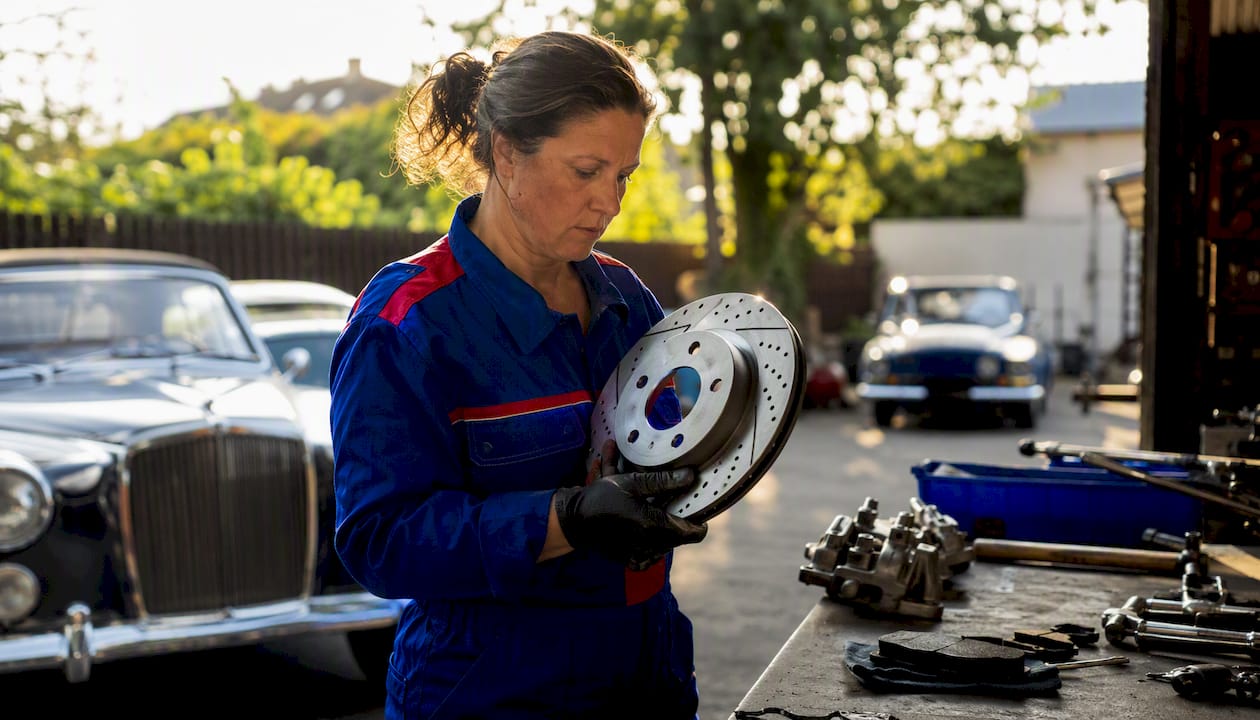
For most performance-minded daily drivers, a hybrid rotor design that combines drilled and slotted features paired with the right pad compound is a strong starting point. It balances convective cooling, water evacuation, and pad-surface maintenance in a single design. The trade-off is real: hybrid rotors carry some structural risk from the drilled holes, so heavy towers and track-day regulars are better served by slotted-only rotors, while wet-climate commuters who prioritize aesthetics and light cooling can lean toward drilled. Aaafrictions offers matched rotor-and-pad kits engineered for each of these profiles, with HydroAdaptive ceramic pads that maintain consistent friction in rain, snow, and humidity.
Table of Contents
- How do drilled, slotted, and hybrid rotors actually work?
- Drilled vs. slotted vs. hybrid: how do they compare?
- Which rotor type fits your driving style?
- Why rotor material and pad compound must match
- What to expect for maintenance, lifespan, and cost
- How to choose the right rotor before you buy
- Why Aaafrictions kits are a strong choice for U.S. drivers
- Key Takeaways
- A technician’s perspective on what actually matters
- Aaafrictions matched kits: where to go next
- Useful sources and further reading
How do drilled, slotted, and hybrid rotors actually work?
Every rotor design is a thermal management decision. The goal is the same across all three: move heat away from the pad-rotor interface fast enough to prevent fade, and keep the pad surface clean enough to maintain consistent bite.
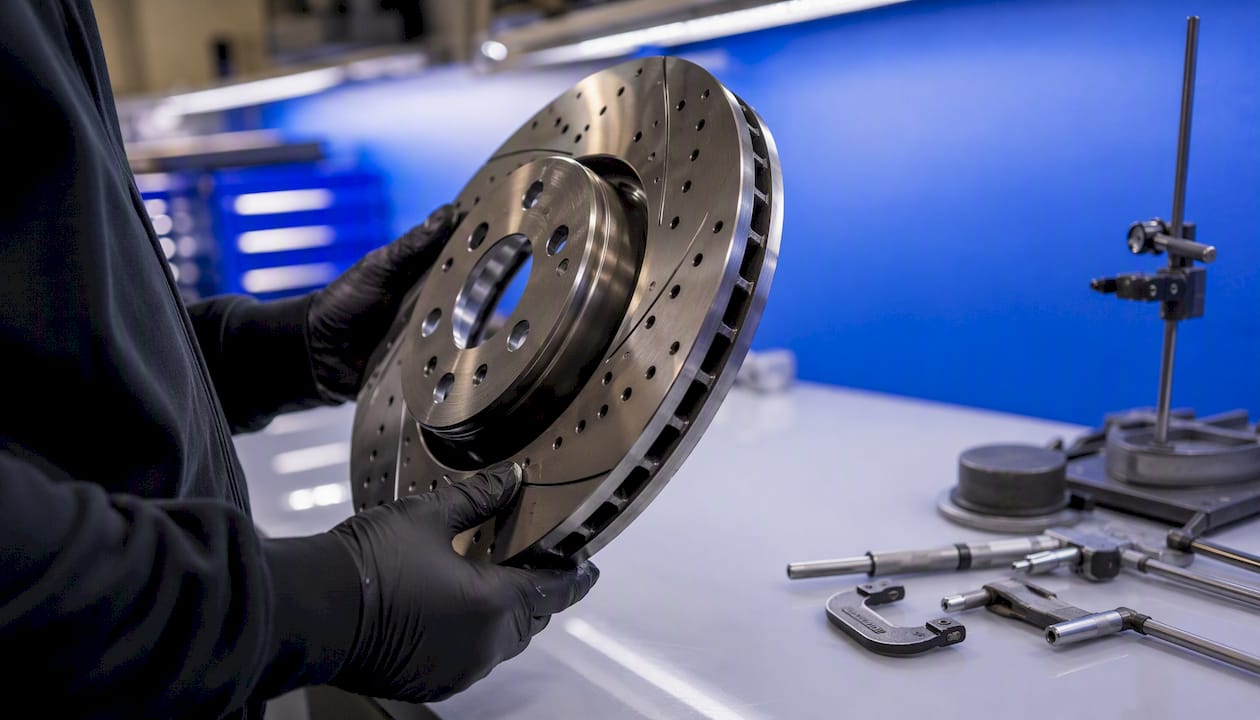
Drilled rotors use a pattern of holes bored through the rotor face. Those holes do two things: they increase surface area for convective heat transfer, and they give water, steam, and outgassed pad material a direct escape path. AME Motorsport’s engineering guide notes that this improved wet-weather evacuation comes with a structural cost. Each hole is a stress concentrator. Under repeated heavy thermal cycling, cracks can initiate at hole edges and propagate through the rotor face.
Slotted rotors take a different approach. Instead of removing material through the full rotor thickness, they cut shallow channels across the face. Those slots act as a controlled abrasive, continuously wiping the top layer of pad material to prevent glazing and keep the friction surface fresh. DrivingLine’s performance rotor guide describes this as the “cheese-grater” effect: consistent bite is preserved, but pad wear increases as a direct result.
Hybrid (drilled-and-slotted) rotors combine both features. The mechanical effects stack:
- Convective cooling through the drilled holes reduces rotor surface temperature during sustained braking
- Slots maintain pad-face cleanliness and prevent glazing between hard stops
- Water and steam evacuate through both holes and slots, improving initial bite in wet conditions
- Reduced contact area (from both features) lowers thermal transfer to the pad compound
- Stress concentrators from the holes remain present, though chamfering and cryogenic treatment can reduce crack initiation risk
The engineering caveat worth understanding: drilling removes rotor webbing and reduces thermal mass. Less thermal mass means the rotor heats faster under load. Slots shave pad material continuously, which changes bedding-in characteristics and shortens pad service intervals compared to blank rotors.
Drilled vs. slotted vs. hybrid: how do they compare?
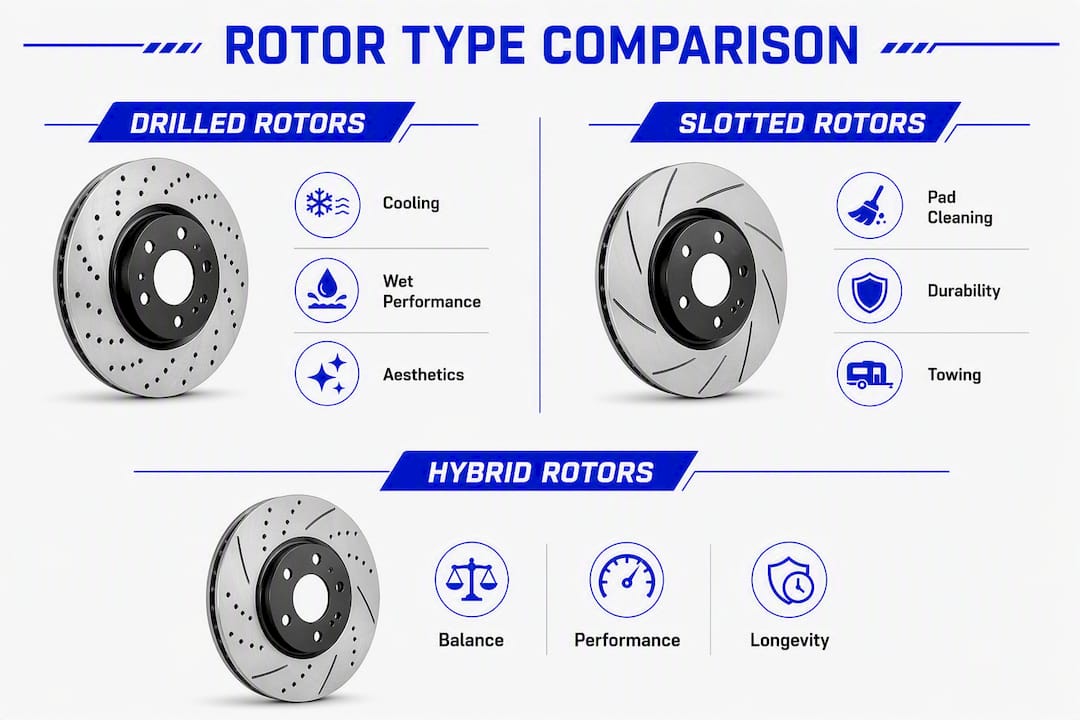
The top-level trade-off is straightforward. Drilled rotors prioritize cooling and wet-weather performance but sacrifice structural durability. Slotted rotors prioritize consistent bite and durability under sustained heat but accelerate pad wear. Hybrid rotors sit in between, which makes them the most versatile choice for street use.
| Feature | Drilled | Slotted | Drilled & Slotted |
|---|---|---|---|
| Best for | Wet-climate daily driving, aesthetics | Towing, track, heavy loads | Performance street, spirited driving |
| Durability / cracking risk | Higher cracking risk under thermal shock | Low cracking risk, most durable | Moderate risk; manageable with chamfering |
| Heat dissipation | Good convective cooling | Moderate; relies on pad wipe | Good; combines both mechanisms |
| Wet-weather performance | Excellent; fast water evacuation | Good | Very good |
| Pad wear | Near-standard | Accelerated (slot abrasion) | Accelerated (slot abrasion) |
| Maintenance | Inspect holes for crack initiation | Monitor pad thickness regularly | Inspect holes and monitor pad wear |
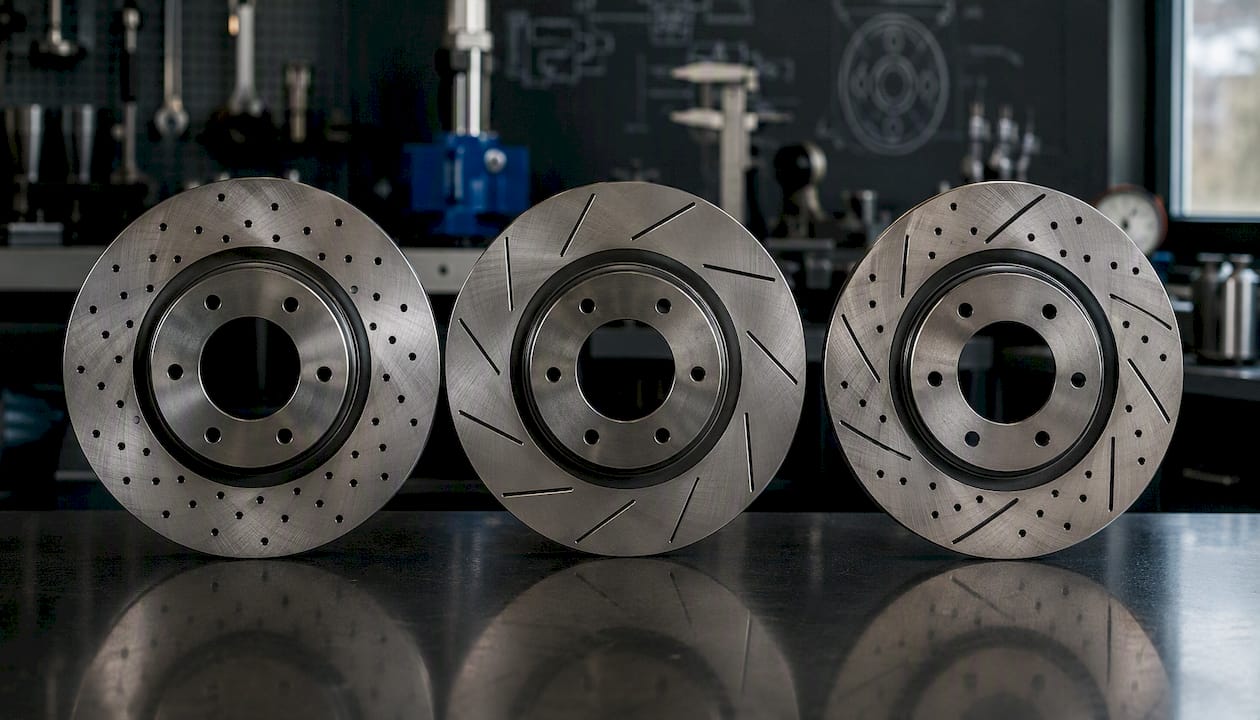
Cracking risk for drilled rotors is the most consequential differentiator. Real-world community reports confirm that drilled rotors perform acceptably for spirited street use and wet climates but underperform in endurance track scenarios where crack initiation at hole edges becomes a genuine failure mode. For slotted rotors, the dominant concern is pad consumption: enthusiasts consistently report accepting faster pad wear in exchange for more consistent bite and lower fade risk during repeated hard stops.
Which rotor type fits your driving style?
Match your rotor choice to your dominant use case. A rotor that works well for a weekend canyon run may be the wrong call for a truck that tows a trailer three times a week.
| Driving Profile | Recommended Rotor | Why It Fits | Trade-offs to Expect |
|---|---|---|---|
| Daily commuter, wet climate | Drilled or drilled-and-slotted | Fast water evacuation, good initial bite in rain | Monitor holes for early cracking; slightly higher cost |
| Spirited street / weekend performance | Drilled-and-slotted hybrid | Best balance of cooling, bite, and pad maintenance | Faster pad wear; some added noise |
| Track days / autocross | Slotted only | Resists cracking under sustained heat; consistent pedal feel | Higher pad consumption; bedding-in required |
| Towing / heavy loads | Slotted only | Durable under repeated heavy braking; low cracking risk | Pad wear accelerates; inspect pads more frequently |
| Light daily use, dry climate | Blank or lightly slotted | Maximum rotor longevity, quiet operation | No wet-weather advantage; no pad-cleaning action |
Multiple performance guides position hybrid rotors as the right compromise for performance street cars that rarely see sustained track heat. That framing holds. If your car sees a track day once or twice a year with mostly street miles in between, a hybrid rotor is a sensible choice. If you run lapping events regularly or tow at or near your vehicle’s rated capacity, slotted-only is the more durable and consistent option.
Pro Tip: For towing applications specifically, mechanic and enthusiast publications consistently recommend slotted over drilled because the repeated heavy braking cycles generate sustained heat that drilled holes cannot manage without cracking risk. Slotted rotors deliver a more predictable pedal feel under those conditions.
Why rotor material and pad compound must match
Rotor geometry alone does not determine braking performance. Matching rotor metallurgy to pad compound is equally important for consistent pedal feel, fade resistance, and avoiding glazing or premature wear.
Retail brake kit guides emphasize that the fastest path to predictable behavior is a vehicle-specific matched kit, where rotor design and pad formulation are engineered for the same temperature range and use case. Buying a high-performance slotted rotor and pairing it with a low-temperature street pad is a common mistake that produces glazing, inconsistent bite, and shortened service life on both components.
Key compatibility factors to evaluate before buying:
- Rotor coating: Zinc-washed or GEOMET-coated rotors resist corrosion between uses; uncoated rotors surface-rust quickly in wet climates, which affects initial bite
- Rotor metallurgy: High-carbon cast iron rotors run cooler and resist cracking better than standard gray iron; they are worth specifying for performance applications
- Pad friction rating (mu): Match the pad’s friction coefficient to the rotor’s intended operating temperature range; a high-mu track pad on a street rotor generates excess heat at low speeds
- Pad temperature range: Street pads typically operate well from ambient to around 900°F; track compounds need to reach operating temperature before they bite effectively
- Environmental factors: In wet or cold climates, a pad compound that maintains friction at low temperatures and clears moisture quickly prevents the “cold fade” effect on the first stop of the day
For slotted and hybrid rotors paired with aggressive semi-metallic pads, the slot geometry keeps the pad face clean and prevents glazing during repeated hard stops. Aaafrictions’ HydroAdaptive ceramic pads are engineered to pair with their GC (GEOMET-coated) and SC (semi-coated) rotors, maintaining consistent friction across variable weather conditions including rain, snow, and humidity. That pairing addresses the wet-climate cold-fade problem directly.
On the manufacturing side, chamfered hole edges and cryogenic treatment are practical steps that reduce crack initiation risk in drilled rotors. Chamfering removes the sharp stress-concentration edge at each hole; cryo treatment relieves internal metal stress. Neither eliminates cracking risk entirely under endurance conditions, but both extend service life meaningfully for street-driven drilled rotors.
What to expect for maintenance, lifespan, and cost
Slotted rotors typically increase pad consumption compared to blank rotors because the slot abrasion continuously removes pad material, leading to faster wear. Drilled rotors can shorten rotor life under heavy repeated thermal shock if cracking initiates at hole edges. Both effects are manageable with the right pad pairing and inspection habits.
Maintenance checklist for drilled and slotted rotors:
- Visual crack check at the hub face: Inspect the area around each drilled hole for hairline cracks after any sustained hard-braking event
- Rotor runout measurement: Use a dial indicator to check lateral runout; excessive runout causes pedal pulsation and uneven pad wear
- Pad thickness inspection: Slotted and hybrid rotors accelerate pad wear; check pad thickness more frequently than you would with blank rotors
- Surface glazing check: A glazed pad surface appears shiny and smooth; it indicates the pad compound has overheated or the rotor slots are worn too shallow to clean the pad face
- Slot depth inspection: Worn-down slots lose their pad-wiping function; a rotor with worn slots performs closer to a blank rotor without the structural integrity of one
For average street drivers, front rotors on a performance-oriented vehicle typically last several years of normal use. Aggressive drivers who brake hard frequently will see shorter intervals. Pad life shortens noticeably with slotted or hybrid rotors versus blank rotors under similar driving conditions. Budget for more frequent pad replacements when you move to a slotted or hybrid setup.
Pro Tip: Inspect drilled rotors at the hub face, not just the swept surface. Cracks almost always initiate at the innermost ring of holes, where thermal stress concentrates. Catching a hairline crack early prevents a rotor failure that could compromise braking at a critical moment.
Cost differences between rotor types are real but not dramatic for most street applications. Slotted and hybrid rotors carry a modest premium over blank rotors. The larger cost variable is pad replacement frequency: if slotted rotors accelerate pad wear, factor that into the total cost of ownership over the life of the rotor.
How to choose the right rotor before you buy
Follow this checklist before committing to a rotor purchase. Skipping any step is where fitment problems and performance disappointments originate.
- Define your primary use case. Commuting, spirited street driving, towing, and track use each call for a different rotor type. Be honest about how the vehicle is actually driven, not how you hope to drive it.
- Confirm pad temperature range compatibility. The pad compound must match the rotor’s intended operating temperature. Mismatched temperature ranges cause glazing or cold fade.
- Check rotor coating. For U.S. drivers in wet or snowy climates, a GEOMET or zinc-washed coating prevents surface corrosion between uses and maintains consistent initial bite.
- Verify hub fitment and runout tolerance. Confirm the rotor’s bolt pattern, hub bore, and runout specification match your vehicle’s factory tolerances. A rotor with excessive runout will cause pedal pulsation regardless of its surface design.
- Ask about hole chamfering and heat treatment. For any drilled rotor, confirm the holes are chamfered and whether cryogenic treatment was applied. Unchamfered holes are a red flag for premature cracking.
- Review the vendor’s warranty and return policy. A reputable supplier stands behind fitment and defects. No warranty is a red flag.
Red flags to avoid:
- No material specification listed (standard gray iron vs. high-carbon blend matters)
- Drilled holes with no chamfering or heat-treatment documentation
- No guidance on compatible pad compounds
- Vague or absent warranty terms
Technical questions to ask your seller or installer:
- What is the rotor’s lateral runout tolerance?
- Were the drilled holes chamfered, and was cryogenic treatment applied?
- What coating is used, and what is its corrosion resistance rating?
- Which pad compound is recommended for this rotor at my intended use?
Why Aaafrictions kits are a strong choice for U.S. drivers
Aaafrictions provides matched rotor-and-pad kits engineered to address the trade-offs this article has outlined. The HydroAdaptive ceramic pad technology maintains consistent friction in rain, snow, and humidity, which directly solves the wet-climate cold-fade problem that affects both drilled and hybrid rotors. Paired with the right rotor coating, the system delivers stable pedal feel across seasonal weather changes.
Key features and what they mean for your braking system:
- HydroAdaptive ceramic pads: — Rapidly clear moisture and maintain friction coefficient in variable weather; engineered to work with both GC and SC rotor types for consistent performance from the first stop of the day
- SC (semi-coated) rotors: Designed for weather-adaptive braking in cold and variable conditions; the Type 07 pads with SC rotors kit is a strong fit for drivers in northern U.S. climates with significant seasonal variation
Use-case mapping from the earlier grid:
- Occasional track / autocross: Consult Aaafrictions’ vehicle search tool to confirm the right kit for your specific vehicle
The HydroAdaptive technology behind these kits is the core differentiator for U.S. drivers who deal with variable weather. Standard ceramic pads lose friction consistency in cold, wet conditions. HydroAdaptive pads are engineered specifically to maintain that consistency, which matters most on the first hard stop after a cold start or in a sudden rainstorm.
Key Takeaways
For most performance-minded drivers, a drilled-and-slotted hybrid rotor matched to a compatible pad compound delivers the best balance of cooling, wet-weather performance, and pad-surface maintenance for street use.
| Point | Details |
|---|---|
| Match rotor type to use case | Hybrid for street performance; slotted-only for towing and track; drilled for wet-climate daily use. |
| Pad-rotor pairing is critical | Mismatched pad temperature range causes glazing or cold fade regardless of rotor geometry. |
| Drilled rotors carry cracking risk | Chamfered holes and cryogenic treatment reduce but do not eliminate crack risk under heavy thermal cycling. |
| Slotted rotors accelerate pad wear | Inspect pad thickness more frequently with slotted or hybrid rotors than you would with blank rotors. |
| Aaafrictions matched kits | HydroAdaptive ceramic pads with GC or SC rotors address wet-climate performance and vehicle-specific fitment in one purchase. |
A technician’s perspective on what actually matters
The most common mistake in a brake upgrade is chasing rotor geometry while ignoring pad compatibility. A driver installs a hybrid drilled-and-slotted rotor, keeps the factory pad, and wonders why the pedal feels inconsistent after three hard stops. The rotor did not fail. The pad compound was never designed to operate at the temperatures the new rotor geometry encourages.
Consistent pad-rotor pairing beats rotor design selection every time. The geometry matters, but it only delivers its intended benefit when the pad compound operates in the same thermal window. A high-carbon slotted rotor paired with a street ceramic pad engineered for the same temperature range will outperform a premium hybrid rotor running a mismatched compound.
On installation: always torque wheel fasteners in a star pattern to factory specification, and bed in new pads and rotors properly. Bedding-in transfers a thin, even layer of pad material onto the rotor face. Skipping this step with slotted or hybrid rotors leads to uneven deposits, vibration, and premature wear. Ten moderate stops from 40 mph, allowing the rotor to cool between each, is a reliable bedding sequence for most street applications.
One more thing worth saying plainly: inspect your rotors at every pad change. Drilled rotors especially. The hub-face area around the innermost ring of holes is where cracks start, and catching one early is far less expensive than discovering it during a hard stop.
Aaafrictions matched kits: where to go next
Aaafrictions’ matched brake kits give you HydroAdaptive ceramic pads and corrosion-resistant rotors in a single vehicle-specific purchase, removing the compatibility guesswork that causes most brake upgrade problems.
Three reasons U.S. drivers choose Aaafrictions kits:
- Weather-adaptive friction: HydroAdaptive pads maintain consistent bite in rain, snow, and cold, where standard ceramic pads lose friction consistency
- Vehicle-specific fitment: Every kit is matched to your exact make, model, and year, so runout and hub-bore issues are engineered out before the box ships
- Corrosion-resistant coatings: GC (GEOMET) and SC rotor coatings prevent surface rust between uses, preserving initial bite in wet climates
Browse the full kit lineup or match a kit to your vehicle at Aaafrictions’ vehicle search. For technical detail on the HydroAdaptive system before you buy, the technology page covers the engineering behind the pad chemistry and rotor pairing logic.
Useful sources and further reading
For technical background on rotor design, pad compatibility, and performance brake selection, these references informed this article.
- Best Brake Rotors For High Performance Driving? | DrivingLine
- HydroAdaptive Technology | Aaafrictions
- Drilled vs Slotted Rotors: Which Is Right for You? | Aaafrictions