
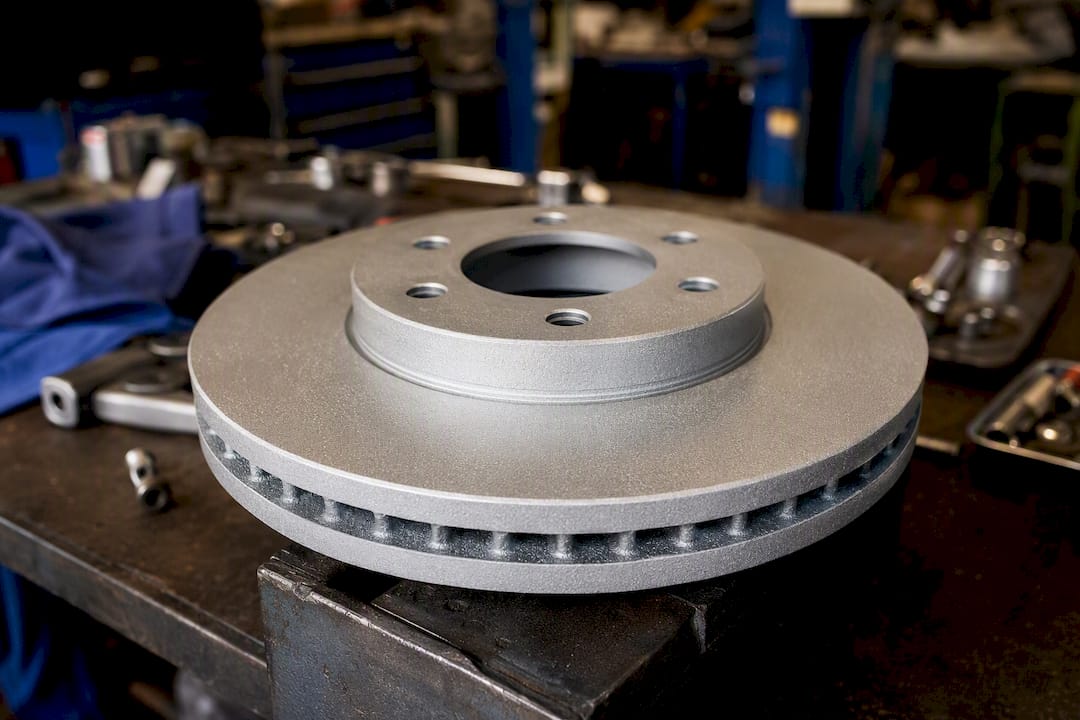
Zinc-coated rotors are worth the upgrade for most daily drivers, and especially for anyone driving through winters with road salt. The coating buys you real corrosion resistance and cleaner-looking rotors for a modest premium over uncoated iron, with documented savings on removal labor when a hub isn’t fused with rust. Here’s what you’re actually paying for, where the coating falls short, and how to pick the right type for your vehicle.
- Best fit: daily drivers, winter/salt climates, open-spoke wheels
- Trade-off: small cost premium, no benefit once resurfaced
- Recommendation: Geomet/zinc-style coatings for most commuters
Key Takeaways
Zinc-style coatings, particularly Geomet, deliver measurable corrosion resistance and easier service for a modest cost premium, making them the practical choice for most daily drivers in salt or humid climates.
| Point | Details |
|---|---|
| Corrosion resistance leads | Coated rotors resist rust on the hat, vanes, and edges, protecting cooling airflow. |
| Service gets easier | Coated hats reduce hub seizure, cutting removal time and hub damage risk. |
| Resurfacing removes protection | Machining a rotor’s friction face strips any coating from that surface permanently. |
| Track use gets less benefit | Heat cycling on track cars depends on metallurgy, not coating type. |
| AAA Frictions offers a fit | Its GC-type GEOMET-coated rotor kits pair with HydroAdaptive pads for salt and wet-climate driving. |
Table of Contents
- Zinc Coated Rotors Benefits Start With Understanding the Coating Types
- What Are the Real Benefits of Coated Rotors?
- What Are the Downsides of Zinc-Coated Rotors?
- How Long Does a Zinc Coating Actually Last?
- How Should You Choose Between Coated and Uncoated Rotors?
- What Do Metal-Finishing and Brake Experts Say?
- Why AAA Frictions’ Geomet-Coated Kits Make Sense for Your Next Brake Job
- Frequently Asked Questions
- Sources
Zinc Coated Rotors Benefits Start With Understanding the Coating Types
“Zinc-coated” covers a few distinct processes, and they don’t all protect a rotor the same way. Electroplated zinc bonds a thin metallic zinc layer directly onto the rotor’s surface. Because zinc is more reactive than iron, it corrodes first and sacrifices itself to protect the steel underneath, a mechanism metal-finishing specialists call sacrificial protection.
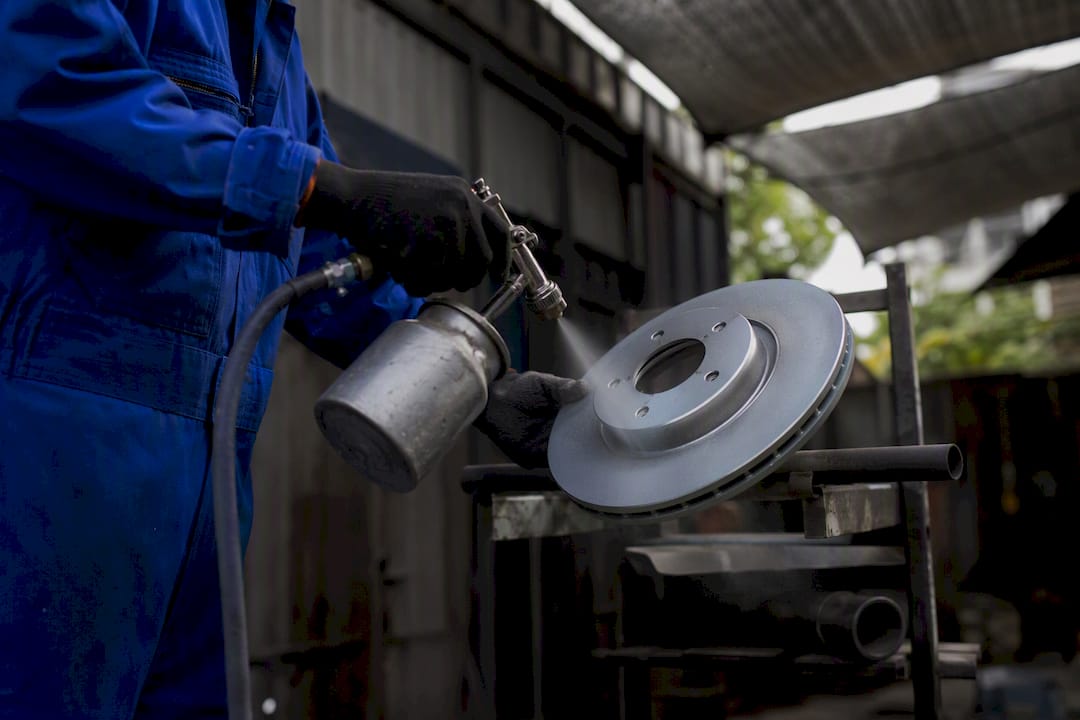
Geomet, a zinc-aluminum flake coating, works differently. It’s a thin, water-based film that layers zinc and aluminum flakes to form both a barrier and a sacrificial shield, and it tolerates far more heat than standard plating.
Electrocoat (e-coat) takes a third approach entirely. Rather than reacting chemically, it forms a continuous paint-like barrier that seals out moisture. It can post strong salt-spray numbers in lab tests, but once that film is scratched, it offers no further protection at the break.
- Electroplated zinc: sacrificial, budget-friendly, thinner corrosion margin at deep scratches
- Geomet (zinc-aluminum flake): thin film, high heat tolerance, barrier plus sacrificial protection
- E-coat: strong uniform barrier, no self-healing once breached
Manufacturers apply these coatings to the hat, vanes, and outer edge. The friction surfaces stay bare metal, since coating would interfere with pad contact.
What Are the Real Benefits of Coated Rotors?
Corrosion resistance is the headline benefit, and it’s not cosmetic. Rust building up in the cooling vanes can choke airflow and raise the risk of warping over time, so keeping those vanes clean has a real effect on how the rotor performs, not just how it looks.
Coated rotors also make service easier. Anyone who has fought a rust-fused rotor off a hub with a breaker bar and a can of penetrating oil knows the frustration. A zinc-style coating on the hat and mounting surface dramatically cuts that seizure risk, which means less time on the lift and less risk of damaging the hub while breaking a rotor free.
There’s an appearance factor too. Open-spoke wheels show off the rotor, and a bare iron rotor streaks with rust within weeks of exposure to rain or salt. A coated rotor stays clean-looking far longer, which matters if you care about how your wheels look at resale or just at a stoplight.
- Less visible rust streaking behind open-spoke wheels
- Easier rotor removal, less hub damage during brake jobs
- Cleaner cooling vanes, lower long-term warp risk
- Reduced pre-installation cleanup for the shop or DIYer
The cost premium is modest. Real-world pricing comparisons on comparable Raybestos rotor lines show coated versions running only somewhat higher than uncoated equivalents, a gap that’s easy to justify against even one avoided seized-hub repair bill.
What Are the Downsides of Zinc-Coated Rotors?
The coating premium doesn’t pay off everywhere. Track cars pushing rotors through repeated hard stops generate heat cycles that have nothing to do with corrosion resistance. A zinc-style or e-coat finish doesn’t change the base metallurgy, so if you’re chasing fade resistance on a track day car, the coating is a nice extra, not a core spec.
Resurfacing is the other catch. Machining a rotor’s friction face removes rust and glazing, but it also removes any coating on that surface. Once resurfaced, a rotor behaves like an uncoated one on the working face, even though the hat and vanes stay protected.
Some finishes carry secondary concerns. Black zinc topcoats can fade with UV exposure over years, and e-coat systems, while strong in lab salt-spray hours, offer nothing extra once scratched.
- Track and heavy-duty use gets little corrosion benefit from the coating
- Resurfacing strips coating from the friction face permanently
- Black zinc topcoats can dull with prolonged UV exposure
- E-coat has no sacrificial backup once the film is breached
Pro Tip: Before you resurface a coated rotor, run the numbers. New coated rotors are often cheap enough that replacing rather than machining makes more sense, and you keep full corrosion protection instead of trading it away.
How Long Does a Zinc Coating Actually Last?
Salt-spray hours are the industry’s standard lab metric, but they measure a controlled chamber, not your driveway in February. GEOMET coatings are rated to tolerate temperatures near 400°C in service while maintaining their protective film, a figure that speaks to durability under braking heat rather than years on the road.
In practice, coated rotors on a mild-climate commuter can look clean for years, while heavy salt exposure accelerates wear on any exposed edge. Coating thickness and type both shift that timeline meaningfully.
- Thicker Geomet-style films generally outlast thin electroplated zinc at scratch points
- Mild, dry climates stretch visible coating life well beyond salt-belt conditions
- Any resurfacing resets the clock on the friction face immediately
Salt-spray hours measure how long a coated sample resists red rust in a standardized corrosive chamber. Higher hours indicate a more durable film, though real driving conditions rarely match lab uniformity.
How Should You Choose Between Coated and Uncoated Rotors?
Start with where you drive. If road salt, coastal humidity, or open-spoke wheels are part of your daily reality, a coated rotor solves problems you’ll actually encounter. If you’re building a dedicated track car, spend your budget on high-carbon metallurgy and pad compatibility instead, since uncoated iron remains the practical choice for repeated hard braking cycles.
- Salt or coastal climate, daily driver: choose Geomet/zinc-style coated rotors
- Show-quality open wheels: coated rotors keep the look cleaner longer
- Track or heavy-duty towing: prioritize metallurgy over coating
- Budget-focused rebuild: compare per-rotor price against expected mileage
Most commuters land in the first category, and Geomet-style coatings deliver the strongest balance of corrosion protection and cost for that use case. When shopping, check whether the rotor comes as part of a matched kit with pads and hardware. That bundling often beats piecing components together separately, and it removes the guesswork of pairing the wrong pad compound with a coated rotor.
What Do Metal-Finishing and Brake Experts Say?
Metal-finishing specialists frame the decision as sacrificial versus barrier protection, and the choice depends on part geometry and exposure. Zinc handles scratches and complex edges better; e-coat wins on uniform coverage where the surface stays intact.
Zinc-based coatings protect sacrificially at damaged spots, while e-coats rely on an unbroken barrier. Combining both technologies is common when parts need protection from all angles.
That’s the core finding from corrosion-protection engineering research, and it holds up in rotor applications too. For salt-exposed parts, GEOMET-type coatings have become a preferred zinc-style solution thanks to their heat tolerance and application profile on complex rotor shapes.
- Sacrificial zinc wins on scratched or damaged surfaces
- Barrier e-coat wins on intact, uniform coverage
- Geomet-style coatings split the difference for daily-driven vehicles
A Mechanic’s Honest Take on Coated Rotors
Nothing tests patience like a rusted rotor welded to a hub by corrosion. Once you’ve fought that battle, a coated rotor’s easier removal alone justifies the small price difference. Daily drivers and anyone in a salt-heavy climate benefit most. Track-only cars can skip it.
Why AAA Frictions’ Geomet-Coated Kits Make Sense for Your Next Brake Job
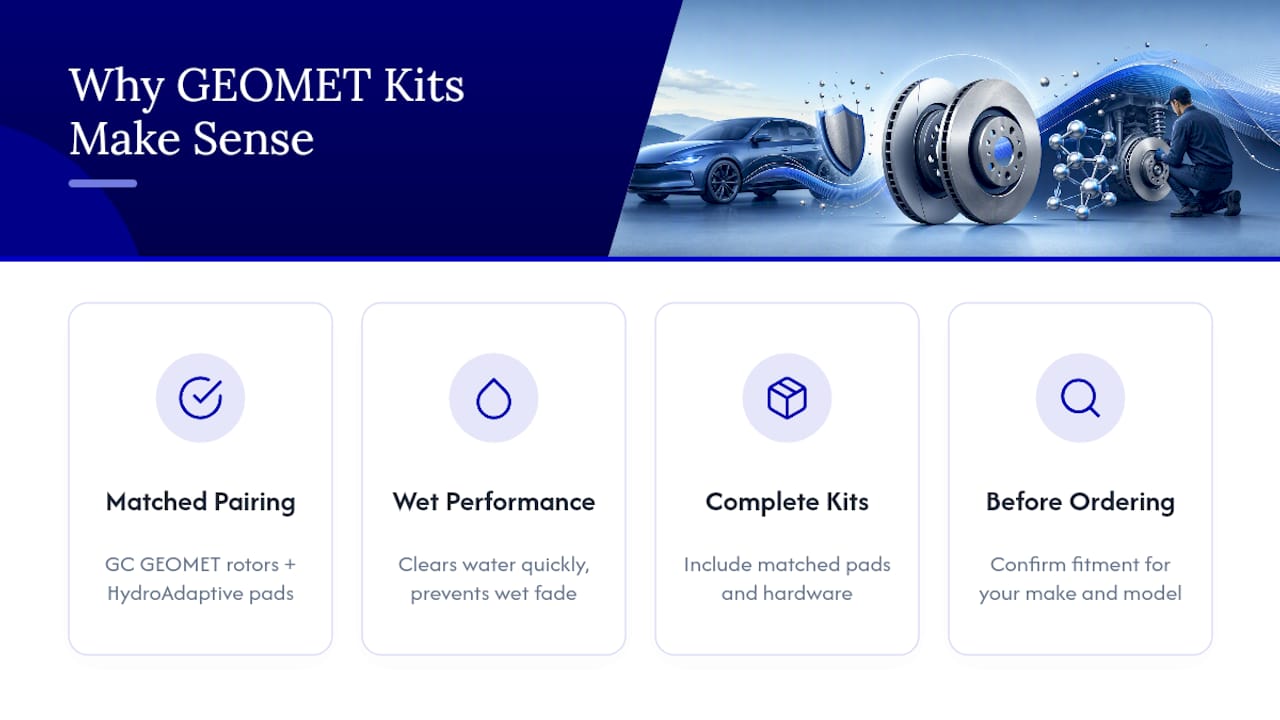
If you’ve decided coated rotors fit your driving conditions, AAA Frictions builds vehicle-specific kits around GC-type GEOMET-coated rotors paired with HydroAdaptive ceramic pads engineered for wet, snowy, and humid conditions.

That pairing matters because a corrosion-resistant rotor loses value if the pad compound can’t handle moisture consistently. AAA Frictions’ HydroAdaptive technology clears water from the friction surface quickly, so braking stays predictable through rain and slush rather than fading on the first wet stop. Kits ship with matched pads and hardware, so you’re not guessing at compatibility or hunting for the right clips separately.
Before ordering, confirm fitment for your specific make and model. Browse the current lineup of GEOMET-coated kits and check availability for your vehicle to get started.
Frequently Asked Questions
Are zinc-coated rotors worth the extra cost?
For most daily drivers, yes. The price premium is modest compared to uncoated rotors, and the corrosion resistance pays off in cleaner brakes and easier future service, especially in salt or humid climates.
Do zinc coatings affect braking performance?
No. Coatings apply to the hat, vanes, and outer edge, not the friction face where the pad contacts the rotor. Initial braking feel matches uncoated rotors.
What happens to the coating when rotors are resurfaced?
Machining removes coating from the friction surface. The hat and vanes typically stay protected since resurfacing only touches the braking face.
Is Geomet better than standard zinc plating?
Geomet offers stronger heat tolerance and a combined barrier-plus-sacrificial effect, making it a common choice over standard electroplated zinc for rotor applications.
Should track cars use coated rotors?
Coating adds little value for track-focused driving, where heat cycling and metallurgy matter more than corrosion resistance. Uncoated, high-carbon rotors are often the better fit there.
Sources
For deeper technical detail on coating chemistry and pricing, these sources go further than this guide:
- Zinc-coated rotors explained: are they worth the price? — SlashGear
- Zinc-coated (Geomet) vs ceramic-coated vs uncoated rotors — GarageGist
- Electrocoat vs. Black Zinc: Which Finish Is Right for Your Parts? — Giering Metal Finishing