

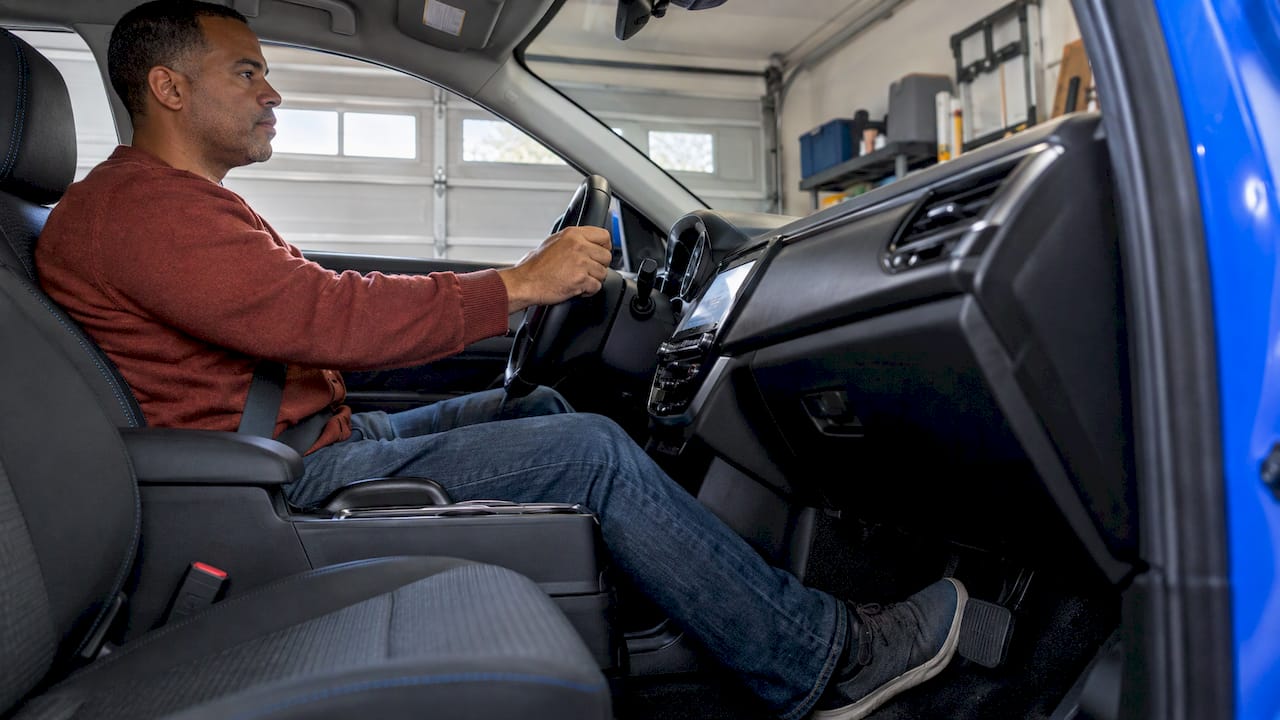
A consistent brake pedal feels the same on every stop: the same height, the same firmness, the same response whether the road is dry, wet or frozen. When the pedal changes from one application to the next, something in the braking system is changing too. That something is usually air or moisture in the hydraulics, worn friction parts, or a component reacting to cold, heat or road salt. This guide explains how to read what your pedal is telling you, what to check first, and how pads, rotors and calipers affect the feel you get.
TL;DR
- A pedal that feels soft, sinks or changes between stops points to a hydraulic or friction problem, not a quirk to live with.
- Air or gas in the brake fluid is a common cause, because gas compresses and liquid does not. Heat can create that gas by boiling the fluid or vaporizing water in it.
- If the pedal goes near the floor, the brake warning light is on or you see leaking fluid, stop driving and arrange a tow.
- Worn pads, out-of-spec rotors, old fluid and seized calipers all make cold and wet weather symptoms easier to feel.
- Our HydroAdaptive pads, GEOMET-coated rotors and ClimateFlex calipers are engineered to keep braking response steady as the weather changes.
Table of Contents
- What a consistent brake pedal should feel like
- Why a pedal feels soft or changes between stops
- Soft, hard or high: reading the difference
- Is it safe to keep driving?
- How Canadian weather changes pedal feel
- A short routine for a more consistent pedal
- What we think: consistency is an engineering target
- Choosing parts for steady braking
- Brakes engineered for changing weather
- FAQ
- Sources
What a consistent brake pedal should feel like
A healthy pedal gives you a firm, predictable push. The first inch of travel should feel the same today as it did last week, and the point where the brakes begin to bite should not wander. You should not have to pump the pedal, and it should not slowly sink under steady pressure.
Three things create that feel together:
- The hydraulic circuit. Fluid, lines, hoses, the master cylinder and the calipers transmit your foot force. Anything that compresses or leaks here changes pedal travel.
- The friction pair. Pads and rotors turn that force into stopping power. Their condition and surface state decide how the brakes bite.
- The moving parts. Caliper pistons and slides must move freely and return cleanly, in summer heat and in a January freeze.
When all three are in good order, the pedal is consistent. When one drifts, the pedal tells you first.
Why a pedal feels soft or changes between stops
The most common explanation for a soft pedal is gas in the hydraulic system. Air or another gas can enter the lines, and heat can vaporize water or boil the brake fluid, creating gas that compresses instead of passing your foot force on to the calipers. You push, the gas squeezes, and the pedal travels farther before the brakes bite.
That is why a pedal can feel fine on a cool morning commute and soft after a long downhill run: heat is generating the gas. It is also why the feel can seem to come and go.

Moisture in the brake fluid
Brake fluid readily takes up moisture over time. The more water it holds, the lower its boiling point, and the more likely hard braking is to create compressible vapour. If your pedal feels fine in normal driving but changes after repeated stops, old fluid is a prime suspect. We cover what drivers and mechanics should do in our guide to brake fluid moisture.
Air in the lines
Air gets in after a repair that was not bled properly, or through a leak. A soft pedal that improves when you pump it twice is a classic sign. Bleeding the system is a job for a qualified technician or an experienced home mechanic with the correct procedure for the vehicle, because ABS equipped vehicles can have their own steps.
Leaks and a failing master cylinder
A leak in a line, hose or caliper lets fluid escape, and a worn master cylinder can let pressure bleed past its seals. Either can make the pedal sink slowly while you hold it at a stoplight. Treat a sinking pedal as urgent.
Worn pads and rotors
As pads thin, caliper pistons extend farther, and the pedal can sit lower. Rotors that are out of spec or warped add vibration and an uneven bite. Our list of worn brake pad signs shows what to look and listen for before rotor damage sets in, and our guide to brake judder causes covers five checks before you replace rotors.
Soft, hard or high: reading the difference
Not every inconsistent pedal is a soft one. The symptoms point to different places.
| What you feel | Likely area | What to do |
|---|---|---|
| Soft or spongy, travels farther than normal | Air or gas in the fluid, old fluid, leak, worn pads | Have the system inspected promptly |
| Sinks slowly under steady pressure | Leak or master cylinder wear | Stop driving, arrange a tow |
| Pedal hits the floor | Major loss of hydraulic pressure | Do not drive, tow the vehicle |
| Hard, needs a lot of effort | Reduced power assist | Have the booster and vacuum supply inspected |
| Pulsing or vibration | Rotor condition, pad deposits, worn suspension parts | Inspect rotors and pads |
| Changes only on the first stop of the day | Moisture and surface rust, cold-stiffened parts | Watch whether it clears; see the cold weather section below |
A hard pedal generally means the power assist is not helping as it should, while a soft pedal points toward compressible air or fluid. If you are unsure which you have, treat it as a reason to book an inspection rather than guessing.
Is it safe to keep driving?
No, not if the change is significant. A soft or spongy pedal is a warning sign, and Michelin advises against continuing to drive: pull over safely, call for assistance and have the vehicle professionally repaired before it goes back on the road.
Use these rules:
- Pedal near the floor, brake warning light on, or fluid leaking: do not drive. Arrange a tow.
- Pedal slightly softer but the vehicle still stops normally: book an inspection as soon as you can. Until then, keep speeds moderate and avoid steep hills, towing and heavy loads.
- Pedal pulses, squeals or grinds: have the pads and rotors checked soon, before the damage spreads.
Ford of Canada lists a soft, squishy or floor-reaching pedal, a brake warning light, vibration, squealing or grinding, a burning odour, metallic flakes or deep rotor gouges as reasons to have brakes inspected sooner than scheduled. GMC Canada likewise names a spongy pedal, a pedal that extends farther than normal and vibration as signs that brake service is needed.
How Canadian weather changes pedal feel
Canada puts brakes through a wide temperature range and a lot of moisture and road salt. That shows up in the pedal in a few predictable ways.
Cold mornings
Rubber seals and flexible hoses stiffen in deep cold, and caliper pistons and slides can move less freely until they warm up. Pads and rotors can also feel less grippy on the first stops. Most of that eases within a few minutes of driving. A pedal that stays strange, sinks or travels farther than usual does not count as normal winter behaviour and needs an inspection. Our guides cover this in more detail: why a brake pedal sinks in the cold, what a soft pedal in cold weather means and quick checks for a firm pedal in cold weather.
Wet parking and surface rust
After a night parked in rain, slush or humidity, a thin film of rust can form on bare iron rotor faces. It usually wears off in the first few stops, which can mean a brief rough sound and slightly less bite at first. Salt accelerates this, and heavy corrosion on rotors and calipers is what turns a harmless film into a lasting problem.

Salt and caliper corrosion
Caliper pistons and slide pins that corrode can stick, drag or return slowly. That makes pedal feel and pad wear uneven from one side to the other. Drivers in salt-heavy regions should read about caliper corrosion in Ontario, which applies in any province that salts its roads.
The winter check
Transport Canada advises a thorough brake check before winter to confirm the brakes are in top working condition, and notes that pulling, a change in pedal feel or unusual squealing or grinding may mean the brakes need repair. Our five winter brake checks turn that advice into a short routine.
A short routine for a more consistent pedal
You can keep the pedal consistent with habits rather than heroics.
- Follow the schedule. Ford of Canada recommends brake inspections every 16,000 km, noting that intervals vary with driving habits, operating conditions and vehicle type. Rideshare, delivery and highway drivers, and anyone towing, should lean toward the shorter end.
- Test the pedal on a quiet street. Press it at a standstill and hold steady pressure for several seconds. It should be firm and not sink.
- Check the fluid level and age. A low reservoir can mean worn pads or a leak. Ask for a moisture test of the fluid at service time.
- Look at the wheels. When you clean off brake dust, learn how to remove brake dust safely and use the chance to look at rotor faces for deep grooves, rust ridges and cracks, and at pad thickness through the wheel spokes.
- Replace pads before they are completely worn. Waiting for metal-on-metal damages rotors and costs more. See our rotor replacement cost guide for what to expect per axle.
- Fix the cause, not the symptom. If a pedal complaint returns after new pads, the hydraulics or calipers need attention.
For a deeper walk through the first inch of pedal travel, see our guide on diagnosing brake pedal feel.
What we think: consistency is an engineering target
Most advice about pedal feel treats weather as an excuse. We treat it as a design requirement.
A braking system meets rain, road salt, humid summer afternoons and freezing mornings in the same year, often in the same week. If a component only performs well in one of those conditions, the driver feels it in the pedal. Our approach is to address each weather challenge in the part where it happens.
Our HydroAdaptive pads are designed for moisture management and stable friction, so the bite you feel is meant to stay steady when the surface is wet or humid. Our GEOMET-coated rotors are designed to protect against corrosion from moisture and road salt, which is where surface rust and uneven wear begin. Our ClimateFlex calipers are designed for smooth operation through winter cold and summer heat, so pistons and slides keep moving the way the system expects.
We develop rotors and pads as a matched system, and we sell rotors only with compatible pads. A rotor and pad designed together share a friction profile and a temperature band, and that is what produces clean, repeatable braking. Pairing parts this way is how we aim for a pedal that feels the same from the first stop of the morning to the last of the evening.
Hydraulic faults such as air, leaks or old fluid need proper service, and no friction part replaces that. Once the hydraulics are sound, the friction pair and calipers you choose decide how consistent the pedal stays through the seasons.
AAA
Choosing parts for steady braking
If your inspection points to worn pads or rotors, the choice you make determines how the new brakes behave in your climate. Consider:
- Your driving pattern. Daily commuters and high-mileage drivers, including rideshare and delivery, put thousands of stops on pads each month. Larger vehicles carry more weight into every stop.
- Your weather. Regions with rain, slush, salt and sharp temperature swings benefit from moisture management and corrosion protection built into the parts.
- The whole system. Pads, rotors and calipers work together, so replace them with that relationship in mind and have the hydraulics checked at the same visit.
- Fit. Brake parts are vehicle specific. Match year, make, model and axle before ordering.
Our range covers Type 03 pads and Type 07 pads, with SC Type rotors and GC Type rotors to match, plus ClimateFlex calipers.
Brakes engineered for changing weather
AAA Frictions builds brake pads, rotors and complete brake kits around one goal: braking that stays consistent when the weather changes. HydroAdaptive ceramic pads, GEOMET-coated rotors and ClimateFlex calipers each address a different weather challenge, and they are designed to work together. Whether you do your own brake work or supply a shop, you can find vehicle-specific parts for Canadian conditions at aaafrictions.ca.

Start with the Type 03 brake pads or browse the full range, then match your vehicle and axle at checkout.
FAQ
Why does my brake pedal feel different from one stop to the next?
Gas in the fluid, moisture, heat and worn parts can all change the pedal between stops. Heat can boil old fluid or vaporize water in it, and the resulting gas compresses instead of transferring force. If the change is repeatable, have the fluid and hydraulics inspected soon.
Is a soft brake pedal ever normal in winter?
A slightly different feel on the first stop of a very cold morning can happen as seals, hoses and surfaces warm up. A pedal that sinks, travels far or stays soft is not normal. Have it inspected promptly, and tow the vehicle if the pedal nears the floor.
Can new pads or rotors fix a spongy pedal?
Only if worn friction parts are the cause. A spongy pedal usually points to the hydraulic side, such as air, old fluid or a leak. A technician should confirm the cause first, then replace pads and rotors if they are worn.
What is the difference between a soft pedal and a hard pedal?
A soft pedal travels farther and feels squishy, which suggests compressible air or fluid. A hard pedal needs more effort and usually suggests reduced power assist. Both deserve an inspection, and the table above lists what to do for each.
How often should I have my brakes inspected?
Ford of Canada recommends an inspection every 16,000 km, adjusted for your habits, conditions and vehicle. Heavy city use, towing and frequent stops justify checking more often. Get one before winter as Transport Canada advises.
Sources
- Why Do My Brakes Feel Spongy? (Kelley Blue Book)
- Driving Emergencies: If Your Brakes Stop Working (Michelin)
- When should I have my brakes inspected? (Ford of Canada)
- About The Brake System (GMC Canada)
- Preparing your vehicle for winter (Transport Canada)
- Remove brake dust safely