

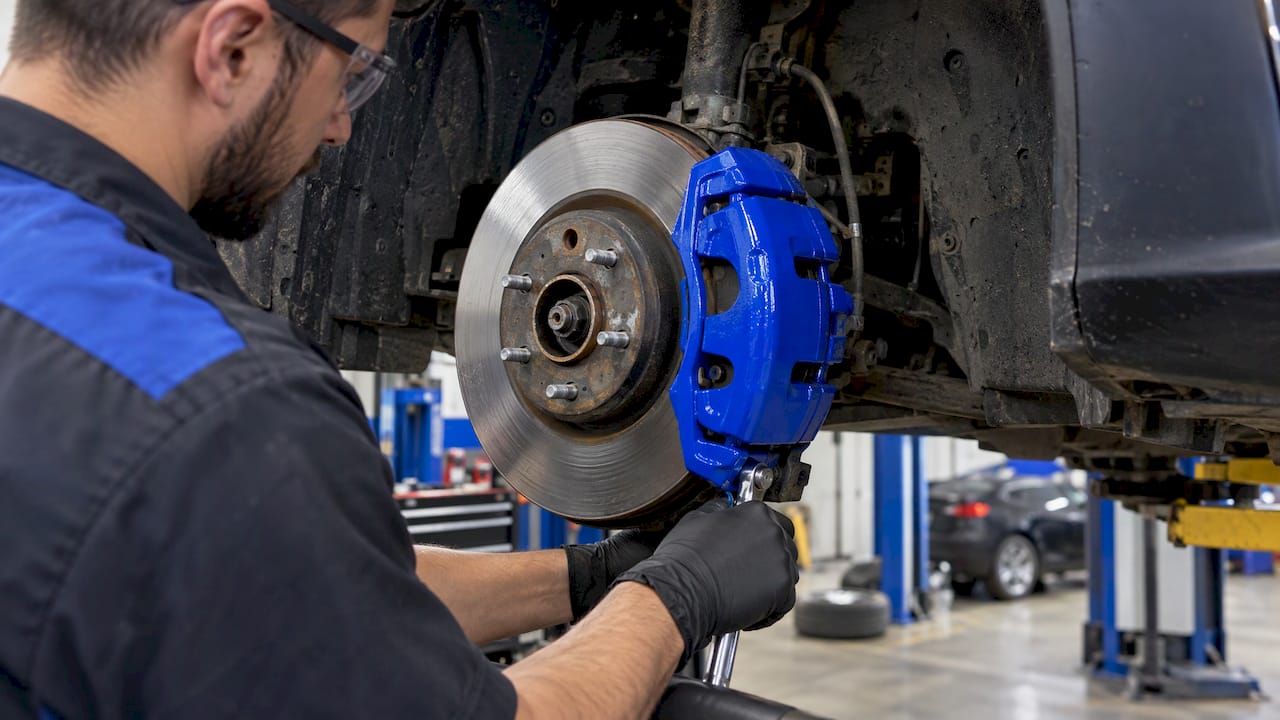
A coating on your brake calipers gives you three practical things: a finish that holds its colour under braking heat, brake dust and road grime that rinse off more easily, and a barrier against moisture and road salt. It is a finish for the outside of the caliper body. It does not change how your brakes stop, and it works best when it goes on clean and before the salt season starts. Here is what each coating type does, where the limits sit, and how to look after the result.
TL;DR
- Coatings make brake dust and road film easier to remove and help caliper colour stay bright through repeated heating and cooling.
- In Canada the biggest value is salt and brine protection, and timing matters: coat clean metal before the first salt drop.
- Powder coating, high-heat paint and ceramic coating are different processes, and a caliper needs a product rated for brake temperatures.
- A coating never goes on pistons, bores, threads or sealing surfaces, so brake work belongs with a licensed mechanic.
- Coating protects a finish. Caliper function in cold and heat comes from the caliper’s design, which is where we focus.
Table of Contents
- What a coating actually does for a caliper
- Why Canadian conditions raise the value
- Powder coating, high-heat paint and ceramic coating compared
- Heat rating decides whether a coating is safe
- Is it safe to coat calipers?
- What coating does not do
- Keeping a coated caliper looking and working well
- Our perspective: the finish is only one part of weather-ready brakes
- Pairing a coated caliper with the right pads and rotors
- Shop weather-ready brake parts
- FAQ
- Sources
What a coating actually does for a caliper
Calipers sit right behind the wheel, so they take brake heat, dust, water and winter brine all at once. A coating adds a hard, heat-stable layer over the caliper’s outer body that takes that exposure instead of the bare finish.
One Calgary detailing studio describes a coating as a slick, heat-stable barrier that helps brake dust and calcium-chloride road brine rinse off rather than bond. The same source says a properly prepped caliper keeps its colour through sustained brake heat, on a winter commuter and on a track-driven sports car alike.
A Canadian coating vendor lists its heat-resistant product as designed to keep high-heat surfaces cleaner for longer, with a stated maximum durability of 2 years or 100 washes. That figure is a useful reminder that coatings are consumable protection, not a one-time fix.
The main benefits in plain terms
- Easier cleaning. Brake dust is still produced, but a coating helps reduce how firmly it adheres, so it is easier to remove. That helps most behind open-spoke wheels, where hands and brushes struggle to reach.
- Colour that lasts. Heat-tolerant coatings applied to clean, dry calipers help the colour stay bright and make road grime easier to rinse off.
- Corrosion and chemical resistance. Powder coating ranges developed for OEM calipers are designed to resist corrosion, brake fluid, gasoline and brake dust, along with chips and UV light.
- Wear resistance. Coating suppliers describe powder finishes as harder than conventional paint, better against scratches, chips and peeling.
Why Canadian conditions raise the value
A coating earns more in a salt climate than in a dry one. Road salt, moisture, gravel and big temperature swings all attack exposed metal, and one Canadian coating shop says powder finishing helps protect against corrosion and rust through the whole year. For drivers in Vancouver, a detailing studio notes that winter brine and wet grime make easier cleaning worth more than in drier climates.
Timing is the part drivers miss. A Calgary specialist calls timing the single biggest mistake: the coating has to go on before the first salt drop of the season, because once brine has etched bare metal, the coating seals the damage in instead of preventing it. If you are reading this in November, the practical plan is to book the work and finish it early in the autumn next year, and in the meantime keep salt off with regular rinsing.
For the wider picture of what salt does to a brake system, see our guides on caliper corrosion in Ontario and monthly checks against road salt corrosion.
Powder coating, high-heat paint and ceramic coating compared
These three get lumped together, but they are different products with different jobs.
| Option | How it is applied | Where it fits best | Watch for |
|---|---|---|---|
| Powder coating | Dry powder baked on, melting and bonding to the metal | Calipers removed from the car, a durable uniform colour | Needs full disassembly and masking, and a high-temperature powder |
| High-heat caliper paint | Brushed or sprayed, then cured | Touch-ups and a refresh on a budget | Chips more easily and is repaired by touch-up |
| Ceramic coating | Liquid layer over an existing sound finish | Easier cleaning and colour protection on painted calipers | Protects a finish, does not repair a failing one |
A Calgary coating shop explains that powder is applied dry and baked until it melts and chemically bonds to the surface, giving a uniform finish that resists chipping, peeling and fading better than paint.
Paint has one real advantage: you can fix it in the driveway. Painted calipers can have minor chips handled with caliper touch-up paint, while larger chips or peeling may need sanding, repainting and a heat-resistant clear coat.
Price varies a lot by method and shop. As one Ontario example, a London, Ontario auto spa lists caliper painting starting at $499 + HST. Always confirm current pricing with the applicator.
Heat rating decides whether a coating is safe
Brake heat is the reason caliper coating is not like coating a valve cover. Caliper temperatures can reach 300°F to 400°F in normal driving and exceed 500°F in aggressive driving. Standard polyester powders are not rated for that and can discolour, blister or fail, so high-temperature ceramic or silicone-based powders rated for continuous 500°F to 900°F are the right choice.

Thickness matters too. The same source recommends a uniform 2 to 3 mil coat, because an overly thick layer can crack as the caliper heats and cools repeatedly.
If you drive hard, tow or run track days, tell the applicator. Installers should choose a suitable heat-tolerant product when the brakes see performance use.
Is it safe to coat calipers?
Yes, when it is done correctly. Powder coating calipers is considered safe with proper masking, heat-appropriate powder and new rubber seals at reassembly, and a professional is recommended for safety-critical brake parts. A ceramic coating on the painted outer body, applied away from pads, discs and moving parts, will not affect braking.
What must stay uncoated
Coating belongs on the outside of the caliper body and nowhere else. These areas are masked:
- The piston bore, bleeder screw threads and brake line fitting threads.
- Mounting bolt holes and pad contact surfaces.
- Slider pin bores and bracket bolt mating surfaces.
- Banjo bolt sealing faces. These seal with crush washers, and coating on them can cause leaks, while coating in threaded holes can alter thread tolerances and torque.
Preparation that makes the coating last
For powder coating, the caliper comes off the car, is disassembled with pistons, boots, seals and pads removed, and is drained of fluid and fully dry before masking. That prep is not optional. Brake fluid absorbs moisture and creeps into casting pores, so a flushed, dry caliper coats better than one hastily emptied. Old grease and road film also have to go before blasting.
In Ontario, one Toronto shop points out that under provincial trade standards only a licensed mechanic with a 310S certification may remove brakes from a vehicle. Regardless of province, brake removal and reassembly is a job for a licensed technician. After a recoat, the brake system needs a proper bleed and a careful check of pedal feel before the vehicle returns to normal use.

What coating does not do
Knowing the limits lets you plan around them, and none of them are surprising.
- It does not remove brake dust. Dust is still produced. The coating only helps it release more easily.
- It does not repair existing damage. Pitting, oxidation and corrosion already present are sealed in, not removed. Start from clean, sound metal.
- It does not fix failing paint. Flaking calipers are poor candidates because a coating protects a finish but does not hold failing paint together.
- It does not stop impacts. A fresh curb scrape can still chip the coating and the surface beneath it.
- It does not change stopping power. Pad material, rotor surface and caliper design govern braking. Anything sprayed onto rotors or pads can reduce braking performance, so coating is strictly for the caliper’s exterior.
Keeping a coated caliper looking and working well
Maintenance is light, and regular rinsing does most of the work.
- Rinse often in winter. A wheel clean every 2 to 4 weeks is a reasonable target for most daily drivers, with more frequent rinsing in winter or on cars that make a lot of dust.
- Remove salt film. Periodic brine rinses and occasional iron decontamination keep coated surfaces performing as intended.
- Choose the right cleaner. Cleaner data sheets for coated surfaces recommend a pH of 3 to 9, and strong acids and alkalis are unnecessary and damaging. Our readers often ask what to use, and non-acid wheel cleaner guidance explains why gentler formulas protect coated finishes.
- Fix chips early. Small chips can be touched up on painted calipers before moisture gets under the edge.
- Inspect while the wheels are off. Seasonal tyre swaps are a good moment to look at the caliper, slider pins and rotor surface together.
Our perspective: the finish is only one part of weather-ready brakes
At AAA Frictions we like coated calipers for what they do: a cleaner look, easier washing and a protected finish. We also see them as one layer of a bigger question, which is how the whole brake system behaves when the weather changes.
A caliper has two jobs in a Canadian year. Its surface has to survive salt and brine, and its moving parts have to work smoothly on a freezing morning and again in summer heat. A coating addresses the first job. Our ClimateFlex calipers are engineered for the second, with smooth operation through winter cold and summer heat.
The same thinking applies to the rest of the system. Our HydroAdaptive pads are designed for moisture management and stable friction, and our GEOMET-coated rotors are designed to protect against corrosion from moisture and road salt. We develop rotors and pads as a matched system, which is why we sell rotors only with compatible pads.
That is our view of consistent braking: protect the surfaces that face the salt, and engineer the parts that move to stay predictable. When each component handles its own part of the weather, pedal feel stays familiar from the first cold start of the season to the last wet commute.
AAA
Pairing a coated caliper with the right pads and rotors
Caliper finish is the visible part of the system. Pad and rotor choice decides how consistent the brake feels on wet and icy days.
- Pads. Our Type 07 brake pads use HydroAdaptive ceramic technology aimed at stable friction in rain, humidity and cold.
- Rotors. Our GC Type rotors carry a GEOMET coating designed to protect against moisture and road salt corrosion. If salt is your main concern, our seven-step brine corrosion guide shows what to do the same day.
- Matched sets. Because we engineer rotors and pads together, kits for your vehicle give you a combination built to work as one.
When you service calipers, whether coated or not, it is efficient to renew pads and rotors in the same visit. The caliper is already off, and the system returns to a known, matched condition.
Shop weather-ready brake parts
If your calipers are due for attention this season, pair them with pads and rotors built for the same conditions. Browse vehicle-specific HydroAdaptive pads and GEOMET-coated rotors at AAA Frictions, and find the set that fits your car.

Prices are listed on each product page. Our ClimateFlex calipers and pad and rotor sets are made for drivers who face salt, slush and wide temperature swings.
FAQ
Do coated calipers improve braking?
No. A coating protects the outside of the caliper and makes it easier to clean, but it does not alter friction, pedal feel or stopping distance. Pads, rotors and caliper design determine those. A coating should never reach pads, discs or moving parts.
How long does a caliper coating last?
It depends on the product, prep and how you care for it. One Canadian vendor states a maximum of 2 years or 100 washes for its heat-resistant coating. Powder finishes are described as tougher than paint, but regular rinsing in salt season still extends the life of any coating.
Is powder coating or paint better for calipers?
Powder gives a harder, more uniform finish and is baked on after the caliper is disassembled. Paint is simpler and can be touched up when chipped. Whichever you pick, the product must be rated for brake temperatures and the sealing surfaces masked.
Can I coat calipers myself?
The coating step is only part of the job. Removing calipers, masking bores and threads, replacing seals and bleeding the system affect safety, and only licensed mechanics may remove brakes under Ontario’s trade standards. Have a licensed technician handle removal and reassembly.
When should I coat calipers in Canada?
Aim to finish before the first salt drop of the season, on clean, corrosion-free metal. Coating after salt has etched the surface seals the damage in. Schedules vary by shop, so ask your applicator for current lead times.
Sources
- Wheel Coat product page
- Powder coating line for brake caliper design
- Powder Coating Services by Insta Tints Canada
- Ceramic Coating Brake Dust Protection Guide
- What Is Powder Coating? Benefits for Rims, Calipers and More
- How to Care for Your Custom Painted Brake Calipers
- Ceramic Coating in London, ON
- DIY Powder Coating Brake Calipers Safely
- Can You Powder Coat Brake Calipers?
- Ceramic Coating Wheels and Brake Calipers Explained
- How to Mask Brake Calipers and Brackets
- Powder Coating Brake Calipers: Prep and Drop-Off
- Powder Coating Calipers: What You Need to Know
- Where NOT to Apply Your Undercoating