

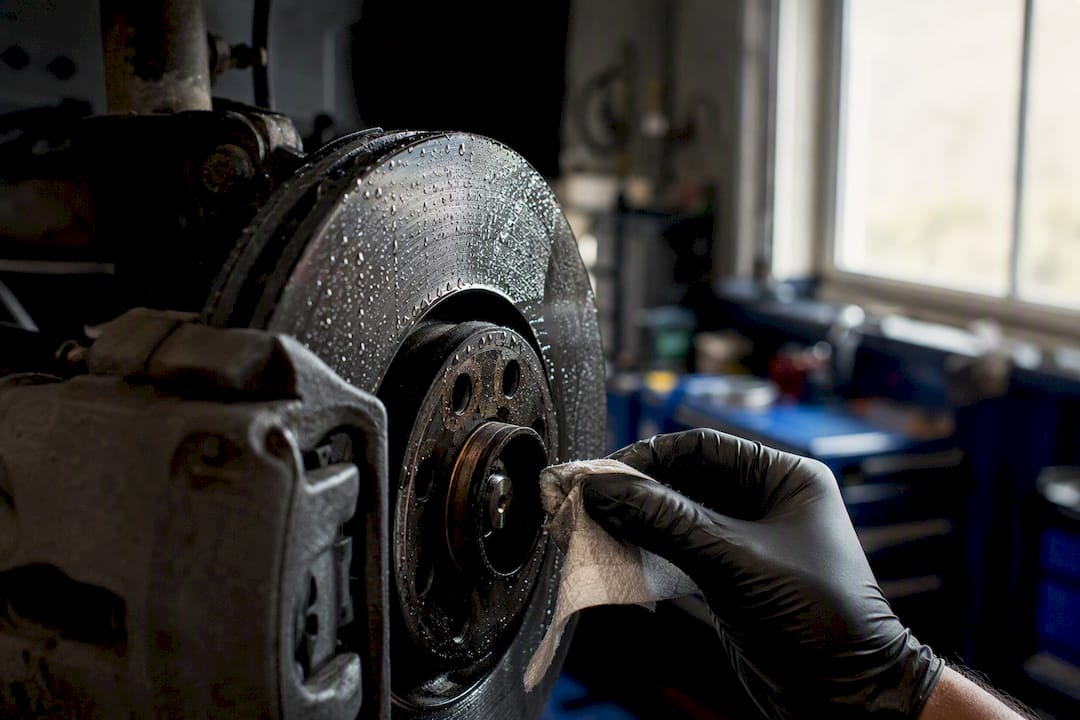
A brake pedal that grabs during the first few stops after rain is usually a moisture problem, not a mechanical one. Light grabbing or a brief squeal in the first several stops is normal wet-weather behavior, caused by a thin water film and surface rust on the rotor face. Persistent grabbing, a soft or spongy pedal, pulling to one side, or grinding is a different story: those are signs of a mechanical or hydraulic fault, and they call for a professional inspection, not another rainy commute.
Right now, the priority is simple. Slow down, open up your following distance, and find a clear stretch where you can safely perform a couple of firm, deliberate stops to scrub moisture off the rotors. Transport Canada’s road-transportation safety guidance recommends exactly this kind of controlled braking when pedal feel changes unexpectedly. Research into pad-rotor contact backs up why the grab happens at all: a meniscus effect at the pad-rotor interface can shift friction by more than 30% at low speeds. Combine that with the reality that rain alone can increase stopping distance by 30 to 40%, and you have good reason to treat wet grabbing seriously even when it turns out to be harmless.
If braking performance does not improve after a couple of safe test stops, or if a warning light comes on, stop driving and call for help. This is not a symptom to drive through and hope it clears.
- Ease off the accelerator and increase your following distance immediately.
- Find a straight, low-traffic stretch to test the brakes deliberately.
- Perform two or three firm (not panic) stops to clear moisture and light rust.
- Treat any grinding, pulling, or dead pedal as a stop-driving signal.
Key Takeaways
Wet-weather brake grabbing is almost always caused by a moisture film or meniscus adhesion at the pad-rotor interface, and it resolves within one to three firm stops unless a mechanical or hydraulic fault is also present.
| Point | Details |
|---|---|
| Brief grabbing is normal | Light grabbing or squeal in the first one to three stops after rain typically clears on its own. |
| Persistent symptoms need inspection | Soft pedal, pulling, or grinding after multiple firm stops signals a mechanical or hydraulic fault. |
| Firm stops beat gentle pumping | One or two deliberate stops clear rotor moisture and rust faster than repeated light taps. |
| Material choice affects wet stability | Hydrophobic ceramic compounds resist the friction swings caused by low-speed meniscus adhesion. |
| Weather-adaptive pads address recurring grab | Aaafrictions’ HydroAdaptive kits use moisture-shedding ceramic pads and coated rotors for vehicles with repeat wet-weather grabbing. |
Table of Contents
- What To Do Right Now If Your Brakes Grab In The Rain
- Why Do Brakes Grab When Wet?
- How Can You Tell If It’s Just Moisture Or A Real Problem?
- Temporary Fixes You Can Try Before A Repair
- What Permanent Repairs Fix Recurring Wet-Weather Grabbing?
- What Does The Research Say About Wet Brake Grabbing?
- When Should You Stop Driving And See A Mechanic?
- What Does A Wet-Brake Repair Typically Cost?
- A Weather-Adaptive Upgrade Worth Considering
- Frequently Asked Questions
- Sources
What To Do Right Now If Your Brakes Grab In The Rain
The moment you notice grabbing in wet conditions, resist the urge to slam or repeatedly pump the pedal. Work through these steps in order:
- Slow down and create space. Back off the throttle and open a longer gap to the car ahead, since your stopping distance is already compromised.
- Choose a safe test stretch. Look for a straight, low-traffic section of road, ideally with no one directly behind you.
- Apply firm, deliberate pressure. One or two confident stops from a moderate speed do more to clear rotor moisture than a series of light taps.
- Check the result. If the pedal firms up and the grab fades, you were dealing with surface water or light rust. If it does not, treat it as a mechanical issue.
- Avoid sudden inputs. Sharp braking or swerving on a wet, grabby pedal increases the risk of lockup or skidding.
Watch for red flags that mean it’s time to pull over completely: a pedal that sinks toward the floor, a burning smell, grinding metal-on-metal noise, or the vehicle pulling hard to one side under braking. Any of those points to a fault that a dry-out won’t fix.
Pro Tip: One firm, confident stop clears surface rust and moisture faster than five gentle taps. Light pumping barely generates enough heat or pad pressure to scrub the rotor face clean, while a single deliberate stop does the job in seconds.
A thin film of water between pad and rotor acts as a temporary lubricant, and that film has to be physically displaced before full friction returns. That’s the mechanical reason gentle pumping underperforms a firm stop.
Why Do Brakes Grab When Wet?
Wet-weather grabbing has a handful of common causes, and most of them are harmless on their own. The trouble is that several benign explanations and a few serious ones produce nearly identical symptoms, so it helps to know the full list.
- Surface water film: A thin layer of water between pad and rotor briefly lowers friction, then friction spikes once heat displaces it, which is what produces that initial grab.
- Capillary and meniscus adhesion: At low speeds, water forms small menisci at the contact points between pad and rotor. Surface tension in those menisci creates adhesion forces that modulate friction, and modeling of this effect shows swings exceeding 30% at low slip speeds, which explains why grabbing is most noticeable when you’re crawling through a parking lot rather than cruising on the highway.
- Flash rust: Rotors start forming a light rust film within hours of sitting in humid air, especially overnight. The first stop or two after that kind of exposure often produces a squeal or a momentary grab that disappears once the rust layer is worn off.
- Pad material and hydrophobicity: Not all friction materials respond to moisture the same way. Tribology testing on brake materials shows that hydrophobic compounds resist the velocity-dependent friction swings that hydrophilic materials experience under high humidity, meaning some pads are simply more stable in the rain than others by design.
- Mechanical and hydraulic faults that wet weather exposes: A caliper piston that’s slow to retract, seized slide pins, or uneven pad wear can all produce inconsistent braking that’s mild in dry conditions but becomes obvious the moment water adds an extra variable. Contaminated brake fluid is a related concern, since absorbed moisture lowers the fluid’s boiling point and can produce a soft or fading pedal under load, wet or dry.
The pattern worth remembering: if the grab is worst on the first stop after sitting and fades quickly, moisture and rust are the likely cause. If it’s inconsistent, asymmetric, or paired with pedal softness, something mechanical is contributing, and rain is just revealing it.
How Can You Tell If It’s Just Moisture Or A Real Problem?
Pull safely off the road and pay attention to how the pedal actually behaves, not just whether the car stops.
- Feel for a transient delay versus a soft pedal. A brief lag before full stopping power kicks in, followed by a firm pedal, usually points to moisture. A pedal that sinks or feels spongy under steady pressure points to air or water in the hydraulic system.
- Perform one firm stop on a clear stretch. Note whether the grab fades after this stop.
- Test for pull. On a straight, empty section, brake gently and see if the car drifts to one side. Pulling suggests a sticking caliper or uneven pad contact on one wheel.
- Listen for the type of noise. A squeal that fades after a stop is typically rust or glaze. Grinding or metallic scraping is not moisture, it’s contact between metal components.
- Glance for visible leaks or damage. Check around the wheels for fluid drips or a caliper that looks stuck at an odd angle.
What the results usually mean:
- Clears within one to three stops: surface moisture or light rust, no action needed beyond normal driving.
- Soft or spongy pedal that doesn’t firm up: hydraulic issue, likely fluid or a leak, needs inspection soon.
- Persistent grabbing or grinding that doesn’t fade: mechanical contact or a seized component, stop driving if severe.
If braking performance hasn’t improved after these checks, or if the ABS light or brake warning light comes on, stop driving and arrange a tow or roadside inspection. This is a case where finishing the trip isn’t worth the risk.
Temporary Fixes You Can Try Before A Repair
A few short-term measures can restore usable braking while you arrange a proper repair, but they only address moisture and light rust, not a genuine mechanical fault.
- Dry the rotors with one or two firm stops, not a series of light taps, on a clear stretch of road.
- Tap the brakes lightly while driving slowly through shallow puddles only when unavoidable, then recheck pedal feel once you’re through.
- Avoid deep water and high splashes on hot rotors. Cold water hitting an overheated rotor can cause thermal shock and, in rare cases, warping.
- Recheck after every attempt. If the pedal doesn’t firm up, stop relying on the workaround.
Temporary drying techniques clear surface moisture and light rust. They do nothing for a seized caliper, water-contaminated brake fluid, or pads that have glazed over from heat cycling, and pretending otherwise just delays a repair that’s going to happen anyway.
What Permanent Repairs Fix Recurring Wet-Weather Grabbing?
If the grab keeps coming back regardless of how carefully you dry the brakes, the fix lives in the shop, not behind the wheel. A few mechanical issues account for most repeat cases.
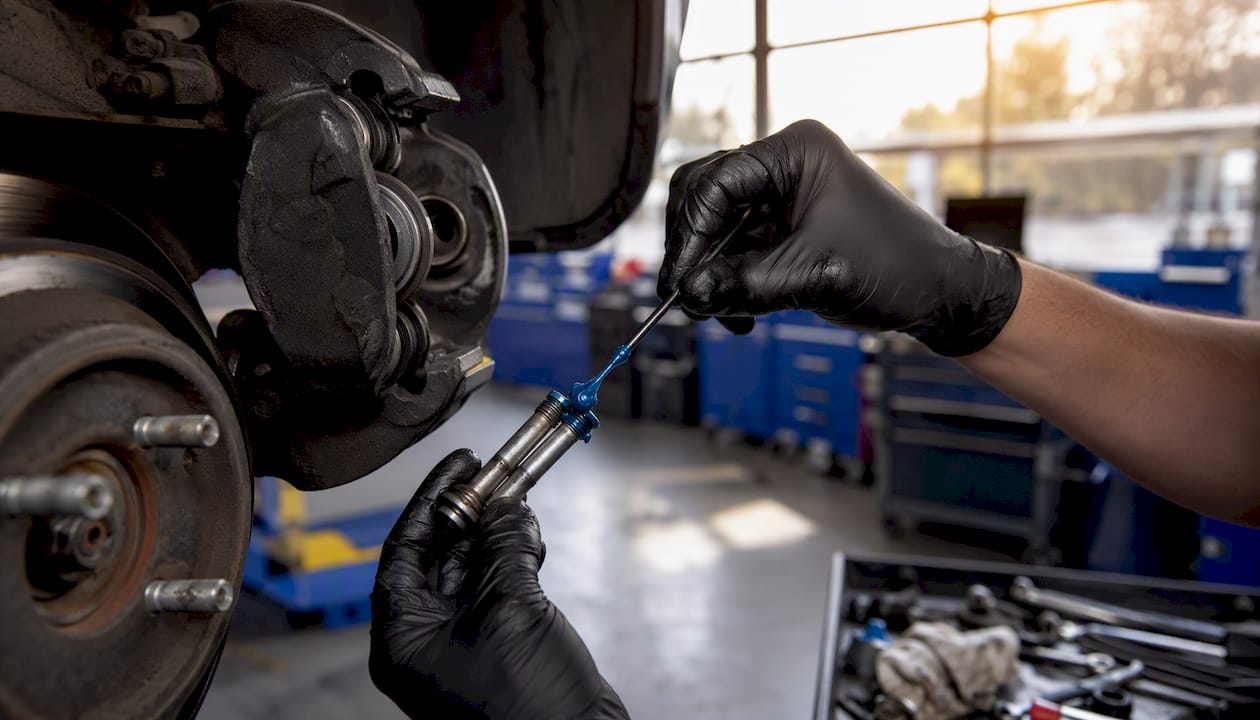
Caliper and slide-pin service. A caliper that doesn’t retract evenly, or slide pins that have seized from corrosion, will produce inconsistent pad contact that wet weather makes obvious. Rebuilding or lubricating the slide pins with a climate-appropriate grease is one of the most common fixes mechanics perform for this exact complaint.
Rotor resurfacing or replacement. Rotors that have developed heavy rust pitting, uneven wear, or corrosion around the friction surface won’t shed water evenly, and that unevenness shows up as grabbing. Resurfacing works for minor cases; heavily pitted or thin rotors need replacement.
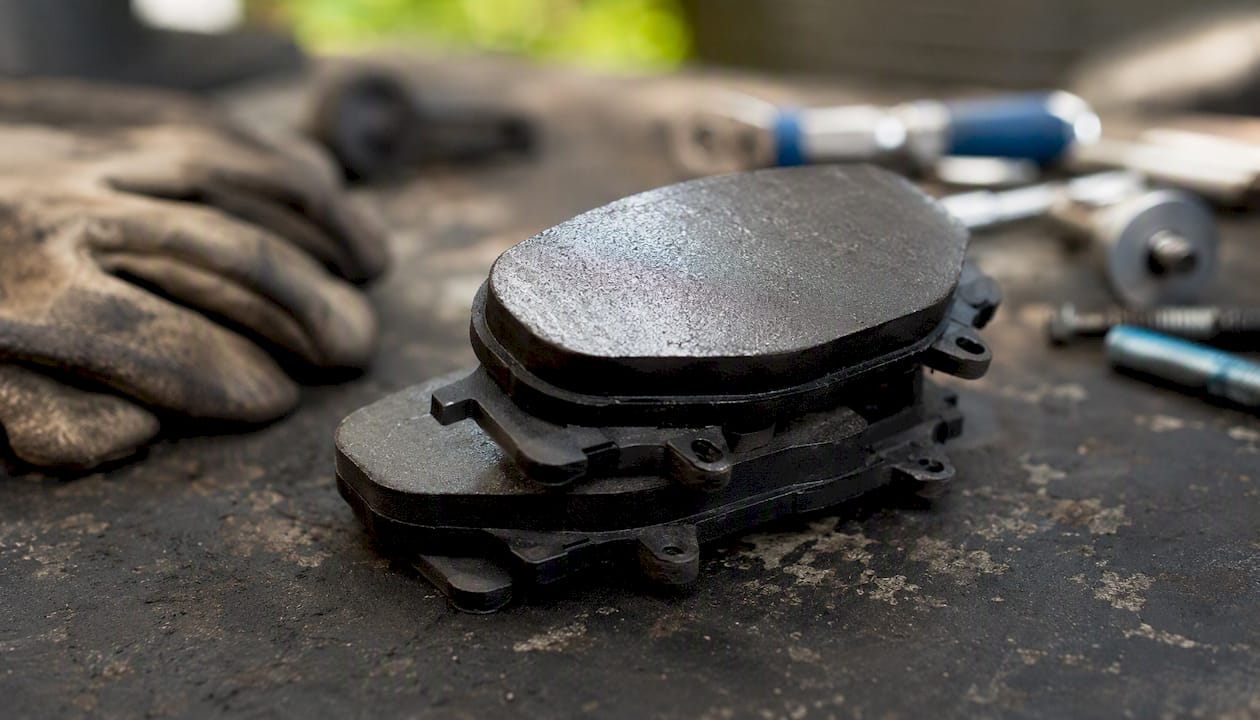
Pad replacement, especially if glazed or contaminated. Pads that have been overheated and glazed lose their consistent friction profile, and moisture makes that inconsistency worse. Swapping to a hydrophobic ceramic compound designed for wet-weather stability solves both the glazing and the moisture sensitivity at once.
Brake fluid flush. DOT brake fluid absorbs moisture over time. Contaminated fluid lowers the boiling point and can produce a soft pedal under sustained braking, a problem that often gets misdiagnosed as a “wet brake” issue when it’s really a fluid issue that happens to show up in wet weather.
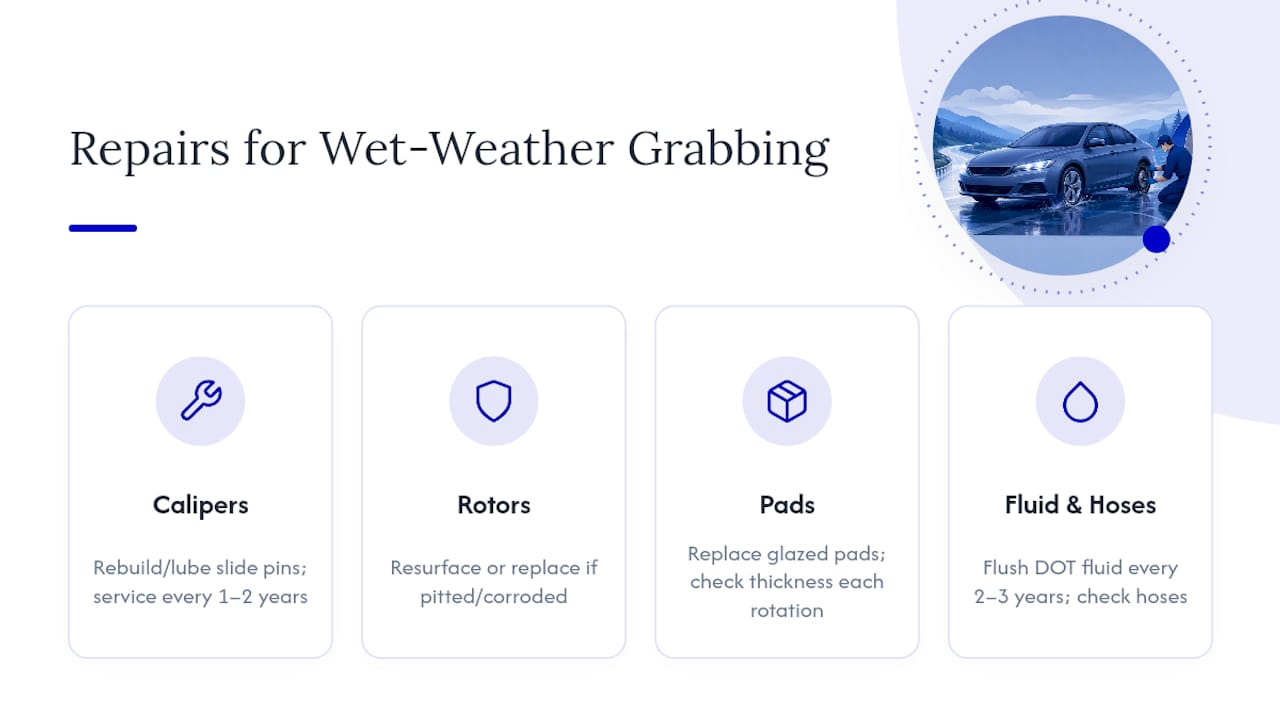
Hose and master cylinder check. Less common, but a collapsed hose or an aging master cylinder can produce uneven pressure delivery that’s inconsistent enough to mimic a wet-grab symptom.
On maintenance intervals: slide pins should get lubrication service roughly every one to two years or whenever brakes are serviced, brake fluid typically needs replacement every two to three years regardless of moisture-related symptoms, and pad thickness should be checked at every rotation to catch glazing before it becomes a safety issue.
Material choice matters here too. Ceramic compounds engineered with moisture-shedding properties behave more predictably at low speed than standard hydrophilic pads, because they resist the same meniscus adhesion effect described in the MDPI research on humidity-driven friction modulation. That’s a real engineering distinction, not marketing language.
Pro Tip: If wet-weather grabbing shows up more than once, ask your mechanic to inspect the caliper slide pins and check brake fluid condition in the same visit. Keep a simple note of when and where the grabbing happened. That pattern can help a technician isolate a one-wheel caliper issue versus a fluid-wide problem much faster.
Component health, slide-pin lubrication, and weather-adaptive friction compounds work together. Relying on any one of them alone tends to leave a gap the others were meant to cover.
What Does The Research Say About Wet Brake Grabbing?
The physics behind wet-brake grab comes down to what happens at a microscopic scale between pad and rotor. Numerical modeling using GIMP-FSI simulation methods found that water menisci, tiny curved surfaces formed by surface tension where water contacts the pad and rotor, generate capillary adhesion forces strong enough to modulate friction by more than 30% at low slip speeds. That’s why grabbing shows up most at parking-lot speeds and largely disappears once you’re rolling faster.
Three material properties determine how much a given brake setup is affected:
- Pad porosity: more porous pads hold more water at the contact surface, extending the moisture-affected window.
- Contact angle (hydrophobicity): pads engineered to repel water rather than absorb it show more stable friction across wet and dry conditions.
- Surface tension at the interface: higher surface tension increases the strength of the meniscus adhesion effect, which is part of why some pad chemistries grab harder than others in identical rain.
Stopping distance in rain increases by roughly 30 to 40% on average, according to industry testing summarized by Direct Brakes, a number worth keeping in mind the next time light grabbing feels like a minor inconvenience rather than a real hazard.
Prior braking conditions and moisture adsorption change friction, pad hardness, and squeal propensity enough that engineers now quantify humidity as a controlled variable in SAE brake testing protocols, not an afterthought.
When Should You Stop Driving And See A Mechanic?
Some symptoms cross the line from annoying to dangerous, and they call for immediate professional attention rather than another attempt at drying the rotors.
- A pedal that stays soft or spongy even after several firm stops.
- Severe pulling to one side, or grinding metal-on-metal noise under braking.
- ABS or brake warning lights, visible fluid leaks under the vehicle, or a near-total loss of stopping power.
When you call for service, describe exactly what you felt: when the grab started, whether it faded or persisted, whether the pedal felt soft or firm, and any noise or pulling. That detail lets a mechanic skip straight to the likely cause instead of starting a full diagnostic from scratch.
What Does A Wet-Brake Repair Typically Cost?
Repair costs vary by region and vehicle, but a few typical service categories give you a realistic range to plan around.
- Slide-pin service and lubrication: roughly 1 to 2 hours of labor, a lower-cost repair on most vehicles.
- Rotor resurfacing: usually under an hour per axle, one of the more affordable fixes when rotors aren’t too far gone.
- Rotor replacement with new pads: commonly 1 to 3 hours per axle, a mid-range cost depending on rotor type and pad material.
- Caliper rebuild or replacement: often the priciest single repair, since parts and labor both climb, especially if more than one caliper needs work.
- Brake fluid flush: typically under an hour, a relatively low-cost service that’s easy to bundle with other work.
Costs climb fastest when a vehicle needs both front and rear service, when labor rates in your area run high, or when you’re stepping up to performance rotors or specialty pad compounds. Always ask for an itemized quote before work begins, and confirm what warranty covers the parts and the labor separately.
A Practical Perspective On Managing Wet-Weather Braking
Safety comes first, always. Drying tests and following distance are the immediate priorities, no exception. But we’d push back gently on treating every wet grab as something to manage forever through habit alone. If mechanical inspection turns up nothing wrong and the grabbing still recurs, the friction material itself is doing something predictable: standard hydrophilic pads simply aren’t built to resist the meniscus effect. That’s where a moisture-managing formulation like HydroAdaptive earns its place, not as a substitute for maintenance, but as the fix for the gap maintenance can’t close.
A Weather-Adaptive Upgrade Worth Considering
If a mechanic has already checked your calipers, slide pins, and fluid, and wet-weather grabbing still shows up trip after trip, the friction material itself may be the limiting factor. Aaafrictions builds its pads and rotor kits around HydroAdaptive technology, a ceramic formulation engineered to shed moisture at the pad-rotor interface rather than let it pool and create the meniscus adhesion effect described earlier in this piece.

The formulation is designed to limit low-speed friction instability, the exact behavior that produces grabbing in a parking lot or at a stop sign right after rain. Kits pair the pads with semi-coated or GEOMET-coated rotors that resist the flash rust responsible for that first-stop squeal, and every kit is sold as a vehicle-specific fit rather than a generic universal part, which matters for consistent pedal feel. You can review the moisture-management engineering in detail on the HydroAdaptive Formulation page, or search your vehicle’s fitment directly to see whether a HydroAdaptive kit is available for your make and model.
Frequently Asked Questions
Is it normal for brakes to grab when wet?
Yes, light grabbing or a brief squeal during the first few stops after driving through rain or a car wash is common and usually clears within one to three stops as the water film and any surface rust wear off.
Why do my brakes grab worse at low speed in the rain?
Capillary adhesion from water menisci at the pad-rotor interface has the strongest effect at low slip speeds, which is why grabbing feels most pronounced when crawling through a parking lot rather than braking from highway speed.
How long should wet-brake grabbing last before I worry?
If the grab doesn’t fade after two or three firm, deliberate stops, or if it’s paired with a soft pedal, pulling, or noise, treat it as a mechanical issue rather than normal wet-weather behavior.
Can brake pad material reduce wet-weather grabbing?
Yes. Hydrophobic ceramic pads designed to shed water resist the low-speed friction instability that causes grabbing, unlike standard pads that absorb and hold moisture at the contact surface.
Should I keep driving if my brakes feel wet and grabby?
You can continue cautiously at reduced speed with extra following distance while testing whether firm stops clear the symptom, but stop driving and seek inspection if the pedal stays soft, the car pulls to one side, or a warning light appears.
Sources
- Transport Canada — road-transportation safety standards and guidance
- An insight to high humidity-caused friction modulation of brake by numerical modeling of dynamic meniscus under shearing (MDPI Lubricants)
- Moisture effects on the velocity dependence of the coefficient of friction for brake materials (ScienceDirect abstract)
- Engineerskill