

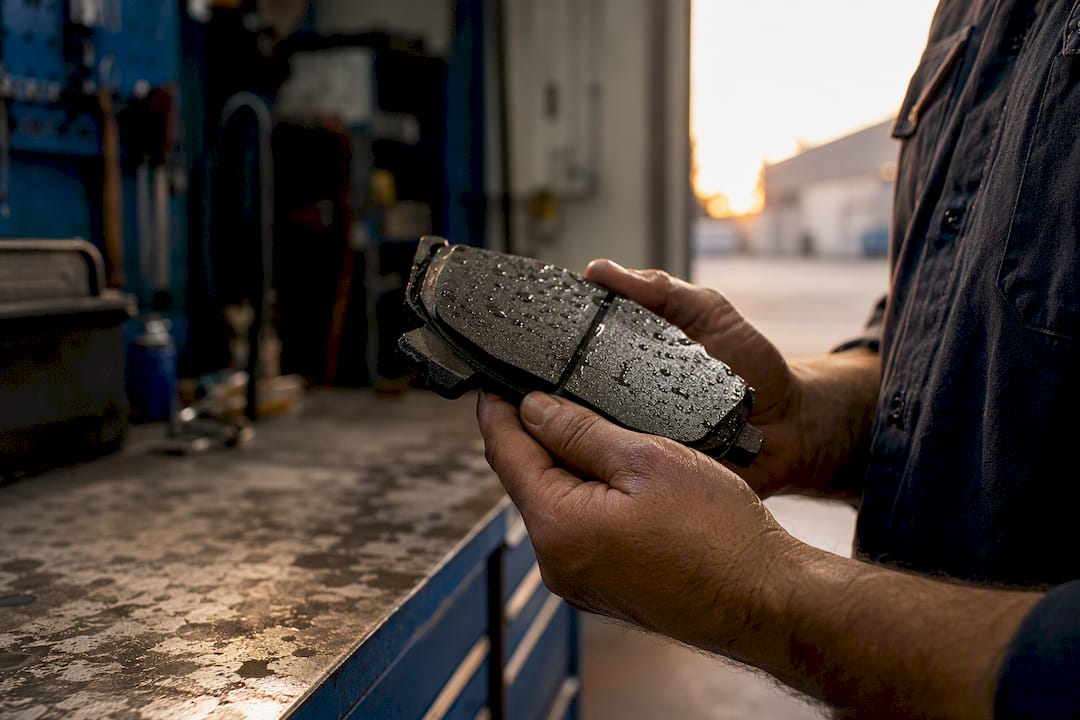
Most cases of brakes sticking after a wash are temporary: thin surface rust, often called flash rust, welds the pad to the rotor for a short window. A short drive with a few firm brake applications usually clears it within a mile or two. Here’s what to do right now:
- Drive at low speed on a safe, empty stretch and apply the brakes firmly several times to generate heat and dry the rotor surface.
- Skip the parking brake until the components have dried; it can lock the flash-rust bond in place overnight.
- If the car barely moves or you hear a metallic squeal, rock it gently forward and back rather than forcing it.
This is harmless when it clears after driving. It’s a different story if one wheel stays hot, drags after several minutes, or the car pulls to one side under braking. That points to a mechanical problem, not just flash-rust bonding, and it’s covered further down.
Key Takeaways
Flash rust causes most post-wash brake sticking, and a short drive with firm braking almost always clears it within minutes.
| Point | Details |
|---|---|
| Diagnose with your first roll | A single pop that fades after a short drive means flash rust, not a mechanical fault. |
| Dry before you park | Drive briefly and brake firmly to clear moisture before the car sits still. |
| Skip the parking brake wet | Wait until rotors dry before engaging it to avoid locking in a rust bond overnight. |
| Check temperature for red flags | An infrared thermometer reveals a seized caliper when one wheel runs far hotter than the rest. |
| Upgrade parts for recurring cases | Aaafrictions’ HydroAdaptive pads and semi-coated rotors reduce the oxide bonding that causes repeat sticking. |
Table of Contents
- Why Brakes Stick After a Car Wash in the First Place
- How to Free Sticking Brakes Safely Right Now
- Telling Temporary Rust From a Real Mechanical Seizure
- Preventing Sticky Brakes the Next Time You Wash
- When Sticking Brakes Need a Mechanic, Not a Drive
- Can Better Brake Parts Reduce Moisture-Related Sticking?
- Frequently Asked Questions
- Sources
Why Brakes Stick After a Car Wash in the First Place
Cast iron rotors start oxidizing the moment water hits them. That’s not a defect. It’s just how the metal is built. Within hours, sometimes less, that oxidation forms a thin rust film exactly where the pad sits against the rotor face. Because the pad is clamped tight against that spot, the rust doesn’t just coat the surface. It bonds the two parts together, creating what mechanics call a flash-rust bond or rust weld.
You’ll usually hear it before you feel it. That “pop” or light snap when you first pull away is the sound of the bond breaking as the rotor spins free of the pad. It’s a normal part of the process, not a sign something is failing.
Three environmental factors make this worse:
- Humidity and standing water. A wash leaves rotors saturated, and if the car sits still afterward, there’s no airflow to dry them.
- Road salt and coastal air. Chloride ions accelerate corrosion far faster than plain water, which is why this issue shows up more in winter driving regions and coastal towns.
- Semi-metallic pad content. Pads with higher metallic fiber content tend to corrode against the rotor face faster than full ceramic compounds, because there’s more exposed iron to oxidize.
Here’s the distinction that trips people up: not every “stuck brake” after a wash is flash rust. Corroded parking brake cables, seized caliper slide pins, and collapsed brake hoses can all produce a very similar symptom, a wheel that won’t turn freely, but they don’t clear up after a short drive. A seized caliper traps the pad against the rotor mechanically, regardless of moisture, and no amount of driving fixes that on its own.
Flash-rust bonding forms fast enough that a car parked wet overnight can feel completely locked the next morning, even though the fix is often nothing more than driving it around the block. That speed is exactly why so many owners panic and assume the worst when the real culprit clears itself in minutes.
The practical test is simple: does it improve as you drive, or does it stay the same or get worse? Flash rust fades with heat and motion. A seized slide pin or corroded cable does not.
How to Free Sticking Brakes Safely Right Now
Before you do anything, park on level ground with enough room to move forward and back, and make sure nobody’s near the wheels. If you’re on an incline, chock the wheels first. This isn’t overkill. A car with one wheel dragging can behave unpredictably the moment it breaks free.
- Start the engine and check for normal warning lights. If the brake warning light is on, stop here and treat it as a mechanical issue, not a moisture issue.
- Ease forward slowly. If the car moves with resistance but does move, that’s consistent with a mild rust bond, not a full seizure.
- Drive at low speed for a few minutes, ideally on a quiet road, and apply the brakes firmly five or six times in succession. This does two things: it generates enough heat to evaporate residual moisture, and it scrubs the thin rust layer off the rotor face. Community reports consistently point to this as the fix that clears the vast majority of post-wash sticking.
- If the wheel won’t roll at all, don’t force it with the accelerator. Instead, rock the car gently forward and back a few inches at a time. This flexes the bond at the pad-rotor interface without stressing the drivetrain.
- Recheck after the drive. The pull, drag, or resistance should be gone. If it’s not, stop and move to diagnosis rather than repeating the process.
What you should never do is reach for a penetrating oil like WD-40 on the brake itself. It seems like a logical fix for anything that’s “stuck,” but oil contaminates the friction surface of both the pad and rotor, and once that happens, braking performance drops until the parts are replaced. The same goes for hammering on calipers or hubs to “knock loose” a stuck wheel. That’s far more likely to bend a dust shield or damage a slide pin than solve the actual problem.
Pro Tip: Do your test drive in a straight line with no traffic behind you for the first few hundred feet. If one wheel is genuinely seized rather than rust bonded, you’ll feel a distinct pull to one side, and you want room to react calmly, not merge into traffic while diagnosing a brake problem.
If the resistance doesn’t improve after a full test drive, or if you hear grinding, smell something burning, or feel the pedal go soft, stop driving and get the car looked at. Those are hardware symptoms, not moisture symptoms.
Telling Temporary Rust From a Real Mechanical Seizure
The signs of harmless flash rust are fairly consistent from car to car:
- A single pop or light snap on the very first roll, then normal driving afterward.
- Slight resistance for the first few feet that fades within a block or two.
- No pulling to one side, no unusual heat, no dashboard warnings.
The signs that point to something mechanical are just as consistent, and they matter more:
- Drag that persists after five or ten minutes of driving instead of clearing.
- The car visibly pulling left or right under braking.
- One wheel noticeably hotter than the others, or a burning smell after a short drive.
- A brake pedal that suddenly feels softer, higher, or spongier than usual.
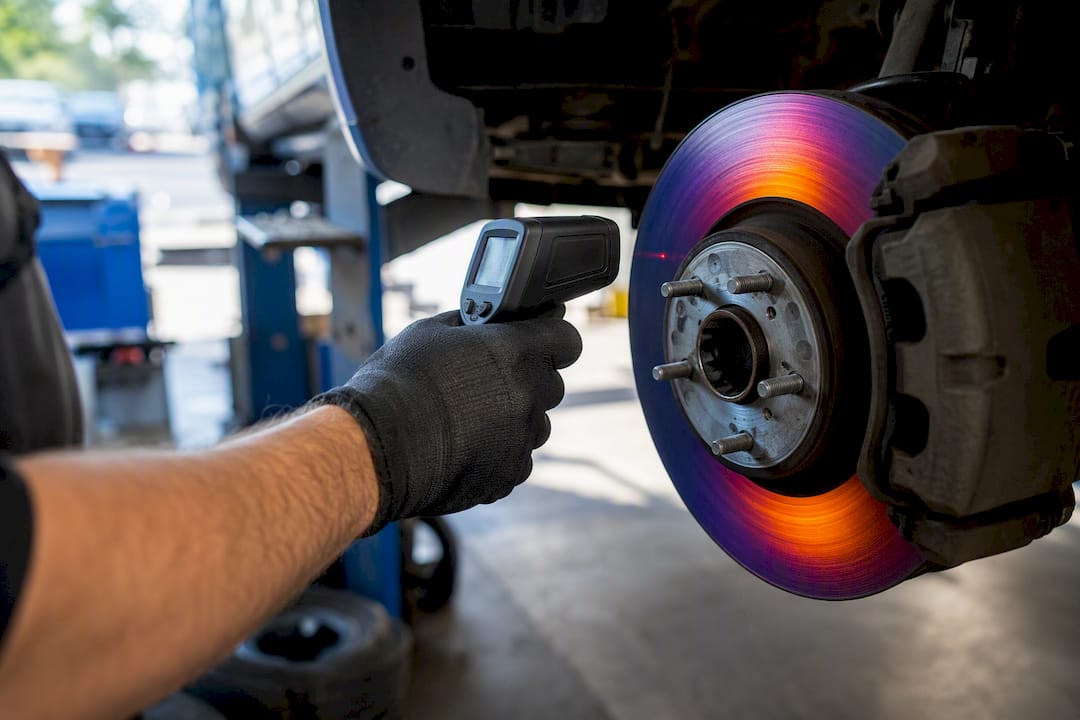
The most reliable way to settle the question is a temperature check. A non-contact infrared thermometer, the kind that costs about as much as an oil change, lets you point at each rotor after a short cautious drive and compare readings side to side. Flash rust affects all four corners fairly evenly, so temperatures should be in a similar range across the car. A caliper that’s mechanically seized keeps dragging constantly, which means that one wheel will run noticeably hotter than the rest, sometimes dramatically so.
That temperature gap is the clearest field signal you can get without a lift. Large, one-sided heat differences are a strong indicator of a stuck caliper piston or a seized slide pin, not surface corrosion. If you’re comfortable and the wheel is cool enough to touch safely, a quick visual check behind the wheel, looking for a shiny imprint pattern on the rotor face where the pad rides, can also confirm whether the contact is even across the surface or concentrated in one spot the way a mechanical bind tends to leave it.
Preventing Sticky Brakes the Next Time You Wash
The habits that prevent flash rust from forming in the first place are simple, and they cost nothing.
- Drive a short distance right after washing, even just around the block, and apply the brakes a few times to dry the rotor surface with heat before the car sits.
- Avoid setting the parking brake while the rear brakes are still wet. If you’re on a flat surface, leaving the car in gear (manual) or park (automatic) without the parking brake engaged is safer for that first hour.
- Point a leaf blower or compressed air at the wheels if you’re detailing at home and want to speed up drying before the car sits overnight.
- Choose pad and rotor materials built for moisture exposure if this keeps happening. Anti-corrosion rotor coatings and ceramic-heavy pad formulations resist the oxide bonding that causes the problem in the first place.
- Move the car periodically if it’s stored, since a vehicle sitting for weeks without being driven is far more prone to a full seizure than one that gets moved every few days.
Winter deserves a specific mention. Road salt dramatically speeds up corrosion on rotors and calipers, so a wash in January carries more sticking risk than the same wash in July. If you live somewhere that salts the roads, treat post-wash drying as closer to mandatory than optional.
Pro Tip: If you’re parking on a slope and can’t skip the parking brake, at least give the brakes a solid five minutes of dry driving first. A bond that forms on a fully dried rotor is far weaker than one that forms on a wet one, so timing the parking brake matters as much as avoiding it entirely.
When Sticking Brakes Need a Mechanic, Not a Drive
Most post-wash sticking resolves on its own. These signs mean it’s time to book an inspection instead of waiting it out:
- Drag that hasn’t improved after several minutes of driving and repeated firm braking.
- A wheel that’s dramatically hotter than the others on your infrared check, or a car that visibly pulls under braking.
- Uneven pad wear, a scorched or glazed pad surface, or a burning smell that lingers after the car cools.
- A soft or spongy brake pedal, which can point to a hydraulic issue rather than a friction issue.
- A parking brake cable or caliper slide pin that feels stiff or won’t release smoothly by hand.
None of these are DIY territory. A corroded cable or a seized piston needs to be freed, cleaned, or replaced by someone with the car on a lift, not worked around with driving technique.
Can Better Brake Parts Reduce Moisture-Related Sticking?
Standard cast iron rotors and semi-metallic pads are the most exposed to flash rust simply because bare iron oxidizes fast and metallic pad content adds more of it. That’s where material choice starts to matter for drivers who deal with this repeatedly, not just once after an unusual wash.
Aaafrictions built its HydroAdaptive formulation around exactly this problem. The ceramic compound clears surface moisture faster than standard pad material, and the semi-coated rotor surface resists the thin oxide layer that causes pad-to-rotor bonding in the first place. In plain terms, there’s less exposed iron sitting wet against the pad face, so there’s less material available to rust weld overnight.
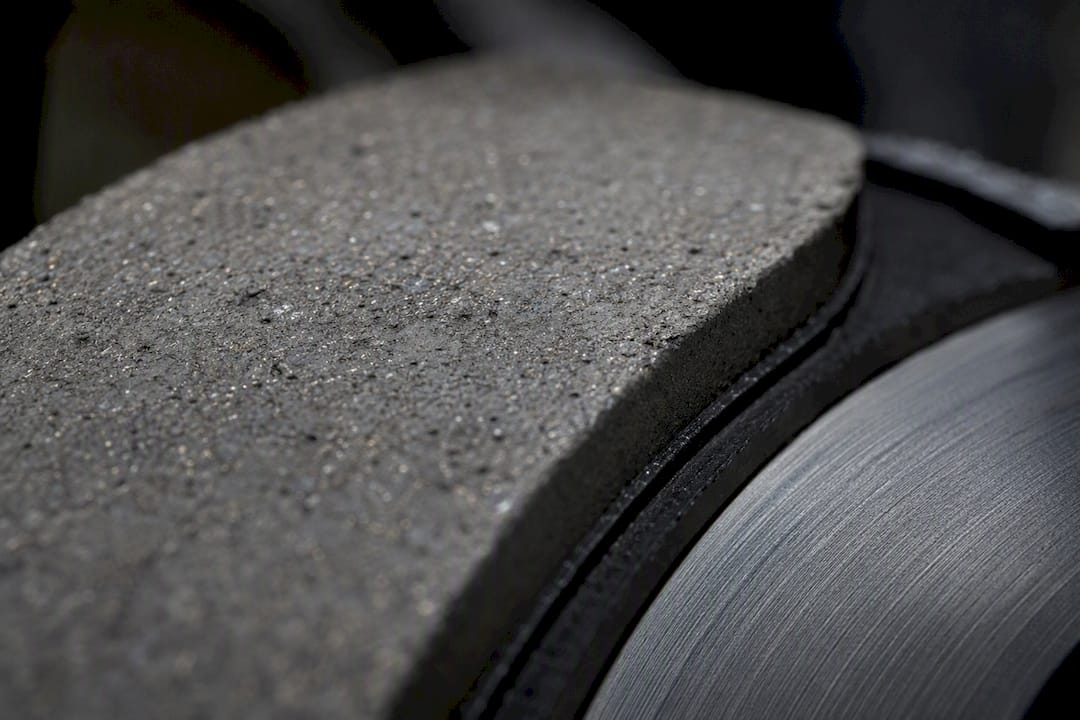
A few things this doesn’t change: it won’t fix a caliper that’s already mechanically seized, and it won’t undo damage from cables or slide pins that have corroded through neglect. Those still need a shop.
Where a parts upgrade makes sense is the driver who’s done everything right, short drives, no parking brake on wet brakes, careful drying, and still deals with sticking every time it rains or the car gets washed. That pattern usually means the stock pad and rotor material is simply more moisture sensitive than the driving conditions call for.
| Point | Details |
|---|---|
| Most sticking is flash rust | A thin oxide layer bonds pad to rotor after washing and usually clears with a short drive. |
| Skip the parking brake wet | Setting it before rotors dry can lock the rust bond in place overnight. |
| Use heat and temperature checks | Firm braking dries rotors fast; an infrared thermometer spots a seized caliper by comparing wheel temps. |
| Persistent drag means a shop visit | Uneven heat, pulling, or a soft pedal point to mechanical failure, not moisture. |
| HydroAdaptive pads resist the bond | Aaafrictions’ ceramic formulation and semi-coated rotors limit the oxide layer that causes sticking. |
A Practical Take on DIY Fixes Versus Real Repairs
A short drive and a few firm brake applications solve this problem far more often than people expect, and there’s no reason to rush into a repair bill before trying that first. Just don’t improvise with penetrating oils or force a wheel that won’t move. If the sticking keeps coming back no matter how careful you are, that’s a pattern worth solving with better parts, not repeated troubleshooting.
Stop Fighting Moisture Every Time It Rains
If flash rust keeps showing up after every wash or wet drive, that’s a material problem, not a habit problem, and no amount of careful parking fixes pad compound chemistry. Aaafrictions engineers its HydroAdaptive ceramic pads and semi-coated rotors specifically to clear surface moisture faster than standard parts, which cuts down the window where a rust bond can even form.

The formulation pairs with corrosion-resistant rotor coatings and climate-adaptive calipers, so the whole system, not just the pad, is built for wet and cold conditions rather than fighting them. If this is a recurring issue on your vehicle, check fitment for your make and model through the product catalog and see whether a HydroAdaptive kit is available for your car.
Frequently Asked Questions
How long does it take for brakes to stop sticking after a car wash?
Most flash-rust sticking clears within a short distance of driving, often within a few minutes if you apply the brakes firmly a few times to generate heat.
Is it normal for brakes to feel stuck after a wash?
Yes, mild resistance or a light pop on the first roll is common and usually harmless. Persistent drag or pulling after a full test drive is not normal and needs inspection.
Can brake pull after a wash mean something serious?
It can. If one wheel stays hot, the car pulls under braking, or the pedal feels different, that points to a seized caliper or corroded hardware rather than simple moisture.
Why are my brakes sticking even though it hasn’t rained recently?
Humidity, condensation, and even a garage wash can leave enough moisture on the rotor to trigger the same flash-rust bonding, regardless of outdoor weather.
Will HydroAdaptive pads stop brakes from sticking completely?
They reduce how easily the moisture bond forms by clearing surface water faster and limiting exposed iron on the rotor, but they can’t fix an already seized caliper or corroded cable, which still needs shop repair.
Sources
For deeper technical background, see EngineerSkill.blog’s breakdown of rust-bond causes, Brake & Front End’s guide to diagnosing brake pulls, and Stratford Tyres on seized brake prevention. For parts fitment, browse Aaafrictions’ technology overview.